Commercial Self Storage Loans
Original HTML

Commercial

Self Storage Loans

Wilshire Quinn provides self storage loans with fast approvals and funding within about 5-7 days. If you are looking to close fast on self storage loans, complete our loan application and speak with a representative today.

Finance Your Next Transaction With Wilshire Quinn

- A nationwide direct Lender, not a broker

- Pre-approval in 24 hours

- Typical funding in five to seven days

- Loan amounts up to $20 million

Purchase | Refinance | Cash-Out | Rehab | 1031 Exchange

Get a Quote on a Self Storage Loan

Get started by completing the form below and an associate will reach out to get your loan details

Self Storage Loans

Self Storage Financing Options

Wilshire Quinn finances commercial self storage loans nationwide up to $20 million. As a direct private money lender, we are able to underwrite your project fast and get a pre-approval letter within about 24 hours and fund the deal within about 5-7 days. Wilshire Quinn realizes the complexities of financing commercial self storage loans.

- Commercial self storage loans available nationwide in metropolitan areas

- Loan sizes starting at: $200,000

- Max LTV: 60%

- Purchase, refinance, cash-out refinance, rehab

- Interest only: 8.5% – 10.5%

- Term: 6 months – 24 months

Commercial self storage loans are provided for self storage and mini-storage properties that are stabilized and are located in high traffic metropolitan areas. Construction should be concrete block, brick, or wood framed. Preference is shown towards single story facilities unless a drive-up access is provided.

How Self Storage Loans Work

How to finance a self storage facility

Self storage loans are usually commercial real estate loans. Wilshire Quinn provides short term reliable financing through bridge loans typically 6, 12, or 18 months while traditional financing is secured. For self storage loans, we generally look at the business’s financial performance, value of the real estate, the surrounding market, and your credit profile to make a lending decision. Because we are a direct lender we typically are able to make this decision within 24-48 hours and provide you with a pre-approval letter. Then we are able to fund the loan within about 5-7 days.

- Loan collateralized by real estate – no business only financing

- Prefer high traffic metropolitan areas

- Loan approvals based on value of real estate rather than borrower credit score and financials

Our successful track record is closely linked to our ability to make immediate lending decisions based on our highly disciplined underwriting approach. The emphasis on in-house loan origination allows our borrowers to move forward with confidence on their mobile home park loans.

Give us a call: 619-872-6000

Here’s What Our Borrowers Are Saying

We Finance Self Storage Loans Nationwide

Submit a loan request

An account executive will reach out to review your loan request today.

FAQs – Hard Money Loans

A hard money loan is a real estate-backed loan where a borrower receives funds secured by equity in their property (or properties). Hard money lenders like Wilshire Quinn are mainly focused on the equity in the property as opposed to borrower credit and financials. Hard money loans are typically short-term ranging from six months up to two years.

Hard money lenders like Wilshire Quinn primarily focus on a property’s equity to secure the loan. The borrower’s credit is considered, but is not a primary determinant in the underwriting process.

After receiving a signed term sheet, Wilshire Quinn typically funds a loan in five to seven business days.

Wilshire Quinn will consider a wide variety of property types including: office, retail centers, industrial, hotels, parking lots/structures, condo inventory, multifamily properties, non-owner-occupied single-family homes, vacation homes and rentals, primer loans and bridge loans.

We will consider a wide variety of loan types including: purchase, refinance, cash-out refinance, partnership buyouts, rehabs, 1031 exchanges and value-added acquisitions including parking lot loans.

You can either complete our online loan application, email or call us. We would prefer to talk through your loan scenario directly, as we can determine whether your parking loan or other real estate deal fits our lending criteria in a matter of minutes.

Ingest Status
Rejected
Dedupe hash
09a37faa6dcb533ddd66dc23a38d87bb
Press Eligible Reason
JSON nicht lesbar - manuelle Pruefung noetig: Inhalt konnte nicht als JSON geparst werden
Source Name
Wilshire Quinn Capital, Inc.
Content Hash (SHA-256, erste 32 hex)
5303f82f2d10eed56a30028c63a799ab
Your Dependable Source for Bridge Loans
Original HTML

Your Dependable Source for

Bridge Loans

Rapid Execution. Proven Performance.

Submit Loan Request Our Lending Parameters

A direct portfolio lender for commercial and residential real estate in California and nationwide

Bridge Loans

A Modern Lending Solution

Wilshire Quinn, headquartered in San Diego, California, is a portfolio bridge lender that provides rapid and reliable funding for borrowers who cannot risk potential delays associated with traditional banks and lending institutions.

Since 2004, Wilshire Quinn Capital Inc. has been a leader in the capital markets. In 2011, the firm launched the Wilshire Quinn Income Fund LLC, a portfolio lender that originates bridge loans secured by real estate located in California and nationwide, including specialized solutions such as 1031 exchange financing for investors seeking to defer capital gains taxes. Wilshire Quinn Capital serves as the Fund’s managing partner, actively working to provide fast funding for our borrowers and consistent returns for our investors.

Wilshire Quinn’s successful track record is closely linked to our disciplined underwriting approach. Our emphasis on in-house loan origination allows for a faster, more streamlined lending process. Wilshire Quinn has grown to become one of the premier bridge lenders in California.

Our customer base is fairly diverse; borrowers range from corporations looking for rehab financing, to individuals who are looking to purchase or refinance an investment property. Please click on the following to links to explore our lending parameters or submit a loan request.

Here’s What Our Borrowers Are Saying

A Proven San Diego Hard Money Lender, Lending Nationwide

Lending Process

At Wilshire Quinn, we control the lending process, which means fast answers and quick closings.

Whether it’s a purchase, refinance, cash-out, or renovation loan, our lending platform is transparent and fast.

For more information and to speak with a representative, click the button below.

Understanding Our Borrowers

We are a direct portfolio lender; we are not a loan broker. We know that time is of the essence for borrowers who may be seeking a bridge loan or private money loan, including those working with NNN lease lenders for income-generating commercial properties. Wilshire Quinn will work with you to fund your loan in a matter of days, not months like traditional lenders.

We have built a long and successful track record for funding loans quickly without the headache. Our systematic underwriting approach and customer-first mentality allows our borrowers to move forward on their real estate transactions with confidence.

Wilshire Quinn partners with borrowers, mortgage brokers, and traditional lenders to provide a simple funding source for commercial and non-owner occupied residential properties.

Broker Referral Program

We are a private money lender headquartered in San Diego, California. We typically fund loans for our clients in five to seven days, including projects that require multi-family home financing. This quick turnaround stems from our ability to make immediate lending decisions and originate loans in-house, resulting in a highly efficient underwriting process.

We fund a variety of bridge loans such as: Refinance, purchase, multiple property, rehab, 1031 exchange, partnership buyout, and more. We originate bridge loans ranging from $500,000 – $20,000,000. Wilshire Quinn works with commercial and investment residential buyers nationwide. Brokers feel confident knowing they will close more loans faster when they work with Wilshire Quinn.

What We Fund

Commercial

Residential

Rehab / Fix & Flip

Where We Lend

Wilshire Quinn is a nationwide private money lender with offices in San Diego, Los Angeles and San Francisco.

We finance bridge loans from coast to coast for commercial and investment residential real estate, including Parking Lot Loan solutions.

San Diego

Wilshire Quinn, an established San Diego hard money lender, is headquartered in downtown San Diego, where we have helped borrowers and brokers secure reliable financing solutions for a wide variety of real estate transactions. From multifamily to industrial properties, there is no shortage of investment opportunities in this city’s booming coastal market.

Los Angeles

Wilshire Quinn began in the L.A. area and opened its first office on Wilshire Boulevard in 2004. Since our inception, we have cultivated numerous relationships with a wide array of local business professionals and earned a reputation as a trusted lender across the county. We have a long history as a Los Angeles hard money lender and continue to finance bridge loans in the area.

San Francisco

Our Northern California office resides in San Francisco, the fourth-most populous city in the state and 13th-most populous in the nation. We continue to be a reliable San Francisco hard money lender and source of financing for investments in neighboring Silicon Valley and throughout the Bay Area.

Nationwide

While our main offices span the California coast, Wilshire Quinn finances real estate investments nationwide. We typically fund loans in metropolitan areas, with amounts ranging from $500,000 to $20 million. If you are looking to finance a non-owner occupied residential or commercial real estate investment quickly, fill out a loan application. We typically fund bridge loans within five to seven days.

Submit a loan application

Financing private money loans from $500,000 – $20,000,000.

Commercial and investment residential real estate nationwide.

Ingest Status
Rejected
Dedupe hash
745a2ba6fd7058e2256c3d01446783c0
Press Eligible Reason
JSON nicht lesbar - manuelle Pruefung noetig: Inhalt konnte nicht als JSON geparst werden
Source Name
Wilshire Quinn Capital, Inc.
Content Hash (SHA-256, erste 32 hex)
4d100ca97659be1728f509b71bd763ba
MODE Global News
Image File
Original HTML

MODE Global Wins Navex Customer Excellence Award

Honored for Exemplary Innovation in Risk and Compliance Programs

DALLAS, TEXAS (September 12, 2023) – MODE Global, a leading third-party logistics firm, is proud to announce it has won the 2023 NAVEX Customer Excellence Award in the Excellence in Ethics and Compliance category. These awards honor organizations that have showcased exceptional innovation, impactful strategies and remarkable success in risk and compliance programs.

The criteria encompassed a nominee’s mastery of risk and compliance program understanding, positive influence on their work environment and staff, adeptness in identifying and mitigating business risks and the quantifiable impact achieved.

Chosen through a meticulous evaluation process by a panel of esteemed industry experts, MODE Global represents the pinnacle of risk and compliance practices. More than 60 nominations were carefully reviewed across various award categories, ensuring that the most deserving organizations were acknowledged for their remarkable achievements.

“As one of the largest non-asset third-party logistics firms in the industry, we continue to distinguish ourselves through our unwavering approach to upholding corporate responsibility and ethical principles. From conducting risk assessments and implementing compliance scorecards to fostering a fun and positive learning environment through week-long Camp Compliance activities, MODE Global views ethics and compliance as the backbone of our values,” said Sharon Johnson, MODE’s chief legal and compliance officer. “We thank NAVEX for this recognition and look forward to continuing our journey of ethical excellence.”

Award designations were categorized as North American, international, enterprise and SMB, based on the location of the company’s headquarters and its overall size. This thoughtful categorization ensured fairness and recognized the unique challenges different companies face.

This prestigious award highlights the crucial role that risk and compliance programs play in building resilient organizations and fostering positive workplace cultures.

For more information about the Customer Excellence Awards and the winners, please visit the Navex website.

Ingest Status
Rejected
Dedupe hash
0333c3db175b758324cf7f51865747c4
Source Name
MODE Global
Image URL
https://www.modeglobal.com/wp-content/uploads/2023/09/NAVEX-News-Page-Image-.png
Source Node
Content Hash (SHA-256, erste 32 hex)
f6717f30c1b5466dc723e1bf2e97006d
Marketing optimization
Image File
Original HTML

Products available ()

Brand resonance

Assess the impact your campaign makes, including memorability, brand communication, and message recognition.

Marketing outcomes

Make informed data-driven decisions for your brand with powerful insights into what’s driving sales.

Brand Lift

Measure the true impact of your campaigns with Nielsen Brand Lift – trusted brand lift insights across platforms to optimize top-funnel marketing performance.

Media Analytics

Transform complex data into a clear strategy. Our custom research empowers you to justify media budgets and optimize overall performance.

Sales Lift

Prove the real-world impact of your campaigns with Nielsen Sales Lift. Measure incremental sales and optimize media for outcomes that drive revenue.

Sports & games

Maximize sponsorship value, connect with and grow audiences, and turn fans into customers.

Esports Market Analytics

Increase sponsorship value and develop fan bases with Esports market data across sponsorship performance, fan insights, and social analytics.

Fan Insights

Drive fan growth and connection by understanding fan interests, media behavior, brand attitudes, and purchasing habits.

Sponsorship Media Valuation

Optimize sports sponsorships by measuring the total value of brand exposures across channels. Know what’s working, what’s not, and when to adjust.

Sports Research

Prioritize and optimize your investments with customized sports research solutions mapped to your unique challenges from sponsorship strategy to brand impact.

Video Game Tracking

Monitor the mindshare of gamers with exclusive consumer insights for games software to help you better understand gamer preferences.

Let’s discuss your business needs

Ingest Status
Rejected
Dedupe hash
de883910f2feb6b46152802609e075f6
Press Eligible Reason
JSON nicht lesbar - manuelle Pruefung noetig: Inhalt konnte nicht als JSON geparst werden
Source Name
illumin Holdings Inc.
Image URL
https://www.nielsen.com/wp-content/uploads/sites/2/2022/01/Media-sellers.png
Source Node
Content Hash (SHA-256, erste 32 hex)
fa26aef6edb0515ebbbd5177a8c17caf
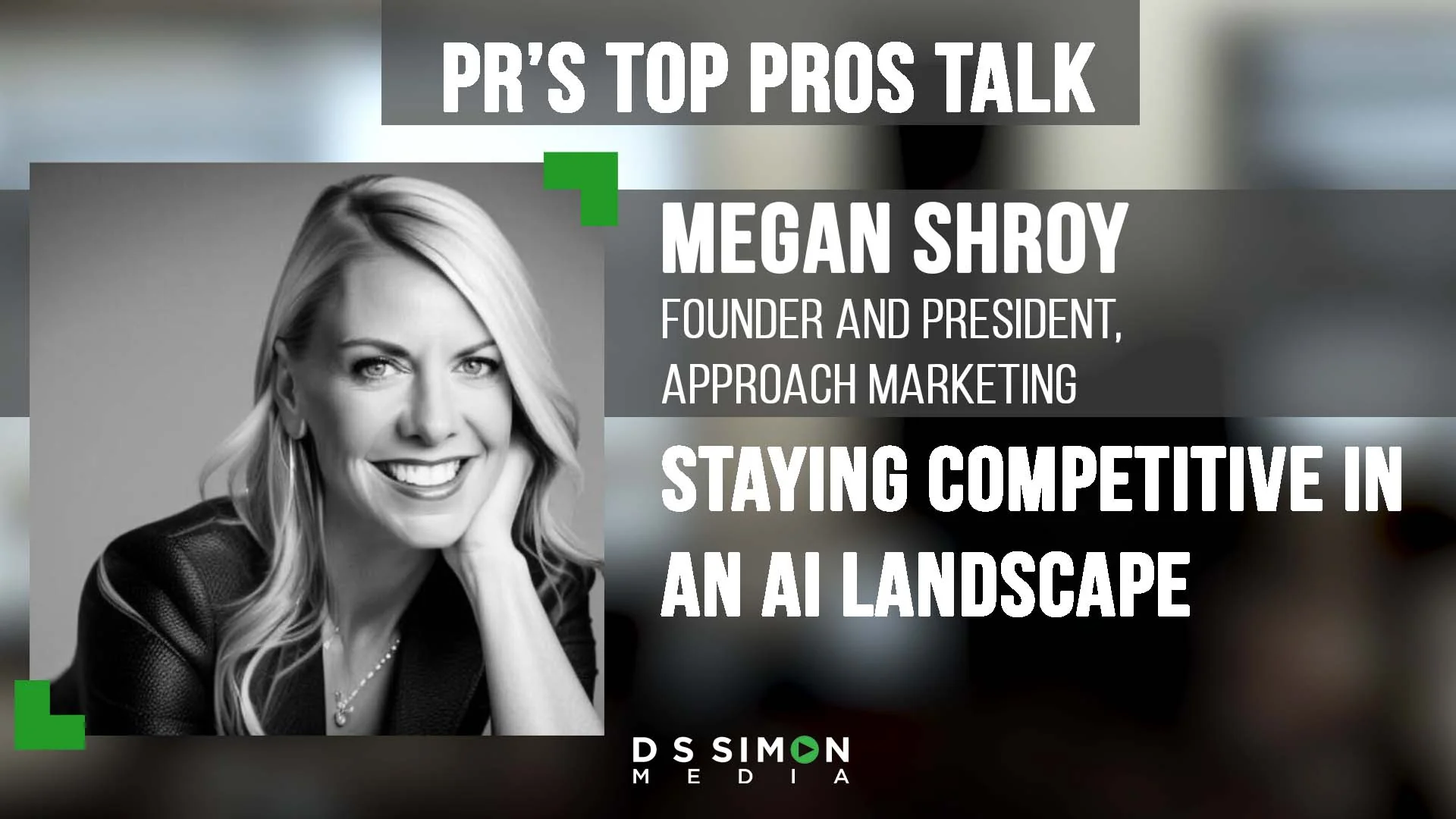
Staying Competitive in an AI Landscape
Image File
Original HTML

>> Listen to the episode on Spotify, Apple Podcasts, and others.

TRANSCRIPT:

DOUG: Megan, let’s start off how small agencies with can stay competitive and if AI plays a role. How can they be using it to stay competitive?

MEGAN: You know, one of the things that we’ve found, you know, over the last decade is small agencies’ ability to be nimble. And that’s at, of course, the direction of leadership. And it’s also just a function of not having many layers of management and oftentimes other factors that weigh into big agencies that, you know, play a role in how quick we can move. And so, I do think that at Approach, at least, we’ve been able to adopt AI much more quickly than some of our big agency counterparts as a result of that. I also think it has been an effort to jump in and experiment early. As we’re talking to our clients, you don’t have that ability, right? They wanted to get everything buttoned up first in a companywide position established, an enterprise platform established early on before people could start experimenting, but I found our approach a couple of years ago was like, let’s just try, experiment. Get comfortable using the technology. And so, I do think that that’s one of the reasons that small agencies have been able to level the playing field a little bit. We’re never going to have the resources that big agencies have. And so, that’s, of course, the challenge on the other side of that. And, really, we just have made an effort to say we’re going to make the investment because we know this is the direction that the industry is moving and we don’t want be left behind.

DOUG: Yeah. And so much about that is about the clients and how they interact as well. One of the things that you’ve taken a big step forward with is agentic AI, which we’ve covered on the podcast before. But you’ve actually built more than 80 custom AI agents for clients. Can you tell us about that process? And if there’s sort of a through line into the types of support you’re giving them with these agents?

MEGAN: Yeah. You know, one of the things we realized early on is that we weren’t going to be able to force our clients to adopt kind of generic tools. And as we were really pushing our clients in the direction of creating custom AI agents, we really had to sell the full story and talk through why they should care about this. So, yeah, we’ve created, you know, eighty plus. It’s probably more now, custom AI agents for clients. It started with an agent stack that every single client was going to get. Things that help us do our job better, easier, and more efficiently.

DOUG: What are some examples of that?

MEGAN: Yeah. So, like, trends spotting us as it relates to a specific client so that we’re getting you know, what are the reporters talking about this week in real time that relates to our clients? So, like, a lot of things that, you know, help us create custom content for them every single week, that’s going to automatically get fed into the inboxes of their team. We actually have five in that stack, different agents that we require our client experience directors to build and customize for their clients, but what’s been really cool is then the ability to have, you know, higher level conversations with clients and say, what are the things that you care about? Where are your feet being held to the fire? And that’s when we’ve gotten really creative in what we’ve been able to create. And for me, as a PR practitioner and someone in comms, it’s always been really, really difficult for us to tie our results directly to business outcomes, right? You know, we’re not doing performance marketing. And so, it’s difficult for us to do that, and our clients are very used to measurement in that way. And so, for me, that’s where we’ve really pushed our clients to go is to say, okay, how much of your data can we access? Can we get all the sales data? Can we get foot traffic walking into your locations? Because then we can get pretty creative with building agents that are going to help us link our efforts to that. To give you a specific example, we work with a multi-location client that was open to giving us access to everything. They’re like, you’re working in a protective environment. We’re really comfortable with you getting our daily sales reports. We’re comfortable with you getting everything that we have access to as far as sales in real time. And we’re implementing a pretty large scale community engagement program for them. So, if we’re doing, you know, really micro events in the neighborhoods that they operate in across the country, and what that has allowed us to do is be more nimble in our strategy with what’s working in real time. So, this agent will spit out a report every single day that says, okay, maybe we had thirteen different events across the country yesterday, and what showed ROI, what we spent, how long people stayed in there, what their food and beverage totals were. And so. we can say, okay, gosh, These type of events are performing way better than these. Let’s scrap, you know, all of the, sports sponsorships next month and really lean more into bar crawls or whatever it might be. And that’s what I think has been exciting with customizing these is when the clients get excited about it, they’re on board and they’re like, this is going to help us get a better ROI out of this program, and, you know, we’re willing to adapt and change in real time and say, like, this strategy needs to kind of evolve with us based on what we’re seeing. And that’s been exciting. It’s been really cool.

DOUG: Two of the topics that come up are both somewhat related. One is adoption within your employee base and client base, and the other is compliance issues. How do you navigate those issues?

MEGAN: Both great questions that we talked about early on as we were investing in our AI approach and building our AI strategy. At the time, a gentleman who sat on my advisory board was, you know, starting an AI firm, talking to us a lot about where we should go. And one of the things he kept bringing up is change management. And you almost need to be an expert in change management with this big of a transformation in your industry. So, we really did take a thoughtful approach to adoption, right? We have a senior level team. It’s one of the value propositions that we tee up to our clients. And what that means is, you know, they’ve been doing this for multiple decades, and they have their ways of doing things. And I get it. Changing, the way that you go about, you know, your everyday work can be frustrating, particularly when it involves learning a new technology that you might not fully understand and you certainly don’t know, you know, how to use.

DOUG: Other than that, it’s pretty easy to do it.

MEGAN: Yeah. I mean, right. I think that any anytime we’re going through a transformation like this, especially when people, you know, feel a little bit threatened by AI. And, you know, we’ve all heard it’s coming for our jobs. You know, as writers, as creators, AI can, you know, do a lot of the things that we have historically been doing. And so, we tried to take a thoughtful approach to this. We’ve tried to make it fun, and we’ve also, you know, put process and standard operating procedures around the way that we use AI to help people adopt. I’ll give you some examples. So, you know, I mentioned that custom stack of AI agents that we require every single one of our client experience directors, our account leads, to build for their specific client, and then, you know, they’re responsible for, making sure that they’re holding the team accountable for using them. You know, these aren’t coders, right? These are, you know, agency folks, client experience directors, but we said, you’re going to take a first pass at this, and then the consultancy that we hired is going to come in and, you know, help you work through all the bugs. So, it got them, you know, rolling up their sleeves and getting their hands dirty, you know, within this orchestration platform to build agents. We sent out a power user list every single week, and we kind of stack rank people on who’s adopting this. We had town halls every weekend where, you know, the consultancy we’re using were there. People could come in and ask questions, but they also could, you know, bring some of those brand and client challenges that they’re talking about on the front lines, you know, of our client business and talk through, is there a solve for this? Is there a tool that could help us operate more efficiently and, you know, really utilize our team’s time to the highest and best use, you know, of the client? And so, things like that, I think, helped everyone, you know, dive into the, you know, pool head first. And still we’re learning, right? We’re still trying to get It better at this every certainly doesn’t happen overnight, but I do feel like we’ve kind of rolled up our sleeves and said like, this is the direction this agency is going, so, you know, like, get on the bus. We are going to be in this together. You asked another question too, and that was about policy. You know, we learned very early on, again, at the advisory of, you know, this gentleman who sits on my board that we needed to put together an AI usage policy. We needed to feel, you know, really strongly about making sure that our clients understand how we’re using AI. They understand how we’re using their data, that we’re working in a really protective environment. And so, you know, we did that early. We published it on our website. We communicated that to all of our clients. And now, you know, it’s a part of our standard master service agreement. It’s in every single scope of work that we sign with clients, and it protects the clients too, as well as us. And so, yes, I think that being transparent is a number one.

Class (B2B/B2C)
B2B
Ingest Status
Rewritten
Dedupe hash
d4611d3a995fcef128a4dd667b860651
Press Eligible
Yes
Press Eligible Reason
Discusses a PR agency’s use of custom AI agents and AI adoption for client business outcomes.
Source Name
D S Simon
Image URL
https://www.dssimon.com/wp-content/uploads/2026/08/Megan.jpg
Source Node
Content Hash (SHA-256, erste 32 hex)
afdbe6261ec8f0efcf91082008e925af
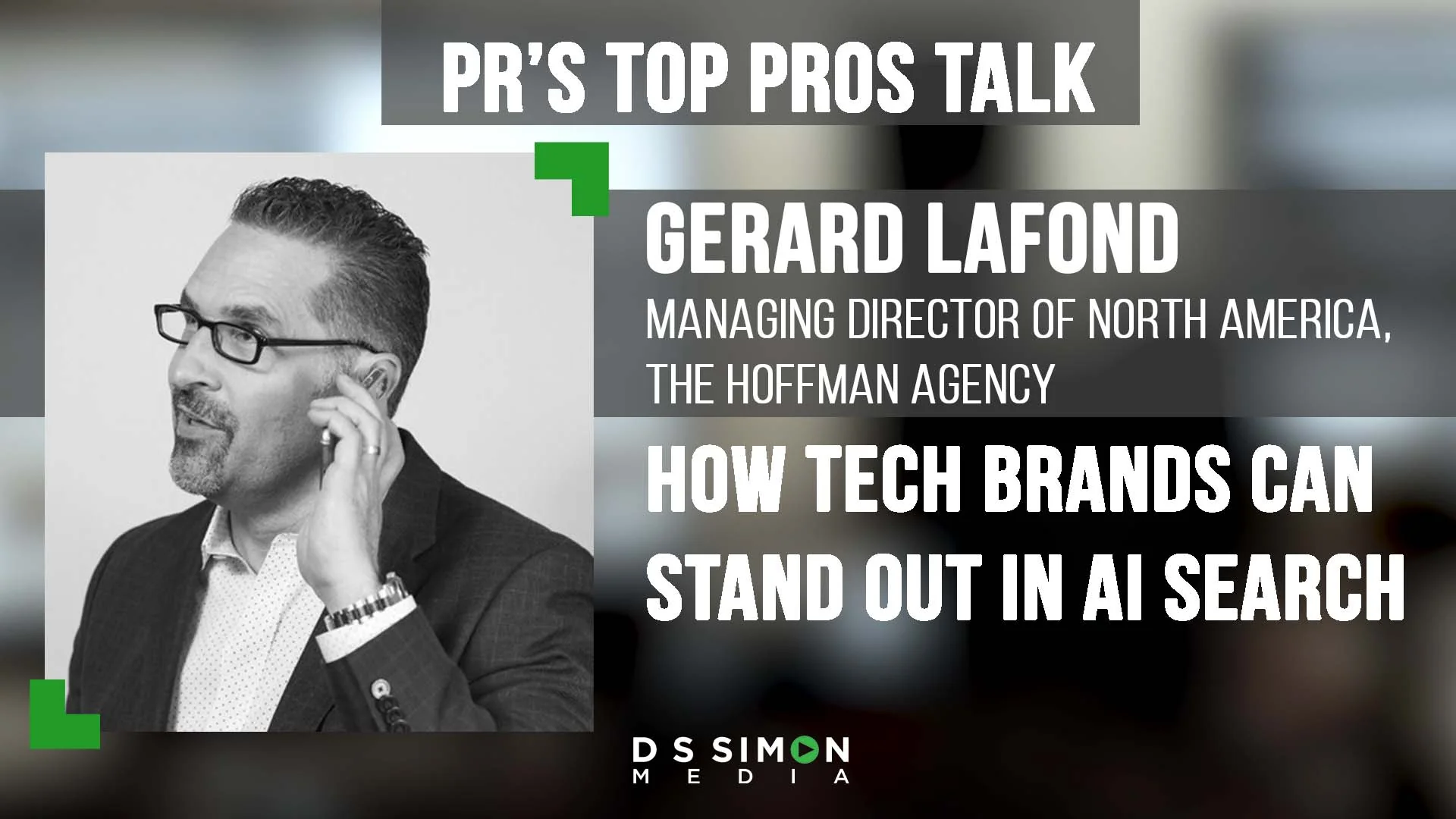
How Tech Brands Can Stand Out in AI Search
Image File
Original HTML

>> Listen to the episode on Spotify, Apple Podcasts, and others.

TRANSCRIPT:

DOUG: There are huge changes affecting companies in terms of how they’re going to be discovered, and we’re going to focus on that specifically in the tech industry. So, Gerard, let’s start off. What’s the biggest change you’re seeing in discoverability?

GERARD: I’m going to answer that question by mentioning one thing that hasn’t changed, and that is strong referrals. People sharing word-of-mouth is still a part of this equation, but the big thing that’s changing today is people are using AI to discover resources, vendors, products, and opportunities. And that’s where our agency has focused a lot of its attention lately.

DOUG: Yeah. And, obviously, one of my top areas is earned media. And earned media seems to have the pendulum swing back, holding the power. What’s going on with that?

GERARD: Yeah. So, years ago, when we were first talking about search engine optimization and the correlation between earned media, owned media, the copy on your website, and the blog that you created. We’re also having similar conversations today on how your content and your story are finding themselves in these large language models. And that obviously plays into discoverability because people are going there to find out answers.

DOUG: Yeah. And there’s been a tremendous increase in the percentage of searches, if you will, that are being done through the large language models. And it also has a growing role in business-to-business, where a number of the tech companies play these days.

GERARD: The Hoffman Agency is a business-to-business business. And, you know, oftentimes when people reach out to us asking about our services, I ask them, how did you hear about us? And I will tell you, over the last six to twelve months, over half of the people I’ve asked that question have told me, I went to AI. I used ChatGPT, or I went to Claude, and I asked it, give me the top ten tech PR agencies in Silicon Valley or in the United States or in Asia, and that’s how people are finding things. And back to your earlier point, Doug, it’s often earned media that is informing these large language models, and so that makes our role as a PR firm even more important today.

DOUG: Yeah. We’ve seen that with a number of leads coming in through ChatGPT. When we ask how they got that, you know, three years ago, guess what? That was a big zero on that. So, you know, technology brands always have to differentiate themselves, but now it’s about differentiating themselves for discoverability within these machines and large language models. How do that in such a competitive environment?

GERARD: Yeah. So, I think if we take a step back and we think about what’s going to land earned attention for these tech companies. And the obvious place a lot of the tech companies want to go to is our technology. Our technology is great. It’s fast. It’s small. It’s energy efficient and all those things. And yet that’s not really what the media is interested in, and that’s not so much what large language models are tracking. They’re tracking respectability. They’re tracking third-party validation. And so, when we try to connect all these dots, that’s what we do. That’s what an agency like us does. When we try to connect all these dots, we’re trying to put this technology story in terms of impact and how actual humans are going to be impacted by that technology. And when we do that, it seems to connect the dots across all of these different places that are becoming more important for discoverability.

DOUG: Are you looking to optimize those earned media placements? Not only thinking of, hey, let’s get a story, and it’s great that people are more focused on earned media and need that support. But the idea of: will this story then get picked up in large language models? And does that change how you’re coaching people? How you’re sharing with the media what the story’s about? I know it’s done that quite a bit on our end, but I’d love to hear from you first.

GERARD: What you’re talking about is how we used to think about SEO, right? Like keywords, phrases, and search terms. It’s a little bit different here, but it’s also very much the same. And what I mean by that is the language you’re using, the domain you’re talking about, is still really important, but the other parts of this are really about looking at where your competitors are being mentioned in large language models and why, and looking at that opportunity space for our clients. So, then we can target media. We can target the topics. We can target the types of stories that are actually informing these large language models. So, it’s a little bit of both of those things, Doug, and I think it’s ever-changing, and it’s changing super fast.

DOUG: Do you ever want to focus on where competitors aren’t necessarily being mentioned, as that might be a part of the playing field where you can show up and own that to yourself?

GERARD: Yeah. It’s fascinating, Doug. We’re looking at this playing field, this kind of emerging playing field over the last couple years, as an opportunity to differentiate in messaging. So, when we’re doing, you know, an updated narrative for a company, or we’re looking at their messaging and potentially thinking about updating it, a lot like what we did ten, fifteen, twenty years ago in SEO land, we’re looking at the opportunity space. Where’s the white space? How can we differentiate ourselves so that we’re not just another SaaS software solution?

DOUG: So, what are the tricks or approaches you’re taking to tell more compelling stories about tech and the clients you work with? What should people be thinking about when they’re trying to craft these messages and opportunities?

GERARD: Yeah. So, I recognize that not every brand is telling a tech story, but most brands are much more technical than they think. If you consider your brand innovative, you’re probably using technology in some way, shape, or form to get there. It could be in product development. It could be in how your employees are doing their jobs day in and day out. It’s how you’re manufacturing the widget that you’re selling in, you know, the corner store. All those stories are opportunities to, I think, tell a tech-led story in a way that connects to real people, real impact, and real businesses. And so, when I go back to what our advice to our clients is, it really hasn’t changed, Doug, because what works with the media, what reporters, editors, and producers are interested in, is the same thing that a lot of the large language models are interested in too.

DOUG: Your point about so many companies being engaged with tech even if it’s not at the core of their business. We saw a study from the US Chamber of Commerce about small businesses, and there was a huge number of them that were using different technologies. They were outperforming competitors and were more satisfied with how business is going. Is there anything that I guess I’m contradicting myself now, anything that sort of “not traditional” tech companies can learn about what you’re doing to help position tech companies more effectively in this new age of discoverability?

GERARD: There are a couple of things. And, again, this is also the kind of stuff that has been good, you know, storytelling for years and years, and that is using things like conversational language and creating contrast in your storytelling. You know, you said differentiate. We often just try to contrast what other people are saying to help differentiate, you know, a little drama, a little bit of levity, and then a lot of humanity. If we can use those elements in our stories, we can be successful in media relations, but that can also be helpful in making sure that the large language models pick this up. Because remember what we’re up against. We’re up against these large, you know, phrase-based prompts and questions. It’s not keyword necessarily. It’s conversational. And so, if you can start putting your company’s story and brand, whether you’re selling a soda or a semiconductor chip, if you can put that into conversational language, you’re more likely to show up and be discovered in these models.

DOUG: Well, it’s been great to speak to you as a master in conversational language. So, thanks so much for being part of the podcast.

GERARD: Thanks, Doug. Thanks for having me.

Class (B2B/B2C)
B2B
Ingest Status
Rewritten
Dedupe hash
97d505a9b4424a19fb025f48a9289d2a
Press Eligible
Yes
Press Eligible Reason
Discusses how technology companies can improve discoverability in AI search and the role of earned media and PR.
Source Name
D S Simon
Image URL
https://www.dssimon.com/wp-content/uploads/2026/08/GL.jpg
Source Node
Content Hash (SHA-256, erste 32 hex)
8192a52475e840727a022a87bdd801bb
Lawyers for Industrial Accident Victims
Image File
Original HTML

The Horn Law Firm, P.C., lawyers who concentrate in claims for serious injury, have an extensive track record of success in representing people who have been injured in various types of work-related accidents, including those that happen in manufacturing facilities, plants, and factories. If you or a family member has been injured on-the-job, the injured person is likely entitled to state worker compensation benefits. Additionally, injured workers may also have claims against other responsible parties. We encourage you to contact Lead Attorney Doug Horn as soon as practical after a work injury to consider all of your legal options.

Common Types of Industrial Accidents

Over the years, Horn Law has handled a variety of industrial accidents related to:

- Injuries caused by unsafe, hazardous, or defective machinery or conditions

- Accidents resulting from the fault of a contractor, supplier, or other responsible parties

- Injuries to the head, neck, back, chest, mid-section, or extremities, including those resulting in burns, fractures, nerve damage, amputation, and disfigurement

Ask A Question,

Describe Your Situation,

& Get Immediate Help

Contact Us & We’ll Guide You Through Your Next Steps!

Required Fields*

Your Information Is Safe With Us.

We respect your privacy. The information you provide will be used to answer your question or to schedule an appointment if requested.

Free Legal Consultations

If you or someone you know has been injured in a motor vehicle accident, alert Lead Attorney Doug Horn to the case at 816-795-7500. Horn offers free legal consultations. In addition to telephone consultations, Horn offers office, home, and hospital consultations to provide aid to clients at a convenient location.

As rapid response attorneys, early legal consultation is a priority with Horn Law. An early start allows us to take care of our clients’ immediate issues, including legal, investigative, insurance, and financial questions that arise in nearly every car accident claim.

Close & Convenient

The Horn Law home office is in Independence, Missouri, near I-70 and I-470 (across the street from Costco).

In addition to our home office, consultation offices are located in both Lee’s Summit and Liberty in Missouri, as well as Overland Park, Kansas.

Horn Law At Work

Right from the start, Horn Law will devote our full professional abilities, resources, and experience to obtain a maximum legal recovery. This work is complex, and at a minimum, requires securing important evidence, litigation, and advanced settlement negotiations. Below are our areas of concentration with respect to industrial accident cases. Falls: Falls are the most common industrial accident and the most common cause of death and injury among industrial and factory workers. While safety measures such as hard hats have reduced the damaging effects of falling in some cases, there is still a great danger posed to workers who are completing tasks at high elevations or on slick surfaces. Because of the heights involved in many falls, workers do not just face the risk of severe injury, but also face the risk of death. Potential liabilities include:

- Failure to provide proper equipment, including safety equipment

- Failure to provide appropriate training and supervision

- Failure to accurately assess risks

- Failure to maintain lifts and other elevated surfaces

- Failure to remedy potentially dangerous conditions

Machine Guarding Accidents: Poor or improperly installed machine guarding can lead to serious injury or death. Many high-powered industrial machines weigh several tons and can easily entangle fingers, hands, arms, legs, feet, or hair. Because heavy machinery generates such force and energy, many of these apparatuses have machine guards to help protect workers from moving parts, sparks, and ingoing nip points. When these guards fail or are improperly utilized, an industrial worker immediately faces danger. Guards can cause injury or death, first, when they are improperly used. Many of the guards in place over factory devices can be lifted or removed. If these guards are removed before shutting off a machine, uninstalled after a machine repair, or altered while a machine is at work, workers are exposed to hazards. Potential liabilities include:

- Failure to maintain guards

- Failure to update defective guards or outdated technology

- Failure to provide appropriate training

- Failure to warn inspectors or maintenance crew of risk

- Failure to lock out the machine when not in use

- Failure to provide protective equipment

Toxic Chemical Exposure: Toxic chemical exposure is one of the leading causes of severe injury and death amongst industrial workers because it is not easy to spot until it is too late. Chemicals like ammonia, chlorine, and sulfur dioxide are highly dangerous yet can be a part of the outcome of the production process for many factories. Modern technology has made these and other chemicals much easier to monitor, yet they still pose a significant risk to those working around them. Chemical and drug manufacturing, metal fabrication, and petroleum processing make up more than 90% of all industrial waste in the United States and are highly-regulated processes. However, the guidelines and regulations set forth for the handling of these dangerous substances are not always followed correctly. Potential liabilities include:

- Failure to properly and compressively assess chemical risk

- Failure to provide proper fumigation and output systems

- Failure to train employees to identify any signs or symptoms of chemical exposure

- Failure to provide personal protective equipment

- Failure to maintain, inspect, and review operations protocol

- Failure to remain updated on any new regulations or developments on chemical exposure

Vehicle Accidents: Forklifts, lift trucks, and other work vehicles are highly dangerous if not handled properly or inspected regularly. Like machines, these industrial trucks generate high amounts of force and energy, making them risky to those who operate them. Thorough training and regulation of such vehicles are necessary to ensure the viability of their operation. If corners are cut during the training or maintenance processes for these trucks, their operators are exposed to great danger. Potential liabilities include:

- Failure to appropriately train operators

- Failure to update and repair trucks

- Failure to provide specific truck safety training

- Failure to abide by weight/capacity regulations

- Failure to use a vehicle for intended purposes

Electrical Hazards: There is a myriad of safety issues surrounding the exposure to and use of electricity. Because its use is so commonplace in industrial environments, there are plenty of well-defined regulatory measures. These measures must be followed strictly, however, because death is certain with high-voltage operations. Unfortunately, many accidents can still occur despite the implementation of some safety measures. Exposed wires (especially near areas of standing water), open electrical panels, faulty switches, and more can expose serious danger to even the safest of workers. Potential liabilities include:

- Failure to appropriately train electrical operators

- Failure to provide a safe working environment for electricity

- Failure to identify unique risks to wires, etc.

- Failure to utilize correct lockout/tagout protocol.

- Failure to repair or maintain wires, panels, and switches

- Failure to comply with voltage or energy regulations

Lockout/Tagout Incidents: Electrical, mechanical, chemical, and hydraulic energy sources can be hazardous to workers in and of themselves. During the servicing and maintenance of machines and equipment, the unexpected startup or release of stored energy can result in severe injury or death to workers. Ensuring that industrial workers are following proper startup and shutdown procedures can be essential, preventing serious injury and death. General procedural training and device-specific should be given to all operating workers. Potential liabilities include:

- Failure to provide training on a uniform lockout/tagout process

- Failure to sufficiently inform employees of lockout importance

- Failure to warn any repairmen or inspectors of any dangers

- Failure to identify and alert managers of any machine issues related to lockout/tagout

Confined Spaces: Small, enclosed areas inherently represent a threat to the safety of industrial workers. In particular, such spaces can furnish very low levels of available oxygen, which can lead to suffocation. Because some of these tank-like spaces may also not provide any visual on a worker, it is necessary to follow and abide by a strict safety protocol thoroughly. If a worker is without oxygen for longer than a few seconds, asphyxiation and unconsciousness can pose a severe and even deadly risk. Further, such states also produce severe injury from falling, especially when working around hard metal and aluminum materials. Potential liabilities include:

- Failure to identify confined spaces and assess their risk

- Failure to train employees on confined space procedures

- Failure to alert inspectors/maintenance personnel that space is confined

- Failure to implement a uniform, consistent emergency protocol for confined space risks

Uncontrolled Fires: Uncontrolled fires are a common form of industrial workplace accidents. Because many factories and industrial manufacturing facilities utilize gas and other flammable materials, an unchecked pipe or unreviewed safety measure could send the factory into flames if an accident were to occur. Moreover, combustion reactions are common for several factory processes. This paired with the immediate threat of flammable materials calls for extreme measures to be put in place. Even small fires can lead to damaging burns, loss of vision, lung damage, and other injuries.


Class (B2B/B2C)
Ignore
Ingest Status
Need Review
Dedupe hash
2305b6787b9bf7295f387a62bf77a185
Press Eligible
No
Press Eligible Reason
Irrelevant (need review): Law firm promotional content soliciting clients for injury claims and legal consultations.
Source Name
The Horn Law Firm, P.C
Image URL
https://hornlaw.com/wp-content/uploads/2025/10/industrial-accidents-img-1.webp
Content Hash (SHA-256, erste 32 hex)
6ecf2a51b59ff129115e597a2d279d7e
Motor Vehicle Crash. Work Accidents.
Original HTML

Motor Vehicle Crash. Work Accidents.

We are a rapid response injury law firm offering same hour legal representation.

Immediate Help

Highly Rated and Reviewed on Google

Message From Lead Attorney Doug Horn

“For over 30 years, my job has been to protect the injured by zealously pursuing fair, full, and maximum injury settlements and awards for our clients”, notes Lead Attorney Doug Horn. “The legal representation of an injured person carries a special responsibility. It must be detailed and account for all the different ways the injury has affected our client’s life.”

Horn Law’s Track Record

Because selecting a personal injury lawyer and law firm is an important decision, we invite you to visit our Track Record page. This page is constantly updated with our most recent results, highlighting our effective focus on early legal work to pursue fair and full injury settlements for injury victims throughout Kansas City and surrounding areas.

Ask A Question,

Describe Your Situation,

& Get Immediate Help

Tell us what happened, ask a question, or request your rapid-response free case evaluation. Our legal team is ready to help. Contact The Horn Law Firm, P.C. Today for Same Day Legal Representation. Call (816) 795-7500 now for immediate help.

Required Fields*

Your Information Is Safe With Us.

We respect your privacy. The information you provide will be used to answer your question or to schedule an appointment if requested.

Class (B2B/B2C)
Ignore
Ingest Status
Need Review
Dedupe hash
00ec7f3bf0e4f783a1f6769ce862e38a
Press Eligible
No
Press Eligible Reason
Irrelevant (need review): Personal injury law firm promotion soliciting clients for legal representation.
Source Name
The Horn Law Firm, P.C
Content Hash (SHA-256, erste 32 hex)
aaa4e4ae6d369ae3c280c981cbd3668f
Attorney Douglas R. Horn
Image File
Original HTML

“My responsibility is to obtain fair, full, and maximum settlements and awards for our injured clients, compensation that accounts for all the ways the injury has affected their past, present, and future.”

Douglas R. Horn is the Lead Attorney of The Horn Law Firm, P.C. where he exclusively represents persons injured in motor vehicle collisions, work & industrial accidents, premises liability, and accidents resulting from general negligence.

Since 1991, Horn has handled a wide variety of personal injury matters with a special emphasis in cases that involve more serious injury to adults and children who require extended medical treatment and rehabilitation.

As a highly rated and reviewed lawyer, Horn has a 30+ track record of maximizing personal injury settlements and awards for his injured clients.

In addition to his law practice, Horn regularly gives personal injury law presentations for national attorney audiences, including those that are focused on head, neck, back, and spinal injuries resulting from car, truck, and motorcycle collisions.

During the course of his legal career, as his practice has increasingly concentrated in motor vehicle accident law, Horn has developed an expertise in a range of traffic safety issues. Beginning in 2009, Horn has used his legal experience to advance driver safety, particularly in the areas of teen driver protection, distracted driving prevention, and traffic fatality reduction.

Horn is a member of a number of professional organizations, including the Multi-Million Dollar Advocates Forum which recognizes America’s top trial lawyers.

Born and raised in Cleveland Heights, Ohio, Horn earned his B.A. from Wittenberg University, Springfield, Ohio, and his J.D. from Capital University Law School in Columbus, Ohio.

For more information, visit Doug’s Linkedin profile. Visit Link

Attorney Douglas R. Horn

Lead Attorney

Ask A Question,

Describe Your Situation,

& Get Immediate Help

Contact Us & We’ll Guide You Through Your Next Steps!

Required Fields*

Your Information Is Safe With Us.

We respect your privacy. The information you provide will be used to answer your question or to schedule an appointment if requested.

Message From Lead Attorney Doug Horn

For over 30 years my job has been to protect the injured by making sure our clients receive fair, full, and maximum personal injury settlements and awards.

Right from the start, when an injured person alerts me to their case, my priority is to take care of the immediate issues, handle the claims adjusters, initiate the legal investigations, and secure the important evidence.

Because injury claims can be complex, the legal representation of an injured person carries a special responsibility. The representation must be detailed and account for all the different ways the injury has affected our client’s life, including the past, present, continuing, and the longer-range consequences of the injury.

Since 1992, this is the approach that we have taken to earn high marks from our clients and how we measure success in every case.

Latest Motor Vehicle Accident Articles

Explore selected articles already published by Horn Law about accident investigations, serious injuries, insurance claims, settlement preparation, and the legal process.

When Does Uber’s Insurance Cover a Driver Waiting for a Ride in Missouri?

Your Uber Crash Claim Depends on Coverage During the App-On "Waiting" Period Key Takeaways: Missouri…

Douglas "Doug" Horn

October 21, 2026

What Counts as Flagrant Disregard in a Missouri Car Crash Claim?

When Reckless Driving Becomes Grounds for Punitive Damages in Missouri Key Takeaways: In a Missouri…

Douglas "Doug" Horn

October 17, 2026

Why Serious Teen Crash Settlements Over $35,000 Need Court Approval in Missouri

When a Teen’s Crash Settlement Needs a Judge’s Signature Key Takeaways: In Missouri, a settlement…

Douglas "Doug" Horn

October 13, 2026

What should I do after a car accident in Kansas City if I feel injured but didn’t go to the hospital right away?

Many people don’t recognize the full extent of their injuries until hours or even days…

Douglas "Doug" Horn

November 4, 2025

How do car accident attorneys handle insurance companies that try to reduce settlement offers?

Insurance companies often look for ways to minimize what they pay out, especially in cases…

Douglas "Doug" Horn

November 4, 2025

What types of injuries qualify for a personal injury claim after a vehicle accident?

A wide range of injuries may provide grounds to pursue a personal injury claim. These…

Douglas "Doug" Horn

November 4, 2025

Can I still pursue compensation if I was partly at fault for the accident in Kansas City?

In Missouri, accident victims may still seek compensation even if they were partially responsible for…

Douglas "Doug" Horn

November 4, 2025

What makes work injury claims different from other personal injury cases?

Work-related injuries, such as those from construction accidents, warehouse incidents, or industrial hazards, often fall…

Douglas "Doug" Horn

November 4, 2025

Ingest Status
Rejected
Dedupe hash
f6218853cc52a685f79ea0a96ec9283e
Press Eligible Reason
JSON nicht lesbar - manuelle Pruefung noetig: Inhalt konnte nicht als JSON geparst werden
Source Name
The Horn Law Firm, P.C
Image URL
https://hornlaw.com/wp-content/uploads/2025/10/Douglas-R.-Horn-1.webp
Content Hash (SHA-256, erste 32 hex)
90c2caf3b83b773f827978c5cd64603a
You Can't permission your way out of Surveillance at Scale
Image File
Original HTML

Palantir's institutional sovereignty pitch is real. So is the depth, sensitivity, and reach of the citizen data it now touches across allied governments.

TYSONS, Va., Sept. 24, 2026 /PRNewswire/ -- Permuta Technologies today published the 3rd in a Series of Whitepapers focused on AI and government, "You Can't Permission Your Way Out of Surveillance at Scale," examining the structural risks of AI enabled, government facing data fusion at national scale. The whitepaper responds to Palantir's "Institutional Sovereignty in the Age of AI" framing by arguing that while protections like zero data retention, model agnostic architecture, granular permissions, and continuous audit logging are important for third party model providers, they do not address the separate and higher stakes risk that a single vendor ontology can concentrate deeply sensitive citizen data across agencies such as immigration, tax, health, and defense. Using the UK NHS Federated Data Platform as a cautionary example, the paper concludes that sovereignty is determined at adoption, and that permissioning and logging can monitor concentration but cannot undo it once it exists.

"AI controls are necessary, but they cannot substitute for structural limits on how and where government data is fused. The key decision is made before signing, said "Sig Behrens, CEO of Permuta, "and that is why the 3rd Whitepaper demands early exit mechanisms, enforceable architectural separation, and hard evaluation of concentration risk, not just model provider risk."

About Permuta Technologies

Permuta Technologies is a readiness software company delivering mission critical solutions to federal, defense, and government organizations. Built on Microsoft technologies, Permuta's platform enables organizations to put the right people in the right place at the right time.

SOURCE Permuta Technologies, Inc.

Share this article

Class (B2B/B2C)
B2B
Ingest Status
Rewritten
Dedupe hash
1aeeea382ee317787c3e02b99979419d
Press Eligible
Yes
Press Eligible Reason
Company-published whitepaper on AI, government data systems, and technology risk.
Source Name
Permuta Technologies, Inc.
Image URL
https://mmx.prnewswire.com/media/MS1520715/Permuta-Logo-ID-1e5a5127d67f-Logo.jpg?id=OA2970075&p=facebook
Content Hash (SHA-256, erste 32 hex)
1854c6ec11efd67e976831d76170b5e8