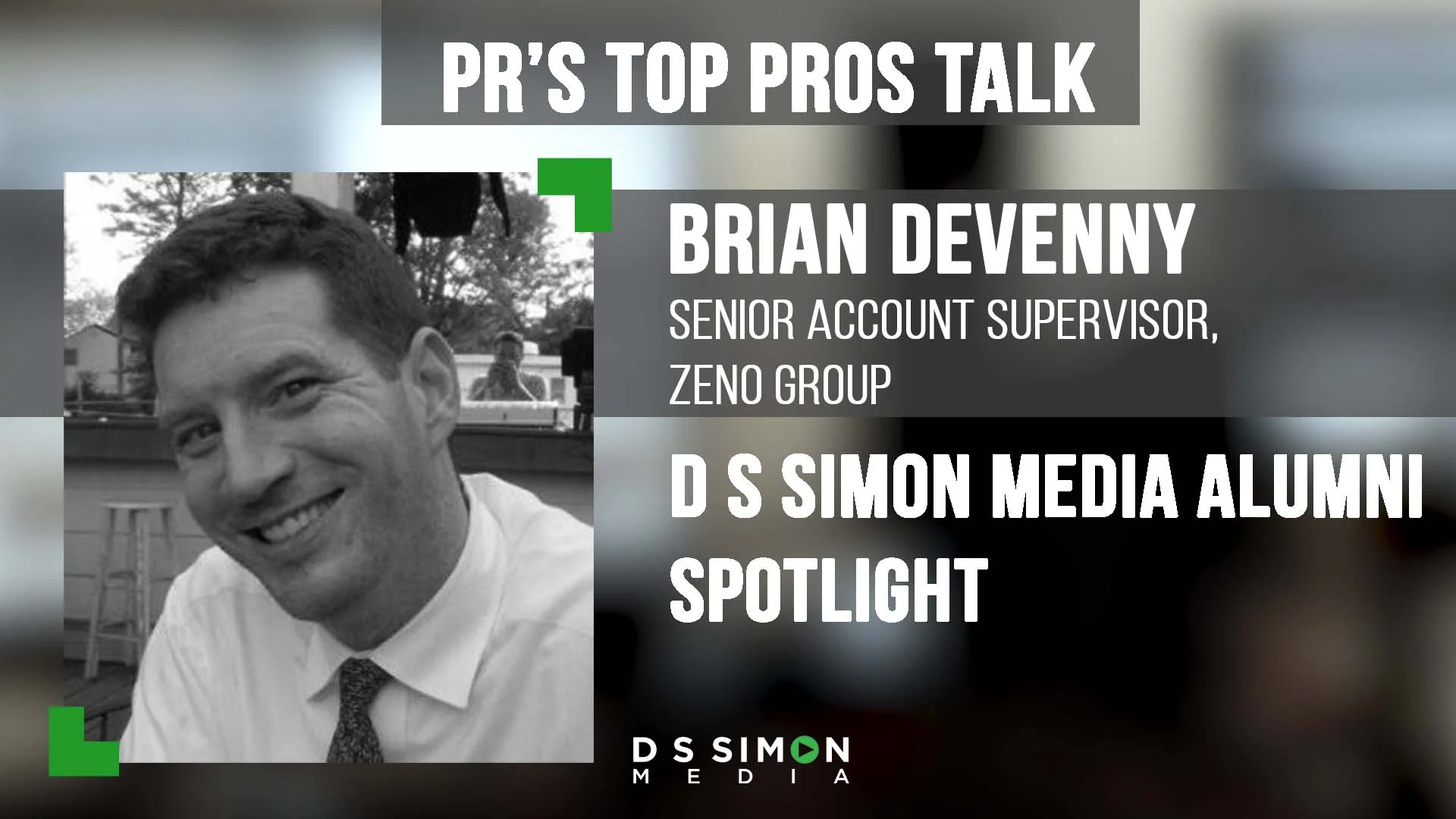
D S Simon Media Alumni Spotlight: Brian Devenny
Image File
Original HTML

Listen to the episode on Spotify, Apple Podcasts, and others.

TRANSCRIPT:

DOUG: We love the people who work with us, but we also love and recognize the contributions of the people who’ve passed through and gone on to bigger and better things. One of them joining us, Brian Devenny. Brian, it’s great to see you.

BRIAN: Good to see you, sir. How are doing?

DOUG: Doing great. So, let’s start off, maybe share a little bit about the work that you did while you were here at D S Simon Media.

BRIAN: I was the director of media relations at D S Simon during the seven years I was there from 2006 to just about 2013. And I led media strategy across a variety of projects. I think the biggest week we ever had when I was there was 17 SMTs in one week. So, it was always a very fast paced environment, very quickly moving, things changing on the fly, but it was a great experience. It was a great team, ultimate professionals, and everybody had sort of their role, and everybody knew exactly what they needed to do in order to make a project successful. I can’t remember one instance in my tenure there that that didn’t happen.

DOUG: We did manage to break that record with 20 in one week. And now, of course, we call them AI-Powered Broadcast Media Tours™ because they’re also optimizing for GEO. But, you know, one might think hearing this or suspect in my own bias is, like, where could you go from there? But somehow you managed to go. Tell us about, you know, what you’ve been embarked on more recently in your career.

BRIAN: Yeah. So, after my time at D S Simon, I actually moved from, New Jersey to California, and I now work at Zeno Group, which is international, actually. And I’ve been working on the Kia account for, just over ten years. So, it’s been great. I’m dedicated to one client, so it’s very different from my time at D S Simon, but it’s really cool.

DOUG: Yeah. If you want to add a feather in your cap, you can let them know that we have a Kia and thought of you when making that Kia Sportage purchasing decision, which was a good thing. We’re also doing as part of our anniversary series is getting people’s take on what stayed the same in the industry, what’s changed and what’s next. So, let’s start. You know, since you started your career in PR, what do you feel has still remained consistent?

BRIAN: The basic tenants of media relations, emails, calls to follow-up. The one thing that has changed a little bit about that, sometimes I’m able to text producers and editors. Whereas when I started out, I wasn’t able to, but it’s really those core, tenants of media relations of building that relationship with the media, so that way they trust you when they see an email with your name on it. They’re like, oh, this is probably a good story. You know, let me take a look. And they don’t just automatically put you in the junk bin or the, you know, to be read later bin.

DOUG: That is great. And, obviously, much has changed even from when you started with us in the early 2000s.

BRIAN: A lot’s changed. The biggest changes that I’ve seen in the industry are social media and now AI. Those are the two biggest changes because social media has really brought in a whole other level of media relations that, some old timers like me had to get used to, because we were used to dealing with the traditional newsroom. And now we’re dealing with journalists, very accredited journalists who are now working from home. And they don’t have the power of a big newspaper, a big TV station, or a radio station behind them, but they are just as influential as the folks in you know, at FOX in Detroit or any other market. So, that was one of the biggest changes. The team that I work on now has someone specifically dedicated to influencer and social media outreach. So, I’ve learned a lot about it, but I need to learn more.

DOUG: And I’d say one question with what you said. I think I can refer to you as a mid-timer, not an old timer. We want to be gracious to the people who pass through. One thing I struggle with is even the what’s next because we’re so deep in the now with AI transforming. Do you see what’s next?

BRIAN: Can you see that ahead? I do see what’s next. I do think AI is going to definitely play a role in communications moving forward and brand communications moving forward. I don’t know how much of what it will play. I think it was really sort of a novelty when it first came out, and people were very interested in it, but then I think people got kind of keen to it. Well, that’s clearly a fake image, and I think they don’t really trust it. So, it’ll be interesting to see how that evolves in the future.

DOUG: Yeah. We’re seeing the big changes. It gives us a better sense of identifying the questions people are asking that are relevant about the product. And that’s what it was always about when you were writing media pitches and developing story ideas. Hey, what’s the info people need to know? And now we’ve got the person who can answer it. What hasn’t changed also? You look the same, looking great. Congratulations.

BRIAN: I have filters on my computer.

DOUG: Congratulations on the success and all you’ve achieved. We know you’ve played a key role in helping us be where we’re at today. So, thank you so much.

BRIAN: I learned a lot working with you guys, and it really helped me hone my media relations skills. It gave me the power to be adaptable on the fly because we were working with so many different clients at the same time at D S Simon. We had to adapt to the client way of communication. So, some were more casual, some were very much indeed more formal. So, it was definitely made me more adaptable, and, you know, I think just a better professional overall.

DOUG: Yeah. Well, thanks so much for your generosity.

BRIAN: I appreciate you guys. Congratulations on your 40th anniversary, and cheers to 40 more.
Class (B2B/B2C)
B2B
Ingest Status
Error
Dedupe hash
1bba6c9d4b4228889c1f70b41c134ac7
Press Eligible
No
Press Eligible Reason
Drupal Push 422
Source Name
D S Simon
Image URL
https://www.dssimon.com/wp-content/uploads/2026/09/Brian.jpg
Source Node
Content Hash (SHA-256, erste 32 hex)
5cd5ce2d8409925620f1348170f791ff
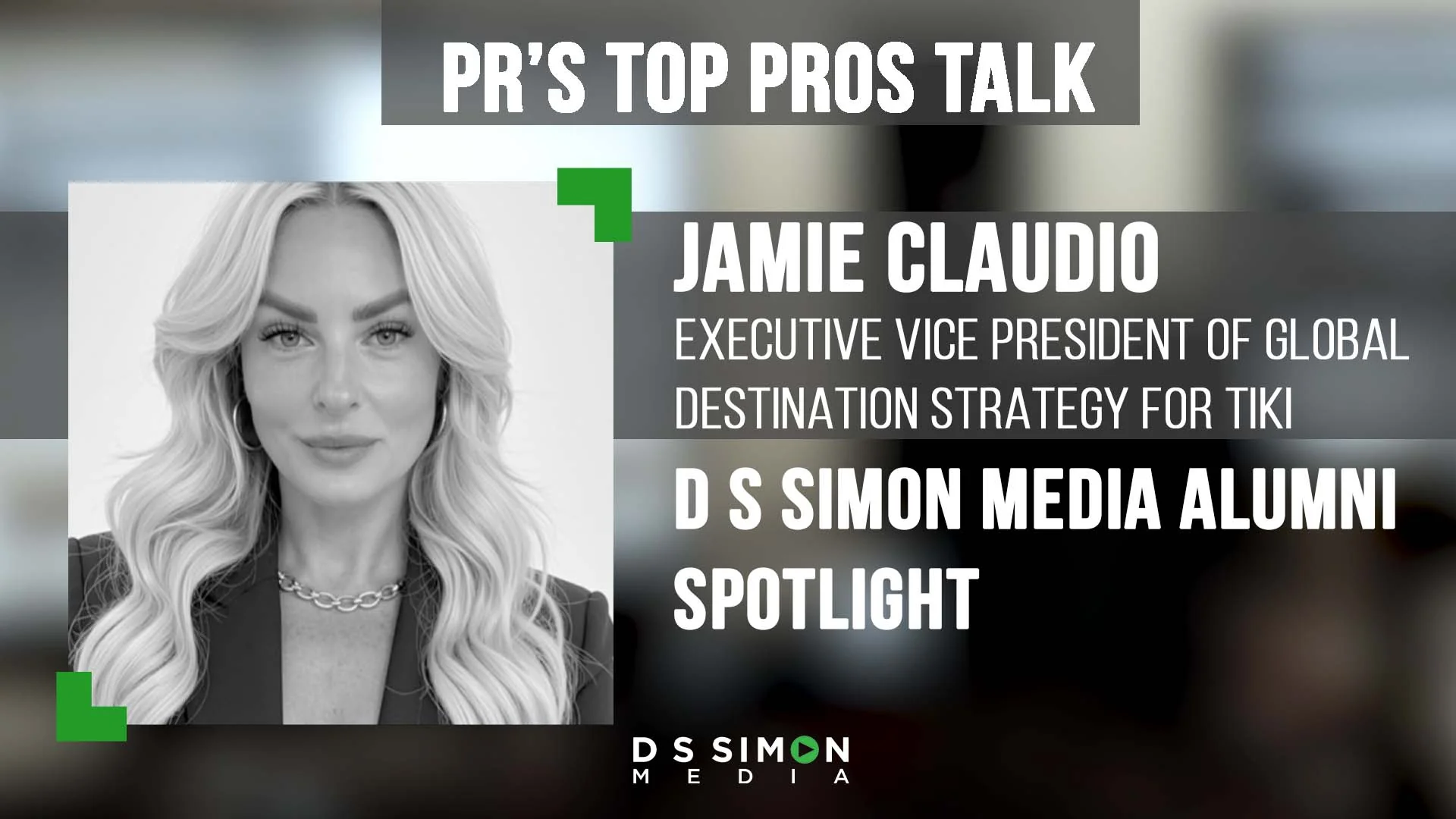
D S Simon Media Alumni Spotlight: Jamie Claudio
Image File
Original HTML

Listen to the episode on Spotify, Apple Podcasts, and others.

TRANSCRIPT:

DOUG: As part of our 40th anniversary series, we’re reaching back to some remarkable people who passed through the company and have gone on to achieve greatness elsewhere. As you know, I take great pride in the fact that our average employee tenure is twelve years, but it’s also wonderful to know how many of them have been able to succeed going forward. And Jamie Claudio is a great example. Thanks for joining us.

JAMIE: Thank you, Doug. It’s a real pleasure to be here with you today.

DOUG: So, let’s start when you started at D S Simon Media. Why don’t you share some of your experiences that you had here?

JAMIE: Yeah, absolutely. It was kind of fun strolling down memory lane. You know, when you reached out to me, I kind of got all those memories going and thinking about my time with you and the company. I started with you in 2010. You were my very first job post-college, so my first adult big kid job, whatever you want to call it. And I started as the assistant to the CEO. So, that was my first time kind of clocking into a real office environment and learning kind of the early professional ropes. I left in 2014, so 4 years later, as the executive producer for what then was the satellite media tours and radio media tours. I would argue it was the most fun position in the company, but it was a real opportunity to grow through all of these iterative stages with an incredibly supportive, smart, and successful team. And it really launched the rest of my career, certainly.

DOUG: Yeah. And you’ve achieved incredible heights. Do you share what you’re doing now?

JAMIE: Yeah, absolutely. Thank you. So, it’s funny, I was telling Eric this story. So, one of the things that I really took away from D S Simon Media and not only starting my career, but it changed the trajectory of my career. I will never forget, we did a satellite media tour for National Geographic. And I think they had just released there, you know, 100 best places to visit or something like that. And, you know, we had the spokesperson in, and they were talking about destinations, places you could experience. And it was so impactful to me because I was like, oh my gosh. We can talk about places to travel to that can change perceptions, you know? I mean, this is really powerful stuff. I don’t ever want to talk about laundry detergent or men’s razors again, right? So, I knew of because that experience that I wanted to head into destination marketing and working in travel and tourism, which is exactly where I ended up today. So, I am the Executive Vice President for Global Destination Strategy. We’re an advertising technology firm called Tiki out of Hermosa Beach, California, and we specialize in building AI and generative engine optimization products specifically for destinations and travel brands.

DOUG: Yeah. It’s so impressive what you’ve been able to accomplish. Now, as part of our series, we’re also asking people for specific take something. So, what hasn’t changed since you started your career in PR and marketing?

JAMIE: You know what hasn’t changed? It’s the art of the pitch. It is still about the person on the other side that you were trying to reach, right? The journalist, the earned placement, or whatever that looks like. It’s about that connection. It’s not the product. It’s about building the pitch and the story that’s going to resonate for that audience. I think, you know, technology has really changed the who and the where, but it’s never going to change the why they said yes, right? So, specificity is always going to beat volume, and trust and relationships are always going to be the real currency.

DOUG: Yeah, and you’ve touched on it there. What are some of the things obviously, there’ve been so many that changed. What’s maybe one that you want to pick out that’s really just affected you and you found important?

JAMIE: Generative AI has really reshaped PR kind of top to bottom not only in pitching, but also in discovery. I mean, the notion of pitching for generative engine optimization, that’s emerged as a real discipline now. And I think there’s a huge opportunity for PR practitioners, right? Because audiences aren’t passive readers or passive viewers anymore. They’re participants, they’re commenting, and they’re sharing. Those things can outrun the potency of the original story. So, how we’re crafting has become very different.

DOUG: How you’re crafting continues to grow and make a difference. And, you know, thank you for the time you spent at our company and for staying in touch all of these years, and congratulations to you on the success you’ve achieved.

JAMIE: Thank you very much, Doug. It’s always a pleasure and I will always, always hold D S Simon Media near and dear to my heart. Thank you for starting my career.

DOUG: As we hold you.

Class (B2B/B2C)
B2B
Ingest Status
Rewritten
Dedupe hash
6225481a7651835ca04975ceb6479d8f
Press Eligible
Yes
Press Eligible Reason
Company alumni interview discusses PR, destination marketing, and AI products for travel brands.
Source Name
D S Simon
Image URL
https://www.dssimon.com/wp-content/uploads/2026/09/Jamie.jpg
Source Node
Content Hash (SHA-256, erste 32 hex)
98f27c0b961613132aeca7929e1412c5
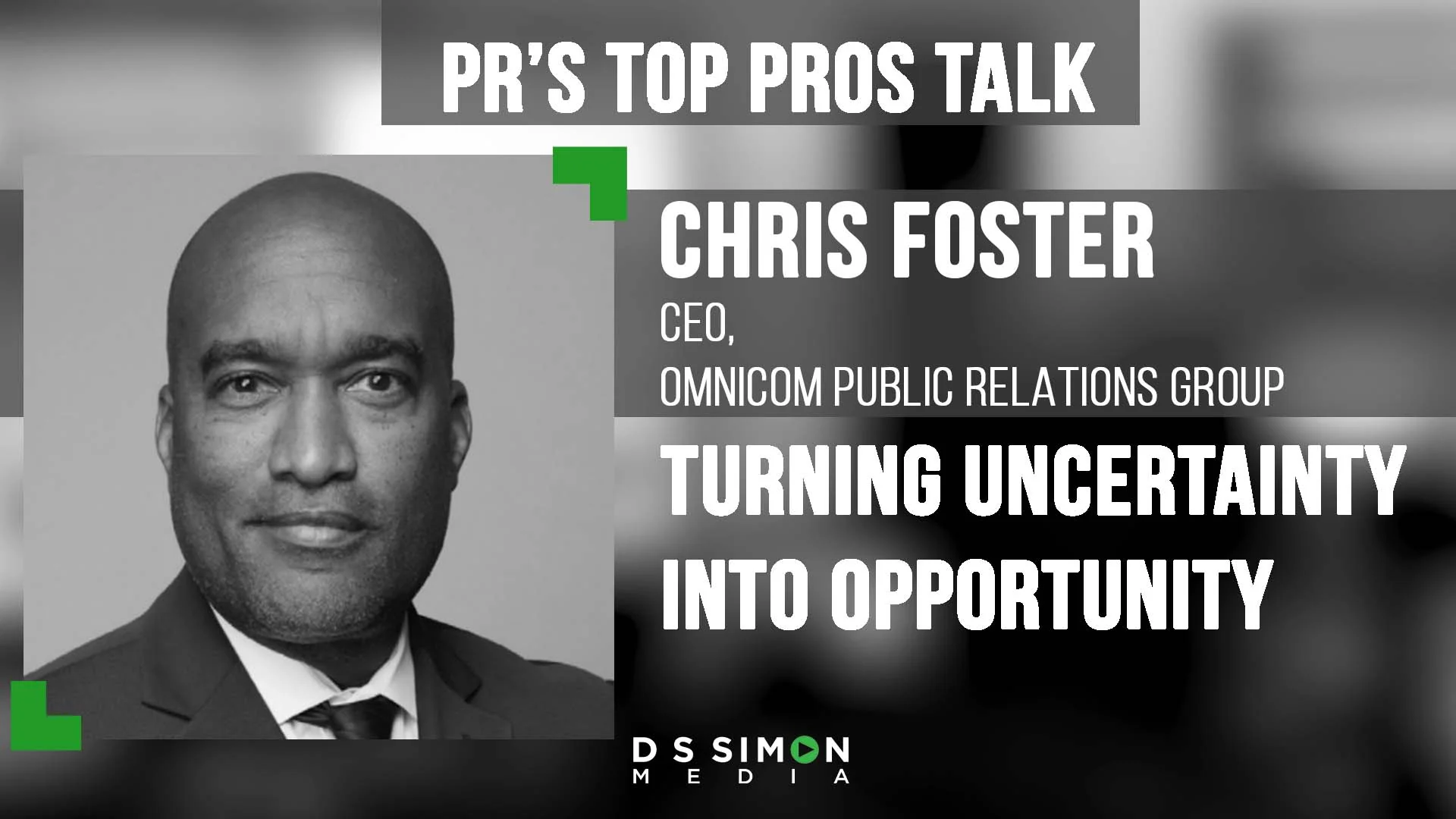
Turning Uncertainty into Opportunity
Image File
Original HTML

>> Listen to the episode on Spotify, Apple Podcasts, and others.

TRANSCRIPT:

DOUG: Chris, let’s jump right into it. What’s one of the most important lessons you’ve learned about industry consolidation?

CHRIS: Thanks for the opportunity to be here. I’d say the biggest lesson I’ve learned is that integration is fundamentally about people, right? I think the financial and regulatory transactions happen in due time, but building one organization takes time, right? It’s about creating trust with employees, maintaining confidence with clients, and being clear about, you know, where you’re headed. You have to resist the temptation, I think, to focus inward as much. Clients expect us to deliver, you know, while we’re integrating, right? So, every decision should answer one question, I think. Does this make us a stronger partner for our clients? And if we keep people and clients at the center, the rest of the integration tends to follow, but let me unpack, if I can, just one of those things real quick, because there are two other lessons I’ve learned. I think the integration is also a leadership exercise, not a financial one, right? I mean, you know, people don’t follow organizational charts. They follow leaders who can communicate clearly and make decisions, you know, with confidence and clarity. So, if you get the leadership right, I think some of the financial and operational synergies actually get easier to realize.

DOUG: Leadership can’t just be about one person. I know you’re extraordinarily influential, but it’s almost like making sure everyone feels like they have a leadership role throughout the organization. So, if you want to pick up with some of your other points, but I just thought that was something that I think is an important sort of take. It’s not just one person doing it all themselves.

CHRIS: I think you’re right. And it’s hard, right? It’s hard to lead. And, you know, one of the things in integrations, mergers, or whatever you may be managing is that there’s uncertainty. And we have to lead and inspire teams through that uncertainty, which takes, you know, a different skill set, but it also does require, it’s all hands-on deck for leaders across the business. So, I think that’s a really good point around extending leaders across organizations in these times.

DOUG: What is something that maybe gets underestimated in the time of transition that you think there needs to be more emphasis on in general?

CHRIS: Organizations tend to underestimate that these transactions are experienced emotionally, not organizationally, right? Leaders are thinking about strategy and operating models, but employers are wondering where do I fit in? You know, is my role going to change? Who’s my manager going to be? Who will I work for? And if we don’t address those very human questions, you know, fairly quickly, transparently, and consistently, I think people will fill those voids with their own assumptions. So, communication isn’t like a work stream, right? It is the work. We also underestimate the cost of uncertainty. Most people can adapt to change faster than I expect and your leaders can expect. They just can’t adapt to ambiguity. So, the longer decisions linger, the more energy people spend speculating instead of servicing clients and building the business. And I’ve learned that making good decisions quickly is often better than waiting for perfect decisions.

DOUG: Yeah, that’s such a great insight with transparency and certainty. And I remember we went through that in Covid and at the time all sudden we’re like, hey, is this the thing that’s going to take out our business after all these years? And we didn’t know, but, you know, fortunately, we were overly transparent, told, hey, we’re trying to get the PPE, we’re going to try and make the salary cuts as minimal as possible for a shorter period. And fortunately, we only had to do that for one pay period and got the PPE turned around that quickly, which just generated so much goodwill, but I think it’s nice if you tell people when times are good, then your credibility to tell them when times are bad. Knowing when times are good, people are going to be like, hey, I want a raise, times are good. You can’t just be nothing on one side and then all out on the other.

CHRIS: And I don’t think you have to have all the answers. I mean, you know, we’re month seven, you know, on this Omnicom PR journey. I don’t have every single answer, but I think, in addition, people want to know, get a lens into my thinking. They want to know where I’m headed strategically and what I’ve learned along the way. So, I do think communication can be broad, but I think, to your point and the point I made, it really is about transparency and honesty, and that’s what’s most important.

DOUG: Yeah. One of the things that you like to talk about is really understanding the time that the operating model of an organization needs to change. I mean, over the course of time, clearly, it’s changing multiple times. Maybe not wholesale change, but incremental and then sometimes wholesale. Obviously, this is a major change you’re going through and leading.

CHRIS: It’s time to change the operating model that made you successful starts getting in the way of the next stage of growth in progress, right? Every operating model is designed, you know, in a, you know, for a moment in time, but markets change, clients change, and technology changes. You know, talent evolves, right? So, I think the mistake leaders make is waiting for when the model breaks to try to change it. If you get to the point where you know your client’s needs are changing faster than your organization can keep up or respond, then I think it’s that’s a clear sign to rethink the operating model for sure.

DOUG: Yeah. So, from top to bottom, how does an organization stay nimble? And there might be a perception that it’s way harder for a larger organization to remain nimble. And some of that is instituting a feeling of entrepreneurship throughout an organization, but what are some of the keys you’re seeing to help the organization stay nimble in a time when change is probably happening faster than it ever seems to have been?

CHRIS: I think it goes back to your point about how you syndicate leadership, right? Remember, large organizations can also be broken up into small component parts, whether it’s a department, practice, division, or market. And I think that’s where, you know, those leaders in those practices, markets, and divisions are much closer to the people in the work, and that’s where you want to get some of that entrepreneurial spirit and the ability to move a little bit faster. I’d also say, though, that, you know, structure is important. You know, there’s a little bit of freedom in structure. It may sound like an oxymoron, but it gives you some of those guardrails to then be able to allow and empower managers across your business to lead and run fast within a bit of a framework. So, I do think structure is important. It should not be a strategy by any stretch, but it does give us sort of the framework and the guardrails that allow leaders to lead and respond in much faster times than you can. As a large enterprise, that’s somewhat silent at times.

DOUG: What I’m hearing from you is another word that it gives is guidance, which is so important. It’s, you know, it’s not just the guardrail of, hey, don’t go off the rails. It’s like, here’s a direction that can really help you move it forward. So, your teams are critical and say the brand or company level in shaping their organization’s reputation. Obviously, in your career, you’re at the point of like helping these organizations, right? How can those PR teams be even more effective in sort of providing that guidance again and actually executing to support the organization’s reputation?

CHRIS: I’m deeply passionate about this area of reputation management strategy. I think the first thing is that PR doesn’t own the organization’s reputation, right? It’s shaped by every experience people have, and customers have with the company. You know, what we do is PR to help the organization to understand, influence, and strengthen the reputation. And that brings together leadership, its employees, its customer service, and its customers. Our customers are now very much a part of the reputation journey with us, investors, and policymakers. So, I do think, you know, reputation is a team sport, and everyone in an organization plays a role in that. So, it’s and, you know, as we know and I know you know all too well, Doug, I mean, reputation isn’t built by what we say, right? It’s built by what we do and how consistently we do that. And I think the more our customers experience that and our clients experience it, the further along we are on that reputation journey.

DOUG: You know, we think of it all. It can be lost in a moment from a brand perspective. It can also be lost in a moment from a manager to employee perspective. I used to have and it was sort of a joke, but true. And I would say, okay, six months of goodwill I’ve generated with a colleague that can be blown up by one small f-up. That’s sort of the equation equality. So, how are you providing your guidance to still have your clients and your teams going for it? But, you know, not being afraid to fail, but still being not wanting to have one of those blow-up moments.

CHRIS: We’ve spent a lot of time focusing on the blow-up moments. I think, you know, where as reputation strategy is evolving, it’s more about reputation readiness, right? Are we clear and honest about where the vulnerabilities live within the enterprise? I mean, have we thought through the multiple scenarios of risk and challenged the reputation? Are we listening to markets? I mean, there are millions of conversations happening every day in social and digital channels about brands. And are we listening to those conversations or are we monitoring?

Class (B2B/B2C)
B2B
Ingest Status
Rewritten
Dedupe hash
014059d4e6edb892d716f504a4232024
Press Eligible
Yes
Press Eligible Reason
Business podcast discussion of merger integration, leadership, and organizational strategy.
Source Name
D S Simon
Image URL
https://www.dssimon.com/wp-content/uploads/2026/08/Chris.jpg
Source Node
Content Hash (SHA-256, erste 32 hex)
90df6b17e82cd01a3057e8ab1d1be543
All Whatfix Solutions
Original HTML

All Whatfix Solutions

Accelerate digital transformation, drive user adoption, maximize technology investments, and achieve business outcomes with Whatfix.

Sort By

Application Type

ATS

Accelerate recruiter productivity and maximize ATS adoption with in-app guidance and on-demand support.

Learn more >

ERP

Drive business outcomes by enabling employees with in-app guidance and on-demand support.

Learn more >

S2P

Drive procurement transformation by enabling employees with guided S2P experiences.

Learn more >

CRM

Accelerate seller productivity and maximize CRM adoption with in-app guidance and on-demand support.

Learn more >

Application Vendor

Salesforce

Enable sellers with guided Salesforce experiences, drive sales outcomes, and maximize Salesforce ROI.

Learn more >

SAP

Drive SAP adoption on S4/HANA, Ariba, SuccessFactors, and Concur with in-app guidance and on-demand support.

Learn more >

Microsoft

Maximize Microsoft ROI and enable employees with guided experiences on MS Dynamics, Power BI, Teams, or any MSFT application.

Learn more >

Oracle

Drive Oracle adoption on JD Edwards, PeopleSoft, Siebel, and any Oracle application with in-app guidance and on-demand support.

Learn more >

Industry

Financial Services

Accelerate Financial Services Software Adoption to Drive Transformation Outcomes

Learn more >

Higher Education

Unlock the Full Potential of Higher Education Software for Faculty, Staff, and Students

Learn more >

Pharma and Life Sciences

Drive pharma transformation with frictionless technology experiences on QMS, RIM systems, and any pharma or life science software.

Learn more >

Insurance

Drive insurance transformation with frictionless technology experiences on Guidewire, Duck Creek, and customer-facing applications.

Learn more >

Banking

Drive banking transformation with frictionless technology experiences on nCino, Fiserve, and customer-facing applications.

Learn more >

Roles

HR Professionals

Unlock the full potential for your HR transformation with in-app guidance and support.

Learn more >

Sales Professionals

Drive sales productivity, maximize CRM ROI, and provide guided training and support experiences.

Learn more >

Product Managers

Enable product managers with no-cool tools to create product-led onboarding, support users, and manage product analytics.

Learn more >

Use Case

Employee Training

Effectively train your employees with in-app task assistance and embedded learning.

Learn more >

Why Customers Choose Whatfix

Class (B2B/B2C)
B2B
Ingest Status
Rewritten
Dedupe hash
941bf23c36ad5863b84020a451227968
Press Eligible
Yes
Press Eligible Reason
Whatfix describes its enterprise software solutions and use cases for businesses.
Source Name
Whatfix
Source Node
Content Hash (SHA-256, erste 32 hex)
653a8b4a45101cd12a08cc73e24ed47e
ROI of a Digital Adoption Platform: Quantifying DAP Value
Image File
Original HTML

Digital Adoption Platforms (DAPs) are not just onboarding tools. They’re enterprise enablement solutions that embed user guidance, training, and support directly into software applications ensuring that employees adopt new technologies, follow compliant processes, and continuously improve productivity across systems.

With IT investments soaring and digital transformation projects failing to meet expected business outcomes, DAPs are emerging as mission-critical platforms.

According to Gartner, 70% of large enterprises will deploy a DAP by the end of 2025 to realize the full value of their technology stacks. These platforms are no longer optional, they are the connective tissue between enterprise applications and business outcomes.

Quantified Value: How Much ROI Can a DAP Unlock?

Based on Whatfix experience data across application sizes and complexities, organizations see on average $652K in annual value per application deployed on when supported and optimized with contextual guidance and usage analytics.

To further break down the value a DAP can extract from an application, here is the average ROI of a digital adoption platform investment from real Whatfix customers based on the number of application users:

How to Measure DAP ROI

Digital transformation leaders must define ROI by looking beyond cost savings. The ROI of a DAP investment spans across departments, including things like:

- User productivity gains.

- Reduction in support tickets.

- Time-to-proficiency acceleration.

- Improved data quality and process compliance.

- Faster change adoption.

- Higher utilization of enterprise software capabilities.

Each metric should align with your application’s business purpose and the contextual value its intended to drive. For example:

- In a CRM: Faster sales cycles, improved data hygiene, better use of enablement content.

- In an ERP: Cleaner master data, fewer delays in procurement, compliance with financial processes.

- In a claims processing app: Faster cycle times, lower claim rework or waste.

- In a pharma app: Reduced validation cycle times, improved accuracy of batch processing, compliance with FDA mandates.

- In EHRs: Reduced clinician time-on-system, improved diagnostic flow.

- For loan officers: Reduced underwriting times, fewer application errors, better portfolio risk analysis.

Understanding DAP Costs and Risks

While the ROI can be significant, DAPs come with upfront and ongoing investments:

Key Cost Factors

- Subscription costs that are based on MAUs, the number of applications, and usage tiers.

- Deployment complexity (cloud, on-premise, hybrid).

- Content creation and maintenance for Flows, Smart Tips, Tours, etc.

- Administrative overhead for monitoring, updating, and scaling guidance across apps.

Potential Risks

- Underutilization due to a lack of governance or executive leadership misalignment.

- Change fatigue if guidance becomes overwhelming or irrelevant.

- Inadequate integration with analytics, content repositories, or user roles.

- Poor content design, leading to confusion instead of clarity.

Mitigating these risks requires strategic planning, stakeholder buy-in, and a strong partnership with your DAP vendor.

How DAPs Drive ROI Across the Application Lifecycle

Digital adoption technologies don’t just support one stage of the user journey they are foundational across the entire software lifecycle, from pre-launch to continuous improvement. By embedding in-app guidance, insights, and automation at every step, DAPs like Whatfix deliver compounding ROI across four key end-user adoption pillars:

- Accelerated user onboarding.

- Reduced support burden.

- Improved process compliance.

- Better feature adoption, utilization, and long-term value realization.

Here’s how that plays out at each stage of the application lifecycle:

1. Pre-Deployment Testing and User Feedback Loops

Why it matters: Most transformation failures start before rollout with poor process design, unclear workflows, or lack of user validation.

How DAP helps: Whatfix allows organizations to create simulated sandbox environments that mirror real application usage. Admins can deploy guided Flows, Smart Tips, and Field Validations to test user behavior, surface workflow bottlenecks, and collect end-user feedback before changes are pushed live.

ROI Outcomes of DAP for pre-deployment testing and user feedback:

- Prevent costly rollout rework.

- Accelerate time-to-deployment.

- Validate UX with frontline feedback.

Example: A major telecommunications enterprise was tasked with successfully building 150 HR workflows on its new Workday HCM instance (which was replaced 10+ legacy applications that had fragmented HR services) that would be used across 150,000 employees. With Whatfix, it streamlined its pre-launch user acceptance testing and case management by assigning test cases and collecting end-user feedback from the pre-launch pilot directly inside the beta application. This significantly accelerates the Workday implementation, deflected a surge of HCM-related IT tickets, and resulted in polished, optimized HR service workflows at launch, helping to drive user adoption and realize ROI from day one.

2. Onboarding and Training

Why it matters: Traditional onboarding is generic, disconnected, and quickly forgotten costing millions in lost productivity and re-training.

How DAP helps: Whatfix provides contextual onboarding journeys, personalized to the user’s role, department, or app module. With tools like Task Lists, Product Tours, and Progress Nudges, employees ramp up faster and retain workflows better.

ROI Outcome:

- Accelerate time-to-value of software investments.

- Reduce end-user training overhead and dependency on support staff.

- Minimize dependence on classroom or LMS training.

- Improve employee confidence and engagement from day 1.

- Eliminates risk of productivity dip after launch.

REG Case Study: Renewable Energy Group reduced time-to-proficiency in Salesforce and JD Edwards by 50% by providing hands-on training and embedding workflow support into employee tasks with Whatfix. Read the REG case study →

3. Embedded Support in the Flow of Work

Challenge: End-users often hit roadblocks during daily operations, leading to increased support ticket volumes, compliance issues, and process errors.

DAP ROI Enabler: With in-app guidance like Smart Tips, Tooltips, and Field Validations, DAPs proactively prevent errors and guide users toward task completion. Self Help modules, powered by AI assistants, give users immediate access to documentation, SOPs, or helpdesk articles without leaving the application.

ROI Outcome:

- Lower support ticket volume, support case escalations, and overall IT workload.

- Improve data quality and task accuracy.

- Higher first-time task completion.

- Maintain compliance with real-time process enforcement.

Acorn Recruitment Case Study: Achieved faster user enablement and decreased support queries with Whatfix.

4. Change Management and Process Adoption

Challenge: Rolling out new processes or compliance changes often causes confusion, productivity loss, or outright resistance.

DAP ROI Enabler: DAPs serve as a real-time change communication layer with features like Pop-Ups, Beacons, and Launchers that notify users about critical updates inside the app. You can also drive proactive behavior change by launching Flows or Smart Tips that reinforce new tasks and process steps.

ROI Outcome:

- Accelerate adoption of process updates.

- Lower training costs post-updated.

- Minimize downtime and change-related resistance.

- Ensure fast compliance and policy adherence across teams.

Sophos Case Study: Used Whatfix to manage Salesforce changes and ensure adoption across a global sales team. Read the case study →

5. New Feature Rollout and Adoption of Advanced Capabilities

Challenge: Enterprise tools are often underutilized. Many advanced features, AI assistants, or automation capabilities go unused because users don’t know how or why to engage with them. In fact, 64% of features in enterprise apps are never used. Enterprises pay for licenses and capabilities that employees never touch.

DAP ROI Enabler: Whatfix nudges users toward high-impact features using event-based guidance, dynamic nudges, and user segmentation. This ensures features especially new AI tools, analytics dashboards, or automation features are actively discovered and used. For example, a sales organization uses Whatfix to guide its CRM users toward competitive intel battle cards, which increased deal conversion rates. Another customer used Whatfix DAP in its SaaS platform to provide in-app upsell nudges, increasing its free trial-to-paid conversions.

ROI Outcome:

- Increase usage of high-impact features.

- Better outcomes from GenAI, reporting, or automation capabilities.

- Improve software license utilization rates.

6. Continuous Process Optimization and Workflow Enhancement

Challenge: Software processes aren’t static. As users engage, friction builds and without insight, IT can’t fix bottlenecks and inefficiencies.

DAP ROI Enabler: With Whatfix Product Analytics and Whatfix Mirror, leaders gain end-to-end visibility into how tasks are performed across applications. Time-on-task, drop-off points, error paths, and help content usage can all be tracked, fueling continuous optimization and task efficiency using real user data.

ROI Outcome:

- Quantifiable task time improvements.

- Eliminate redundant steps and process bottlenecks.

- Reduced user frustration.

- Higher productivity and process efficiency.

- Create a continuous feedback loop between users, IT, and business.

7. Long-Term Value Realization and Governance

Challenge: Without long-term governance, digital transformation efforts lose momentum, and applications drift from their intended value. Knowledge fades, content becomes outdated, and processes fall apart.

DAP ROI Enabler: DAPs enforce scalable governance across applications by providing consistent, measurable, and adaptable guidance.

Class (B2B/B2C)
B2B
Ingest Status
Error
Dedupe hash
9231f1e147729d1a46fe1b942d1b9ea8
Press Eligible
No
Press Eligible Reason
Drupal Push 422
Source Name
Whatfix
Image URL
https://whatfix.com/blog/wp-content/uploads/2024/05/image1-7.png
Source Node
Content Hash (SHA-256, erste 32 hex)
b57a922c349ea7e5210f89c432d0001b
Whatfix Blog | Your Hub for Digital Adoption Insights
Image File
Original HTML

Whatfix Blog | Your Hub for Digital Adoption Insights

Join 10k+ digital adoption leaders by subscribing to the Whatfix Blog. Be the first to get new content delivered right to your inbox.

email

Subscribe

Training & Readiness

User Readiness: Before Go-Live, Prove Teams Can Do Real Work

User readiness helps teams identify whether employees can perform real workflows before mistakes affect customers, compliance, support volume, or revenue. This guide breaks down how to assess readiness with simulations, AI roleplay, workflow scoring, and adaptive remediation before real work begins.

Learn the basics of digital adoption platforms (DAP), explore use cases, and see why organizations with a DAP see a 64% lift in time-to-value and 67% lift in overall ROI from software investments.

Leadership wants proof that software investments improve execution. This KPI framework shows application owners how to connect adoption metrics to productivity, quality, support, and quarterly business reviews.

After an app goes live, IT and support teams face a surge in tickets. Learn how a structured hypercare plan helps triage repeat issues, deflect questions with in-app guidance, and smoothly transition critical workflows to business-as-usual.

An enterprise software launch is just the start. Explore our 90-day roadmap to reduce workflow friction, boost adoption, and maximize ROI through continuous, data-driven system optimization.

Our buyers guide breaks down the best application simulation training platforms to prepare teams and assess user readiness before go-live with guided training workflows.

Move software training out of slide decks and into safe, hands-on practice. This guide shows how IT teams can build sandbox environments that reduce live-system risk, improve confidence, and accelerate proficiency.

Training completion is a weak proxy for adoption. This playbook shows how to cut time-to-proficiency with role-based onboarding, contextual guidance, and cohort-level measurement.

This 2026 ROI report surveyed 300 U.S.-based C-suite and digital transformation leaders to analyze if recent initiatives have succeeded or stalled and how long it actually takes organizations to realize value

Most rollout plans over-index on launch dates and training. This template helps application owners plan for live execution with clear ownership, readiness criteria, support paths, hypercare, and adoption KPIs.

Done effectively, application consolidation lowers technology costs, simplifies IT governance, standardizes business processes, unifies data, and creates a stronger foundation for AI, automation, analytics, and overall digital transformation ROI.

Digital Adoption Platforms: An Enteprise Buyer's Guide

Learn the basics of digital adoption platform (DAP), explore use cases, and see how organizations with a DAP see 64% faster time-to-value and 67% higher overall ROI from their software investments vs their peers.

Turn static procedures into contextual, in-app guidance that helps employees follow approved workflows, reduce errors, and maintain process consistency.

Explore how contextual in-app guidance accelerates software onboarding, reinforces complex workflows, reduces support dependence, and helps employees work more confidently.

Learn how to document cross-functional workflows, decisions, approvals, and exceptions so teams can execute processes consistently and keep procedures current.

Build a process governance framework that clarifies ownership, standardizes execution, strengthens compliance, and continuously improves workflows across enterprise teams.

Identify the causes of user errors and improve workflow accuracy through stronger controls, hands-on readiness, contextual guidance, and continuous analysis.

Compare modernization strategies and learn how to address technical complexity, prepare employees, and realize measurable business value beyond go-live.

Modernize CRM technology, customer data, and cross-functional workflows with a practical roadmap for improving employee adoption, sales productivity, and customer outcomes.

Navigate common ERP modernization risks with practical guidance on process redesign, phased rollouts, user readiness, and sustained operational improvements.

Build a more connected procurement operation by modernizing source-to-pay systems, standardizing workflows, strengthening compliance, and enabling employees through change.

A digital roadmap for modernizing claims and policy systems while protecting business continuity, preparing insurance teams, and improving critical operational workflows.

Plan core banking modernization across legacy infrastructure, critical workflows, and phased migrations while strengthening employee readiness and measurable business outcomes.

Drive Adoption of Every Software Investment, from Rollout to ROI

See how Whatfix helps enterprises accelerate proficiency, guide users in the flow of work, and optimize adoption across every mission-critical application with its AI-native digital adoption platform.

Class (B2B/B2C)
B2B
Ingest Status
Error
Dedupe hash
0fbf6aa36a65e7c2ff92536d89f538a7
Press Eligible
No
Press Eligible Reason
Drupal Push 422
Source Name
Whatfix
Image URL
https://whatfix.com/blog/wp-content/uploads/2025/09/Group-289503-e1758742125923.png
Source Node
Content Hash (SHA-256, erste 32 hex)
5b35b62a52f6eda9c7cfc6b793014857
Speech: Remarks by Administrator Seema Verma at the Medical Device Manufacturers Association Annual Meeting
Original HTML

Remarks by Administrator Seema Verma at the Medical Device Manufacturers Association Annual Meeting 

(As prepared for delivery – May 2, 2019)

Thank you, Paul, for that kind introduction, and it’s a pleasure to be with all of you today. Earlier this year, we at CMS set forth 16 strategic initiatives, one of which is Fostering Innovation. This spans across the agency -- reducing burden through Patients over Paperwork, regulatory reform, and enhancing access to new transformative technologies. Today, I’m pleased to discuss our plan for Fostering Innovation as we focus on overhauling and modernizing CMS’s policies for new technologies.

At CMS, we understand that relentless innovation is a crucial driver in creating value across all industries. As Thomas Edison noted, “There’s always a way to do it better—find it.” Healthcare and technology, of course, are no exceptions.

Our vision is ambitious yet achievable: to protect and secure Medicare and ensure beneficiaries have access to the latest medical technologies. There is no greater need for innovation than in American health care. Today’s innovation and technology will be drivers for reducing costs, improving quality, and increasing access to health care for all Americans for years to come.

Think about it, in recent years—thanks to improved diagnostics and therapies, tools, and technologies—healthcare has witnessed a myriad of innovations designed to extend and improve the quality of our lives.

For example, we need only look at the history of hip replacement surgery. Not long ago, this surgery involved an expensive multi-day hospital stay, lengthy and often exceedingly painful rehab, and a device implant that was susceptible to wear and tear. Today, a patient can have a very different journey: more durable materials, coupled with advances in peri-operative management, have led to shorter hospital stays, lower costs, and improvements in outcomes such as lower surgical revision rates.

Or perhaps a patient is having symptoms indicating a heart attack. Innovative, high-tech tools such as pocket-sized ultrasound connected to a mobile phone can help physicians make a rapid diagnosis and potentially reduce expensive and unnecessary hospital stays.

Undoubtedly, innovation—coupled with the American free market—is the fuel that powers the engine of progress and creativity. That’s why the Trump Administration wants to do everything we can to promote, enhance, and assist it.

Unfortunately, we’re all too aware of the problem. When I came to CMS, I inherited outdated government rules and regulation that stifle innovation and access to innovative treatments. For CMS, as the largest payer in the country, we have a particularly outsized effect on the market. And our often arcane and outmoded regulations around coverage, coding, and payment can lead to unpredictability for innovators. In many cases, it isn’t enough for an innovator to wind their way through the maze of regulations. Because Medicare is set up with defined benefit categories set in law, innovations often can’t be covered or paid for by Medicare without an act of Congress. Meanwhile, there continues to be an ongoing discussion of Medicare for All, a complete government takeover of healthcare. Sitting where I sit, and seeing – on a daily basis – all the problems faced by patients in accessing innovative technology, it’s hard to imagine anyone could advocate for such a takeover. Let me be clear: government run healthcare will stall innovation and risk the development and adoption of new technology. Medicare for All leads to innovation for none.

The advent of novel medical technologies requires CMS to remove barriers to ensure safe and effective treatments are readily accessible to beneficiaries without delaying patient care. In essence, keeping new technologies and treatments moving from bench to bedside—and into the hands of those who need them most.

Currently—as many of you are aware—when it comes to new technology, the CMS process generally involves three elements. One aspect is coverage. CMS coverage decisions are guided by laws and procedures that determine whether CMS makes a National Coverage Determination to cover a new therapy nationwide…or, Medicare Administrative Contractors (or MACs) may make individual Local Coverage Determinations to cover a therapy in their region, leading to inconsistent access.

Another element is coding. Coding decisions are based on whether a new code needs to be developed, or whether an existing code can adequately describe the new therapy.

A third element is payment. CMS makes payment decisions for a new therapy through the Medicare payment systems, with a different decision on how each new therapy is reimbursed. For example, if a new therapy is provided to a beneficiary as part of a hospital stay, Medicare pays for it according to the relevant DRG. This may also include the possibility of a new technology add-on payment (or NTAP) if, for example, the cost of a medical product is significantly more than the current payment. But if a new therapy can be provided in a beneficiary’s home and meets certain criteria, it may be considered Durable Medical Equipment (or DME).

With the remarkable number of transformative technologies coming to market — many with unprecedented price tags — Medicare must develop new frameworks that will support tomorrow’s innovations and endure the test of time.

Simply put, our goal is to get new innovations to our beneficiaries concurrent with FDA approval by (1) removing government barriers to innovation and (2) harmonizing CMS coverage, coding, and payment processes.

That’s exactly what the Trump Administration has been working to do since day one—and we’ve already witnessed substantial accomplishments when it comes to changing outdated and harmful regulations around new technology.

For example:

We’ve undertaken painstaking efforts to unravel – one by one – government-imposed tangles to ensure access to specific technology. This includes a situation where Medicare refused to pay for a glucose meter because the meter could also be used with an app. In another situation, Medicare started paying for disposable insulin pumps more than a decade after private sector insurance had already begun covering it.

We announced that we would consider validated commercial payments in determining payments for certain innovative DME without predecessors in our fee schedule composed in the mid ‘80s, which the Medicare law requires as the starting point for DME payment. And we’re looking for other opportunities to make sure Medicare is getting the best deal for 2020…not 1986.

We’ve advanced proposals to bring telehealth services, remote communication services and monitoring, and care management in the physician fee schedule to all Medicare beneficiaries, not just those in rural areas. We are leveraging for the first time certain technologies that have long been available in the private marketplace. This is a historic advancement designed to improve access for all Medicare beneficiaries.

We also redesigned the LCD process as part of our Patients over Paperwork initiative to ensure a clear roadmap to local coverage. Patients over Paperwork is an agency-wide effort to solicit input from stakeholders on policies that are outdated, redundant, or overly burdensome, and to make updates in response. We believe these changes clarify and simplify the process, helping to ensure that manufacturers get appropriate therapies and medical devices to patients more efficiently. These improvements respond to stakeholders’ suggestions for more transparency, including multiple opportunities for engagement with CMS and our MACs.

We are advancing efforts to lower drug costs while increasing competition and encouraging the development of biosimilars in the United States. In 2018, we changed reimbursement for biosimilars, allowing each biosimilar for a reference product to be coded separately—adding pricing predictability for biosimilar innovators and encouraging their development.

And last week we announced significant payment policy changes to support broad access to transformative technologies, including certain antimicrobial drugs and CAR-T cell therapy. These include an increase to the NTAP, which provides hospitals with additional payments for cases with high costs involving new technologies.

We’ve proposed to modernize payment policies for medical devices that are granted FDA Breakthrough Devices Program designation to expedite their entry into the market. This includes waiving the requirement for “substantial clinical improvement,” which is one of the criteria that must be met for CMS to make additional payments. For devices granted Breakthrough-designated FDA approval, real-world data regarding outcomes in different patient populations is often limited at the time of approval, making it hard for innovators to meet this requirement. Waiving this requirement would provide additional Medicare payment for the technologies for a period of time while real-world evidence is emerging, so Medicare beneficiaries don’t have to wait for access to the latest innovations. After devices have been on the market for two years, they would still have to demonstrate evidence of “substantial clinical improvement” to receive the third year of add-on payment. We’re also considering waiving this requirement for similar “pass through” payments.

Additionally, CMS is soliciting comment on what constitutes “substantial clinical improvement.” This will help innovators better understand how we evaluate applications for NTAP under our payment policies.

These are great first steps, but our work is not done. It’s a vision of fostering innovation to lower cost and improve quality. Ultimately, we want to transform health care to deliver better value and results for Medicare -- and all Americans -- through competition and innovation.

Class (B2B/B2C)
B2B
Ingest Status
Error
Dedupe hash
48edd6ad365a45fe63bf7ccbe8511927
Press Eligible
No
Press Eligible Reason
Drupal Push 422
Source Name
AdvaMed News
Source Node
Content Hash (SHA-256, erste 32 hex)
5c59e754293c96a46570bf5fd090a167
News from Huntington Hotel Group A wide array of domestic and global news stories; news topics include politics/government, business, technology, religion, sports/entertainment, science/nature, and health/lifestyle.
Image File
Original HTML

News from Huntington Hotel Group A wide array of domestic and global news stories; news topics include politics/government, business, technology, religion, sports/entertainment, science/nature, and health/lifestyle.

Making a selection with these dropdown will cause content on this page to change. News listings will update as each option is selected.

Latest

Journalists and Bloggers

The news you need, when you need it.

Join PR Newswire for Journalists to access all of the free services designated to make your job easier.

In need of subject matter experts for your story? Submit a free ProfNet request and find the sources you need.

LEARN MORE

Class (B2B/B2C)
Ignore
Ingest Status
Rejected
Dedupe hash
d508e4ca2e7fe04d8e5092459a3f7735
Press Eligible
No
Press Eligible Reason
Text too short (104 words. Min: 150)
Source Name
EB5 Capital Investments
Image URL
https://www.prnewswire.com/content/dam/prnewswire/common/prn_facebook_sharing_logo.jpg
Content Hash (SHA-256, erste 32 hex)
eec3680dcc7c34ac7b776162c342f9c0
Redwire Corporation News
Image File
Original HTML

Redwire is proud to introduce the Octopus 140 LWIR, a mission-ready, gyro-stabilized EO/IR payload built for demanding defense and security missions, delivering reliable long-range Intelligence, Surveillance, and Reconnaissance (ISR) performance and superior situational awareness around the clock.

Mission success depends on reliable, actionable data, accurate target localization, and onboard processing to help accelerate decision-making while reducing operator workload. The Octopus 140 LWIR provides exceptional image clarity, precise stabilization, and extended-range capability for missions where every second counts and conditions are challenging—without adding significant weight to the aircraft.

Take a closer look at the type of mission the Octopus 140 LWIR was built to enhance.

Mission Use Case: Actionable Intelligence Around the Clock

Mission Objective

To deliver dependable day/night ISR capability with enhanced stabilization, accurate target localization, and onboard processing that supports rapid detection, recognition, and identification without increasing overall burden on the platform.

Target Operators

- Uncrewed Aircraft Systems (UAS) flight operations

- Border security teams

- Sensor specialists supporting intelligence collection, perimeter defense, search and rescue, and mobile surveillance.

The Operational Challenge

Traditional LWIR payloads often force operators to choose between reliable stabilization, thermal detail, or system weight:

- Larger sensors add platform burden and reduce aircraft endurance.

- Limited stabilization can degrade imagery during dynamic flight profiles.

- Inaccurate ranging complicates geolocation and slows target classification.

- Poor visibility conditions reduce confidence in target identification.

The result: delayed decisions, reduced situational awareness, and increased risk.

The Solution: Redwire’s Octopus 140 LWIR

In military, border security, and force-protection operations where every second counts, the Octopus 140 stays rock steady, helping operators see farther, identify targets with confidence, and act faster in mission-critical environments—all without the cost or complexity of heavier systems.

Key Capabilities and Benefits

- Enhanced stabilization for steady imagery, precise target tracking, and reliable video capture during dynamic maneuvers or turbulent conditions

- Integrated laser rangefinder for rapid, accurate ranging of NATO-sized targets up to 4 km, enabling better geolocation and more reliable situational awareness

- Multi-mission performance through Full HD EO + LWIR imaging, onboard object tracking, and moving-target indication that supports time‑sensitive surveillance and identification

- Mission-ready architecture featuring NDAA-compliant, ITAR-free critical components

Mission Outcomes

- Higher confidence identification enabled by clearer thermal detail and exceptional stabilization

- More accurate target localization through integrated laser rangefinder

- Reliably automated workflow thanks to onboard tracking and moving-target indication

- Faster decision-making supported by real-time onboard processing

- Greater platform flexibility through a lightweight, SwaP-efficient design

Why It Matters

Complex missions demand that operators see clearly, track effectively, and act decisively. The Octopus 140 LWIR brings high-quality EO/LWIR imaging, precision stabilization, and reliable laser ranging into a future-facing, mission-ready system. These advanced capabilities help operators maintain standoff distance, preserve the aircraft’s endurance, and increase mission success across dynamic operational environments.

Learn more about the Octopus 140 LWIR and Redwire’s portfolio of Octopus payloads at RDW.com

Class (B2B/B2C)
B2B
Ingest Status
Error
Dedupe hash
7ad1b0083e6a81cb9fa3bd4281155644
Press Eligible
No
Press Eligible Reason
Drupal Push 422
Source Name
Redwire Corporation
Image URL
https://rdw.com/wp-content/uploads/2026/10/cropped-140-LWIR-with-soldiers-2-1-1.jpg
Source Node
Content Hash (SHA-256, erste 32 hex)
1a68aaf662ddcb2731604ae1ad358e0e
ARKET to open third store in Stockholm
Image File
Original HTML

Nordic design and lifestyle brand ARKET will open a new store in Stockholm in late 2026. Located on Biblioteksgatan 11, the new destination will mark the brand’s third store in Stockholm and fifth in Sweden, joining existing Stockholm locations on Drottninggatan and Götgatan, as well as stores in Malmö and Gothenburg.

News

ARKET to open third store in Stockholm

Based in Stockholm, ARKET is a modern-day market and lifestyle destination offering collections for women, men, children, and the home, alongside an in-store seasonal vegetarian café. Inspired by simplicity, nature, and slower rhythms of living, the assortment brings together garments, objects and food – all carefully made and artfully curated for everyday life.

We are thrilled to announce the opening of our fifth ARKET store in Sweden, in our beautiful home city of Stockholm. We look forward to further connecting with the local community and welcoming them to our modern-day market experience.

Pernilla Wohlfahrt, Managing Director at ARKET

The new Stockholm store will offer a curated selection of ready-to-wear and accessories for women, men and interior objects.

Launched in 2017, ARKET is founded on the idea of everyday beauty and long-lasting design, drawing inspiration from the Nordic modernist movement of the 20th century and its vision of well-made, functional and accessible objects for daily life.

Class (B2B/B2C)
B2B
Ingest Status
Rewritten
Dedupe hash
a5797728d651b17951767d7c71540521
Press Eligible
Yes
Press Eligible Reason
Retail brand expansion and new store opening.
Source Name
H&M Group Newsroom
Image URL
https://hmgroup.com/wp-content/uploads/2026/06/ARKET_2606-thumb.jpg
Source Node
Content Hash (SHA-256, erste 32 hex)
32652de141968509a84b28327d43b565