SpaceX CRS-25
Image File
Original HTML

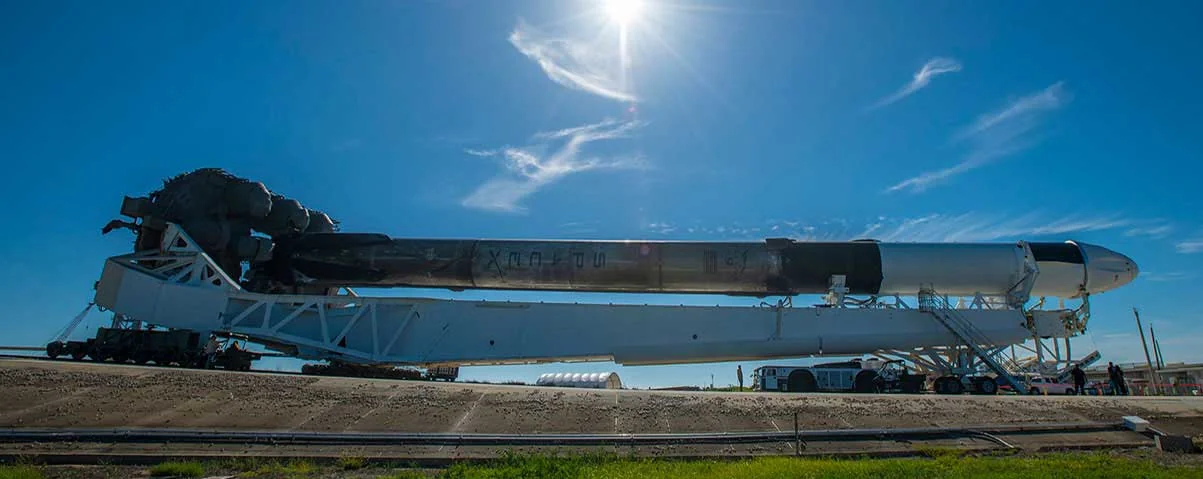
SpaceX’s Cargo Dragon spacecraft, seen atop the company’s Falcon 9 rocket, is rolled out to the launch pad at NASA’s Kennedy Space Center in Florida on July 12, 2022, in preparation for the 25th commercial resupply services launch.

Media Credit: NASA

Mission: SpaceX CRS-25

Launch date: Thursday, July 14, 2022 at 8:44 p.m. EDT

Location: Space Launch Complex 39A at Kennedy Space Center in Florida

You’ll receive a welcome email in your inbox and a link to the Upward web page, where you can access past Upward issues, feature articles, and guest perspectives.

✕

Sign up to receive updates on new research funding and grants opportunities.

Full Name(Required)

This field is hidden when viewing the form

First Name

This field is hidden when viewing the form

Last Name

Company

Email(Required)

Funding Opportunities

Update me on new research funding and grants opportunities.

Subscribe to ISS National Lab

Yes! Please keep me updated on ISS National Lab events and activities.

Subscribe to Upward

Yes! Please keep me informed of future Upward publications.

Subscribe to Space Station Spotlight Newsletter

Yes! Please keep me informed of future Space Station Spotlight Newsletter publications.

Subscribe to STEM Events and Activities

Yes! Please keep me updated on STEM events and activities.

This field is hidden when viewing the form

Do not Subscribe

Do not Subscribe.

✕

Sign up to receive notifications regarding STEM Events and Activities

Full Name(Required)

This field is hidden when viewing the form

First Name

This field is hidden when viewing the form

Last Name

Company

Email(Required)

Subscribe to STEM Events and Activities

Yes! Please keep me updated on STEM events and activities.

Subscribe to ISS National Lab

Yes! Please keep me updated on ISS National Lab events and activities.

Subscribe to Upward

Yes! Please keep me informed of future Upward publications.

Subscribe to Space Station Spotlight Newsletter

Yes! Please keep me informed of future Space Station Spotlight Newsletter publications.

Funding Opportunities

Update me on new research funding and grants opportunities.

This field is hidden when viewing the form

Do not Subscribe

Do not Subscribe.

✕

Full Name(Required)

This field is hidden when viewing the form

First Name

This field is hidden when viewing the form

Last Name

Company

Email(Required)

Subscribe to ISS National Lab

Yes! Please keep me updated on ISS National Lab events and activities.

Subscribe to Upward

Yes! Please keep me informed of future Upward publications.

Subscribe to Space Station Spotlight Newsletter

Yes! Please keep me informed of future Space Station Spotlight Newsletter publications.

Subscribe to STEM Events and Activities

Yes! Please keep me updated on STEM events and activities.

Funding Opportunities

Update me on new research funding and grants opportunities.

This field is hidden when viewing the form

Do not Subscribe

Do not Subscribe.

✕

Sign up to receive notifications regarding Upward, the ISS National Lab Magazine.

We’ll keep you updated on future Upward issue releases and feature highlights!

Full Name(Required)

This field is hidden when viewing the form

First Name

This field is hidden when viewing the form

Last Name

Company

Email(Required)

Subscribe to Upward

Yes! Please keep me informed of future Upward publications.

Subscribe to ISS National Lab

Yes! Please keep me updated on ISS National Lab events and activities.

Subscribe to STEM Events and Activities

Yes! Please keep me updated on STEM events and activities.

Subscribe to Space Station Spotlight Newsletter

Yes! Please keep me informed of future Space Station Spotlight Newsletter publications.

Funding Opportunities

Update me on new research funding and grants opportunities.

Class (B2B/B2C)
B2B
Ingest Status
Rewritten
Dedupe hash
c531a47ab64398a63fa5887d680e8cde
Press Eligible
Yes
Press Eligible Reason
SpaceX commercial cargo mission launch information is relevant aerospace industry news.
Source Name
International Space Station National Lab
Image URL
https://issnationallab.org/wp-content/uploads/2024/08/spx25-roll-out.jpg
Content Hash (SHA-256, erste 32 hex)
f57a542b48a63d2af8400fe6185b6853
P&G Febreze Product Benefits From ISS National Lab-Sponsored R&D
Image File
Original HTML

P&G Febreze Product Benefits From ISS National Lab-Sponsored R&D

May 3, 2022 • By Amy Thompson, Staff Writer

More than 4 billion people worldwide—which is greater than half the Earth’s population—use Procter & Gamble (P&G) household products every day.

The latest formulation of P&G’s Febreze Unstopables Touch Fabric Spray not only is one of those products but also benefits from research sponsored by the International Space Station (ISSInternational Space Station) National Laboratory. According to P&G researcher Matt Lynch, the product, which now features touch-activated scent release technology, is the first P&G product to incorporate materials based on the company’s space-based research.

Many of P&G’s products, ranging from shampoos and detergents to medicines and more, are comprised of mixtures of tiny particles suspended in a liquid. These mixtures are called colloids. In an effort to improve product design, P&G has teamed up with the ISS National Lab and NASANational Aeronautics and Space Administration to study how colloids behave in space.

On Earth, gravity causes some of the particles in colloids to sink, while others rise. In microgravityThe condition of perceived weightlessness created when an object is in free fall, for example when an object is in orbital motion. Microgravity alters many observable phenomena within the physical and life sciences, allowing scientists to study things in ways not possible on Earth. The International Space Station provides access to a persistent microgravity environment., however, this type of buoyancy-driven fluid movement is reduced. Studying the interactions of the particles in the absence of gravity enables researchers to not only improve current products but also create new ones. The P&G Febreze product mentioned above is an example of a product that benefitted from research in the microgravity environment of the ISS.

“This product looks and feels like water,” Lynch said, “but it has these special microscopic capsules in it that contain perfume.”

He explained that the perfume capsules help to distribute a small burst of freshness whenever people rub their hand on or walk over something that has been sprayed with the product. The idea is that the spray would create a nice sensory experience for consumers and mitigate offensive smells simply with a touch of the hand.

For the product to work like it should, researchers had to create microstructures and suspend them in the fluid. The key question was how to keep the structures suspended for long periods of time while the product sat on stores shelves.

“Most products that have these dispersed particles tend to separate, like salad dressing, where you have to shake the heck out of it to be able to use it,” Lynch said. “The tricky part is figuring out how to keep them from doing so.”

Here’s where microgravity comes in: By sending these mixtures to the space station, the research team could better understand the fundamental forces at play. “We’ve been able to look at our system on a particle-by-particle basis in order to better design the structures in these products,” Lynch said.

This is the first example of a P&G product that directly benefitted from research on the ISS. However, Lynch says that in the future, more of P&G’s biggest brands could benefit from space-based research, and the findings could lead to improved products for consumers. “If you think about the number of people that use our products, we’re making a significant contribution that will help a lot of people.”

Class (B2B/B2C)
B2B
Ingest Status
Rewritten
Dedupe hash
8cb14af1339f76727dd72d4ad1f30e66
Press Eligible
Yes
Press Eligible Reason
P&G product innovation stemming from ISS-sponsored research in microgravity.
Source Name
International Space Station National Lab
Image URL
https://issnationallab.org/wp-content/uploads/2024/05/lmm-dan-pg.jpg
Content Hash (SHA-256, erste 32 hex)
8e3b308697deaf8472c8823d1a7242b6
The ISS and Household Products: How P&G is Using Space to Improve Customer Experience
Image File
Original HTML

The ISS and Household Products: How P&G is Using Space to Improve Customer Experience

September 27, 2016 • By Emily Tomlin, Staff Writer

In an era of increasing commercial innovation in space, many big-name companies are taking to the skies to explore how microgravityThe condition of perceived weightlessness created when an object is in free fall, for example when an object is in orbital motion. Microgravity alters many observable phenomena within the physical and life sciences, allowing scientists to study things in ways not possible on Earth. The International Space Station provides access to a persistent microgravity environment. research might enhance their products. But for Procter & Gamble (P&G), a giant among household product providers, spaceflight has been a part of their R&D portfolio for almost a decade—and recently, they have shared exciting progress from their ISSInternational Space Station experiments investigating the new science of polydisperse systems.

A common problem in the consumer product world is how to develop new and clever ways of suspending materials in fluids. Consumer foams and gels—such as the familiar products from Gain®, Dawn®, Tide®, Olay®, Gillette®, Pantene®, and many other P&G brands—depend on the stability of such mixtures. This is particularly true for polydisperse mixtures; that is, liquids or gels that contain particles of different sizes in suspension. Unfortunately, how these mixtures move and break down is often not fully understood, which poses a challenge to product designers and manufacturers: How to create better, longer-lasting products that maintain all their desired features.

The Problem of Polydispersity

If a company creates sticky particles of the same size and introduces them into a mixture, the particles organize themselves into strands. These individual strands interact to form the net structure product chemistry seeks to exploit.

But the behavior of sticky particles of varying sizes—the attractive interactions of polydisperse systems—is not well understood. It is these more complex systems that may hold the key to better products with enhanced features and longer shelf life. Polydisperse mixtures behave very differently than the more well-defined systems with uniform particle size.

For example, shampoos contain oils that give the product nice characteristics for a consumer; for example, the oils condition hair and make it easier to brush. But oil droplets suspended in a liquid tend to separate over time, because the oil tends to float to the top. So how does a manufacturer keep these droplets suspended in solution without changing the product so much that it loses its functional and preferable characteristics?

Building Microscopic Nets

One way to keep droplets suspended is to introduce tiny sticky particulates into a mixture. These micro- and nano-sized particles stick together to create strands that form a net structure within a fluid, stabilizing the movement and dispersity of larger droplets in the mixture. The behavior and effectiveness of such “nets” is the focus of P&G research on the ISS, led by P&G Principal Scientist Matthew Lynch.

“We need overarching mathematical models to describe interactions within these complex mixtures,” said Lynch. “We need to build predictability to model, improve, and design for commercial product development.”

For nets to stabilize a complex mixture, they have to possess mechanical strength. The net must “catch” larger droplets responsible for product benefits (such as oils), keeping the droplets from separating out of solution. But the net also has to be flexible—it must stretch and even break so the mixture can flow like the commercial foams and gels a consumer is used to.

For example, the fluid mixture that makes up a shampoo must flow like a liquid when a consumer squeezes it out of the bottle. However, while the shampoo sits in the bottle, both the manufacturer and the consumer ideally want the solution to behave almost like a solid—keeping the droplets of active materials in place, dispersed throughout the bottle. An ideal product thus acts like a solid as it sits on a shelf in the store or in your home—or even as it is transported down a bumpy road—but under the influence of mechanical force (such as squeezing the bottle), the product flows like liquid.

“We need to get the interactions just right to meet both sets of conditions,” said Lynch. “By performing experiments on the ISS, we can ask basic science questions about how these mixtures behave and eventually have a tangible impact on product definition.”

Basic (rather than applied) science works to answer these fundamental questions and build a foundation for new technologies and new ideas. Lynch’s team works on “upstream R&D” at P&G, performing investigations in such basic sciences—and eventually improving mathematical models to describe the underlying phenomena responsible for the behavior of fluid mixtures.

Estimating Shelf Life

Technically termed complex fluid physics, the basic science P&G is performing onboard the ISS is the study of colloids, or mixtures of particles dispersed in fluids. On the ISS, the complexity of the mixtures in the P&G experiments is somewhat balanced by the simplified elegance of fluid physics in microgravity. Changes in product behavior happen more slowly in microgravity because of reduced buoyancy-driven fluid movement. Moreover, there are fewer confounding factors to studying these systems on the ISS (for example, sedimentation, which is gravity driven).

The ISS has thus allowed P&G to isolate and study the interactions within complex systems under time scales not possible on Earth. Specifically, Lynch’s team has been investigating how the nets within fluids keep droplets dispersed and maintain a product’s functional characteristics. The ultimate commercial application of this science is something every consumer can appreciate—shelf life, which is dependent on how long these nets stay intact.

“Imagine you have a strand of sticky particles that hold all this stress,” said Lynch, “but there’s a characteristic time scale for how this strand will change and break down over time.” As the many strands within a product break down, the product’s structure will eventually collapse, and the various components of the mixture will separate. The product then becomes unusable.

Companies currently have some understanding of the probability of strand breakdown within nets over time, and they use this to predict shelf life. But current models for how this occurs are one-size-fits-all, best describing only simple systems with sticky particles of uniform dimensions. True product chemistry involves polydispersity—interacting particles of many sizes. Breakdown within polydisperse mixtures is complex and difficult to model or predict, let alone to exploit for design of better product formulations.

In other words, current models can give companies indications of how product breakdown will occur, but in the real world, mixtures are not simple, static systems—they are dynamic and complex. Therefore, pragmatic approaches to not only predict shelf life but also improve product design must be driven by a better understanding of the underlying fundamental physics—and the ISS is ideal for this kind of investigation.

Studying Product Behavior

For P&G, the robust history of colloid physics investigations onboard the ISS also paved the way for a streamlined, effective R&D experience in space. In collaboration with NASANational Aeronautics and Space Administration, CASIS(Abbreviation: CASIS™) The nonprofit organization that manages the ISS National Lab, which receives at least 50 percent of the U.S. research allocation on the International Space Station to facilitate research that benefits humanity (NASA manages the other 50% and focuses on research for space exploration purposes)., Harvard, Case Western Research, and service provider ZIN Technologies, Inc., two series of P&G experiments were conducted over the past decade, with complementary goals and results building a new knowledge base for understanding polydispersity.

“Typically, the more complex experiments can have timelines of three years or more,” said Christopher Sheehan, area manager at ZIN Technologies, “but in this case we were able to leverage lessons learned from previous NASA experiments to enable flight of multiple payloads within a comparatively short time frame.”

The experiments—one series through NASA sponsorship and the other through CASIS and the ISS National Lab—involved the study of complex fluids at both ends of the spectrum: microscopic and macroscopic.

In the NASA-sponsored experiments (part of the Advanced Colloids Experiment, or ACE, series on the ISS), P&G studied colloid dispersions—the fundamental physics of how suspended particles move and evolve over time within a fluid. The systems studied not only varied particle size but also differing levels of particle stickiness—which can also be controlled as part of product design.

Basic science knowledge about how these varied mixtures and particles behave will allow manufacturers to predict characteristics, including shelf life, of commercial products that depend on this physics and chemistry.

In contrast, the CASIS-sponsored experiments (part of the Binary Colloidal Alloy Test, or BCAT, series) looked not at microstructure but rather at the ensemble, over longer time scales. Functionally, this allowed P&G to assess the “aging” of a mixture at a very detailed level, because the separation of mixtures occurs more slowly and evenly within spaceflight samples than on Earth.

Bringing Home the Benefits

The parallel approach of P&G’s multiple investigations, correlating the microscopic data from ACE with the macroscopic phenomena from BCAT, has allowed the company to see evolving “textures” at the product level that correlate with microscopic events.
Class (B2B/B2C)
B2B
Ingest Status
Need Review
Dedupe hash
5d5c9d5f959ddd1b4a16421c453ff713
Press Eligible
Yes
Press Eligible Reason
QA FAIL (need review): The target claims gravity-driven sedimentation is 'absent' on the ISS, but the source only says there are 'fewer confounding factors' and lists sedimentation as an example. This is a stronger factual claim than the source explicitly supports.
Source Name
International Space Station National Lab
Image URL
https://issnationallab.org/wp-content/uploads/2024/05/pg-from-upward.jpg
Generated Article_json
{"target_audience": "b2b", "is_medical": false, "ai_generated_title": "P&G Uses ISS Microgravity to Model Shelf Life of Foams and Gels", "body_html": "<p><strong>United States -- [CURRENT_DATE] --</strong> Procter & Gamble has run two series of experiments on the International Space Station over the past decade to model how microscopic particle \"nets\" keep oils suspended in shampoos, foams and gels. The goal is to predict and extend product shelf life.</p><h5>P&G targets polydisperse mixtures that current shelf-life models cannot describe</h5><p>Foams and gels from P&G brands including Gain, Dawn, Tide, Olay, Gillette and Pantene depend on how stable their suspensions are. Industry models for strand breakdown are one-size-fits-all. They best describe only simple systems in which sticky particles are of uniform size.</p><p>Real formulations are polydisperse, meaning they contain particles of many sizes. Breakdown in these mixtures is difficult to model or predict, and harder still to exploit in product design.</p><h5>Microscopic nets must hold droplets in place yet break under force</h5><p>P&G Principal Scientist Matthew Lynch leads the research. Micro- and nano-sized sticky particles link into strands that form a net inside the fluid and stop larger droplets, such as the oils in shampoo, from floating to the top.</p><p>The net must be strong enough to behave almost like a solid on a store shelf or on a bumpy road. It must also stretch and break so the product flows like a liquid when a consumer squeezes the bottle. Lynch said P&G needs to \"build predictability\" to model, improve and design commercial products.</p><h5>Microgravity slows breakdown and removes sedimentation from the data</h5><p>Product behavior changes more slowly on the ISS because buoyancy-driven fluid movement is reduced. Gravity-driven sedimentation is also absent. This lets P&G isolate interactions inside complex colloids over time scales not possible on Earth.</p><p>Shelf life depends on how long the nets stay intact. As strands break down, the structure collapses, the components separate and the product becomes unusable.</p><h5>NASA- and CASIS-sponsored series cover microscopic and macroscopic scales</h5><p>The experiments involved NASA, CASIS (which manages the ISS National Lab), Harvard, Case Western and service provider ZIN Technologies. The NASA-sponsored Advanced Colloids Experiment (ACE) studied how suspended particles move and evolve over time. The systems varied both particle size and particle stickiness, which can be controlled in product design.</p><p>The CASIS-sponsored Binary Colloidal Alloy Test (BCAT) examined the ensemble over longer time scales. Mixtures separate more slowly and evenly in spaceflight samples, so P&G could assess the \"aging\" of a mixture in fine detail.</p><p>ZIN Technologies area manager Christopher Sheehan said complex experiments typically have timelines of three years or more. Lessons from earlier NASA experiments allowed multiple payloads to fly within a comparatively short time frame.</p><p>P&G correlated microscopic ACE data with macroscopic BCAT phenomena. The company can now see evolving product-level \"textures\" that match microscopic events.</p>", "meta_description": "P&G has run two ISS experiment series over a decade to model polydisperse mixtures, aiming to predict and extend the shelf life of shampoos, foams and gels.", "seo_keywords": "P&G, International Space Station, microgravity research, shelf life, polydisperse mixtures, colloids, CASIS, NASA, consumer goods R&D", "companies": ["Procter & Gamble", "ZIN Technologies", "CASIS"], "industries": ["Retail & Consumer Goods Industry"], "markets_regions": ["United States"], "news_type": ["research_update"], "products": [], "themes": ["research_and_development", "space_commercialization", "product_innovation"], "events": [], "cta_text": "Follow ISS National Lab research on consumer product development", "learn_more": "", "fact_check": {"accuracy_score": 100, "legal_risk": "low", "corrections_made": ["Replaced source date with [CURRENT_DATE] placeholder per instructions", "Used 'United States' as dateline location because the source names no city", "Source reference to 'Case Western Research' rendered as 'Case Western'"], "recommendation": "publish"}}
Content Hash (SHA-256, erste 32 hex)
846fcc5c3e08be5af4b29d122ab22193
Common Modular Solid Rocket Motors are in Production at Ursa Major
Image File
Original HTML

Common Modular Solid Rocket Motors are in Production at Ursa Major

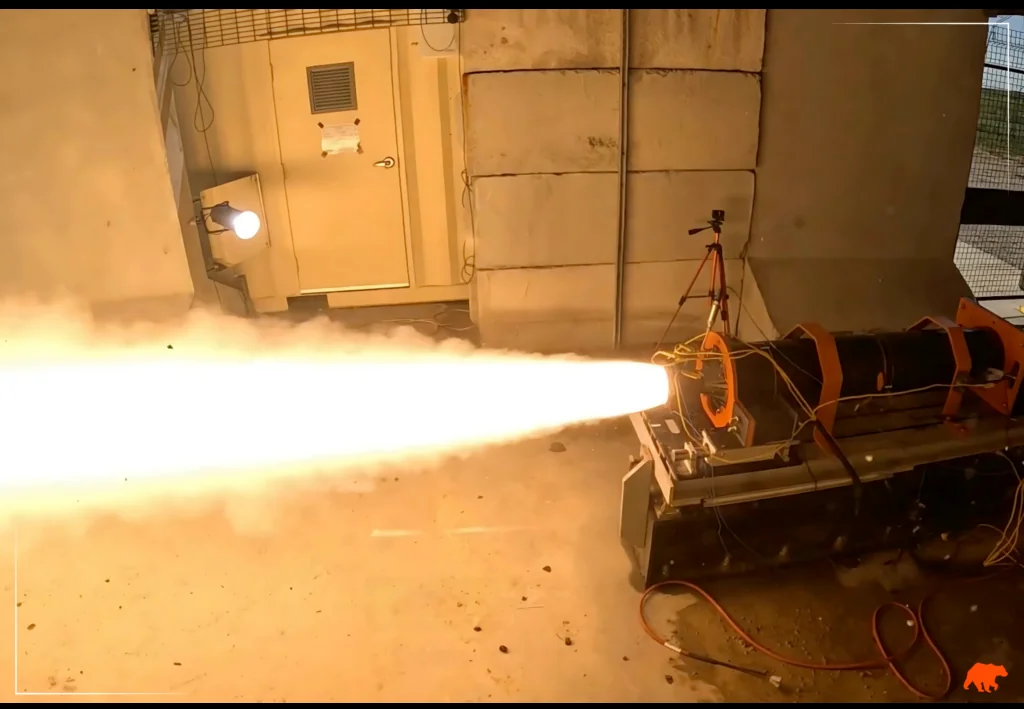
Just over two years ago, Ursa Major set out to re-imagine how solid rocket motors are designed and produced so the United States can replenish critical all-domain missile stockpiles faster, at lower cost, and with high performance—solving the SRM shortfall. Today, that manufacturing approach is delivering a common modular product architecture.

The problem we set out to solve was clear. Legacy SRM manufacturing is slow, brittle, and optimized for single-product lines. The warfighter needs surge capacity and rapid replenishment, not another custom production cell. With Ursa Major’s additive-first, software-backed Lynx process and common production architecture, we’ve built a mixed-manufacturing system that treats SRM production as a repeatable, scalable product line. We deliver SRMs around core architectures with shared components, tooling, and software, that create commonality across the board so most platforms can be served by a standard, lower-cost motor family that still meets performance objectives.

In addition to full execution of our first-of-its-kind manufacturing process, we have:

- completed multiple independent audits, both from government and defense prime customers, that evaluated our energetics and manufacturing processes, providing validation of safety, quality, and scalability.

- increased sustained motor production rate to ~200 motors per year and maintained that cadence for several months, proving meaningful production capacity – and this is just the start.

- proved mixed-model production at scale and are actively manufacturing four different diameter motor sizes concurrently on the same production equipment, running different diameters and lengths through the same flow without line retooling.

- demonstrated operational agility in production. When a customer requested a change to a motor’s thrust profile mid-production, our team modified the design and restarted the line the same day — a capability that is practically impossible on traditional SRM production lines.

- established a Highly Loaded Grain testing pedigree with more than 30 HLG motor tests in the last 5 months, validating HLG as a practical solution to increase propellant mass and extend range without increasing motor size.

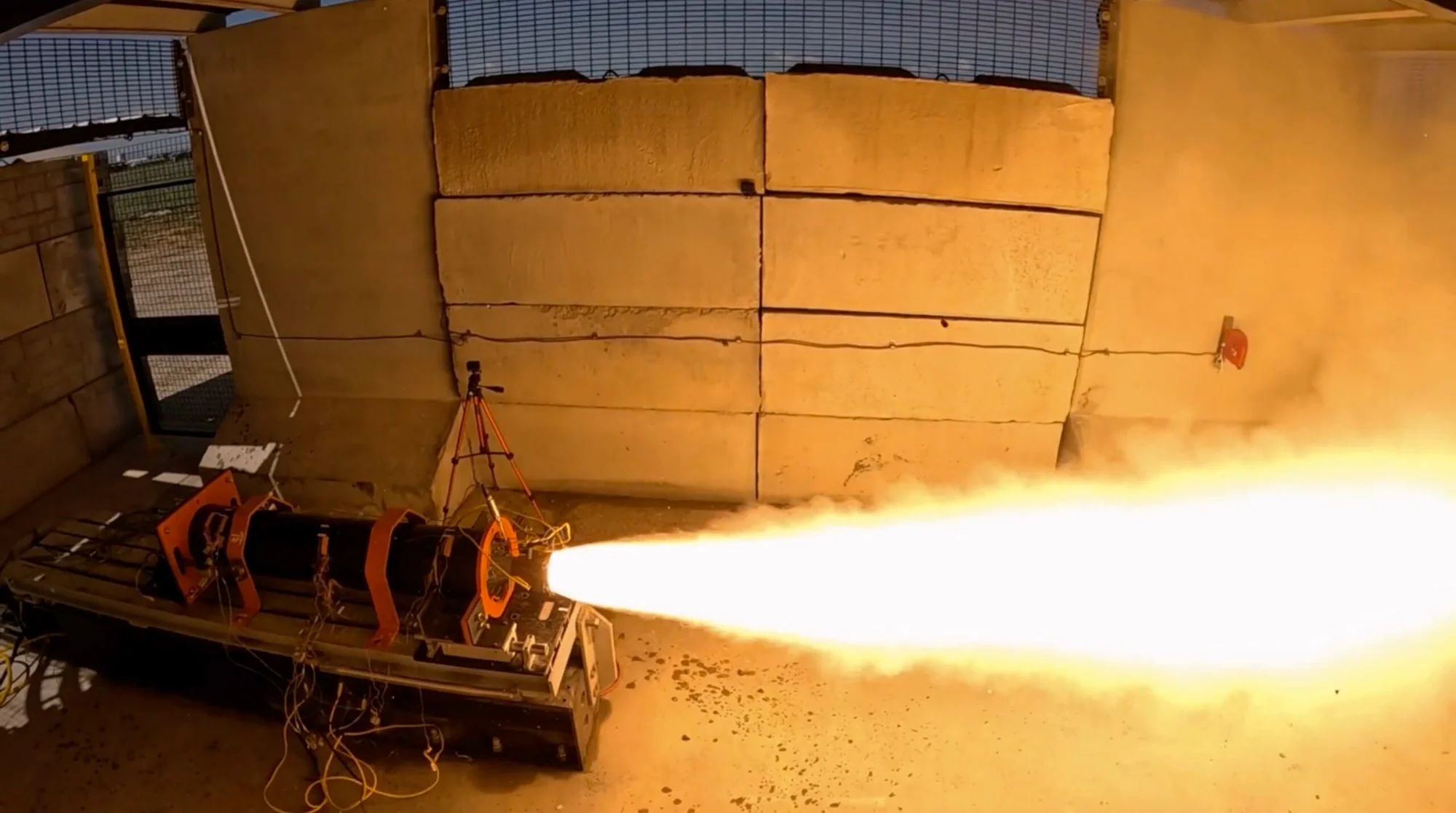
- sustained a regular test cadence of roughly four static fire tests per week, so designs can be refined faster and with confidence.

Ursa Major’s flexible manufacturing method is game-changing for replenishing the nation’s SRM inventory. Our common modular approach means we can scale quickly to meet demand across multiple customers and services and domains. In addition, using physics-based process qualification enables us to reduce program schedule and risk by eliminating the need for bespoke qualification for each motor variant, instead qualifying the production method.

Looking to the future, we’re preparing for the next set of milestones, including flight tests and ramped production. Ursa Major will continue partnering with the Pentagon, new and traditional primes, and our customers to deliver motors across a range of munitions while scaling production throughput and qualifying additional SRM variants.

What people often call ambitious, we call deliberate engineering. Ursa Major’s mixed-manufacturing approach was designed to make SRM production fast, flexible, and repeatable. We’ve proven those concepts in the factory and on the test stand with industrialized propellant production, concurrent mixed‑model manufacturing, sustained production rates, and a growing library of HLG test results. The core tenets of our common, modular and flexible manufacturing method have been demonstrated, and the results are real, American-made, and ready to deliver for the warfighter.

Fly Faster.

Class (B2B/B2C)
B2B
Ingest Status
Error
Dedupe hash
435fccc7ef430555dc813c3095601b45
Press Eligible
No
Press Eligible Reason
Drupal Push 422
Source Name
Ursa Major
Image URL
https://ursamajor.com/wp-content/uploads/2025/11/CommonModularSRM-1024x709.png
Source Node
Content Hash (SHA-256, erste 32 hex)
87bd40ce54e7054b6efea2b7525d2544
An Internship Program Built Around Real-World Challenges
Image File
Original HTML

An Internship Program Built Around Real-World Challenges

What if your internship was an opportunity to work on the technology, projects, and challenges shaping the future of aerospace?

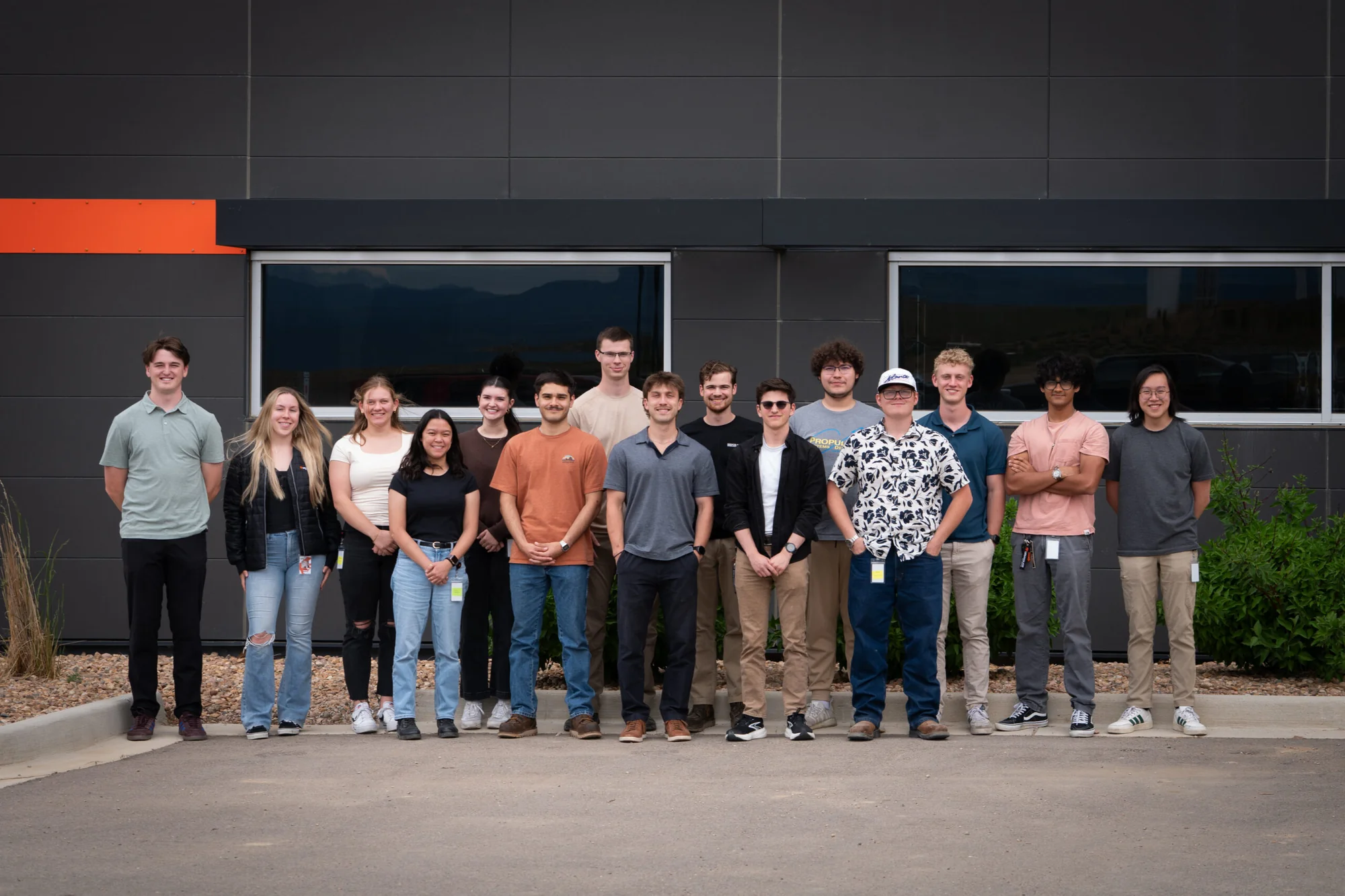
At Ursa Major, interns do more than observe. They join teams, take on meaningful projects, and contribute to work that matters. From hypersonic engine testing and manufacturing to major company events, Summer 2026 interns worked alongside experienced professionals across Ursa Major’s Berthoud, Youngstown, and Washington, D.C. locations.

For many, that experience has become a path to something bigger: a career at Ursa Major.

What Happens When Interns Get to Do the Real Work?

Trey Lustenberger joined Ursa Major as a Configuration Intern after graduating from the University of Colorado Boulder with a bachelor’s degree in physics. His internship led to a full-time position, and Trey now works as a Configuration Engineer.

During his internship, Trey took ownership of projects that connected his work directly to Ursa Major’s hardware and testing programs.

“One of my favorite projects this summer was the drawing for Draper Block 1 As-Tested Tooling Kit,” Trey said. “It excites me knowing I had the opportunity to work on a product that could potentially see the testbed and fly.”

For Trey, the internship offered more than experience to add to a résumé. It gave him the opportunity to contribute to a product with the potential to fly and ultimately become part of the team building it.

What If Your Internship Let You Get Your Hands on the Hardware?

William Stehn, a senior at Clemson University pursuing a master’s degree in mechanical engineering, first joined Ursa Major in Summer 2025. Since then, he has held internship roles spanning manufacturing and engineering.

This summer, William worked as a Test Stand Engineering Intern at the Berthoud campus, gaining direct experience with hypersonic engines firing on test stands.

“My main project was the development of a new modular coldbox that will allow [Ursa Major] to cool the engine, simulating high-altitude flight in testing.”

Projects like this give interns the chance to work directly with hardware and solve problems with real applications. For William, that experience has been valuable enough to bring him

back time again, and he will continue as a Liquids Manufacturing Intern for the academic year.

Aerospace Needs More Than Engineers

The work at Ursa Major extends beyond engineering.

Isabel Hillberg, a senior at Colorado State University studying communications joined Ursa Major as a Marketing & Communications Intern at the beginning of 2026.

“My favorite project over the summer was planning the Longmont ribbon-cutting event and watching it come together,” Isabel said. “Having Governor Polis speak at the event was a highlight to that experience.”

As Ursa Major rapidly develops cutting-edge technology and builds the infrastructure to bring it to market, interns have a rare opportunity to contribute during a pivotal stage of the company’s growth.

Through projects like this, Isabel gained firsthand experience in how marketing and communications supports an organization as it scales from startup to growth-stage.

For Many Interns, The Work Continues

For many students, the Summer 2026 internship was only the beginning. Ursa Major is excited to welcome Aadit Gohil, Josh Bumann, Lucas Lovnander, Barkot Simegn, William Stehn, Isabel Hillberg, and Benjamin Windt back as interns this fall.

Their continues work with Ursa Major reflects what an internship can become when students are given the opportunity to contribute from day one.

An internship should be more than a line on a résumé. It should put you in the room where the work is happening, give you problems worth solving, and surround you with people who are building something important.

Start your career by doing work that matters. Explore opportunities at Ursa Major.

Internships for 2027 will be open later this year.

Class (B2B/B2C)
B2C
Ingest Status
Rewritten
Dedupe hash
5d5120f627eb65ba1a435e248f9de3f4
Press Eligible
Yes
Press Eligible Reason
Aerospace company internship and recruitment news aimed at prospective applicants.
Source Name
Ursa Major
Image URL
https://ursamajor.com/wp-content/uploads/2026/09/DSC09139-2-scaled.jpg
Source Node
Content Hash (SHA-256, erste 32 hex)
4ff5e9b3d9c4f26d03999a2fca7c9781
Ursa Major Appoints Jason Meredith as President
Image File
Original HTML

Ursa Major Appoints Jason Meredith as President

BERTHOUD, Colo. — October 13, 2026 — Ursa Major today announced the promotion of Jason Meredith to President of Ursa Major. In his new role, Meredith will lead business execution across Ursa Major with responsibility for the company’s full profit and loss.

“Jason has the experience and leadership to bring this next phase of Ursa Major to life,” said Chris Spagnoletti, CEO of Ursa Major. “He understands our technology, our customers and what it takes to execute at scale. As President, he will bring that experience across the entire business and help ensure we continue delivering for our customers as Ursa Major grows.”

Meredith most recently served as President of Solid Missile Systems, where he led program execution and engineering across Ursa Major’s growing solid rocket motor portfolio. His promotion comes as Ursa Major continues to scale production across its long-range and hypersonics missiles, solid rocket motors, and space mobility businesses and prepares to become a publicly traded company.

“I’m excited to take on this role at an important point in Ursa Major’s growth,” said Meredith. “We have strong technology, growing demand and a manufacturing approach built to scale. My focus will be on bringing those pieces together across the business so we can move faster, increase production and deliver the capabilities our warfighters need to meet the mission.”

Meredith brings more than two decades of aerospace, defense and solid propulsion experience, with senior engineering, program and business leadership roles at ATK, Orbital ATK, Northrop Grumman, and Pratt & Whitney. He joined Ursa Major in 2026 to lead its Solid Missile Systems business and the continued expansion of the company’s solid rocket motor capabilities.

About Ursa Major

Ursa Major is an advanced weapons and space systems company delivering flight-proven capabilities for hypersonics, solid rocket motors, and space mobility. Headquartered in Berthoud, Colorado, with additive manufacturing operations in Youngstown, Ohio, Ursa Major leverages advanced production techniques and flexible architectures to build systems for all domains: land, air, sea, and space. The company is revitalizing the defense industrial base for the U.S. and its allies, flying faster to accelerate delivery of critical capabilities where speed and adaptability matter most. For more information, visit www.ursamajor.com.

Media Contact: [email protected]

Class (B2B/B2C)
B2B
Ingest Status
Rewritten
Dedupe hash
a2c6d592203c1a2213f5511ba63fcd74
Press Eligible
Yes
Press Eligible Reason
Company leadership appointment and growth in aerospace and defense manufacturing.
Source Name
Ursa Major
Image URL
https://ursamajor.com/wp-content/uploads/2026/10/Jason-Meredith-President-Release-2.png
Source Node
Content Hash (SHA-256, erste 32 hex)
ccaae22d80324b6843074cdc0a0b1d73
Ursa Major Successfully Completes SRM Manufacturing Pathfinder Program with U.S. Navy and OSC
Image File
Original HTML

Ursa Major Successfully Completes SRM Manufacturing Pathfinder Program with U.S. Navy and OSC

The cost-share program concluded on schedule in February 2026 and represents a $25 million joint investment by Ursa Major, the US Navy, and OSC.

DENVER—(July 7, 2026) — Ursa Major has completed its Solid Rocket Motor (SRM) Manufacturing Pathfinder Program conducted in partnership with the U.S. Navy and Office of Strategic Capital (OSC).

Over the course of the program, Ursa Major achieved several key technical and manufacturing milestones. The Company designed, manufactured, and successfully static-fired an HLG 10-inch SRM prototype. Ursa Major also developed and characterized a proprietary propellant for the motor. The motor met all performance objectives and burn duration requirements, achieving a technical and manufacturing foundation for future U.S. Navy systems that require a 10” diameter SRM.

“In partnership with the Navy and OSC, we translated capital into real, measurable outcomes that scaled manufacturing capacity and advanced a production model built for speed and surge,” said Chris Spagnoletti, CEO of Ursa Major. “This program validated that when the government invests in companies that are used to doing more with less, companies that prioritize execution, innovation, and manufacturability from day one, you get capability that matters on timelines that matter. That’s how we rebuild the defense industrial base, and how we deliver credible, scalable capability to the joint force.”

With this program, Ursa Major invested heavily in facility scaling and process improvements to expand its SRM production capabilities. Program milestones were intentionally structured to act as a pathfinder for larger systems. The program also enabled significant refinement of the Company’s common, modular manufacturing process, known as Lynx, which uses Highly Loaded Grain and enables subsystem commonality across components. This approach reduces tooling costs and lead times while increasing flexibility and scalability across multiple motor variants. As a result, Ursa Major is ready to scale to support the U.S. Navy’s demand for solid rocket motors.

The work was conducted in close collaboration with the Naval Air Weapons Center Weapons Division at China Lake, the Naval Surface Warfare Center Indian Head Division, and Naval acquisitions to streamline development, align technical execution with mission-specific requirements, and ensure the manufacturing approach supports real-world operational needs. The work directly supported the Department of War’s Strategic Objective Needs by focusing on manufacturability, scalability, and rapid qualification of SRM technologies critical to missile and rocket systems across the joint force.

About Ursa Major

Ursa Major is an aerospace and defense company delivering flight-proven capabilities for hypersonics, solid rocket motors, space mobility and launch. Headquartered in Berthoud, Colorado, with additive manufacturing operations in Youngstown, Ohio, Ursa Major leverages advanced production techniques and flexible architectures to build systems for all domains: land, air, sea, and space. The company is revitalizing the defense industrial base for the U.S. and its allies, flying faster to accelerate delivery of critical capabilities where speed and adaptability matter most. For more information, visit www.ursamajor.com.

For questions or to schedule an interview, please contact: [email protected]

Class (B2B/B2C)
B2B
Ingest Status
Error
Dedupe hash
26b4fff8f4e5d4f714474ca65a496723
Press Eligible
No
Press Eligible Reason
Drupal Push 422
Source Name
Ursa Major
Image URL
https://ursamajor.com/wp-content/uploads/2026/07/SRM10in-2-scaled.jpg
Source Node
Content Hash (SHA-256, erste 32 hex)
6f9b5d1cdb84fabdac3bf20006895021
U.S. Navy Awards Ursa Major $137M for Advanced Solid Rocket Motor Programs
Image File
Original HTML

U.S. Navy Awards Ursa Major $137M for Advanced Solid Rocket Motor Programs

Contracts include funding for $91M for the Compact Air-to-Air Missile solid rocket motor and $46M for the Naval Modular Missile Quad-Pack Medium-Range motor

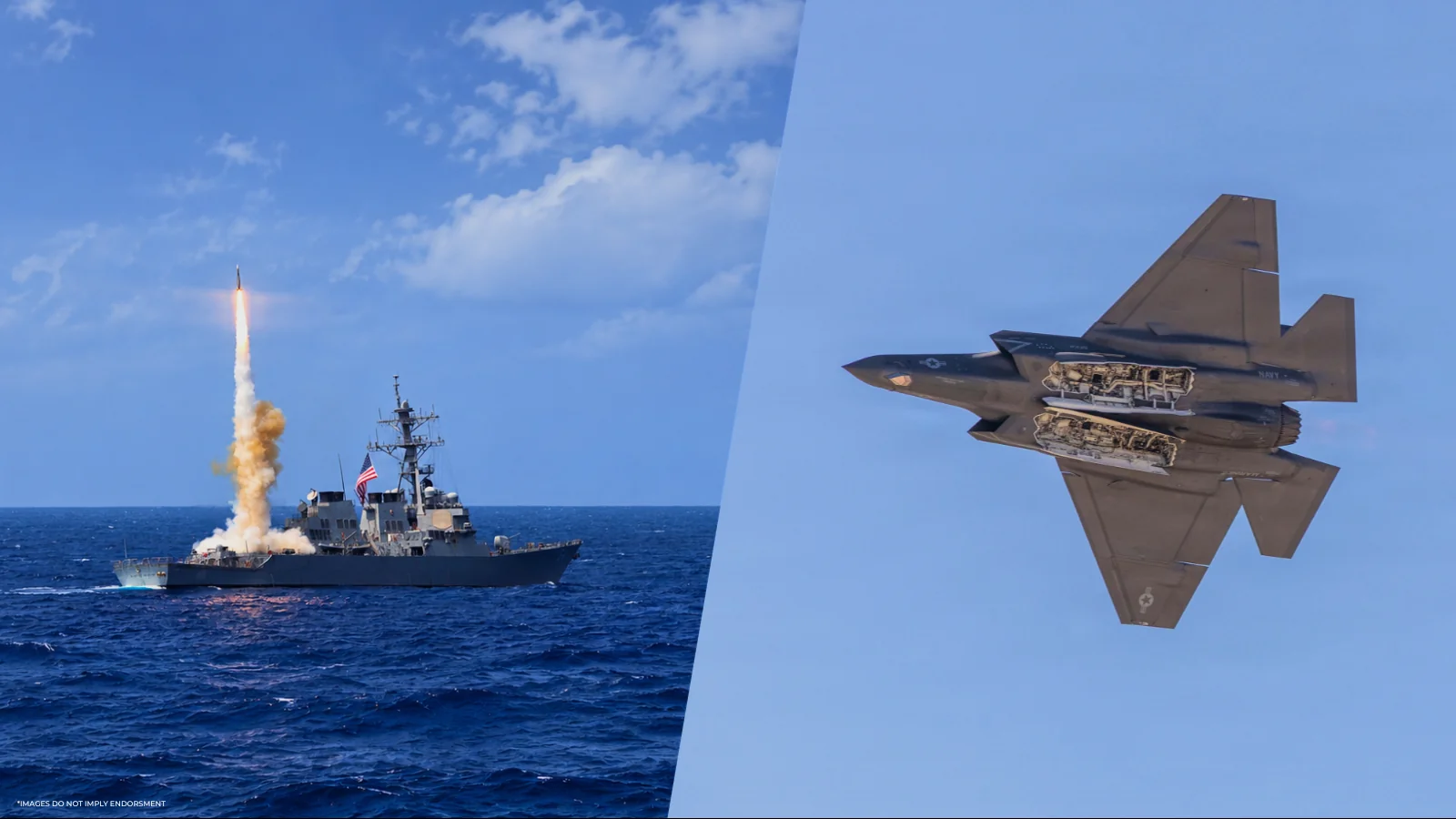
BERTHOUD, Colorado (October 5, 2026) — The U.S. Navy has awarded Ursa Major two separate contracts, totaling $137 million, funded through the Office of the Under Secretary of War (OUSW), to develop and qualify advanced tactical solid rocket motors for the Compact Air-to-Air Missile (CAAM) program and the Naval Modular Missile (NMM) program. The awards leverage Ursa Major’s Lynx manufacturing approach, expanding energetics production capacity and applying advanced additive manufacturing techniques to deliver tactical motors that can be produced at scale.

“By investing in CAAM and NMM, the Navy and OUSW are building solid rocket motor capacity now and getting new tactical air and naval capabilities into development sooner,” said Jason Meredith, president, Solid Missile Systems at Ursa Major. “Our Lynx manufacturing approach and growing energetics capacity enable us to design, build, test, qualify and field these motors faster to support the warfighter. Production is the bottleneck in missile programs right now, and that’s the part we’ve been building for.”

For CAAM, an air-launched missile for current and next-generation aircraft, Ursa Major is designing a high-performance compact, low-cost 7-inch solid rocket motor designed to achieve performance requirements inside a tight volume and at low unit cost using Highly Loaded Grain. The design is being developed with the same manufacturing methods planned for full production, so it can be built at scale once qualified.

Ursa Major will also support the NMM medium-range variant by providing a 10-inch solid rocket motor designed for high-rate production and compatibility with existing Navy shipboard launch systems. The effort is aimed at delivering an operational motor that meets Navy performance and safety requirements while supporting high annual production volumes.

The awards build on Ursa Major’s existing solid rocket motor work with the Navy. In July, the Navy awarded the company $10 million to advance its MK 104 design through critical design review and static fire testing to support the Standard Missile family. In February, Ursa Major completed a $25 million cost-share Solid Rocket Motor Manufacturing Pathfinder Program with the Navy and the Office of Strategic Capital, designing, building and static-firing a 10-inch Highly Loaded Grain motor and developing a proprietary propellant for it. That work was conducted with the Naval Air Warfare Center Weapons Division at China Lake and the Naval Surface Warfare Center Indian Head Division.

About Ursa Major

Ursa Major is an aerospace and defense company delivering flight-proven capabilities for hypersonics, solid rocket motors, and space mobility. Headquartered in Berthoud, Colorado, with additive manufacturing operations in Youngstown, Ohio, Ursa Major leverages advanced production techniques and flexible architectures to build systems for all domains: land, air, sea, and space. The company is revitalizing the defense industrial base for the U.S. and its allies, flying faster to accelerate delivery of critical capabilities where speed and adaptability matter most. For more information, visit www.ursamajor.com.

For questions or to schedule an interview, please contact: [email protected]

Class (B2B/B2C)
B2B
Ingest Status
Error
Dedupe hash
fd0016cf3c3ab7684dc6aeb451d93ac1
Press Eligible
No
Press Eligible Reason
Drupal Push 422
Source Name
Ursa Major
Image URL
https://ursamajor.com/wp-content/uploads/2026/10/UrsaMajor_CAAM_NMM.png
Source Node
Content Hash (SHA-256, erste 32 hex)
6da183488d262edb2f68ffa97ca21793
Rep. Ilhan Omar says she will move from her Washington, DC, home after federal search
Image File
Original HTML

Rep. Ilhan Omar says she will move from her Washington, DC, home after federal search

U.S. Rep. Ilhan Omar says she will move out of her Washington, D.C., home that federal agents searched last week

U.S. Rep. Ilhan Omar will move out of her Washington, D.C., home that federal agents searched last week, she said Wednesday, noting that attention brought on by the raid has made her feel unsafe there.

Federal authorities are investigating potential fraud in her family's immigration paperwork and have issued grand jury subpoenas to some of her relatives, a person briefed on the investigation told The Associated Press on condition of anonymity because they were not authorized to discuss an ongoing investigation.

Omar, who was born in Somalia and is a naturalized U.S. citizen, said Wednesday in her first interview since the search that she is “confident in the fact that I didn’t do anything wrong.”

The progressive Minnesota Democrat has been a frequent critic and target of President Donald Trump, who has on multiple occasions pushed for the prosecution of his perceived political enemies.

In the interview with MS NOW, Omar said she was rattled by the search weeks out from the Nov. 3 midterms, which will decide control of the House and Senate. She is running for reelection in a deep blue district centered in Minneapolis and is expected to retain her seat.

Omar recalled waking around 6 a.m. to Homeland Security investigators banging on her door with a warrant. They searched for four or five hours and seized 17 items, including phones, notebooks, a Somali language children’s book and a vintage camera that her husband had received as a gift, she said.

The Justice Department has shared few details about the case other than saying it was a criminal investigation.

Omar came with her family to the U.S. at age 12, after they obtained asylum. She became a U.S. citizen five years later, in 2000.

“It would be a huge undertaking to, I suppose, indict a 12-year-old for so cleverly conspiring to defraud immigration services to come to the United States. I'm sure there are a lot of smart 12-year-olds, but that seams like a leap,” she said in the interview.

The search drew sharp condemnation from congressional Democrats, who also questioned the timing. The Justice Department has historically avoided overt investigative actions involving candidates in the immediate run-up to an election.

Omar said the agents were “intrusive but polite,” logging the items they took and putting back everything else in its place.

___

Associated Press reporter Alanna Durkin Richer contributed from Washington.

Class (B2B/B2C)
Ignore
Ingest Status
Need Review
Dedupe hash
b4324bd5e490c939ad84576874d21c7e
Press Eligible
No
Press Eligible Reason
Irrelevant (need review): Primarily political news about a congresswoman and an investigation, with no substantive business or technology focus.
Source Name
Davenport Aviation
Image URL
https://i.abcnewsfe.com/a/4ba686c7-fd90-495d-9089-14db1a1f279b/wirestory_21e4b07a2c3a18addc751e4535f2954f_16x9.jpg?w=1600
Source Node
Content Hash (SHA-256, erste 32 hex)
60827e4cc8bca4fe1a7898f4911ae9e3
Why experts say California is the best-equipped state to deal with wildfires
Image File
Original HTML

Why experts say California is the best-equipped state to deal with wildfires

Even with ample resources, it can still be difficult to contain wildfires.

California has just experienced one of its worst wildfire seasons in years, despite the Golden State's ample resources to combat the blazes once they spark.

The Palisades and Eaton fires, while both mostly contained as of Wednesday, are still active in Los Angeles County after starting on Jan. 7 and burning through tens of thousands of acres and killing at least two dozen people -- and new fires have popped up as the region's landscape remains dry and filled with fuel.

California is the best-equipped state in the country to combat wildfires, experts told ABC News. But even with the availability of personnel, equipment and the most advanced technology, other factors -- some exacerbated by climate change -- often make it impossible to contain fires before they cause widespread destruction.

Firefighting resources in California are abundant

The state often experiences the most fire activity in the U.S., leading the country with the most wildfires and the most acres burned, according to the National Interagency Fire Center. The California Department of Forestry and Fire Protection (Cal Fire) says it responds to an average of 7,500 wildfire incidents annually.

But California contains a "spider web" of different fire control, fire management and fire agencies that all come together to combat large wildfires, like the fires that decimated large portions of Los Angeles and Ventura counties in recent weeks, Hugh Safford, a research fire ecologist at the University of California, Davis, told ABC News.

These agencies include local fire departments run by municipalities, which contain firefighters trained not only in urban, or structural, fires but wildland fires, as well. Combined with state and federal efforts -- which include Cal Fire, the U.S. Bureau of Land Management, the National Park Service and the U.S. Forest Service -- California contains not only the most firefighters in the country but also the most highly trained, Safford said.

"The Forest Service has, by far, the largest firefighting organization of all of those, because it manages most of the nation's forests," Safford said. "It deals with most of the areas in which fire risk to ecosystems and to humans is most extreme."

Considering the wildfire risk to human lives, property and wildlands, California has a vast budget for fighting wildfires. Cal Fire was given a $4 billion budget for the 2025 to 2026 season, and operating budgets are always subject to increase in the event of a big fire year, Safford said. Of the Forest Service's $3 billion annual fire suppression budget, most of it is spent in California, he added.

That budget allows for the best equipment, such as helicopters and other machinery, to be implemented during firefighting efforts, Safford said. With Silicon Valley in proximity, the latest technologies in firefighting are also readily available, he added.

"A lot of that new technology is being tested and used here to begin with," Safford said.

Despite ample resources, putting out fires can still be difficult, experts say

Wildfires have been getting bigger and more extreme in the last several decades, research shows. The frequency and intensity of extreme wildfires have more than doubled in the last two decades, a study published last year in Nature Ecology & Evolution found. In regions already prone to wildfires, a climate that has caused further d warming and drying is partly to blame.

In California, annual wildfires are burning five times more land than in the 1970s, according to a 2019 study published in Advancing Earth and Space Sciences.

"Climate change has made California hotter and drier," said Emily Fischer, a professor of atmospheric science at Colorado State University and a member of Science Moms, a nonpartisan group of climate scientists and mothers that says it aims to build a better future for kids. "That just makes it easier for fires to start and spread, and that means a larger area is burning every year," she said.

While wildfires are a natural and necessary part of Earth's cycle, climate change and other more direct human influences have increased their likelihood. Firefighters are battling blazes that could now be considered "unnatural" due to their severity, making them harder to contain before they cause widespread damage.

Safford, who used to work for the U.S. Forest Service, said he's witnessed the rise in wildfires firsthand, in terms of cost. In the year 2000, fire suppression accounted for about 20% of the Forest Service's annual budget, he said. Now, firefighting is taking up about 70% of the agency's budget, he said.

That increase in fire suppression needs has taken away from the Forest Service's other responsibilities, such as restoration, recreation, conservation and law enforcement, Safford said.

"We're burning communities and forests down at a scary rate these days," he said.

In the case of the Los Angeles wildfires, their inception was caused by a perfect storm of weather and climate conditions -- including a Santa Ana wind event that brought hurricane-force winds to the region, as well as plentiful fuel left from two consecutive wet winters followed by months of drought conditions.

The co-occurrence of these events could potentially take place more frequently in the future, further increasing the risk of fires in California, Lei Zhao, an assistant professor of civil and environmental engineering at the University of Illinois, told ABC News.

"Climate change trends, the extremes and climate variability contribute to this situation," Zhao said. "All those things are likely to be exacerbated in the future."

Class (B2B/B2C)
B2C
Ingest Status
Error
Dedupe hash
3ffd5273288c42759013bcf7eec99308
Press Eligible
No
Press Eligible Reason
Drupal Push 422
Source Name
Davenport Aviation
Image URL
https://i.abcnewsfe.com/a/27fe2fde-895a-44a1-9300-77d902401501/california-weather-3-rt-jm-250127_1737988236937_hpMain_16x9.jpg?w=1600
Source Node
Content Hash (SHA-256, erste 32 hex)
1a67227ac65a72a63805ff1417f890ef