PayCargo News
Image File
Original HTML

Background

This global air cargo handler operates multiple stations across the UK, serving walk-in and cash-on-delivery (COD) customers who often have no account on file. For these customers, typically one-time consignees or smaller shippers, every payment relied on manual invoicing and a traditional card reader at the counter.

£7.8M+

in payments collected across UK stations to date

~15,000

transactions processed since launch

£234k+

in estimated savings to date

Zero

card readers; every payment now digital

Challenge: Manual counter payments were slowing cargo release

Because payment was the last step before cargo could be released, every slow transaction rippled straight into the operation. Walk-in and COD customers had no account on file, so staff processed each payment manually, invoicing by hand and running a traditional card reader at the counter.

That manual process created real friction: longer queues at the counter, delayed cargo release, and added pressure on station staff. In an operation where payment gates cargo release, slow processing didn’t just cost time at the counter, it slowed the entire shipment.

Solution: Payments — Moving every counter to one digital platform

The handler rolled out PayCargo’s payments platform station by station, starting with its busiest UK location before extending across its network. The traditional card reader system was retired, with all point-of-service payments moving to one digital platform:

- Secure one-time payments: the company´s walk-in and COD customers pay on the spot without having to set up an account

- Digital point of service: counter payments now go through a single digital platform, so customers move through faster and aren’t stuck behind slow, error-prone card transactions

- Automated reconciliation: payments reconcile automatically, so customers don’t have to follow up or wait on manual invoicing to confirm their payment went through

- Faster cargo release: instant payment confirmation means customers get their cargo released faster, with shorter queues at the counter

Result: £7.8M+ processed, zero card readers left in the network

Measured results:

- £7.8M+ in payments collected across UK stations to date

- ~15,000 transactions processed since launch

- £234k+ in estimated savings to date

- Zero card readers; every payment now digital

Strategic Outcome:

By moving every station payment onto PayCargo’s payments platform, the handler cut costs, sped up the counter, and released cargo sooner for walk-in and COD customers. Automated reconciliation replaced slow manual invoicing and eased pressure on station staff, while customers now pay in a few taps with instant confirmation. With the card reader system fully retired, the handler plans to extend the rollout to further stations.

Class (B2B/B2C)
B2B
Ingest Status
Error
Dedupe hash
c390907064bbebfa658f8dfe3a945b72
Press Eligible
No
Press Eligible Reason
Drupal Push 422
Source Name
PayCargo
Image URL
https://paycargo.com/wp-content/uploads/2026/09/Group-4-1024x1024.webp
Source Node
Content Hash (SHA-256, erste 32 hex)
7eefe12025982f4badebf6ef46a020c8
The Development of an Ambulatory Infusion Center Business
Image File
Original HTML

Our History

As serial healthcare entrepreneurs, Kelly Lambrese and I had been successful in starting healthcare businesses that introduced novel and innovative treatments to the marketplace, resulting in improved clinical outcomes for patients, a better patient experience, a simplified process for our referral sources, and a reduced cost of care for payers. We fulfilled this mission throughout the years as a home infusion provider, Medicare-certified home health agency, DME & home respiratory care provider, and a clinical trials business. And then we were ready for the next chapter in our professional lives.

The Opportunity & Analysis

While researching new, growing opportunities in healthcare, we discovered the emerging Ambulatory Infusion Center (AIC) market. As we conducted due diligence on the industry, we spoke with multiple people involved in the space, including successful AIC entrepreneurs, investment bankers, healthcare investors, physicians, payers, patients, and others. The feedback we received was consistent – there are tremendous tailwinds in this industry driven by physicians and patients searching for an improved experience and an alternative to hospital infusion centers, and payers motivated to reduce the cost of care.

Although we understood the key functions in home infusion – clinical operations, revenue cycle management, sales, marketing, and finance – we quickly learned that the AIC space is somewhat different. We believed that mistakes can be costly and time is money, so we sought out industry experts to advise and guide us, and based on the recommendations from the many people we spoke with during due diligence, we reached out to WeInfuse. Although engaging consultants can seem expensive, engaging the right consultants helps avoid costly mistakes, expedite start-up, and become a long-term resource.

While we were finalizing our business plan for Suite Life (www.suitelifehealth.com), Kelly and I reached out to Reece Norris at WeInfuse. He was kind enough to have a few conversations with me so I could pressure test my assumptions, get some questions answered, and provide us feedback. It was reassuring to our potential investors that we intended to work with WeInfuse, as both consultants and software providers. After completing the plan, we were able to secure an angel investment, lease our first location in southeast Massachusetts, pre-sell in the marketplace, and formally engage WeInfuse to guide us through the critical start-up phase of our company.

The Pre-Start Phase

Things started to move fast with the business. Kelly and I began scheduled weekly calls with Reece and Julie Walker, their consultant and sales liaison. We needed to build out the infusion center, finalize policies and procedures, fine tune the budget, recruit staff, develop our website, negotiate with wholesalers and medical distributors, and secure payer contracts. And we wanted to compress the timeline between the start of the company and first patient treated.

During our meetings with Reece and Julie, we addressed these priorities and received valuable guidance, including buildout considerations, furniture and fixture recommendations, standard operating procedures, important forms and templates, and best practices in the industry. They saved us valuable time and money by introducing us to key contacts at wholesalers, GPOs & medical equipment distributors; credentialing experts to assist with payer contracting; many “friendly” competitors from who we learned a great deal and remain connected; the National Infusion Center Association (NICA); and many other helpful organizations. One unexpected benefit included referring an angel investor looking to get into this space, and he has since become a valued partner, board member, and important advisor.

We formed the legal entity for the business in December 2023 and treated our first patient in March 2024. Throughout the first quarter, we trained on WeInfuse’s software program including the RxToolKit. The software implementation was seamless and effortless, and is among the best we have used throughout 30 years and multiple healthcare businesses.

A Very Busy Launch

When a large, multi-speciality physician group nearby closed their infusion suite around the time we were opening, we onboarded hundreds of infusion and injectable patients. Fortunately, we had contracted with many key payers enabling us to onboard their patients, but it was like drinking through a fire hose for weeks. Reece and Julie remained readily available for us to help capitalize on opportunities, avoid mistakes, and develop very efficient processes to provide quality care and improve the patient experience. As is true for all entrepreneurs, we stumbled at times but picked ourselves back up, learned from the experience, stayed positive, and persevered.

Our current referral sources are diverse and extend well beyond the physician group that closed their infusion center when we were opening Suite Life. So many physicians and their practice managers are unhappy with the status quo: the difficulty in making referrals and obtaining prior authorizations from the payers; coordinating with specialty pharma when necessary; and hearing patients complain about access, costs, and convenience. In addition, several patients found us online – especially snowbirds searching for their infusions while traveling.

Our focus remains on the key specialties that drive the business – neurology, gastroenterology, rheumatology, endocrinology, immunology, pulmonary, and others. Simplifying the patient

referral process, improving the patient journey, and reducing the cost of care for health insurers and patients remain the keys to our success.

Scaling the Business & Diversifying

Fortunately, we have been able to build our management team and add quality players in clinical operations, finance, and business development. As a result, we are now planning to open our next two centers in southern New England before the end of 2024. As our team speaks with referral sources and biotech representatives throughout the area, Kelly and I are encouraged by the tailwinds in the industry – payer driven site of care shifts, patients looking for a better experience, and physicians wanting a simple referral and care management process. Our industry is built to deliver these results and further distinguish ourselves from the high cost, inconvenient, and institutional experience offered at most hospital-based infusion centers.

In addition to opening new locations, we are diversifying our business. Based on past experience and success in the clinical drug trials business, we will be conducting phase 1B through phase 4 studies for the biotech industry. There is a robust pipeline of new medications in development and a limited supply of infusion centers qualified to conduct the research. Time is money for the biotech companies as patents have an expiring shelf life. Experience in trial recruitment, budgeting and contracting, the regulatory process, and patient enrollment are needed to build a successful research business. By incorporating clinical trials into our business, we can leverage so many of the resources we need to operate a successful infusion center. And there is a credibility that comes along with providing these novel and innovative therapies in the market. Some of the FDA-approved medications we administer today were drugs in development that our team worked on a few years ago in a prior business.

Closing Thoughts

Being a healthcare entrepreneur in an important and expanding market is exciting, nerve wracking, professionally rewarding, and stimulating. Enjoy the journey, embrace your team, respect your referral sources, collaborate with your colleagues in the industry, and treat your patients like family. You are part of the solution for patients, payers, providers, and the biotech industry.

Guest Authors:

Chief Executive Officer Bernie Lambrese

Chief Patient Experience Officer Kelly Lambrese

WeInfuse is dedicated to keeping infusion simplified by streamlining workflows for home infusion, specialty pharmacies, and infusion centers. WeInfuse software enables infusion operators to operate efficiently, decrease burnout, maximize profits, and improve clinical outcomes.

For more infusion insights, tune into the WeInfuse podcast, download our magazine, and subscribe to our blog.

See how WeInfuse is saving infusion operators both time and money with our ROI Calculators.

Class (B2B/B2C)
B2B
Ingest Status
Error
Dedupe hash
c4cbf06a51c1202039aafabf522264f2
Press Eligible
No
Press Eligible Reason
Drupal Push 422
Source Name
WeInfuse
Image URL
https://weinfuse.com/wp-content/uploads/2024/11/SuiteLife-Blog-1024x614.png
Source Node
Content Hash (SHA-256, erste 32 hex)
1e3591cd6d359e28fb9e87de748137b3
In the Chair with Multi-Platinum Country Artist Clay Walker: His Life Beyond the Stage, Living with Multiple Sclerosis
Image File
Original HTML

Navigate directly to any section of this article.

What is Multiple Sclerosis, and How Many People Are Affected by It?

As one of many chronic diseases, multiple sclerosis impacts the brain, spinal cord, and optic nerves, and currently has no cure. Unfortunately, the exact cause of MS has not yet been found, but research has determined that something triggers the immune system and attacks the central nervous system (CNS). After this attack, the body’s myelin is damaged, causing a communication cutoff across the brain. This damage causes unpredictable symptoms like tingling, numbness, memory problems, mood changes, pain, paralysis, and more.

There are three main disease courses of MS: Relapsing-Remitting, Primary Progressive, and Secondary Progressive. Relapsing-Remitting MS is the most common form at diagnosis, causing affected individuals to experience periods of relapses followed by periods of remission. Some individuals with RRMS may eventually develop Secondary Progressive MS, where neurological disability gradually worsens over time. Clay Walker himself has suffered from relapsing-remitting MS (more on that to come).

But Walker isn’t alone in his fight with multiple sclerosis, whether it’s the Relapsing-Remitting, Primary Progressive, or Secondary Progressive form. Approximately 1 million people in the U.S. have multiple sclerosis (MS), according to the National Multiple Sclerosis Society, which conducted research back in 2019 to get a better understanding of how many people suffer day-to-day from this disease. MS organizations estimate that 3.1 million people worldwide are suffering from this disease.

For more predicted stats, visit nationalmssociety.org.

Clay Walker’s Story: The Life of a Country Artist, Family Man, and Multiple Sclerosis Patient & Advocate

In 1996, 26-year-old Clay Walker was diagnosed with MS after experiencing facial spasms, a lazy right leg that felt numb and “asleep”, an electric-shock feeling down his spine, double vision, and numbness in his hands.

After being told that this disease would upend his life, Walker thought he would no longer be able to walk, would be confined to a wheelchair for four years, and in eight years, he’d be dead [2]. Despite his first neurosurgeon telling him this, Clay Walker defied the odds. By immediately seeking additional counsel and help from other doctors, Walker has had almost 20 years of stability. Now in his 50s, Walker has proved it’s possible to live a life not defined by a chronic disease, but by the life you choose outside of it.

Walker’s life has led him to release 11 studio albums and win multiple platinum awards over the length of his career, including four Recording Industry Association of America (RIAA) platinum album certifications and two gold album certifications.

He doesn’t plan to slow down either. His most recent full-length album, Texas to Tennessee, was recorded in both his home state of Texas and his new home in Tennessee. In the 2021 album, Walker reflects on his storied career and how he ended up in Nashville, TN. Since the album, Walker has released additional standalone singles and continues to tour.

The Turning Point for Clay Walker and His Multiple Sclerosis – The Relapse and Learning How to Live With It

More Than a One-Man Show: Walker’s MS Support Team, On and Off the Stage

In 2025, Walker reported that his MS had relapsed (People.com) and that he faced a new wave of complications. To help combat living with this chronic disease, Walker’s wife Jessica quickly became his caretaker, playing a major role in her husband’s health. As wife and caretaker, Jessica maintains a healthy diet and lifestyle for her family [3].

When Jessica can’t join Walker on the road during his hectic tour schedule, they depend on Walker’s bandmates to become his secondary caregivers. Whether it’s Jessica or his bandmates, Clay Walker has an army of support around him, all devoted to keeping him strong, provided for, and doing what he loves: advancing his musical career.

“Although there are over 90 million [caregivers] nationwide, it can be a lonely position at times. Knowing that you can reach out and create your own support team is really important,” Jessica told FoxNews.com.

The Road to Managing MS: Walker’s Treatment Journey

Clay Walker has recently been open about his multiple sclerosis treatments over the years, including Copaxone injections, Ocrevus (ocrelizumab) infusions, and a Baclofen pump surgery.

During the early stage of his diagnosis, Walker took Copaxone, a prescription subcutaneous injection used to treat relapsing forms of MS. These self-administered daily injections helped maintain his long relapse-free period. However, after experiencing a severe sensory attack in 2020 that caused numbness from the chest down, he switched to Ocrevus, an infusion (IV) therapy that’s given twice a year and is administered into a vein via the patient’s arm.

During an interview with Lone Star Plate [4], Walker recalled his sudden attack after being relapse-free for 20 years. “That was a shocker for me and my wife. And, you know, we have four kids, and we didn’t know what was going to happen. I couldn’t feel anything from my chest down… I just lost all feeling, and that lasted for several months. That was a very dark time, very stressful for her as well. And I came through that with the help of my doctors in Houston… I started this new therapy that every six months you take as an IV—it’s called Ocrevus.”

In March 2025, Walker underwent surgery to implant a Baclofen pump, a device that delivers a muscle relaxant directly into the spinal fluid. Since implantation, it has modestly improved his mobility by delivering continuous doses to relieve muscle stiffness and ease his severe spasticity.

But while Walker knows that these treatments cannot cure MS completely, he still chooses hope over fear.

Clay Walker discusses his multiple sclerosis journey and treatment experience in an interview with Lone Star Plate Podcast.

“You know, every day for someone with MS is an unknown, and I don’t wake up in fear every day…That’s where the charity comes from. That’s where Band Against MS comes from. Our goal is to stamp out MS, to eradicate it. You know, I have no other goal than that with the charity.” [4]

The Establishment of The Clay Walker Foundation (a.k.a. Band Against MS)

Clay Walker’s charitable initiatives and efforts in the fight against multiple sclerosis.

In 2003, Walker established The Clay Walker Foundation, a nonprofit organization dedicated to fighting MS, funding research, and finding solutions to everyday struggles. Through this organization, Walker and his team have dug into the hard questions, hoping to help families in their battle with the disease and serve as key leaders in educating, informing, and helping people live the lives they deserve.

Since its establishment, the organization has hosted numerous events and fundraisers, including the Band Against MS Gala and the Clay Walker Charity Classic at Pebble Beach.

The Band Against MS Gala celebrates the nonprofit’s progress in research and fundraising for people living with MS. It is a night full of musical entertainment, special guest appearances, a seated dinner, and a live auction.

His other signature event in connection with the gala is the Clay Walker Charity Classic at Pebble Beach. This annual golf tournament stretches over multiple days and is designed to further support Walker’s nonprofit in the fight against multiple sclerosis. It is hosted at world-class courses at Pebble Beach Resorts in California, including Pebble Beach Golf Links, Del Monte Golf Course, and the Spyglass Hill Golf Course. The event features multi-format golf competitions, like a 36-hole championship and the “Clayboy Cup” team shamble.

Multiple Sclerosis Won’t Have the Final “Verse”

While the chronic autoimmune disease alters the way one lives, it is imperative to note that it doesn’t have to define your life completely. As a community, WeInfuse and many others are determined not to let multiple sclerosis have the final say. By showing up and staying committed each day, we can fight back against the disease, one step at a time.

To Clay Walker and everyone else who is affected by MS, know you are not alone. WeInfuse is proud to support the infusion teams that help deliver care to MS patients across the country.

For advanced care and awareness, check out these additional resources and foundations regarding MS treatments, stats, and more:

Keeping Care on Beat: WeInfuse’s Role in MS Infusion Therapy

While WeInfuse never works directly with a patient, we proudly support the teams behind the care and dedication. We believe that by helping infusion providers streamline their operations, they can better care for the patients who seek their guidance and services. For us, it will always be a win-win outcome.

WeInfuse has proudly served 1400+ infusion centers, including MS treatment locations, over the span of 10 years, and we don’t plan to slow down. We believe infusion teams are the heartbeat of a patient’s journey, and we strive to help them create a better tomorrow for people who suffer with MS or any other chronic autoimmune disease that requires IV care.

For more information about our software services, please don’t hesitate to contact us. Reach out at weinfuse.com/about/contact-us/ to get started.

Main Sources Used

Author: Brittany Casadiego, WeInfuse Marketing Lead

Subscribe To Our Newsletter

Get updates and learn from the best

WeInfuse needs the contact information you provide to us to contact you about our products and services. You may unsubscribe from these communications at any time. For information on how to unsubscribe, as well as our privacy practices and commitment to protecting your privacy, please review our Privacy Policy.

Class (B2B/B2C)
B2C
Ingest Status
Error
Dedupe hash
254cb793590a38b9a4e1596c1842f61e
Press Eligible
No
Press Eligible Reason
Drupal Push 422
Source Name
WeInfuse
Image URL
https://weinfuse.com/wp-content/uploads/2026/10/Clay-Walker-Blog-2.png
Source Node
Content Hash (SHA-256, erste 32 hex)
6fec8308831a6fab0b71cdef3c21916e
Press Release: WeInfuse and Clarion Partner to Bring AI Agents to the Infusion and Pharmacy Front Office
Image File
Original HTML

Clarion’s AI agents connect directly to WeInfuse to resolve routine patient calls using live order, authorization, and appointment data.

DALLAS, October 14, 2026 – WeInfuse, the premier software platform for infusion providers and pharmacies, announced a strategic partnership with Clarion, an end-to-end platform that runs the front office for medical practices with AI agents.

As demand for infusion therapy continues to grow, providers and pharmacies face increasing administrative demands, from managing inbound phone calls and scheduling requests to coordinating referrals and prescription refills. Through this partnership, WeInfuse and Clarion are bringing AI agents into infusion operations, helping clinical teams automate routine communications, improve responsiveness, and dedicate more time to patient care.

WeInfuse’s cloud-based platform manages the end-to-end workflows of infusion providers and pharmacies, including intake, scheduling, clinical documentation, inventory management, dispensing, and billing. Clarion connects directly to WeInfuse, so its agents see each patient’s orders, prior authorization status, and upcoming appointments in real time. They resolve routine calls end to end and route everything else to the patient’s clinic. Together, the two platforms cover not only the clinical and operational aspects of infusion care, but also the communications that connect patients and care teams.

“As a physician, I’ve seen firsthand how administrative work pulls clinical teams away from the patients who need them,” said Clarion Co-Founder & CEO Ryan Gallagher, MD. “Infusion is one of the most operationally complex areas of care. Every treatment depends on the order, the authorization, and the chair all lining up at the right time. Connected directly to WeInfuse, Clarion’s agents run that front office work end to end, so infusion providers and pharmacies can grow without burning out their teams.”

“Our clients have enough on their plates without having to spend so much of their day answering phones, managing scheduling requests, and chasing down information,” said WeInfuse Co-Founder & CEO Bryan Johnson. “We see a tremendous opportunity for AI to take some of that work off their hands. That’s what makes this partnership with Clarion so exciting. It’s another way we can help our clients operate more efficiently and give their teams more time to focus on patients.”

Medix Infusion, a national multi-site infusion center and pharmacy organization and a longtime Clarion customer, is the first provider to utilize the WeInfuse and Clarion integration, and is already seeing positive results. Clarion’s agents now work directly from Medix’s data in WeInfuse, using the same orders, authorizations, and schedules the Medix team relies on every day. “Our team spends a lot of time on the phone coordinating care, answering questions, and making sure patients have what they need,” said Medix CEO & President Carmine DeNardo. “That’s an important part of what we do, but it’s also time-consuming. We saw an opportunity with WeInfuse and Clarion to make that process easier for our team and our patients, and we’re already seeing the benefits. It’s helping our team work more efficiently, and we’re excited to see what else we can accomplish as we continue leveraging the integration.”

About WeInfuse

WeInfuse is the premier technology and consulting provider for infusion therapy and medication delivery in the U.S. The WeInfuse software platform powers the end-to-end workflow for infusion centers and home infusion and specialty pharmacies nationwide. WeInfuse’s modern, purpose-built workflows for all sites of care allow pharmacies and providers to improve patient care and scale operations with confidence. Take the confusion out of infusion and learn more at weinfuse.com.

About Clarion

Founded in 2024 by Ryan Gallagher, MD, and Jeffrey Lamothe, Clarion is an end-to-end platform that runs the front office for medical practices with AI agents. Its agents handle inbound and outbound patient calls, referral and fax processing, and scheduling for customers representing 20 specialties and a footprint of over 1,000 clinic locations in nearly all 50 states. Clarion is based in New York and backed by Accel and Y Combinator. Learn more at clarionhealth.com.

Class (B2B/B2C)
B2B
Ingest Status
Rewritten
Dedupe hash
db18c48f640cde4776771c85cc76c729
Press Eligible
Yes
Press Eligible Reason
Healthcare technology partnership integrating AI agents into infusion and pharmacy operations.
Source Name
WeInfuse
Image URL
https://weinfuse.com/wp-content/uploads/2026/10/WeInfuse-News-graphic-Clarion.png
Source Node
Content Hash (SHA-256, erste 32 hex)
bcbc5e915d6aa0ce1579dfc1e66214da
Get To Know the Infusion Access Foundation
Image File
Original HTML

Who Are We?

As an infusion center professional, you know that patients are the heart of your business. At the Infusion Access Foundation, patients are the heart and soul of our work too. We work tirelessly to ensure that patients can access the medications they need in order to live their best and healthiest lives. That’s our mission.

The Infusion Access Foundation is a 501(c)(3) patient advocacy organization that envisions a world where provider-administered therapies are accessible and successful for everyone who needs them. Our team works tirelessly to ensure that patients have the resources to live vibrant, fulfilled lives and have an uplifting community to support them along the way. Our programs and passions are targeted at expanding access to provider-administered therapies because we know the right treatment at the right time changes lives.

The Infusion Access Foundation delivers unique value in the complex infusions space as an advocacy organization that is inclusive of all disease states and diagnoses. We have a broad view of the treatment landscape and are able to see the issues that impact all patients using provider-administered medications.

Our staff is a small but mighty, creative, and unique group of people who are all incredibly dedicated to our community. Most of us are personally impacted by autoimmune diseases. We’re passionate about improving the healthcare system to serve people living with chronic illnesses more effectively and compassionately. Those of our staff who don’t have a direct personal connection have formed deep professional relationships with people living with chronic conditions and genuinely understand the obstacles that they face in trying to access care.

The Foundation was formed to amplify the voices of people impacted by chronic illness relentlessly. We identify daunting healthcare hurdles and fight to change them. We identify and leverage partnerships and possibilities amongst our community of patient organizations and infusion partners. We work to convene and connect our community.

We recognize the need for education not only on recommended treatments but also on advocating for yourself or your loved ones in the healthcare system, the halls of Congress, and beyond. We understand the fundamental human need to belong and to find others who know what we’re going through, and we help to build community. We give a voice to the people who need it most.

What Do We Do?

The work of the Infusion Access Foundation falls into three categories- Educating, Empowering, and Engaging.

Educating

One of our main focuses is educating patients and their care partners. We educate folks on how to prepare for an infusion and how to talk to their healthcare providers about their treatment choices. We provide information about insurance terms and utilization management techniques, such as prior authorization, that they may face as they navigate the healthcare system. We educate people impacted by chronic illnesses about how to participate in grassroots advocacy, the legislative issues that may impact their care, and how to advocate for their needs within the healthcare system.

Empowering

We empower patients with tools to decipher insurance terms that insurance companies use to block access in our Health Term Dictionary. We enable patients to find resources that may help them access their treatments with our Infusion Resource Wizard, an online tool that includes streamlining the search for foundation and manufacturer patient assistance programs such as copay and cost-share assistance. We assist patients looking for a new treatment path or who want to advance research in finding clinical trials. We provide hope and encouragement through our blogs and patient stories. We’re incredibly proud of our patient stories and the brave individuals who shared them with us. These stories are deeply meaningful and allow others living with chronic illnesses to connect with the personal accounts of those who have been able to achieve a better quality of life by finding the best treatment option for them. We capture these stories at Champions’ Weekend, our patient retreat program where we bring a small group of people living with chronic illnesses together. Our training enhances self-advocacy skills and bolsters our grassroots advocacy, story-telling, and social media. This train-the-trainer style program allows us to help each person learn to share their story in an impactful way and to use their story to advance personal and systemic change in healthcare. We bring people together from condition areas to encourage collaboration across communities.

Finally, through our outreach efforts, we gather a group of advocates to attend our annual Infusion Access Foundation Hill Day. During Hill Day, we take a group of advocates to Washington, D.C. to have them speak to their legislators about how the health insurance industry and healthcare system impact them. Our focus has been on step therapy, known as fail-first policies; copay accumulators or maximizer policies; Pharmacy Benefit Managers; and Medicare reform. This program has been instrumental in helping patients feel empowered. It has helped them see how much of a difference their story can be in helping to shape legislation to support the patient community.

Engaging

The Infusion Access Foundation is a disease-agnostic organization. Instead of focusing on any specific disease state, our work ensures access to all provider-administered treatments. We work and search for partnerships with other nonprofit organizations and companies in healthcare.. We maximize our collective impact without duplicating efforts. We also strongly believe that our voices can push policy change faster together. Thus, we’re active on many coalitions and have even been the lead on the All Copays Count initiatives in Texas and beyond.

This year, in addition to engaging with many nonprofit partners, we invited a select group of ambulatory infusion center (AIC) providers to join our Industry Perspective Panel (IPP). The IPP has been made up of our biotechnology and life science partners, but we recently decided to expand this group to encompass our AIC partners as well. This group engages with us to help us understand what’s happening politically, economically, and culturally in the infusion landscape. Our AIC partners have been instrumental in helping us understand the needs of the patients being treated in infusion centers every day. This new partnership has brought such a new perspective to our IPP and helped shape some of the education and advocacy work that we’ve undertaken.

Patients are at the heart of what we do, and we continue to actively reach out and engage with people living with chronic illnesses. To further our reach via social media, we actively reach out to advocates to promote their content relevant to our cause, and to work with them to share our services. We’ve also undertaken a campaign to highlight the chronic illness journey. Online and offline, we provide tips and tools for our patients to improve their quality of life. These posts have garnered incredible engagement and have allowed us to reach so many more patients.

How Can We Help and Partner with Infusion Providers?

Our partners vitally amplify our work! As an infusion provider, we would love to work with you and your staff to help promote our materials and services. Our videos, infusion guides, dictionaries, and more are so helpful to patients learning to navigate a complicated system. Help us get them into the hands, phones, tablets, and computers of your patients.

We would love for you and your staff to sign up for our Advocacy Action Alerts. This will allow you and your staff to help us advance legislation that will allow patients to have better access to the treatments they need to live their best and healthiest lives. It may make it easier for you too! If your patients have been impacted by step therapy, a copay program, an alternative funding program, or a PBM issue, we want to hear about it. Connect us to your patient. We are always seeking out patient stories to illustrate the harm that these utilization management programs or policies cause.

If you want to add your AIC to our IPP, please reach out so we can tell you more! We have been so pleased with the conversations and collaboration that this has garnered that we would like to expand this group.

Finally, if you run into an issue with a patient or a group of patients, we may be able to help. Please contact us, and we will work with you to resolve the issue.

We are excited to partner with you to help serve our community. Please visit our website to sign up for our newsletter and action alerts, follow us on our socials, and stay in touch: www.infusionaccessfoundation.org.

Guest Authors: Alicia Barron, LGSW is the Executive Director at the Infusion Access Foundation and has more than 20 years of experience working with people affected by chronic illnesses and the healthcare providers who treat them. She cares deeply about the ways in which living with chronic illness impacts a patient in all areas of their life – from physical healthcare to psychosocial health.

Knowing that better outcomes for patients require teamwork, Alicia builds relationships with everyone involved in patient care – healthcare providers, pharmaceutical companies, other patient organizations, elected officials, and of course, patients themselves.

_____________________________________

WeInfuse is dedicated to keeping infusion simplified by streamlining workflows for home infusion, specialty pharmacies, and infusion centers. WeInfuse software enables infusion operators to operate efficiently, decrease burnout, maximize profits, and improve clinical outcomes.

For more infusion insights, tune into the WeInfuse podcast, download our magazine, and subscribe to our blog.

Class (B2B/B2C)
B2B
Ingest Status
Need Review
Dedupe hash
2cffb1750ed50f02ae4ada0c65439a7f
Press Eligible
Yes
Press Eligible Reason
QA FAIL (need review): Unsupported factual claim: the target says Executive Director Alicia Barron 'co-authored' the outreach with WeInfuse, but the source only lists her as a guest author; co-authorship is not stated.
Source Name
WeInfuse
Image URL
https://weinfuse.com/wp-content/uploads/2024/08/Alicia-Blog-Infusion-Access-Foundation-1024x614.png
Source Node
Generated Article_json
{"target_audience": "b2b", "is_medical": true, "ai_generated_title": "Infusion Access Foundation Opens Policy Panel to Infusion Centers", "body_html": "<p><strong>Washington, D.C. -- [CURRENT_DATE] --</strong> The Infusion Access Foundation, a 501(c)(3) patient advocacy group, has expanded its Industry Perspective Panel (IPP) to include ambulatory infusion center (AIC) providers and plans to grow the group further.</p><h5>Foundation adds AIC operators to a panel of biotechnology and life science partners</h5><p>The IPP was previously made up of biotechnology and life science partners. This year the Foundation invited a select group of AIC providers to join. The panel advises the Foundation on political, economic and cultural shifts in the infusion landscape. According to the Foundation, AIC partners have clarified the needs of patients treated in infusion centers every day and have shaped some of its education and advocacy work.</p><h5>Annual Hill Day takes advocates to Washington on four policy issues</h5><p>The Foundation brings patient advocates to Washington, D.C. each year to brief legislators on how the health insurance industry and healthcare system affect them. Its stated priorities are step therapy (fail-first policies), copay accumulator and maximizer policies, Pharmacy Benefit Managers and Medicare reform. It has also led the All Copays Count initiatives in Texas and beyond.</p><h5>Foundation asks infusion providers to share tools, patient cases and alerts</h5><p>The organization is disease-agnostic and covers all provider-administered treatments. It offers a Health Term Dictionary for decoding insurance terminology and an Infusion Resource Wizard that streamlines searches for foundation and manufacturer assistance programs, including copay and cost-share aid.</p><p>It is asking infusion providers to distribute its videos, infusion guides and dictionaries to patients and to sign up for Advocacy Action Alerts. Providers whose patients have been affected by step therapy, copay programs, alternative funding programs or PBM issues are asked to connect those patients with the Foundation, which collects such cases as evidence of utilization management harms. Providers can also request to add their AIC to the IPP.</p><p>Executive Director Alicia Barron, who has more than 20 years of experience working with people affected by chronic illness, co-authored the outreach published with infusion software provider WeInfuse.</p>", "meta_description": "Infusion Access Foundation widens its Industry Perspective Panel to ambulatory infusion centers and targets step therapy, copay accumulators and PBMs.", "seo_keywords": "Infusion Access Foundation, ambulatory infusion centers, Industry Perspective Panel, step therapy, copay accumulators, pharmacy benefit managers, patient advocacy, provider-administered therapies", "companies": ["Infusion Access Foundation", "WeInfuse"], "industries": ["Healthcare"], "markets_regions": ["United States"], "news_type": ["partnership_announcement", "regulatory_update"], "products": ["Infusion Resource Wizard"], "themes": ["patient_access", "healthcare_policy", "utilization_management"], "events": ["Infusion Access Foundation Hill Day"], "cta_text": "Visit the Infusion Access Foundation website to sign up for action alerts and the newsletter", "learn_more": "https://www.infusionaccessfoundation.org", "fact_check": {"accuracy_score": 100, "legal_risk": "low", "corrections_made": ["Removed promotional language and WeInfuse boilerplate", "Used the [CURRENT_DATE] placeholder in the dateline as instructed", "Used Washington, D.C. as the dateline location because it is the only city named in the source"], "recommendation": "publish"}}
Content Hash (SHA-256, erste 32 hex)
ddcf446dd73cfb3c560c22359a301bd7
Essential Chips for AI: from the cloud to the edge (2min read)
Image File
Original HTML

Essential Chips for AI: from the cloud to the edge (2min read)

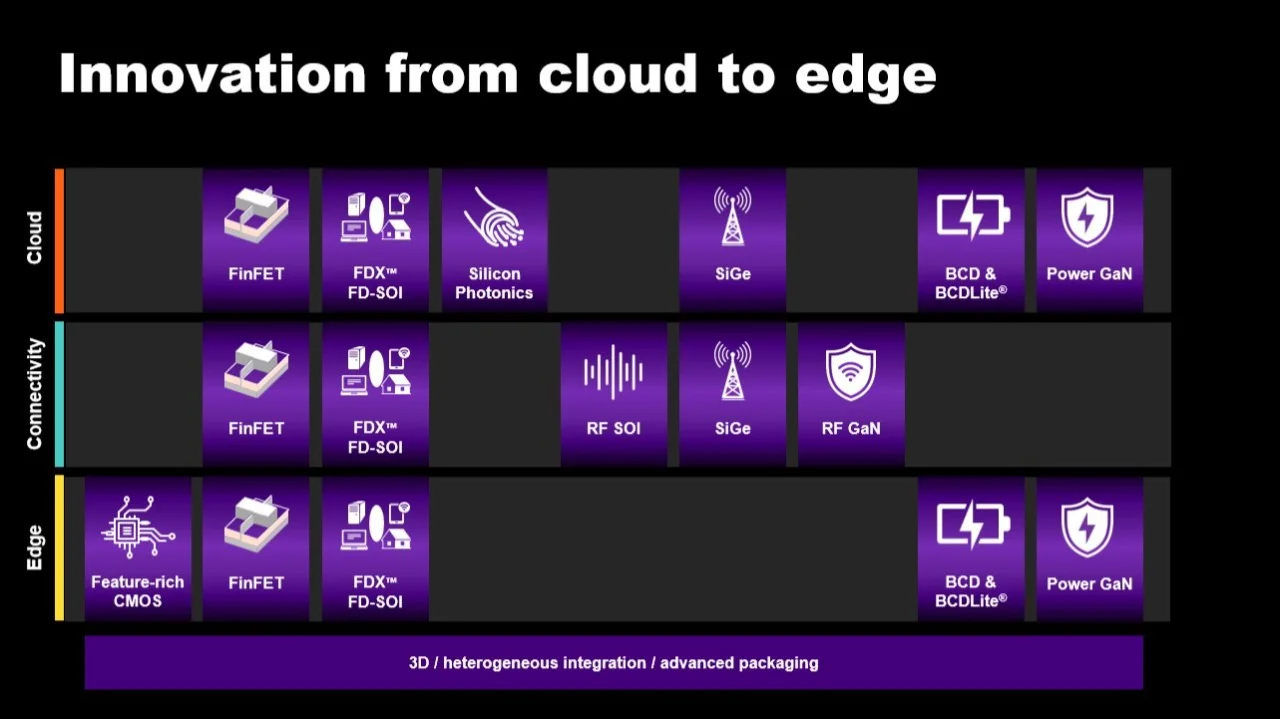
Thank you, CEA-LETI, for the opportunity to provide a talk on GF’s portfolio of essential chips that address some of the most pressing semiconductor challenges for AI. Together, we are building a synergistic cloud-to-edge ecosystem to create more powerful AI learning and inferencing and make AI more productive in applications such as autonomous driving, healthcare, robotics, and industrial automation.

In the cloud, connecting more GPUs for more powerful AI models needs higher data rate Fotonix(TM) (silicon photonics) and optical networking; data centers with sustainable power and reduced CO2 emissions requires low transmission loss power delivery and fast transient response voltage regulation from GaN, BCDLite(TM), and FinFET technologies; and more powerful domain specific computing architectures requires chiplet assembly and advanced packaging from GF’s new Advanced Packaging and Photonics Center.

Between the cloud and the edge, higher data speed networks that allow AI to process large data sets quickly and efficiently are made possible with high performance RF such as SiGe, RF-SOI, and FDX(TM) (FD-SOI); massive device connectivity for edge nodes and sensors requires ultra-low-power wireless connectivity from FDX and FinFET; and distributed intelligence, where AI algorithms autonomously process across multiple systems, domains and devices, requires reliable communication and support for new bands and standards such as 5G FR2/FR3, 6G, WiFi8/9, V2X/A2X, SatComm, and THz.

And at the edge, more personalized AI user experiences, where devices tailor their recommendations based on individual preferences and user patterns and provide a higher level of privacy and security by processing data locally requires high-density embedded non-volatile memory (eFlash, eRRAM, eMRAM) for neural net weight storage; battery powered edge computing with real-time inferencing and autonomous decision making at low latency needs ultra-low power FDX (FD-SOI) and FinFET and design IP optimized for high TOPS/Watt; and the fuel for AI data analytics come from Feature-rich sensor solutions including cameras, infrared sensors, microphones, and radars.

Recommended by LinkedIn

GF’s essential chips innovate beyond transistor size, they innovate from the cloud to the edge.

Helpful insight, Jamie S.

💡 Insightful talk Jamie S.

Class (B2B/B2C)
B2B
Ingest Status
Rewritten
Dedupe hash
81c346bbbbd7ea1425dfc0efe87f1cbb
Press Eligible
Yes
Press Eligible Reason
Technology and semiconductor industry news about GlobalFoundries’ AI chip portfolio and cloud-to-edge applications.
Source Name
GlobalFoundries Newsroom
Image URL
https://media.licdn.com/dms/image/v2/D5612AQF0ohD3HZT9sA/article-cover_image-shrink_720_1280/B56ZefdRNdGoAI-/0/1750726940008?e=2147483647&v=beta&t=irVvvNh9D0a9cNvE5TQ_Ky7scZ0DAuj8YJ7ant01Mm4
Content Hash (SHA-256, erste 32 hex)
53b381500da06d6a2d41f29abaec8ed0
Insights on Physical AI
Image File
Original HTML

Insights on Physical AI

Powerful new forces are reshaping how industries design and build products. As demand grows for AI everywhere, power efficiency at scale and stronger, more reliable connectivity, the need for essential, high‑performance chip technology has never been greater. Through this shift, GF’s role remains clear: we make technology real. We turn our customers’ ideas into products through our essential technologies—spanning power, RF, real time compute and differentiated platforms—delivered through dependable, globally distributed manufacturing and deep, collaborative partnerships.

Where the future takes shape is an ongoing series focused on these changes and the work happening across GF to meet them. Each edition will explore the technology, market trends and customer programs that matter most, and highlight how our global teams bring new ideas from design to manufacturing to real-world deployment.

We’re starting with Physical AI—intelligence moving out of the cloud and into the devices, vehicles and systems people rely on every day. These applications demand real-time performance, power efficiency and long-lived, reliable platforms so they can sense, think, act and communicate. Together with our customers and partners, we are building the technologies that make this possible.

Physical AI is one part of the broader opportunity ahead, and we will continue to share how GF is scaling and delivering where it matters most.

- Tim Breen , CEO at GF

A deeper look at Physical AI with Ed Kaste

Today, AI lives mostly in the cloud, but the next wave is bringing intelligence into the physical world. From vehicles and robots to industrial systems and wearables, Physical AI is enabling machines to sense, think and act in real time, under strict power and latency constraints. That shift toward real‑time secure compute is redefining what semiconductor technologies must deliver at the edge.

Ed Kaste , SVP of Ultra‑Low Power business at GF, leads the company’s product lines that help customers build these next‑generation systems across smart mobile devices, home IoT and automotive. Read the Q&A below for Ed’s perspective on why Physical AI is accelerating, how it’s reshaping semiconductor requirements, and how GF is investing to power this next wave of computing.

Read the Q&A below for his thoughts on the future of Physical AI, then head over to the GF blog for Ed’s full perspective on how GF is powering this next wave of computing.

Physical AI is beginning to show up everywhere. How do you define Physical AI, and why is it accelerating now?

Ed: Physical AI is AI moving off the cloud and into the real world—into machines that can sense, think, act and communicate in real time. What’s accelerating this shift is the demand for machines that can interpret their environments instantly and operate safely and autonomously. That requires real‑time performance, low latency, reliable connectivity and extremely efficient power usage. These are things traditional data‑center‑optimized silicon wasn’t built for providing an exciting opportunity for innovation at the edge.

You say Physical AI is reshaping semiconductor requirements. What’s changing?

Ed: Physical AI workloads are incredibly broad. Devices must incorporate multimodal sensing, local intelligence, actuation and communication—all under tight thermal and power constraints. At GF, platforms like FDX, FinFET, embedded MRAM/RRAM, RF and silicon photonics and advanced packaging are designed to deliver high performance at the lowest possible power. They allow customers to build systems that are adaptive and reliable over long lifecycles.

Power and latency seem to be recurring themes. Why are they so critical to Physical AI?

Ed: These systems run continuously, often with limited thermal headroom or battery capacity. If power consumption is too high or latency is too long, the system can’t make timely decisions—or worse, it fails to operate safely. Optimizing at the semiconductor level lets us deliver ultra‑low power, ultra‑low latency performance so Physical AI devices can do more under strict constraints. Without breakthroughs here, Physical AI simply won’t scale beyond early pilots.

Recommended by LinkedIn

What role does distributed intelligence play in the future of Physical AI?

Ed: We’re shifting away from centralized compute models. Instead of sending everything up to the cloud, more intelligence is moving closer to where the action is—right alongside the sensors and actuators in the real world. And as systems become more software‑defined, we can decouple hardware from software more cleanly. That means you don’t have to replace entire platforms to add new capabilities, extending system lifetimes by updating features over time. That’s especially important for long‑lived platforms like vehicles, robotics and industrial systems.

Vehicles and humanoid robots seem to be major examples. What makes them such strong indicators of where Physical AI is headed?

Ed: Modern vehicles offer a great preview of what Physical AI looks like in scale. These already use hundreds of chips for ADAS, connectivity, infotainment and battery management—and semiconductor content per vehicle keeps rising. Physical AI is core to autonomy, electrification and safety. For humanoid robots, the demands are even greater. They need multimodal sensing, ultra‑low latency distributed intelligence and precise motor control across dozens of degrees of freedom. A high‑end humanoid can require up to four times more semiconductor content than a software‑defined vehicle. They show how critical real‑time, power‑efficient platforms will be.

With GF’s recent acquisition of MIPS, what new opportunities does that unlock for Physical AI?

Ed: Combining MIPS’ compute architecture and IP with GF’s optimized process technologies gives us a stronger foundation for the real‑time, deterministic workloads of Physical AI. It lets us deliver platforms that integrate sensing, decision‑making, actuation and communication more efficiently and with more predictable performance. It’s another step toward scaling Physical AI across markets—from mobile and IoT to automotive, industrial and beyond.

Ed’s blog explores in more detail how GF is powering Physical AI innovation by enabling today’s platforms to think, sense and act. Check out the full piece:

You can also listen to GF Chief Business Officer Mike Hogan 's perspective on how Physical AI is shifting semiconductor design:

Did you know?

By 2030, next‑gen AI processors will require more than 5 kW each. 

As AI workloads surge, power is becoming the new bottleneck. Engineers are rethinking chip architectures from the earliest design stages to squeeze out every possible watt, enabling next‑generation processors to keep scaling sustainably even as their power demands climb past 5 kW by 2030.

From Tim Nutt , Data center power business lead at GF's recent article, “How HVDC and GaN are transforming hyperscale data centers.” Read the entire piece at EDN: Voice of the Engineer :

Subscribe to be notified when the next issue of GF's Where the future takes shape is published.

#####################################################################################################################

It's great to read and hear GF's leadership thought when it comes to #PhysicalAI. Ed Kaste 's points really resonate. Exciting!

--

7mo

Very interesting development. Do you see increasing demand for precision metal components to support cooling and reliability in physical AI hardware?

Absolutely, #AI is the future of the Corporate World! ✨ *08.03.2026 - Happy #Women's Day! Thanks for sharing an insightful article, & Best wishes, GlobalFoundries. Syed Awees, ACCA. Syed Suheb. Aspiring PhD Scholar. ✨ I hope, you can find this useful! https://www.linkedin.com/posts/s-saidhamiyan-mie-mba_happy-womensday-ugcPost-7436318821705097216-FaE5?utm_source=share&utm_medium=member_android&rcm=ACoAAAW6WS8BeP6Ni7c8l_yGdbiV4nJNg5_PwZ8 #Thanks!

As AI workloads move closer to the edge, manufacturing scalability and reliability will become just as important as architectural innovation. Delivering high-performance chips at volume requires tight alignment between design, process capability, and global manufacturing execution.

Class (B2B/B2C)
B2B
Ingest Status
Error
Dedupe hash
5e9865cab255e122c720ec9e83bdf49c
Press Eligible
No
Press Eligible Reason
Drupal Push 422
Source Name
GlobalFoundries Newsroom
Image URL
https://media.licdn.com/dms/image/v2/D4E12AQEr69TeIT5DcQ/article-cover_image-shrink_720_1280/B4EZyfUEb0IsAI-/0/1772199373608?e=2147483647&v=beta&t=go1iIptbUwGwSJEJynTZzAiL8zoti2oPWlb2mARRf-A
Content Hash (SHA-256, erste 32 hex)
c1ff2fad0502c7b074ac20adc2193088
GLOBALFOUNDRIES – FIRST DECADE OF GROWTH SINCE 2009
Image File
Original HTML

GLOBALFOUNDRIES – FIRST DECADE OF GROWTH SINCE 2009

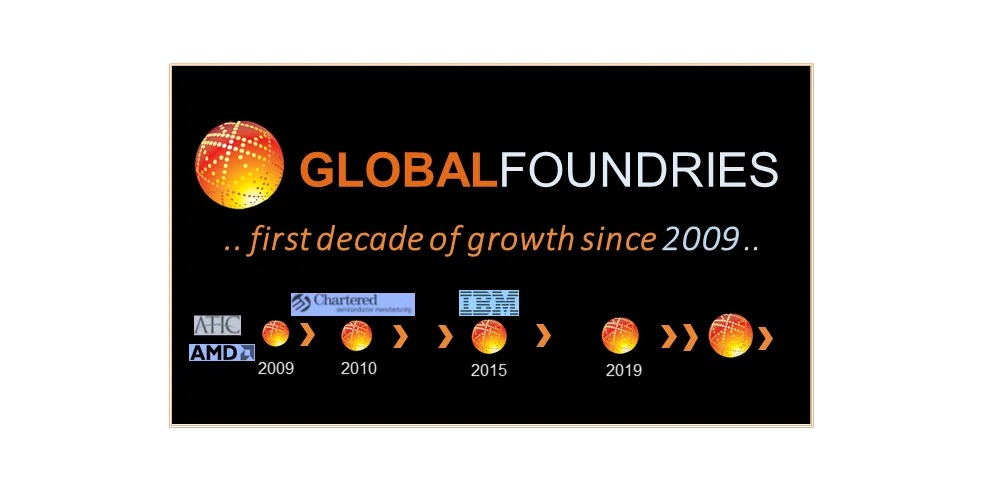
Abstract: Spun off from Advanced Micro Devices (AMD) in March 2009, GLOBALFOUNDRIES is a truly global privately owned company with operations spread across three continents Germany, USA and Asia serving a wide cross section of customers. The company has consolidated its footprint as a leading full-service semiconductor design, development, fabrication and innovation pure play foundry. The article revisits a few of company's initial challenges and leadership decisions and draws few insights from its success story. It also suggests a few growth strategies as the company repositioned itself with its differentiated product offerings to its existing and new market segment in 2018 under the leadership of its new CEO, Dr. Thomas Caulfield.

I. MARCH 22, 2009 - AN IMPORTANT DATE IN THE HISTORY OF SEMICONDUCTOR MANUFACTURING

GLOBALFOUNDRIES, which was originally called “The Foundry Company” had been a part of a joint venture between Advanced Micro Devices Inc. (AMD) and Advanced Technology Investment Company (ATIC), owned by Abu Dhabi-based Mubadala Development Company (“Mubadala”).

Two days after the deal, it got its new name "GLOBALFOUNDRIES" in March 4, 2009. Doug Grose, former SVP Manufacturing, AMD become GLOBALFOUNDRIES ' CEO and former AMD CEO Hector Ruiz as Chairman. AMD's Fab 36 facility in Dresden became Global Foundries' Fab 1 with two capabilities: Module 1 for high-performance SOI 45 nm process technology, while module 2 for 32 nm bulk silicon development. It had also its plan to build its 300 nm wafer manufacturing new facility fab 2 (now called fab 8) in Saratoga County, New York for 32/22 nm process technologies.

ATIC acquired Singapore based Chartered Semiconductor Manufacturing Ltd. (“Chartered”) on December 18, 2009. On December 28, 2009, ATIC and GLOBALFOUNDRIES and Chartered entered into a Management and Operating Agreement (“MOA”) through which the management and operations of Chartered were entrusted to GLOBALFOUNDRIES

The details can be found in the consolidated financial statement for the period March 2, 2009 to December 25th 2009, and for the fiscal year ended Dec. 25th 2010 to of GLOBALFOUUNDRIES as exhibit 99.2

II. INITIAL CHALLENGES

GLOBALFOUUNDRIES (GF) has spent initial couple of years fixing its new production challenges from one product and one process AMD era to multiple products for multiple customers at multiple nodes. At the same time, working towards ramp up capacity by volume. The level of complexity was high and it needed a new approach to do “first time right” and zero excursion.

Unlike a pure play foundry business model, where a foundry engages with its customers only during manufacturing stage, GF created a new foundry model called “foundry 2.0” through early engagement and deep collaboration with its customers. GF’s growth strategy has always been “customer first” centric.

“ GF is a strategic asset for the global semiconductor industry and our shareholder. We will continue to invest to differentiate and grow the business and further consolidate the industry through partnerships, in a way that allows us to better serve our customers"- Ahmed Yahia Al Idrissi, Mubadala CEO and chairman of the GF Board of Directors.

The company entered into a collaborative agreement with its IDM partners resulting into “Common Platform Alliance” with membership from three key players namely Samsung, IBM and ST Microelectronics respectively. It entered into joint development and production Collaboration with Infineon for 40nm Embedded Flash Process Technology.

GF had to revisit exclusive supply agreement with its key customers to solve production yield issue. In this process entered into 28 nm production collaboration with Samsung thereby ICs could be produced at multiple facilities without any redesign requirements.

III. KEY STRATEGIC DECISIONS (2014-2018)

2014

Strategic Collaboration agreement between GF and Samsung for 14-nanometer manufacturing production deploy Samsung’s 14 nm technology at all GF facilities. This strategic realignment with Samsung shows how foundries are committed to delivering to the customer on schedule.

Brining Toshiba GF’s Ecosystem as Worldwide ASIC Partner

2015

Acquisition of IBM Microelectronics Business. With the IBM acquisition, GF became the #1 market share leader in RF, half of the driving factor in 4G and 5G

2016

GF signing a memorandum of understanding to drive its next phase of growth in China, and announcing new 12nm FD-SOI semiconductor technology.

2017 - GF entering into long-term supply agreement with Soitec on FD-SOI wafers. The move was to strengthen the FD-SOI supply chain and help ensure high-volume manufacturing as the market adopts GF’s 22 nm/12 nm or 10 nm FDX technology.

2018

Putting its 7nm FinFET program on hold indefinitely and restructuring its research and development teams to support its differentiated portfolio initiatives. This move would consolidate customer base who has no plan down the line to use leading age technologies less than 10nm. GF can now focus on its present 14 nm/12nm FinFET, 22 nm/12 nm FD-SOI, RF SOI, HP silicon-germanium (SiGe) technology for RF applications.

GF and the Chengdu municipality signed an amendment to their investment and cooperation agreement and decision to bypass the original phase one investment in mainstream process technology (180/130 nm). This would better align capacity building to meet China-based demand for GF’s differentiated offerings.

Launch of Avera Semiconductor LLC, a wholly-owned subsidiary intended to deliver custom ASIC solutions and free to use 7 nm manufacturing process technology from beyond GF. This would definitely help manage risk at the same time delivering ASIC offerings on 14/12nm including older technologies.

IV. LEADERSHIP

Doug Grose (2009-2010)

Doug Grose (Former SVP of Manufacturing, AMD) had been CEO of GF since its creation. He had a tough challenge to meet customers demand for more capacity, faster technology delivery and greater agility and improving operational performance.

There were a lot of roadblocks and challenges. The AMD spinoffs had been dedicated to single customer without significant diversification. The acquired Chartered had been technologically behind. They were 2nd source on 65 nm and degraded to 4th source on 40nm after the merger behind UMC and SMIC.

Capacity building and expansion milestones seemed slower than stakeholder’s expectations. The management team decided to appoint Ajit Manocha as interim CEO.

“As the world's leading chip design companies face increasing pressure to push the boundaries of innovation, they need a full-service foundry partner with the ability to invest and sustain an aggressive leading-edge technology road map while offering a full breadth of services," - Doug Grose.

Ajit Manocha (2011 -2014)

As interim CEO, Manocha had played a critical role in strengthening GF, focusing on improving operations, increasing customer engagement, and laying the groundwork for technology leadership in the future.

Manocha was instrumental in making the company the second largest foundry in the world and delivering on customer relationships, technology leadership and operational excellence,. He had put significant effort to revamp fabs and build capacity to cater to the requirements of new customers and their multiple product manufacturing. In a very short time, Manocha had overseen the company’s focused effort to achieve operational excellence, boost customer satisfaction and accelerate leading-edge capacity expansion plans.

“ ...Given the demand from our customers, our strong global assets and our committed investor with its long-term perspective, we’ll strive for market leadership in the semiconductor foundry industry... ” Ajit Manocha

Sanjay Jha (2014-2018)

Sanjay Jha led GF’s efforts to build out and ramp its Fab 8 in Malta, New York, for 14 nm and build partnership with the leading customers in the industry. A few of the strategic milestones during his pivotal four years were: (1) IBM’s microelectronics business in 2015 bringing a team of more than 1,000 technologists and a portfolio of 16,000 patents, as well as its East Fishkill chip manufacturing plant, (2) Establish a road-map for its FDSOI-based FDX manufacturing technology and (3) in 2017 announced a partnership with Chengdu, China where a 300mm wafer fab is set to begin operations in 2019.

Recommended by LinkedIn

"..The strategy for every other company other than the TSMC in the fab businesses has been one. You (companies) do what TSMC does three years later. There is one company that is doing differently, which is us (GF). We have a road map independent of TSMC's roadmap…" - Sanjay Jha

Dr. Thomas Caulfield (March 9, 2018 – present)

Dr. Thomas Caulfield has spent his early 17 years working for IBM before joining GF in 2014. Caulfield has been instrumental in building and leading GF’ Fab 8 production facility. Dr. Caulfield's new leadership charter focuses on improving company’s financial performance and building a sustaining business for the company and at the same time to become more relevant in the industry and for customers.. This includes continued focus on its FDXTM platform, leading RF offerings (including RF SOI and high-performance SiGe), analog & mixed signal, and other technologies designed for a growing number of applications that require low power, real-time connectivity, and on-board intelligence

" Building a New Breed of Differentiated Foundry" - Dr. Thomas Caulfield, CEO - 2018 GLOBALFOUNDRIES Technology Conference

GLOBALFOUNDRIES' Strategic Pivot ... a conversation with Tom Caulfield

V. Summary

GF is the world's first full-service semiconductor foundry and world's second largest pure play semiconductor foundry by revenue.

It has consolidated its position as a pure play semiconductor foundry partner to provide manufacturing excellence to its global customers across a spectrum of technologies.

Class (B2B/B2C)
B2B
Ingest Status
Error
Dedupe hash
54a1cde7fe5d52ca6f77c006e16e7ec1
Press Eligible
No
Press Eligible Reason
Drupal Push 422
Source Name
GlobalFoundries Newsroom
Image URL
https://media.licdn.com/dms/image/v2/C5112AQEB7qMzkt9XxA/article-cover_image-shrink_600_2000/article-cover_image-shrink_600_2000/0/1548995889249?e=2147483647&v=beta&t=6Y8DivHyw1CZ9YJs2msb04diecV5X1DBSNOy4y0B5Ks
Content Hash (SHA-256, erste 32 hex)
dd998b153ae70705923c549c88739e39
Is AI effecting your life? YES!
Image File
Original HTML

Is AI effecting your life? YES!

Even though most people are unaware of its presence, Artificial Intelligence (AI) has been slowly creeping into every aspect of our lives. It helps us get cheap airline tickets, it gives us better search results while translating text into more than 100 different languages, it approves us for financial credit, and it is beginning to improve our health with better diagnoses and drugs. There are countless other ways (see the article, "10 AI use cases") that AI applications are becoming an integral part, not only of our digital world but also other aspects of our personal lives.

Emerging from the AI Winter

AI is not a new concept. It has a long and diverse history within academics, the military, and industry, dating back to the dawn of computers in the 1940s and 1950s. Early efforts, however, were often disconnected and punctuated with over-exuberant optimism, leading to pessimistic, dark periods, referred to as the AI winter.

In the past ten years, statistical machine learning (ML), the present realization of AI (see the article by Bernard Marr ), has witnessed an unprecedented success of intelligent systems. This success is driven by three factors: massive amounts of data, the computation capability of CPUs and GPUs, and algorithmic improvements.

To teach or not to teach

Some believe that ML is more than a subset of AI, it is something more fundamental that allows machines to learn in ways that are still not understood (see the article, "Dark secrets of AI"). At the heart of statistical ML, the objective is to find a functional mapping that transforms data into a predictive mathematical model (similar to finding the straight line that best "fits" a set of data). For this, data (e.g., text, audio, video, genomes, etc.) must first be transformed into numerical feature vectors.

Next, ML models are fit, or "trained" (i.e., internal parameters are adjusted), with one of two methods: either "supervised" or "unsupervised" learning. In both cases, the resulting ML model is used to predict the class of other unlabeled data. Supervised learning is "training-by-example"; the classes are known ahead of time, and the training procedure includes information about the feature vector with its corresponding class label. In contrary, unsupervised learning is a discovery process, for which no underlying structure is known or assumed, and the result is a separation of data defined by class boundaries.

Let the Machine Think

Early ML pattern recognition systems had limited success because features were manually engineered. For example, a face detection system might be based upon manually crafted rules for the geometric relations of facial features. In a seminal paper by Viola and Jones in 2001 (see the Wikipedia entry) showed that by allowing the computer to select relevant features, the pattern recognition task was far better and more robust. Unlike other techniques at the time, their algorithm was data-driven. The computer decided which set of Haar wavelets best described a human face, showing that it was better suited for selecting features, rather than the human crafted features.

Despite the success of this and other subsequent supervised learning systems, recognition success was limited to the training process, depending upon the time-consuming process of providing class labels. What was needed was a machine capable of teaching itself the class labels, akin to unsupervised learning. In 2012, a group from Google and Stanford did just that (see the article, "Google computers learn to identify cats" at Slate). The system was presented with lots of videos of cats, but without class labels, and learned by itself what a cat was.

Let the machine Think Deeply!

The paradigm shift in ML is due to the advent of Deep Neural Network (DNN) models, which are based upon large artificial neural networks(ANN). These models work so well, that other techniques are rapidly being superseded. The use of ANNs goes back to work of McCulloch and Pitts (see their original paper) in the 1940s. While their use has waxed and waned, interest was rekindled in 2009 by the remarkable results obtained by increasing the number of network layers and algorithm improvements (see the article, "Deep Learning" at Nature).

Deep learning is data-driven, yet produces cognitive qualities associated with intelligence. Although internal layers of the DNNs are known to work in a multi-resolution manner (i.e., some layers capture details, while others see a bigger picture), the way these complex systems make decisions is still not fully understood (see the article, "AI revolution in science"). Such questions are stimulating new lines of inquiry into human cognition and may bridge a yet unknown gap between artificial intelligence and fundamental physics (see the article, "Holographic principle/deep learning").

Software Tools for AI

Many software libraries and tools exist for building AI systems (see a brief list at "Open-source AI tools" ), yet they share many similarities concerning basic training and prediction operations of ML. One such tool on the list, TensorFlow, represents an excellent example for building AI systems in Python (a full-featured open source interpreted programming language with many libraries for data analysis and visualization). Also of interest, the platforms Theano and Torch are general purpose high-performance numerical platforms for running deep learning models on CPUs and GPUs.

Apart from DNNs, Scikits sklearn is a python library that implements many ML methods for supervised and unsupervised learning and regression. Also, many other software languages can be used, such as R, which is a popular open-source statistical computing programming language that has a large community for machine learning.

Building your AI in Python

Imagine building an AI application to discover disease biomarkers from a set of patients using multiomics and clinical data. For example, based on these biomarkers, the system could divide patients into responder groups for drug therapy. A typical workflow for building an AI supervised learning application could be as follows. First, a modeling framework, or classifier, should be selected that best maps to the problem (i.e., DNN, Random Forests, SVMs, etc.). Next, the high-level representations (i.e., omics data, images, video, text, etc.) would be transformed into numerical feature vectors (e.g., for biomarkers, these may represent the presence/absence of biological molecules). Each representation would be associated with a corresponding class label (e.g., a patient's disease state). The collection of feature vectors with known class labels would constitute a supervised learning procedure. In the TensorFlow library, these quantities would be matrix inputs to a training function that would also be responsible for selecting the DNN topology.

The output of the training process is a large matrix, representing a function of the internal coefficients of the network. For features from different classes, this matrix would be quite different, while for features from the same class, the coefficients (hence the ANN) would be nearly identical. Predictions for newly presented data would classify the data due to these similarities and differences. Although more complex, this simplified description captures the essential features needed to build a modern intelligent AI project.

Concluding Remarks

Building intelligent systems will continue to expand into new areas and eventually transform our society. Now, we are just at the "Cambrian explosion" (see the article, "Why Deep Learning matters") of the deep learning AI transformation, and it will only get more interesting.

Class (B2B/B2C)
B2B
Ingest Status
Error
Dedupe hash
c7d782d9546ecd94bb3b0a5a1cf58a9a
Press Eligible
No
Press Eligible Reason
Drupal Push 422
Source Name
GlobalFoundries Newsroom
Image URL
https://media.licdn.com/dms/image/v2/C5112AQGhxCNKbmIRBg/article-cover_image-shrink_600_2000/article-cover_image-shrink_600_2000/0/1520100107198?e=2147483647&v=beta&t=H4-Ehn-YflTV2N02VMNaaiEEmWGu52x_VfpN7jFKpkI
Content Hash (SHA-256, erste 32 hex)
72abdcb4eb0f56f3fe5e293fa890e26a
Alaska Air Group News
Original HTML

Investor hub / Annual meeting & proxy

Annual meeting & proxy

Annual meeting materials

Annual meeting information

Alaska Air Group, Inc.

Virtual Annual Meeting of Stockholders

Tuesday, May 12, 2026

Electronic proxy voting

Please consider internet or telephone voting. In addition, you can request to receive your annual meeting notice and materials electronically. This will reduce the Company’s printing and postage costs, as well as the number of paper documents you will receive. Simply follow the prompts provided when voting via internet.

If you already receive your proxy materials via the internet, you will continue to receive them that way until you instruct otherwise.

Registered shareholders

- You can vote via the internet regardless of whether you receive your annual meeting materials electronically. Simply connect to www.proxyvote.com and follow the instructions provided on your proxy card.

Class (B2B/B2C)
Ignore
Ingest Status
Rejected
Dedupe hash
d164249c4f819bcf74ca93c2c2524a0f
Press Eligible
No
Press Eligible Reason
Text too short (135 words. Min: 150)
Source Name
Alaska Air Group
Image URL
https://news.alaskaair.com/wp-content/uploads/2026/03/external-link-icon-24X24.svg
Source Node
Content Hash (SHA-256, erste 32 hex)
04e215817d36f3e1bd3928bd37ae95e5