From Fragmented Touchpoints to Intelligent Conversations: The Rise of Multimodal AI in Healthcare
Image File
Original HTML

Healthcare has no shortage of communication tools. Patient portals, call centers, mobile apps, and messaging platforms all promise better engagement. Yet for many patients, the experience still feels disconnected.

A symptom is entered in one place. A call is made in another. A follow-up gets lost somewhere in between.

This fragmentation is not just inconvenient. It is costly, inefficient, and often impacts outcomes.

Andor Health’s latest announcement points to a different future—one where patient conversations are no longer siloed, but intelligently orchestrated across the entire care journey.

The Problem: Conversations Without Continuity

Today’s healthcare ecosystem is built around isolated points of interaction. Patients move between websites, portals, and phone systems, often repeating the same information at every step.

These disconnected experiences create friction for patients and additional workload for clinicians.

Even as digital tools have expanded, most solutions still operate in silos—each handling a piece of the journey, but none managing it end to end.

The result is a system that reacts to patient needs rather than guiding them.

A New Approach: AI That Drives the Conversation

Andor Health is advancing a model that changes this dynamic entirely.

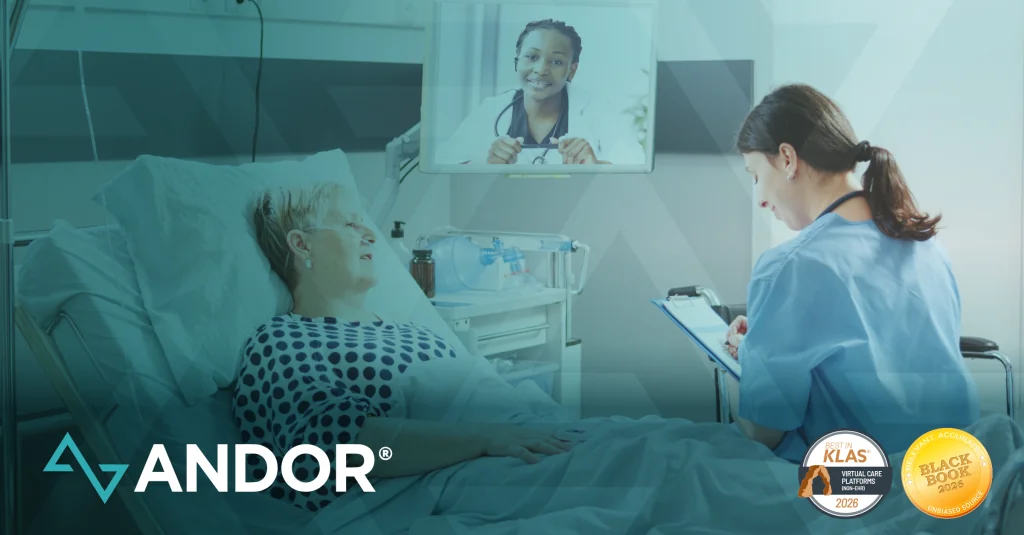
With expanded multimodal agentic capabilities, ThinkAndor® enables voice-based and conversational AI interactions that actively guide patients through their care journey—from initial access to post-acute follow-up.

This is not just about adding another communication channel. It is about transforming how those channels work together.

Instead of waiting for patients to navigate the system, AI agents:

- Initiate and manage conversations

- Understand patient context in real time

- Recommend next best actions

- Coordinate workflows behind the scenes

The experience becomes less transactional and more like a guided journey.

From Entry Point to Intelligent Orchestration

Traditional digital health strategies often focus on the “front door” experience—how patients first access care.

ThinkAndor extends far beyond that.

Its multimodal AI infrastructure orchestrates conversations across every stage of the continuum:

- Initial triage and intake

- Virtual waiting rooms and care navigation

- Inpatient communication and coordination

- Post-discharge follow-up and monitoring

This creates a continuous thread of engagement—one that follows the patient rather than forcing the patient to restart at every touchpoint.

Personalization at Scale

One of the most powerful aspects of this approach is personalization.

ThinkAndor’s agentic AI can analyze a patient’s medical history, current symptoms, and prior interactions to tailor each conversation.

This enables interactions that feel relevant and timely:

- Guidance before a procedure

- Real-time education after a diagnosis

- Automated follow-ups triggered by lab results

- Ongoing support for chronic condition management

Rather than generic messaging, patients receive context-aware engagement that adapts to their needs.

Solving the “Last Mile” of Care

Healthcare has long struggled with what many call the “last mile” problem—the gap between clinical intent and patient action.

Appointments are missed. Instructions are misunderstood. Follow-ups fall through.

This is where agentic AI has a measurable impact.

By actively managing conversations and workflows, ThinkAndor helps close that gap—automating outreach, coordinating next steps, and ensuring continuity of care.

The result is a system that not only informs patients but also helps ensure that care plans are executed.

Reducing Burden While Improving Access

This shift is not just about patient experience. It directly addresses operational challenges as well.

Administrative burden and call center costs continue to rise, contributing to clinician burnout and inefficiency.

By automating patient interactions and workflow orchestration, multimodal AI can:

- Reduce reliance on call centers

- Streamline intake and triage processes

- Free up clinical staff for higher-value tasks

- Improve access without increasing staffing levels

It is a model that expands capacity while reducing strain.

Why Multimodal Matters

The term “multimodal” is more than a technical distinction. It represents a fundamental shift in how AI interacts with healthcare data and communication channels.

ThinkAndor integrates multiple inputs—voice, text, clinical data, and real-time signals—to create a unified understanding of each patient’s journey.

This allows AI agents to move seamlessly across channels, maintaining context and continuity at every step.

For patients, it means fewer gaps. For clinicians, it means better visibility. For health systems, it means a more coordinated approach to care.

A Concierge Experience for Healthcare

Perhaps the simplest way to describe this evolution is through experience.

Instead of navigating a fragmented system, patients are guided through a coordinated journey—one that anticipates needs, removes friction, and supports better decisions.

It is a shift from reactive care to proactive orchestration.

From disconnected touchpoints to continuous conversation.

From systems that manage data to systems that manage care.

Final Thoughts

Healthcare is entering an era where communication is no longer just a feature. It is the foundation of care delivery.

Andor Health’s vision of a multimodal AI infrastructure reflects this shift. By enabling intelligent, continuous patient conversations across the continuum, it moves the industry closer to a model that is more connected, more efficient, and more human-centered.

The future of healthcare will not be defined by how many tools are available.

It will be defined by how well those tools work together—guided by AI that understands, adapts, and acts in real time.

And increasingly, that future is being built around conversation.
Class (B2B/B2C)
B2B
Ingest Status
Rewritten
Dedupe hash
022fcf5e2dd380834569c8fd35497544
Press Eligible
Yes
Press Eligible Reason
Healthcare technology article about Andor Health’s multimodal AI product and its operational applications.
Source Name
Andor Health
Original Summary

Healthcare has no shortage of communication tools. Patient portals, call centers, mobile apps, and messaging platforms all promise better engagement. Yet for many patients, the experience still feels disconnected.

Image URL
https://andorhealth.com/wp-content/uploads/2026/04/Image20for20Briscoe20Blog-1-4-1024x683.jpg
Source Node
Content Hash (SHA-256, erste 32 hex)
8d31e291f78744e102e5b8fc551d7655
Why Care Requires an AI-Native Clinical Services Infrastructure
Image File
Original HTML

Healthcare was built around the visit.

A patient develops symptoms, schedules an appointment, receives treatment, and leaves. Days, weeks, or months pass before another interaction occurs. While this model has served acute care well for decades, it falls short for chronic disease, where patient needs evolve every day, not just during scheduled appointments.

As healthcare shifts toward value-based care and outcomes-based reimbursement, health systems need a fundamentally different operating model. One that continuously monitors patients, identifies risks before they become crises, and coordinates timely interventions at scale.

That is why Andor Health and Psynergy Health launched the ACCESS Clinic, powered by ThinkAndor®, the industry’s leading AI-native clinical services operating system. The initiative combines AI reasoning, a licensed virtual clinical workforce, and an approved CMS ACCESS Model clinic into a single, accountable model for continuous care.

Moving Beyond AI That Documents

Most healthcare AI today focuses on improving productivity during a patient encounter. Ambient documentation, note generation, and clinical summaries reduce administrative burden, but they still depend on the traditional visit as the center of care.

The next generation of AI extends well beyond documentation.

ThinkAndor® continuously analyzes information from electronic health records, remote patient monitoring devices, patient-reported outcomes, and wearable technologies. Rather than simply summarizing information, AI agents reason across the patient’s longitudinal record, identify meaningful clinical changes, prioritize interventions, and prepare recommendations for clinician review. Every decision remains under the oversight of a licensed clinician, ensuring responsible, accountable AI.

The result is a model where AI performs the continuous operational work surrounding care while clinicians focus on the decisions that require human expertise.

Why Continuous Care Matters

More than two-thirds of Medicare beneficiaries live with chronic conditions that require ongoing management rather than episodic treatment. Traditional healthcare models often detect problems only after patients experience deterioration significant enough to require hospitalization.

Continuous care changes that equation.

By combining remote monitoring, longitudinal patient engagement, AI reasoning, and coordinated clinical intervention, providers can identify changes earlier, intervene sooner, and prevent unnecessary emergency department visits and hospital admissions.

This approach aligns directly with the CMS ACCESS Model, which rewards organizations for improving patient outcomes over time rather than simply delivering more visits. The ACCESS Clinic extends these capabilities to Medicare beneficiaries nationwide through coordinated programs focused on cardiometabolic disease, chronic kidney disease, musculoskeletal conditions, behavioral health, transitional care management, and other chronic conditions.

Technology Alone Doesn’t Improve Outcomes

Healthcare organizations have invested heavily in software over the past decade, yet clinicians continue to face workforce shortages, growing administrative demands, and increasing patient complexity.

Technology by itself cannot solve those challenges.

Successful transformation requires technology, clinical services, and operational accountability working together.

The ACCESS Clinic combines:

- AI agents that continuously analyze patient data and automate clinical workflows.

- A licensed workforce of physicians, advanced practice providers, nurses, dietitians, and care coordinators who validate recommendations and deliver care.

- Deep integration with existing clinical workflows and electronic health records.

- A reimbursement model designed around measurable patient improvement rather than episodic encounters.

Rather than handing software to health systems and expecting them to operationalize it, the model delivers both the technology and the clinical services required to achieve outcomes.

Proven at Enterprise Scale

The foundation behind the ACCESS Clinic is already operating across more than 40 health systems, supporting over 20 million patients in nearly every U.S. state. AI agents have completed more than 35 million clinical and patient interactions while helping organizations improve both operational and clinical performance.

Health systems leveraging the platform have achieved outcomes including:

- 180% increase in patients seen following hospital discharge

- More than 40% reduction in unplanned readmissions

- 45% reduction in total cost of care

- 24% reduction in hospital readmissions

- Automated care pathways supporting remote patient monitoring and chronic disease management

These results demonstrate that continuous, AI-enabled care can improve patient outcomes while helping health systems address workforce constraints and financial pressures.

The Future Is Accountable AI

Healthcare is entering a new era.

The conversation is no longer centered on whether AI can generate a note or summarize a chart. The real opportunity is creating AI-native clinical services that continuously support patients, augment clinicians, and improve measurable outcomes.

The ACCESS Clinic represents an important step toward that future by bringing together AI reasoning, clinical expertise, and accountable care delivery into a single operating model.

Because the future of healthcare isn’t defined by better software.

It’s defined by better outcomes.

Class (B2B/B2C)
B2B
Ingest Status
Rewritten
Dedupe hash
75823c977331fcde8039b6e8736759ed
Press Eligible
Yes
Press Eligible Reason
Healthcare AI platform and clinical services launch aimed at health systems and professionals.
Source Name
Andor Health
Original Summary

Healthcare was built around the visit.

Image URL
https://andorhealth.com/wp-content/uploads/2026/07/shutterstock_1644820069-1024x576.jpg
Source Node
Content Hash (SHA-256, erste 32 hex)
31e7f9f403405eb6a2a826aa44911290
CMS Validation Signals the Next Era of Healthcare
Image File
Original HTML

For years, healthcare has talked about interoperability as if connecting systems were the finish line.

It isn’t.

The real opportunity begins after the data is connected: using that information to make healthcare easier to access, more continuous, and more accountable for outcomes.

That is why CMS’s Health Technology Ecosystem initiative represents an important shift for the industry. CMS is advancing a patient-centered ecosystem in which individuals can securely access and use their health information through modern digital experiences.

For Andor Health, that vision is already operating at scale.

CMS recently recognized Andor Health for reaching General Availability in the CMS Health Technology Ecosystem initiative—validating patient-facing capabilities that ThinkAndor® has delivered since its inception. Today, millions of patients across dozens of health systems use ThinkAndor® to access care, retrieve health information, interact with Conversational AI, complete digital intake, and connect with clinician-reviewed guidance.

But the larger story isn’t interoperability.

It’s what interoperability makes possible.

Interoperability Should Be Infrastructure, Not the Outcome

Healthcare organizations have spent enormous resources connecting applications, integrating EHRs, building interfaces, and aggregating data.

Those investments matter. But a connected healthcare system isn’t necessarily a better healthcare system.

Patients still encounter fragmented journeys. Clinicians still spend significant time coordinating information and administrative work. Health systems still assemble multiple vendors to solve different pieces of a patient’s care journey.

The next generation of healthcare infrastructure must therefore do more than move information.

It must act on information.

That requires an operating model in which AI can reason across EHR data, connected devices, patient interactions, and other clinical signals; initiate and orchestrate workflows; surface actionable intelligence; and bring clinicians into the process when their expertise is needed.

This is the foundation of AI-native clinical services.

Moving Beyond the Traditional Software Model

Traditional healthcare technology typically follows a familiar model: a vendor sells software and the health system assumes responsibility for turning that software into an outcome.

That can mean configuring workflows, staffing programs, monitoring queues, managing patient outreach, coordinating care, and measuring performance.

AI creates the opportunity for a fundamentally different model.

Instead of selling another tool for clinicians to operate, AI-native clinical services combine AI infrastructure, clinical expertise, and care delivery into an integrated operating model.

AI becomes a primary engine for continuously processing information and coordinating work. Licensed clinicians provide supervision, judgment, and intervention where appropriate. And the organization delivering the service becomes accountable for measurable outcomes rather than simply software utilization.

That’s an important distinction.

Healthcare doesn’t need more technology that creates another place for clinicians to work.

It needs infrastructure that helps do the work.

From Episodic Healthcare to Continuous Care

This shift becomes even more important as healthcare moves outside the four walls of the hospital.

A patient managing hypertension, diabetes, heart failure, or another chronic condition doesn’t stop generating clinically relevant information when an appointment ends.

Their health changes continuously.

Connected devices, EHR data, patient-reported information, and digital interactions can provide an increasingly complete picture of that patient’s condition. AI can continuously interpret those signals, prioritize risk, coordinate workflows, and escalate situations requiring clinical attention.

That creates the possibility of moving healthcare from episodic encounters toward continuous, outcomes-based care.

ThinkAndor® was built around that model: combining interoperable AI infrastructure with clinical services so that information doesn’t simply flow between systems—it becomes actionable intelligence that drives care.

Why the CMS ACCESS Model Matters

The CMS ACCESS Model provides an important example of where healthcare delivery is heading.

ACCESS is designed around technology-supported chronic care and outcomes rather than isolated encounters. For health systems, participating successfully requires more than deploying remote monitoring technology or adding another digital application.

It requires the ability to continuously engage patients, interpret clinical signals, coordinate care, and operate the underlying clinical workflows.

Through ThinkAndor® and Psynergy Health, Andor brings those capabilities together.

Rather than requiring health systems to assemble separate technology, staffing, workflow, and clinical-service vendors, the model combines AI-native infrastructure, licensed clinical services, and CMS-approved ACCESS clinic operations under one accountable structure.

The result is a fundamentally different value proposition.

Not software.

Not staffing.

Not another point solution.

An AI-native clinical service designed to own the work and the outcome.

The Next Phase of Healthcare Technology

CMS’s recognition of ThinkAndor® isn’t simply validation of another interoperability capability.

It points toward a larger change taking place across healthcare.

The industry spent the last decade connecting systems.

The next decade will be about using intelligence to transform what happens across those connections.

AI will increasingly reason across healthcare data, automate routine clinical and administrative work, coordinate care across settings, and enable clinicians to focus their expertise where it creates the greatest value.

Interoperability makes that future possible.

AI-native clinical services make it operational.

And outcome ownership is ultimately what makes it matter.

Class (B2B/B2C)
B2B
Ingest Status
Rewritten
Dedupe hash
b92a5c154f3858cccf5a4421dfcf177d
Press Eligible
Yes
Press Eligible Reason
Healthcare technology company news about CMS recognition and AI-enabled clinical services.
Source Name
Andor Health
Original Summary

For years, healthcare has talked about interoperability as if connecting systems were the finish line.

Image URL
https://andorhealth.com/wp-content/uploads/2026/07/shutterstock_653538934-1024x449.jpg
Source Node
Content Hash (SHA-256, erste 32 hex)
64642a3fef2b292771c05148f68de017
Virtual Nursing & The Enterprise Case for AI-Native Care Delivery
Image File
Original HTML

The question health systems should be asking about virtual nursing has changed.

It is no longer:

Can virtual nursing work?

Increasingly, the question is:

How do we make virtual nursing an enterprise care-delivery model that produces measurable outcomes?

New independent research from the Medical University of South Carolina (MUSC) Telehealth Center of Excellence provides important evidence for that conversation.

MUSC’s experience shows what can happen when virtual nursing moves beyond a staffing experiment and becomes part of a broader redesign of clinical care.

Powered by ThinkAndor®, MUSC expanded its virtual nursing program from five inpatient units to 57 units across four regions in approximately two and a half years.

The results demonstrate why virtual nursing is rapidly becoming strategic infrastructure for health systems.

The Value Is Bigger Than Labor Substitution

The simplest way to think about virtual nursing is as a workforce solution.

There is certainly value there.

But that definition misses the larger opportunity.

According to MUSC’s research, 87% of bedside nurses surveyed reported a decrease in overall workload. Seventy-six percent reported spending less time documenting admissions and discharges, while 68% reported having more time available for patient rounding.

Bedside nurse satisfaction averaged 4.41 out of 5, and 100% of virtual nurses reported being satisfied or very satisfied with the program.

MUSC also estimated approximately $2.4 million in savings associated with reduced nurse turnover across early adopter units.

Those aren’t simply staffing metrics.

They demonstrate how redesigning clinical workflows can affect workforce experience, capacity, financial performance, and ultimately patient care.

Virtual Nursing Creates a New Clinical Capacity Layer

Healthcare’s workforce challenge cannot be solved simply by asking existing clinicians to work harder.

Health systems need ways to expand clinical capacity without requiring staffing levels to increase proportionally with patient demand.

Virtual nursing provides one path.

Across more than 23,500 virtual nursing encounters, MUSC’s program generated capacity equivalent to approximately 10.2 full-time nursing positions.

That doesn’t mean replacing bedside nurses.

It means changing where work happens and who—or what—needs to perform it.

Activities such as admissions, discharge workflows, patient education, documentation support, quality surveillance, and care coordination can increasingly be distributed across bedside teams, virtual clinicians, and AI.

That allows each resource to operate at the highest level of value.

AI Changes the Economics Again

The next evolution is even more significant.

Traditional virtual nursing programs still depend heavily on people operating technology.

AI-native virtual nursing changes that equation.

ThinkAndor® acts as an intelligence and orchestration layer behind the clinical workflow. AI can help process information, identify relevant signals, automate documentation and coordination activities, prioritize work, and surface the patients or situations that require human attention.

The clinician increasingly becomes the supervisor of intelligent workflows rather than the operator of another application.

That distinction matters because it changes the scalability of virtual care.

In a traditional services model, serving more patients typically requires adding more people.

In an AI-native clinical services model, AI performs an increasing portion of the routine work while clinicians concentrate on activities requiring judgment, empathy, and clinical expertise.

That creates the potential to expand capacity without expanding labor at the same rate.

From Point Solution to Operating Model

One of the most important conclusions health systems can draw from MUSC’s experience is that virtual nursing should not exist as an isolated technology deployment.

A camera in a patient room isn’t a virtual nursing strategy.

Neither is a video connection.

Enterprise virtual nursing requires orchestration across workflows, clinical teams, patient information, communications, documentation, and the EHR.

That’s why the architecture underneath the program matters.

ThinkAndor® integrates virtual clinical workflows directly into the clinical environment while enabling experienced nurses to support bedside teams across multiple use cases.

The goal isn’t to create another workflow beside the EHR.

It’s to intelligently coordinate the work already happening around it.

Measuring What Actually Matters

MUSC’s research also provides something the industry badly needs: a framework for measuring virtual nursing beyond anecdotal success.

Health systems should evaluate these programs across multiple dimensions, including workforce experience, patient outcomes, operational performance, population health, and financial impact.

That moves the conversation away from technology adoption and toward measurable enterprise value.

How much clinician capacity was created?

How much administrative work was removed?

Did nurse satisfaction improve?

Did turnover decline?

Did patient throughput improve?

Did the organization increase its ability to care for patients without proportionally increasing labor?

Those are the questions that determine whether virtual nursing is truly transforming care delivery.

The Future Is AI-Native

MUSC’s experience provides a glimpse of a much larger transformation.

Healthcare delivery is moving toward a model in which physical care teams, virtual clinicians, and AI operate as one coordinated workforce.

AI continuously interprets information and orchestrates workflows.

Virtual clinicians provide centralized expertise and capacity.

Bedside teams focus on the physical, interpersonal, and complex clinical work that requires their presence.

Together, they create a more scalable care-delivery system.

Virtual nursing helped prove that clinical work doesn’t always have to happen at the bedside.

AI-native clinical services take the next step by demonstrating that not every part of that work needs to be performed manually.

That’s where the next generation of healthcare capacity will come from.

Class (B2B/B2C)
B2B
Ingest Status
Rewritten
Dedupe hash
bd95ba30b9409195f3921c6ec5efcac0
Press Eligible
Yes
Press Eligible Reason
Healthcare technology and enterprise virtual nursing operations, supported by research and program outcomes.
Source Name
Andor Health
Original Summary

The question health systems should be asking about virtual nursing has changed.

Image URL
https://andorhealth.com/wp-content/uploads/2026/08/VN20Image205-1024x535.png
Source Node
Content Hash (SHA-256, erste 32 hex)
cb34483390f54cb71363d5e619d8f8b0
Remote Patient Monitoring Needs an AI-Native Clinical Service.
Image File
Original HTML

Remote patient monitoring has enormous potential.

The premise is simple: instead of waiting for a patient’s next appointment to understand how they’re doing, healthcare organizations can use connected devices to continuously collect information outside traditional care settings.

But collecting more data doesn’t automatically create better care.

In fact, without the right operating model, it can create the opposite problem.

More readings.

More alerts.

More queues.

More work for already stretched clinical teams.

That’s why the next generation of remote patient monitoring can’t simply be about connecting devices to healthcare systems.

It needs to turn those signals into clinical action.

ThinkAndor® Remote Patient Monitoring is now available in Epic Toolbox for the Remote Patient Monitoring category, giving health systems a path toward an AI-native approach that combines connected devices, intelligent automation, integrated workflows, and clinical services.

The significance goes far beyond another integration.

It represents a different model for delivering continuous care.

The RPM Problem Has Never Been the Device

Healthcare has become increasingly capable of collecting patient-generated health data.

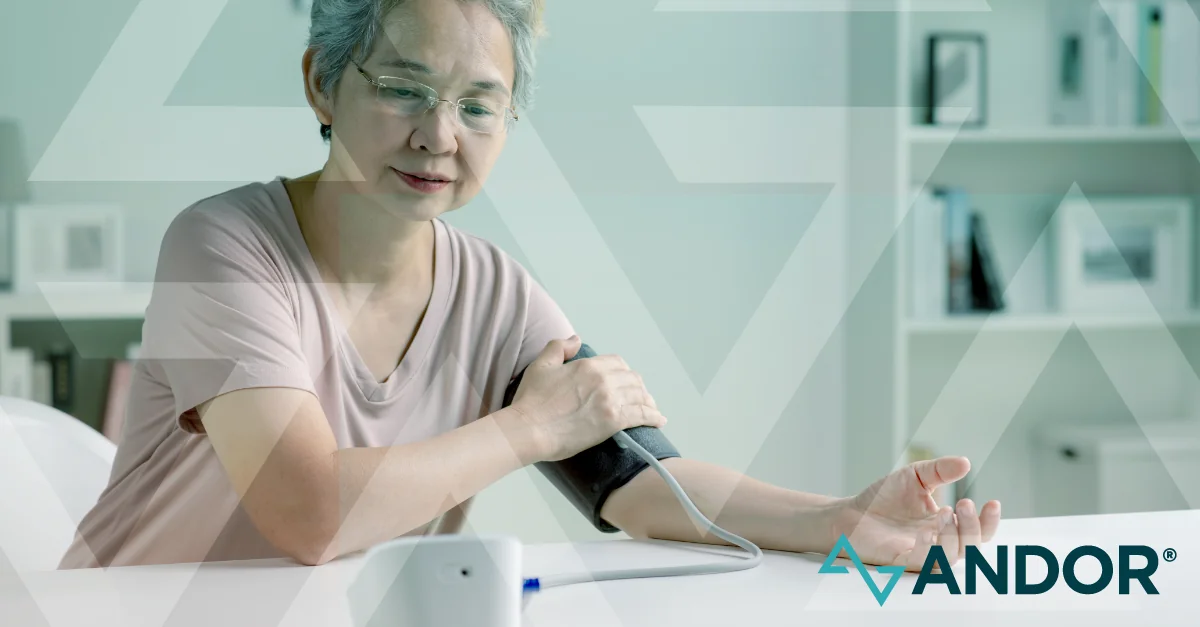
Blood pressure cuffs, scales, pulse oximeters, glucose monitors, and other connected devices can continuously provide valuable information about patients between traditional encounters.

But somebody—or something—still has to interpret that information.

A successful RPM program must answer a series of operational questions:

Which readings matter?

Which patients require attention?

Who should follow up?

What action should be taken?

How does that information become part of the patient’s longitudinal record?

And how can all of this happen without creating an unsustainable new workload for clinicians?

Simply sending device data into a dashboard doesn’t solve those problems.

An AI-native clinical service can.

From Data Collection to Intelligent Action

ThinkAndor® RPM continuously analyzes incoming patient information to identify potential clinical concerns and prioritize patients who may benefit from intervention.

That changes the role of remote monitoring.

Instead of clinicians manually reviewing every signal with equal urgency, AI can help continuously evaluate incoming information, organize work, and surface the situations most likely to require attention.

Clinicians remain responsible for clinical judgment.

But they don’t need to be the first layer of manual processing for every piece of data.

That is the central advantage of AI-native clinical services: AI does the work it can do, while clinicians focus on the work only they should do.

Meet Clinicians Where They Already Work

Healthcare technology adoption becomes dramatically harder when clinicians are asked to operate yet another application.

ThinkAndor® takes a different approach.

Patient-generated health data, device readings, alerts, and longitudinal trends can flow into the CHR so clinicians can review monitoring information within established workflows while the CHR remains the system of record.

That’s important because AI-native healthcare shouldn’t require replacing the EHR.

It should make the EHR—and the people working inside it—more effective.

The intelligence layer should operate across existing infrastructure, bringing the right information and actions into the clinical environment instead of forcing clinicians to continually move between disconnected systems.

Technology Alone Doesn’t Operate an RPM Program

Even with AI, health systems still face another challenge: clinical capacity.

Remote patient monitoring requires ongoing patient engagement, care coordination, education, escalation, and follow-up.

Traditionally, expanding those programs meant building internal teams alongside the technology.

ThinkAndor® approaches the problem differently.

Through integrated clinical services, nurses, care navigators, dietitians, and other clinical resources can support patient engagement, monitoring, and care coordination based on the needs of the health system.

That turns RPM from a software implementation into an AI-native clinical service.

Instead of giving the health system another platform and asking it to build an operating model around the technology, AI infrastructure and clinical capacity can operate together.

Expanding Access Without Expanding Complexity

The model becomes particularly important when healthcare organizations want to reach rural and underserved populations.

Remote monitoring often assumes patients have reliable broadband, compatible smartphones, and the technical ability to configure connected devices.

Those assumptions can unintentionally exclude many of the people who could benefit most from continuous care.

ThinkAndor® can support cellular-enabled monitoring devices designed to reduce those technology barriers.

The objective is simple: participation in continuous care shouldn’t depend on a patient’s ability to become their own IT department.

Removing those barriers can help health systems extend monitoring programs beyond digitally sophisticated patient populations and into communities where access to traditional care may already be limited.

A Practical Foundation for CMS ACCESS

This capability also takes on new significance as CMS advances the ACCESS Model.

ACCESS represents a shift toward technology-supported chronic care in which healthcare organizations are increasingly accountable for continuous engagement and outcomes.

Psynergy Health, an Andor Ventures company and CMS ACCESS participant, uses ThinkAndor® as the technology foundation supporting its ACCESS clinical model.

For health systems, that creates an important opportunity.

Rather than assembling devices, monitoring software, AI capabilities, clinical staffing, EHR integration, and chronic-care workflows from separate vendors, organizations can move toward an integrated model built around AI-native clinical services.

The Future of RPM Is Continuous Care

Remote patient monitoring shouldn’t ultimately be measured by the number of devices deployed or readings collected.

It should be measured by what happens because those readings exist.

Was risk identified earlier?

Was the right clinician engaged?

Was unnecessary work avoided?

Did patients remain connected to their care teams?

Did the organization increase the number of patients it could effectively manage?

Did outcomes improve?

Those questions move RPM from a technology conversation to a healthcare-delivery conversation.

Connected devices provide the signal.

AI provides continuous intelligence and orchestration.

Clinicians provide judgment and care.

And the EHR provides the longitudinal clinical record.

Bringing those components together is what turns remote patient monitoring into continuous care.

That’s the promise of AI-native clinical services: not another system clinicians have to operate, but an operating model that helps healthcare organizations deliver the outcome.

Class (B2B/B2C)
B2B
Ingest Status
Rewritten
Dedupe hash
5f6cd3d1b3757918899de5ac402c5062
Press Eligible
Yes
Press Eligible Reason
Healthcare technology and clinical service model for health systems and clinicians.
Source Name
Andor Health
Original Summary

Remote patient monitoring has enormous potential.

Image URL
https://andorhealth.com/wp-content/uploads/2026/08/Andor20Health20Article2023520Image.png
Source Node
Content Hash (SHA-256, erste 32 hex)
a421dce3ebe053ec69689969d2300b59
From AI to Outcomes: Scaling Transitional Care Across UPMC
Image File
Original HTML

Healthcare has no shortage of promising technology. The harder question is what happens after it is deployed.

Who reaches the patient after discharge? Who identifies emerging risks? Who coordinates follow-up? And ultimately, who is accountable for the outcome?

UPMC is addressing those questions by expanding its AI-native transitional care management model from UPMC Jameson to 18 hospitals this fall, working with Andor Health and Psynergy Health.

Closing the Gap After Discharge

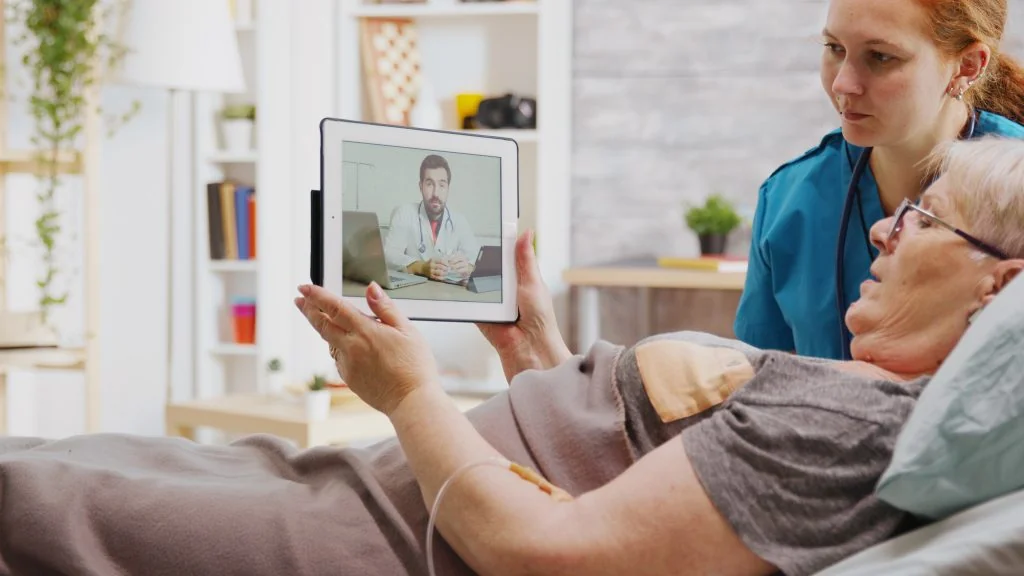
The transition from hospital to home is one of the most critical points in a patient’s care journey. Patients are navigating new medications, follow-up appointments, changing symptoms, and recovery, often without the same level of support they had in the hospital.

Traditional transitional care programs can require clinicians to spend significant time on outreach, screening, documentation, and reviewing information before they can focus on the patients who need their expertise most.

AI-native clinical services change that model.

ThinkAndor® uses AI to automate initial outreach, analyze clinical information, prioritize emerging needs, and prepare clinicians for patient encounters. Every enrolled patient receives outreach within 48 hours of discharge, while patients requiring additional support can be escalated to a care coordinator.

Across transitional care workflows, Andor has seen a 63% reduction in clinician time spent on non-clinical tasks per encounter and an 82% reduction in non-actionable monitoring alerts.

Technology and Clinical Services Working Together

Technology alone does not deliver transitional care.

Patients still need clinical judgment, education, coordination, and human connection. That is why ThinkAndor® works alongside clinical services from Psynergy Health and UPMC’s care teams.

Together, the model supports outreach, scheduling, clinical encounters, documentation, and ongoing care coordination. AI handles work that can be automated while clinicians focus their expertise where it creates the greatest value.

This is the foundation of AI-native clinical services, bringing technology and clinical care together around measurable outcomes.

Scaling What Works

UPMC’s expansion also shows that successful AI transformation is about more than deploying technology across additional hospitals.

Over approximately 18 months, UPMC, Andor Health, and Psynergy Health have continued refining the program based on real-world experience, including strengthening patient education, moving automated check-ins earlier, and co-branding outreach to reinforce the connection with UPMC.

The goal is simple: keep patients connected to their care team, identify needs earlier, and make it easier for clinicians to intervene when their expertise is required.

That can help health systems reduce avoidable readmissions, address referral leakage, expand clinical capacity, and strengthen continuity after discharge.

Owning the Outcome

The next evolution of healthcare AI is not about giving clinicians another tool.

It is about combining AI, clinical expertise, and care delivery in a model designed around accountability.

UPMC’s expansion to 18 hospitals demonstrates what that evolution can look like at scale.

AI helps identify and orchestrate the work. Clinicians provide the judgment and care. Together, UPMC, Andor Health, and Psynergy Health are building a model focused not simply on deploying technology, but on owning the outcomes that matter for patients.

Class (B2B/B2C)
B2B
Ingest Status
Rewritten
Dedupe hash
dfd4e13e569c321063cfb83a6da93696
Press Eligible
Yes
Press Eligible Reason
Healthcare AI deployment and clinical services expansion across UPMC hospitals.
Source Name
Andor Health
Original Summary

Healthcare has no shortage of promising technology. The harder question is what happens after it is deployed.

Image URL
https://andorhealth.com/wp-content/uploads/2026/08/image2028529-2.png
Source Node
Content Hash (SHA-256, erste 32 hex)
2a55162f82ce21d21337ebc07be26ca9
Founder Group Limited Secures US$5 Million EPC Contract for a 5.5MW Solar Plant under Malaysia’s LSS5 PETRA Programme
Image File
Original HTML

Founder Group Limited Secures US$5 Million EPC Contract for a 5.5MW Solar Plant under Malaysia’s LSS5 PETRA Programme

KUALA LUMPUR, Malaysia, March 16, 2026 (GLOBE NEWSWIRE) — Founder Group Limited (NASDAQ: FGL) (“Founder Group” or the “Company”), a leading engineering, procurement, construction, and commissioning (EPCC) solutions provider for solar photovoltaic (PV) systems in Malaysia, today announced that it has secured a RM19.5 million (approximately US$5 million) EPC contract for a 5.5MW solar facility. The contract was awarded by a prominent solar investment company under Malaysia’s Large Scale Solar 5 (“LSS5”) programme.

The LSS5 programme, also known as Peralihan Tenaga SuRiA (PETRA), represents Malaysia’s largest solar tender to date. With a total generation quota of 2,000 megawatts (MW), LSS5 more than doubles the capacity offered in previous iterations, underscoring the accelerating momentum of the country’s renewable energy sector.

The rollout of LSS PETRA and LSS PETRA 5+ is a key component of Malaysia’s broader strategy to accelerate renewable-energy deployment under the Malaysia MADANI framework and the National Energy Transition Roadmap (NETR), supporting the nation’s target of achieving Net Zero emissions by 2050.

Since its inception in 2016, the LSS programme has been a major catalyst for Malaysia’s Renewable Energy (RE) industry. To date, approximately 121 Large Scale Solar (“LSS”) projects have been approved, representing a combined capacity of 6,228 MW and an estimated investment value exceeding RM21 billion.

Project Scope and it’s Deliverable

Under the newly-secured contract, the Founder Group will oversee the design, construction testing and commissioning of the 5.5 MW solar facility. The project is expected to deliver a guaranteed Maximum Annual Available Capacity (MAAQ) of 13,568.8 megawatt‑hours (MWh) during its first two years of operation. The project has committed to delivering a guarantee of Maximum Annual Available Capacity (MAAQ) guarantee of 13,568.8 megawatts- per hour (MWh) for the first initial two years of power generation operation period. The project is scheduled to achieve commercial operation by May 1, 2027.

The contract win aligns with positive market sentiment regarding Malaysia’s renewable energy landscape. Analysts maintain an “overweight” stance on the sector, citing consistent policy execution, increasing quota allocations, and strong momentum in the solar segment as key drivers of long‑term growth.

“Building on our proven track record in delivering utility-scale projects since LSS4, we are proud to play a key role in this landmark LSS5 cycle,” said Lee Seng Chi, Chief Executive Officer of Founder Group Limited. “Our team remains committed to the technical excellence and operational agility required to ensure successful energization by early 2027, further strengthening our position as a preferred EPCC partner in the region.”

Class (B2B/B2C)
B2B
Ingest Status
Rewritten
Dedupe hash
09f578dad9c2f8762f530c177d0a742d
Press Eligible
Yes
Press Eligible Reason
Company announcement of a solar EPC contract and project delivery under Malaysia’s renewable energy programme.
Source Name
Founder Group Limited
Original Summary

Batteries are the most expensive part of a solar system. Between appropriately-size battery bank and a battery-based inverter like the Outback Radian, you’re looking...

Image URL
https://www.founderenergy.com.my/wp-content/uploads/2026/03/LSS_Petra-1-1024x616.jpg
Source Node
Content Hash (SHA-256, erste 32 hex)
10749342952cfbb4e21c68a2058c7be2
Founder Group Limited Announces Additional US$8.6 Million Contract Under Malaysia’s Large Scale Solar Programme
Image File
Original HTML

Founder Group Limited Announces Additional US$8.6 Million Contract Under Malaysia’s Large Scale Solar Programme

KUALA LUMPUR, Malaysia, March 25, 2026 (GLOBE NEWSWIRE) — Founder Group Limited (NASDAQ: FGL) (“Founder Group” or the “Company”), a leading engineering, procurement, construction, and commissioning (EPCC) solutions provider for solar photovoltaic (PV) systems in Malaysia, today announced that, in collaboration with a prominent solar investment company, it has secured an EPC contract valued at RM34 million (approximately US$8.6 million) under Malaysia’s Large Scale Solar 5 (“LSS5”) programme.

As per the newly signed contract, Founder Group will undertake the design, construction, testing and commissioning of the 9.5 MW solar facility the Company agreed to build under LSS5 earlier this month. That facility is scheduled to achieve commercial operation not later than May 1, 2027.

To date, Founder Group has secured total contract value of about RM70 million (approximately US$17.7 million) under LSS5.

Also known as Peralihan Tenaga SuRiA (PETRA), LSS5 is part of the Malaysian government’s ongoing efforts to achieve a target of 70 percent renewable‑energy (RE) installed capacity and carbon neutrality by 2050. This ambitious RE installed capacity is considered a significant step for the adoption of solar energy in the country, reinforcing the nation’s long‑term commitment to clean energy transition.

According to MBSB Investment Bank Bhd (MBSB Research), Malaysia may soon launch LSS6, potentially adding another 2GW of solar capacity alongside requirements for battery energy storage systems (BESS). This launch, said MBSB, could support a multi-year growth trajectory for solar players, with solar projected to account for more than half of Malaysia’s power capacity mix by 2050.

“This new LSS5 contract, coming shortly after our recently announced LSS5 award, demonstrates the accelerating trust in our technical capability and reinforces the momentum we are building across Malaysia’s utility‑scale solar market,” said Founder Group Chief Executive Officer Lee Seng Chi.

“The Company aims to leverage this milestone to secure additional contracts under LSS6, Corporate Renewable Energy Sourcing Schemes (CRESS) to create electricity from renewable sources, and from various regional solar opportunities, thereby laying the foundation for sustained recurring revenue generation.”

Class (B2B/B2C)
B2B
Ingest Status
Rewritten
Dedupe hash
45aee064194fa4163027aed352cccab8
Press Eligible
Yes
Press Eligible Reason
Company contract award and solar energy industry news for business professionals.
Source Name
Founder Group Limited
Original Summary

Batteries are the most expensive part of a solar system. Between appropriately-size battery bank and a battery-based inverter like the Outback Radian, you’re looking...

Image URL
https://www.founderenergy.com.my/wp-content/uploads/2026/03/Addon_contract-1024x616.jpg
Source Node
Content Hash (SHA-256, erste 32 hex)
cd643dcde10ef7455df882e5009af55b
Founder Group Limited Regains Compliance with Nasdaq’s Minimum Publicly Held Shares Requirement
Image File
Original HTML

Founder Group Limited Regains Compliance with Nasdaq’s Minimum Publicly Held Shares Requirement

SELANGOR, Malaysia, April 10, 2026 (GLOBE NEWSWIRE) — Founder Group Limited (NASDAQ: FGL) (“FGL” or the “Company”) today announced that on April 9, 2026, it received a letter from the Listing Qualifications Department of The Nasdaq Stock Market LLC (“Nasdaq”) confirming that the Company has regained compliance with Nasdaq’s minimum publicly held shares requirement under Listing Rule 5550(a)(4) (the “Listing Rule”).

Class (B2B/B2C)
Ignore
Ingest Status
Rejected
Dedupe hash
0fe5f459e18b3901e716b14772a2b66e
Press Eligible
No
Press Eligible Reason
Text too short (76 words. Min: 150)
Source Name
Founder Group Limited
Original Summary

Batteries are the most expensive part of a solar system. Between appropriately-size battery bank and a battery-based inverter like the Outback Radian, you’re looking...

Image URL
https://www.founderenergy.com.my/wp-content/uploads/2026/08/Compliance-1024x616.jpg
Source Node
Content Hash (SHA-256, erste 32 hex)
e13f28fa960f437f537ee37c227c7e62
Founder Group Limited Secures First Aquaculture Contract, a US$1.2 million 1.4 MW Rooftop System for a Terengganu Shrimp Farm
Image File
Original HTML

Founder Group Limited Secures First Aquaculture Contract, a US$1.2 million 1.4 MW Rooftop System for a Terengganu Shrimp Farm

KUALA LUMPUR, Malaysia, Aug. 10, 2026 (GLOBE NEWSWIRE) — Founder Energy Sdn Bhd, a subsidiary of Founder Group Limited (NASDAQ: FGL) (“Founder Group” or the “Company”), has signed a turn-key EPCC (engineering, procurement, construction and commissioning) contract to build a 1.4MW-peak rooftop solar system for a client that operates an integrated shrimp farm across three sites in Bandar Permaisuri, Terengganu. The contract is valued at approximately RM4.7 million (US$1.15 million).

Malaysia Renewable Energy Acceleration

Malaysia’s renewable energy (RE) sector is undergoing rapid structural growth, driven by national policy initiatives under the National Energy Transition Roadmap (NETR), which targets 70% RE capacity by 2050. Driven by new market mechanisms: including the Corporate Renewable Energy Supply Scheme (CRESS), the launch of Solar ATAP (Solar Accelerated Transition Action Programme), and upcoming Large-Scale Solar (LSS6) frameworks where expected investment ranging RM13 billion to RM15 billion (USD 3.2 billion to USD3.7 billion).

With national utility tariffs adjusting under Regulatory Period 4 (RP4) and fluctuating Automatic Fuel Adjustments (AFA), energy-intensive businesses are increasingly seeking distributed solar solutions to insulate their bottom line from power cost volatility.

Addressing Critical Energy Overhead in Regional Aquaculture

Securing this contract also marking our first EPCC provider for aquaculture contract, operating on a sector the company had not previously served. According to the Department of Fisheries Malaysia, domestic aquaculture produced over 500,000 metric tons valued at approximately US$1 billion in 2023. Under the National Agro-Food Policy 2.0, the government aims to expand aquaculture output to 40% of total fisheries production by 2030, driving significant power requirements across coastal and rural farming facilities.

The adoption of solar energy in commercial aquaculture is rapidly expanding across Southeast Asia. In farming operations, electricity and fuel represent the second-largest controllable expense after feed. Recent regional studies in Brunei and Taiwan demonstrate that rooftop solar can lower aquaculture power costs by as much as 72%, while government-backed solar initiatives in Indonesia achieved up to 50% grid-electricity savings by powering continuous 24/7 pond aeration equipment.

Expanding Service Capabilities: Full-Suite EPCC & AI-Powered O&M

Under the contract, Founder Energy’s scope covers supply and installation of the panels, inverters, mounting structures, cabling and related equipment, plus coordination with national utility Tenaga Nasional Berhad, TNB to connect the system to the grid.

Beyond the turnkey EPCC execution, Founder Group in general also provides long-term asset lifecycle management. The Company integrate the Company’s proprietary AI-driven Operations & Maintenance (O&M) technologies. Featuring automated diagnostics, predictive maintenance algorithms, and drone-assisted visual and thermal inspections. Founder Group’s O&M platform autonomously identifies anomalies and detects module defects without human intervention. This ensures uninterrupted system uptime, minimizes performance degradation, and guarantees energy output for high-stakes, 24/7 commercial operations.

CEO Commentary

“Aquaculture is a non-stop, high demand industry where energy cost efficiency directly safeguards production yield and business continuity,” said Lee Seng Chi, chief executive officer of Founder Group Limited. “For farm operators, power is not an administrative cost, it is a core operational driver. By deploying solar energy, we are enabling operators to stabilize their energy costs, insulate their margins against tariff volatility, and achieve meaningful sustainable decarbonization. This milestone project establishes a proven model for how renewable energy can transform traditional food production sectors across Malaysia and the broader region.”

In short, Founder Group’s expansion into aquaculture sector provides a scalable operational blueprint for commercial aquaculture farms seeking to reduce reliance on grid electricity and diesel power while improving long-term business profitability.

Ingest Status
Rejected
Dedupe hash
9c2bed3541d6c725c874725e3e6f7f1b
Source Name
Founder Group Limited
Original Summary

Batteries are the most expensive part of a solar system. Between appropriately-size battery bank and a battery-based inverter like the Outback Radian, you’re looking...

Image URL
https://www.founderenergy.com.my/wp-content/uploads/2026/08/Aquaculture-1024x616.jpg
Source Node
Content Hash (SHA-256, erste 32 hex)
41e50da629d10e4c6af8d53238f36d14