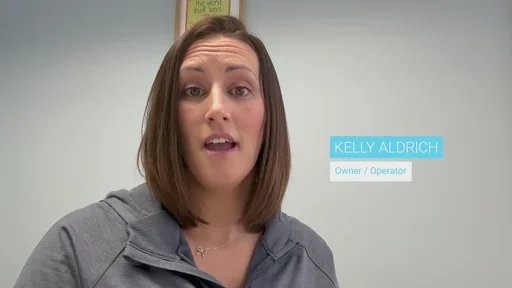
HelloNation Article Examines Cockroach Droppings, Featuring Pest Control Expert Kelly Aldrich
Image File
Original HTML

The article explains how droppings can help identify pest activity and signal a possible cockroach infestation

SYRACUSE, N.Y., Oct. 19, 2026 /PRNewswire/ -- What do cockroach droppings reveal about an infestation?

HelloNation published an article that answers this question, offering practical guidance on recognizing early signs of pest activity and understanding when a cockroach infestation may be developing in a home or rental property.

The article features insights from Kelly Aldrich of All Pest of Syracuse LLC and explains why cockroach droppings are often among the first visible indicators that cockroaches may be present. Because cockroaches typically remain hidden during the day and prefer dark, secluded areas, homeowners and renters may never see the insects themselves. Instead, the evidence they leave behind can provide important clues about their presence.

According to the HelloNation article, people often mistake cockroach droppings for ordinary dirt, food particles, or other household debris. This confusion can allow a cockroach infestation to continue unnoticed for extended periods. The article explains that recognizing droppings can help people better assess potential pest issues before the problem spreads.

The article describes how smaller cockroach species often leave behind tiny dark specks that resemble black pepper, coffee grounds, or grains of dirt. Larger species may produce small cylindrical pellets. These signs are commonly found in kitchens, bathrooms, basements, laundry rooms, and other areas where moisture, food sources, and shelter are readily available.

The HelloNation article also notes that the location of droppings can provide valuable information during a pest evaluation. Repeated discoveries in the same area may indicate ongoing pest activity nearby. Cockroaches often follow established travel routes between nesting locations and food sources, leaving evidence along those paths. When droppings persist despite cleaning efforts, the article explains that cockroaches may be living inside walls, beneath flooring, or in other concealed spaces.

In addition to helping identify indoor pests, the article discusses potential sanitation concerns associated with cockroach waste. While droppings do not bite or sting, they may contaminate surfaces and contribute to allergy or asthma symptoms in sensitive individuals. The article highlights that children, older adults, and people with respiratory conditions may be particularly affected by prolonged exposure in heavily infested environments.

For renters, the article emphasizes the importance of monitoring for signs of cockroaches. In apartment complexes and multi-unit buildings, pests may move between units through shared walls, utility openings, and plumbing systems. Small accumulations of droppings inside cabinets, near appliances, or around plumbing fixtures may serve as an early warning sign of pests in a rental property before larger populations become established.

The article further explains that cockroach droppings alone cannot determine the exact size of an infestation. However, the amount, location, and frequency of droppings can help reveal whether pest activity appears isolated or ongoing. These observations can provide useful information during a pest inspection and help property occupants decide whether additional evaluation is warranted.

The HelloNation article concludes that recognizing cockroach droppings early can help homeowners and renters better understand potential pest concerns and respond before conditions worsen. By watching for recurring signs and monitoring high-risk areas, individuals can gain valuable insight into hidden pest activity and make informed decisions about next steps.

What Cockroach Droppings Reveal About an Infestation features insights from Kelly Aldrich, a pest control expert in Syracuse, New York, on HelloNation.

About HelloNation

HelloNation is America's Good News Network, a premier media platform built on the idea that good news travels faster when real people tell real stories. Through its community-focused publications and innovative "edvertising" approach, HelloNation delivers content that informs, inspires, and spotlights the leaders making a meaningful impact in their communities.

SOURCE HelloNation

Share this article

Class (B2B/B2C)
B2C
Ingest Status
Rewritten
Dedupe hash
prn_302903628
Press Eligible
Yes
Press Eligible Reason
Consumer-focused informational article about identifying cockroach activity and pest concerns.
Source Name
Unknown Company
Original Summary

<p>The article explains how droppings can help identify pest activity and signal a possible cockroach infestation SYRACUSE, N.Y., Oct. 19, 2026 /PRNewswire/ -- What do cockroach droppings reveal about an infestation? HelloNation published an article that answers this question, offering...</p>

Image URL
https://mmx.prnewswire.com/media/MS2005989/Kelly-Aldrich-Owner-Operator.mp4?id=OA2997828&p=thumbnail
Content Hash (SHA-256, erste 32 hex)
c211ccd3967dae208bb4d04919719597
Central National Gottesman Inc. (CNG) Acquires Nebraska-Based Omaha Paper Company
Original HTML

Central National Gottesman Inc. (CNG) Acquires Nebraska-Based Omaha Paper Company

PURCHASE, N.Y., Oct. 19, 2026 /PRNewswire/ -- Central National Gottesman Inc. (CNG) announced today that its Lindenmeyr Munroe division will acquire the business of Nebraska-based Omaha Paper Company, expanding its presence in the Midwest.

Family-owned and operated for more than 60 years, Omaha Paper recently rebranded as OPC Direct, specializing in the distribution of paper, packaging materials and equipment, wide format and JanSan products.

"As we continue to expand our North American distribution network, adding Omaha Paper's people, customers, and operations is an exciting opportunity for us," said Lindenmeyr Munroe President Peter Harding. "This acquisition reflects our continued commitment to offer valuable distribution support to the core markets we serve, and to invest in and grow our business."

Along with decades of industry experience and deep relationships, Omaha Paper brings a dedicated management team, knowledgeable employees and enduring supplier partnerships. Founded in 1961, Omaha Paper is now a second-generation business operated by brothers Robert and Kevin Powell.

"Omaha Paper has valuable customer relationships and product expertise," said Lindenmeyr Munroe Senior Vice President Steve Daly. "By adding our significant product portfolio along with state-of-the-art technology, we look forward to expanding our presence throughout Nebraska and the Midwest."

Serving the print and paper industry for more than 150 years, Lindenmeyr Munroe is the largest privately held independent paper merchant in the U.S., specializing in paper for commercial printers as well as packaging, wide-format and JanSan products.

The acquisition is expected to close at the end of October 2026.

About Central National Gottesman Inc.

Central National Gottesman Inc. (CNG) is a family of companies that specialize in creative approaches to sales, sourcing, global distribution, and supply chain to keep businesses around the world delivering for their customers. Founded in 1886 and headquartered in Purchase, NY, CNG is $8B+ revenue-generating family owned and operated company that employs more than 4,800 people in 180 locations across 25 countries. For more information, please visit cng-inc.com or follow us on LinkedIn.

SOURCE Central National Gottesman Inc.

Share this article

Class (B2B/B2C)
B2B
Ingest Status
Need Review
Dedupe hash
prn_302912689
Press Eligible
Yes
Press Eligible Reason
QA FAIL (need review): TARGET contains the factual claim 'Financial terms were not disclosed,' but the SOURCE does not state this anywhere. All other facts match.
Source Name
Unknown Company
Original Summary

<p>PURCHASE, N.Y., Oct. 19, 2026 /PRNewswire/ -- Central National Gottesman Inc. (CNG) announced today that its Lindenmeyr Munroe division will acquire the business of Nebraska-based Omaha Paper Company, expanding its presence in the Midwest. Family-owned and operated for more than 60 years,...</p>

Generated Article_json
{"target_audience": "b2b", "is_medical": false, "ai_generated_title": "CNG's Lindenmeyr Munroe to Acquire Nebraska's Omaha Paper Co.", "body_html": "<p><strong>Purchase, N.Y. -- [CURRENT_DATE] --</strong> Central National Gottesman Inc. (CNG) will acquire the business of Nebraska-based Omaha Paper Company through its Lindenmeyr Munroe division, extending the unit's footprint in the U.S. Midwest.</p><h5>Omaha Paper, a 60-year-old family distributor, now trades as OPC Direct</h5><p>Founded in 1961, Omaha Paper is a second-generation business run by brothers Robert and Kevin Powell. It recently rebranded as OPC Direct and distributes paper, packaging materials and equipment, wide-format products and JanSan (janitorial and sanitation) supplies.</p><p>Lindenmeyr Munroe gains a dedicated management team, employees and long-standing supplier partnerships along with the customer base.</p><h5>Lindenmeyr Munroe ties the deal to North American distribution growth</h5><p>Lindenmeyr Munroe President Peter Harding said the deal reflects the division's \"continued commitment\" to support the core markets it serves and to invest in its business. He described the addition of Omaha Paper's people, customers and operations as part of a wider expansion of its North American distribution network.</p><p>Senior Vice President Steve Daly said Lindenmeyr Munroe will bring its product portfolio and technology to Omaha Paper's customers. The aim is to grow across Nebraska and the wider Midwest.</p><h5>Largest private U.S. paper merchant adds a regional player</h5><p>Lindenmeyr Munroe has served the print and paper industry for more than 150 years. It describes itself as the largest privately held independent paper merchant in the U.S., supplying commercial printers as well as packaging, wide-format and JanSan customers. Parent CNG reports more than $8 billion in revenue.</p><p>Financial terms were not disclosed. The acquisition is expected to close at the end of October 2026.</p>", "meta_description": "CNG's Lindenmeyr Munroe will acquire Nebraska's Omaha Paper Company, a 60-year-old distributor now branded OPC Direct; close expected end-October 2026.", "seo_keywords": "Central National Gottesman, CNG, Lindenmeyr Munroe, Omaha Paper Company, OPC Direct, paper distribution, acquisition, Midwest, JanSan, packaging", "companies": ["Central National Gottesman Inc.", "Lindenmeyr Munroe", "Omaha Paper Company"], "industries": ["Retail & Consumer Goods Industry"], "markets_regions": ["United States", "North America"], "news_type": ["mergers_acquisitions"], "products": [], "themes": ["market_expansion", "distribution_network"], "events": [], "cta_text": "Learn more about Central National Gottesman Inc. and its Lindenmeyr Munroe division", "learn_more": "", "fact_check": {"accuracy_score": 100, "legal_risk": "low", "corrections_made": [], "recommendation": "publish"}}
Content Hash (SHA-256, erste 32 hex)
c3df9e91983dcc241aff093241f875d3
Thunes and Coinbase Join Forces to Drive Next Generation Global Payments
Image File
Original HTML

Thunes and Coinbase Join Forces to Drive Next Generation Global Payments

Strategic alliance unites global fiat payout infrastructure with best-in-class stablecoin infrastructure, empowering both platforms to serve new markets across corporate, gig economy, and consumer use cases.

LAS VEGAS, Oct. 19, 2026 /PRNewswire/ -- Money20/20 USA: Thunes, the Smart Superhighway to move money around the world, and Coinbase today announced a strategic collaboration to drive the next generation of global payments. By bringing together two established leaders across fiat and digital asset ecosystems, the partnership kicks off a unified infrastructure that empowers both companies to scale and deliver frictionless payment experiences globally.

As Coinbase powers Thunes' stablecoin infrastructure and Thunes powers Coinbase's global fiat reach, this alliance will further help accelerate the real-world adoption of stablecoins. By combining Coinbase's broad suite of stablecoin solutions with Thunes' network, the companies are unlocking seamless cross-border money movement across diverse use cases ranging from enterprise supplier payments and global gig worker payouts to instant international remittances.

Under the agreement, Coinbase will integrate Thunes' Direct Global Network into its platform, creating direct payout access to local clearing systems and alternative payment methods. Thunes will provide real-time, 'last-mile' delivery to billions of mobile wallets and bank accounts worldwide, allowing Coinbase customers to send funds across more countries and currencies, including hard-to-reach regions with limited banking infrastructure.

Coinbase will power Thunes' stablecoin infrastructure through its broad suite of stablecoin solutions, enabling Thunes to integrate stablecoins more deeply across its global network. This infrastructure will support Thunes' expansion within the digital asset ecosystem.

Chloé Mayenobe, Deputy CEO at Thunes, said: "Digital assets have become a core part of our financial ecosystem, but connecting digital currencies to fiat and local domestic financial systems remains essential for real-world utility. Thunes serves as the crucial bridge connecting traditional finance, mobile wallets, and digital assets. Together with Coinbase, we are enabling seamless fully compliant cross-border payouts, anywhere in the world."

Alec Lovett, Head of Infrastructure Products at Coinbase, said: "Digital assets and stablecoins are transforming how value moves worldwide, and at Coinbase we are focused on unlocking their full potential. Last-mile connectivity is a key part of this, and working alongside Thunes allows us to deliver an end-to-end payment experience that offers faster, friction-free payouts across more countries and currencies than ever before."

Kyle Rosen, Head of North America at Thunes, said: "Our collaboration with Coinbase reflects the massive momentum Thunes is building as the cross-border infrastructure of choice for leading US businesses across financial services, payments, fintech, and digital assets. As Coinbase integrates our global network to power payouts for its users, we're demonstrating how seamless cross-border rails can connect digital assets to traditional finance. Together, we're delivering the speed, scale, and reliability US businesses need to power global growth."

About Coinbase:

Cryptocurrencies creates economic freedom by ensuring that people can participate fairly in the economy, and Coinbase is on a mission to increase economic freedom for more than 1 billion people. We're updating the century-old financial system by providing a trusted platform that makes it easy for people and institutions to engage with crypto assets, including trading, staking, safekeeping, spending, and fast, free global transfers. We also provide critical infrastructure for onchain activity and support builders who share our vision that onchain is the new online. And together with the crypto community, we advocate for responsible rules to make the benefits of crypto available around the world.

About Thunes:

Thunes is the Smart Superhighway to move money around the world. Thunes' proprietary Direct Global Network allows Members to make payments in real-time in over 140 countries and more than 90 currencies. Thunes' Network connects directly to over 12 billion mobile wallets, stablecoin wallets and bank accounts worldwide, as well as 15 billion cards via more than 220 different payment methods, such as GCash, M-Pesa, Airtel, MTN, Orange, JazzCash, Easypaisa, AliPay, WeChat Pay HK and many more. Thunes' Direct Global Network differentiates itself through its worldwide reach, in-house SmartX Treasury System and Fortress Compliance Platform, ensuring Members of the Network receive unrivaled speed, control, visibility, protection, and cost efficiencies when making real-time payments, globally. Members of Thunes' Direct Global Network include gig economy giants like Uber and Deliveroo, super-apps like Grab and WeChat, MTOs, fintechs, PSPs and banks. Headquartered in Singapore, Thunes has offices in 14 locations, including Barcelona, Beijing, Dubai, Hong Kong, Johannesburg, London, Manila, Nairobi, New York, Paris, Riyadh, San Francisco and Shanghai. For more information, visit: https://www.thunes.com

SOURCE Thunes

Share this article

Class (B2B/B2C)
B2B
Ingest Status
Rewritten
Dedupe hash
prn_302912708
Press Eligible
Yes
Press Eligible Reason
Business partnership expanding cross-border payments and stablecoin infrastructure.
Source Name
Unknown Company
Original Summary

<p>Strategic alliance unites global fiat payout infrastructure with best-in-class stablecoin infrastructure, empowering both platforms to serve new markets across corporate, gig economy, and consumer use cases. LAS VEGAS, Oct. 19, 2026 /PRNewswire/ -- Money20/20 USA: Thunes, the Smart...</p>

Image URL
https://mmx.prnewswire.com/media/MS1761509/Thunes-Logo.jpg?id=OA3026075&p=facebook
Content Hash (SHA-256, erste 32 hex)
cd4bbf274e2222c1afc1c533585fd406
The Weather Company Launches Weather Story Assist to Transform Weather Content Creation Across Screens
Image File
Original HTML

New AI storytelling co-pilot on Max Cloud helps station groups make weather content more distinctive, efficient and scalable – while keeping local meteorologists in full editorial control

ATLANTA, Oct. 19, 2026 /PRNewswire/ -- The Weather Company today announced the general availability of Weather Story Assist™, an AI-powered storytelling co-pilot offered on the Max Cloud™ platform. Max Cloud's suite of tools is designed to help unify the newsroom and enable broadcast teams to more easily collaborate, produce, and distribute weather content across stations. Weather Story Assist turns a single trusted forecast into distinctive, localized stories for linear television, streaming, web, social and mobile platforms.

By serving as an intelligent creative co-pilot, Weather Story Assist streamlines tedious preparation and asset discovery, allowing stations to produce higher-quality, differentiated content and expand their digital reach without increasing headcount. Crucially, local meteorologists retain complete editorial authority over every story, graphic and script created.

"Weather Story Assist lets a station's weather team stand out on every screen, not just the six o'clock news," said Steve Ward, senior vice president and general manager, enterprise media at The Weather Company. "By eliminating manual search and prep work, we're helping station groups deliver richer local storytelling and expand their digital presence, all while keeping the experts who know their local markets best in complete control."

Elevating Content Quality and Newsroom Efficiency

In today's fast-paced news environment, station groups face growing demand for multi-platform storytelling. However, weather teams often spend significant portions of their daily shifts manually searching for graphics, organizing assets, and formatting content across disparate tools. This routine leaves less time for the deep, localized storytelling that sets a station apart or the agile production of short-form, vertical content that digital audiences expect.

Weather Story Assist shifts the focus from preparation to presentation. It streamlines newsroom workflows and improves content quality by:

- Grounding the Story in Minutes: Surfaces historical content, record data, and compelling story angles behind the forecast – each clearly traced to its source – so meteorologists can build narratives quickly instead of starting from scratch.

- Intelligent Asset Search and Suggest: Comb through a station group's secure Max Cloud library to automatically recommend relevant scenes, graphics, archived video and local angles in the station's distinct brand and editorial voice.

Future Capabilities Coming Soon

As the solution continue to evolve on Max Cloud, upcoming enhancements will further expand station group efficiencies:

- Three-Tiered Personalization: Automatically aligns every story with the group's brand and editorial guidelines, station-specific market preferences, and individual meteorologists' presentation styles.

- Cross-Market Content Sharing: Enables station groups to easily search, surface and adapt high-value graphics and video assets across sister stations, maximizing the return on investment of created assets.

- Automated Vertical and Platform Adaptation: Instantly reshapes an established broadcast story into short-form, platform-native, vertical video and digital post drafts ready for fast meteorologist review and publishing on social, web, mobile and streaming.

Meteorologist-in-the-Loop Guardrails and Data Privacy

Built around strict "meteorologist-in-the-loop" principles, Weather Story Assist helps ensure that no content is published or aired without explicit approval from a meteorologist. Every suggested storyline and media asset clearly traces back to its original source, providing transparency and trust.

Operating entirely within a station group's secure, private Max Cloud environment, Weather Story Assist learns exclusively from that group's proprietary content, brand guidelines and usage patterns – ensuring custom intelligence without sharing data or training across external platforms or customers.

Industry Interoperability

Reflecting The Weather Company's commitment to open newsroom innovation, the company is an official participant in the IBC Accelerators industry consortium. The Weather Company is actively contributing to the development of the Story Object Model (SOM) schema ahead of industry standardization, and Weather Story Assist is being designed to support SOM to help ensure seamless integration across newsroom control systems.

Weather Story Assist is available now as part of the Max Cloud platform offering. For more about Max Cloud, visit weathercompany.com/media/max-cloud.

About The Weather Company

The Weather Company helps the world navigate changing conditions and build weather resilience. As the world's leading weather provider, we fuse deep meteorological expertise with immense data scale and cutting-edge AI to turn atmospheric chaos into actionable intelligence. We deliver enterprise-grade products at a massive consumer scale – providing the same verified data and reliability to a single app user as we do a global airline. We serve hundreds of enterprise customers and are trusted by hundreds of millions of people monthly via digital properties like The Weather Channel (weather.com), Weather Underground (wunderground.com), and Storm Radar. Visit weathercompany.com.

SOURCE The Weather Company

Share this article

Class (B2B/B2C)
B2B
Ingest Status
Rewritten
Dedupe hash
prn_302912744
Press Eligible
Yes
Press Eligible Reason
The Weather Company launched an AI product for newsroom workflows and broadcast station groups.
Source Name
Unknown Company
Original Summary

<p>New AI storytelling co-pilot on Max Cloud helps station groups make weather content more distinctive, efficient and scalable – while keeping local meteorologists in full editorial control ATLANTA, Oct. 19, 2026 /PRNewswire/ -- The Weather Company today announced the general availability...</p>

Image URL
https://mmx.prnewswire.com/media/MS2016034/The-Weather-Company-Image.jpg?id=OA3026570&p=facebook
Content Hash (SHA-256, erste 32 hex)
f7c9d86772f7c5bbbdaf36a735ee75aa
Digital Turbine to Host Fiscal 2027 Second Quarter Financial Results Conference Call on November 2, 2026, at 4:30pm ET
Image File
Original HTML

AUSTIN, Texas, Oct. 19, 2026 /PRNewswire/ -- Digital Turbine, Inc. (Nasdaq: APPS), a global mobile platform company, announced it will host a conference call and webcast to discuss its fiscal 2027 second quarter financial results and operating progress on Monday, November 2nd, at 4:30pm ET/1:30pm PT. The call, hosted by Digital Turbine's Chief Executive Officer Bill Stone and Interim Chief Financial Officer Josh Kinsell, can be accessed via webcast link: https://app.webinar.net/AQjXr7E0lMd. The call can also be accessed by dialing 888-317-6003 in the United States (or 412-317-6061 from international locations) and entering access code 0136244. A live and archived webcast of the call can be accessed via the Investor Relations section of Digital Turbine's website. The webcast will be archived for a period of one year.

For those unable to join the live call, a playback will be available through November 9th, 2026. The replay can be accessed by dialing 855-669-9658 in the United States or 412-317-0088 from international locations, passcode 1562528.

About Digital Turbine

Digital Turbine is the driving force behind superior mobile experiences for consumers and results for the world's leading mobile operators, advertisers and publishers. Our platform uniquely simplifies our partners' ability to drive end-to-end recognition, acquisition and monetization - connecting them to more consumers, in more ways, on more devices. Digital Turbine is headquartered in North America, with offices around the world. For additional information visit www.digitalturbine.com.

Follow Digital Turbine:

Digital Turbine

Investor Relations Contact:

Brian Bartholomew

Digital Turbine

[email protected]

SOURCE Digital Turbine, Inc.

Share this article

Class (B2B/B2C)
B2B
Ingest Status
Rewritten
Dedupe hash
prn_302912743
Press Eligible
Yes
Press Eligible Reason
Corporate announcement of a public company’s quarterly financial results call.
Source Name
Unknown Company
Original Summary

<p>AUSTIN, Texas, Oct. 19, 2026 /PRNewswire/ -- Digital Turbine, Inc. (Nasdaq: APPS), a global mobile platform company, announced it will host a conference call and webcast to discuss its fiscal 2027 second quarter financial results and operating progress on Monday, November 2nd, at 4:30pm...</p>

Image URL
https://mmx.prnewswire.com/media/MS614264/Digital-Turbine-v1-Logo.jpg?id=OA3026539&p=facebook
Content Hash (SHA-256, erste 32 hex)
fc9b7895aec8c3f4303ce4c24d875583
Empyrean Medical Systems Submits its Bespoke Vektra™ Beam Sculpting Radiation Therapy System to FDA
Image File
Original HTML

FDA filing advances clinical entry for beam-sculpting brachytherapy and IORT

BOCA RATON, Fla., Oct. 19, 2026 /PRNewswire/ -- Empyrean Medical Systems, Inc. today announced the submission of a 510(k) premarket notification to the U.S. Food and Drug Administration for Vektra™, its robotically assisted brachytherapy and intraoperative radiation therapy (IORT) system. The submission completes a planned milestone in Empyrean's entry into clinical radiation oncology.

Vektra™ is the world's first robotically assisted rapid beam-sculpting X-ray photon platform for brachytherapy and IORT. It delivers conformal doses to target malignant tumors while minimizing dose to healthy tissue and organs at risk (OARs). This state-of-the-art treatment platform provides clinicians new options for invasive and minimally invasive cancer treatments.

Brachytherapy and IORT treat approximately 15% of patients receiving radiation oncology care (source: IAEA). Vektra™ brings disruptive precision, speed, and flexibility to this established clinical market.

"We're excited to bring Vektra™ to market and make a difference for cancer patients worldwide," said Pavlina Frolik, Vice President of Sales and Marketing. "We look forward to working with the world's leading radiation oncology centers to build clinical adoption, blaze new trails in treatment, and turn this state-of-the-art innovation into tangible clinical outcomes for patients and clinicians."

"I'm grateful to our hardware and software R&D, our Quality and Regulatory, and Scientific teams, and our industry partners for getting Vektra™ to its FDA submission milestone," said Johnathan Vainer, Chief Technology Officer. "Vektra™ builds on Sculptura™, our predecessor platform cleared in 2019. Feedback from our partner luminary centers of excellence shaped its performance and feature upgrades, including automated source placement and higher treatment energy. Those upgrades offer a robust, precise, and rapid system in clinicians' hands, with beam sculpting that provides clinicians greater treatment flexibility and safety."

Empyrean's next phase is clinical deployment and commercial scale-up following FDA clearance.

About Empyrean Medical Systems

Empyrean Medical Systems develops and commercializes radiation oncology technologies based on its proprietary X-ray photon beam sculpting and Magnetically Optimized Very High Energy Electron Therapy (MOVHEET), an approach developed by researchers at MD Anderson Cancer Center. It applies its patented technologies to improve treatment precision, safety, facility operational economics, and outcomes while reducing side effects. Empyrean's mission is to change how cancer patients are treated worldwide. Visit www.empyreanmed.com.

SOURCE Empyrean Medical Systems, Inc.

Share this article

Class (B2B/B2C)
B2B
Ingest Status
Rewritten
Dedupe hash
prn_302912747
Press Eligible
Yes
Press Eligible Reason
Medical technology company announces FDA submission of a radiation therapy system.
Source Name
Unknown Company
Original Summary

<p>FDA filing advances clinical entry for beam-sculpting brachytherapy and IORT BOCA RATON, Fla., Oct. 19, 2026 /PRNewswire/ -- Empyrean Medical Systems, Inc. today announced the submission of a 510(k) premarket notification to the U.S. Food and Drug Administration for Vektra™, its...</p>

Image URL
https://mmx.prnewswire.com/media/MS1776250/Empyrean-Medical-Systems-Logo.jpg?id=OA3026540&p=facebook
Content Hash (SHA-256, erste 32 hex)
2151091346bf218316c06a6721d867ba
Swift Current Energy Appoints Scott Koziar as Chief Development Officer
Image File
Original HTML

Industry veteran brings more than two decades of power sector experience as Swift Current scales development to meet rising U.S. electricity demand

HOUSTON and BOSTON, Oct. 19, 2026 /PRNewswire/ -- Swift Current Energy (Swift Current) today announced that Scott Koziar has joined the company as Chief Development Officer and a member of its executive management team. Koziar will lead Swift Current's development organization and advance its portfolio of utility-scale solar, wind and energy storage projects as data centers, advanced manufacturing and other large loads drive the need for new power generation across the United States.

Koziar brings more than 20 years of experience in the power sector, most recently serving as Chief Development Officer at Apex Clean Energy, where he oversaw a 63 GW pipeline of utility-scale wind, solar and battery storage projects. During his tenure, Apex commercialized 12 GW of projects now in construction or operation.

"Development is at the heart of what we do at Swift Current, and Scott is a proven leader who knows how to build teams and move complex projects from concept to operation," said Michael Arndt, Chief Executive Officer of Swift Current Energy. "That experience is especially valuable today. The power market is changing quickly, demand is accelerating, and customers need solutions at a scale we haven't seen in decades. Scott's leadership will help us move faster and capitalize on the opportunities we see across our portfolio."

"I'm thrilled to be joining Swift Current and grateful for the opportunity to work alongside such an experienced team," said Koziar. "What attracted me to the company was its relationship driven culture and its track record of taking on ambitious, complex projects. With electricity demand reshaping the opportunity for new energy development across the country, I'm excited to build on that track record and help move the next generation of projects forward."

Rick Miller, who has served as Interim Chief Development Officer since August, will continue with Swift Current as Senior Vice President of Development and work closely with Koziar to advance the company's development portfolio.

For Koziar's full biography and more information about Swift Current's leadership team, visit the company's Team page.

About Swift Current Energy

Swift Current Energy is trailblazing a path for clean energy now. Founded in 2016, the company develops, commercializes, owns, and operates highly competitive, utility-scale solar, wind, and energy storage projects across North America. The company has commercialized 5 gigawatts (GW) of clean energy projects, owns and operates more than 1 GW, and has more than 10 GW in development. Swift Current Energy is majority-owned by funds managed by IFM Investors and Lookout Ridge Energy Partners.

For more information, please visit swiftcurrentenergy.com.

Media Contact

Ellie Malone

[email protected]

SOURCE Swift Current Energy

Share this article

Class (B2B/B2C)
B2B
Ingest Status
Need Review
Dedupe hash
prn_302912725
Press Eligible
Yes
Press Eligible Reason
QA FAIL (need review): Final paragraph is a generic 'About the Company' boilerplate copied from the source (founding year, GW stats, ownership) with no news context.
Source Name
Unknown Company
Original Summary

<p>Industry veteran brings more than two decades of power sector experience as Swift Current scales development to meet rising U.S. electricity demand HOUSTON and BOSTON, Oct. 19, 2026 /PRNewswire/ -- Swift Current Energy (Swift Current) today announced that Scott Koziar has joined the...</p>

Image URL
https://mmx.prnewswire.com/media/MS1595691/Swift-Current-Energy-Logo.jpg?id=OA3022560&p=facebook
Generated Article_json
{"target_audience": "b2b", "is_medical": false, "ai_generated_title": "Swift Current Energy Hires Apex's Scott Koziar as Chief Development Officer", "body_html": "<p><strong>Houston -- [CURRENT_DATE] --</strong> Swift Current Energy has appointed Scott Koziar, formerly Chief Development Officer at Apex Clean Energy, where he oversaw a 63 GW pipeline, as its new Chief Development Officer and a member of its executive management team.</p><h5>Koziar takes over development of Swift Current's solar, wind and storage portfolio</h5><p>Koziar will lead the company's development organization and advance its portfolio of utility-scale solar, wind and energy storage projects. Swift Current links the hire to demand from data centers, advanced manufacturing and other large loads, which are driving the need for new power generation across the United States.</p><h5>Koziar brings 20 years of experience and 12 GW of commercialized projects</h5><p>Koziar has more than 20 years of power sector experience. At Apex, his 63 GW pipeline spanned utility-scale wind, solar and battery storage. During his tenure, Apex commercialized 12 GW of projects that are now in construction or operation.</p><h5>Interim CDO Rick Miller moves to Senior Vice President of Development</h5><p>Rick Miller, who has served as Interim Chief Development Officer since August, will stay on as Senior Vice President of Development. He will work closely with Koziar to advance the development portfolio.</p><p>Swift Current CEO Michael Arndt said the power market is changing quickly and that customers need solutions at a scale not seen in decades. He said Koziar's leadership will help the company move faster and capitalize on opportunities across its portfolio.</p><h5>Swift Current has 10 GW in development and more than 1 GW in operation</h5><p>Founded in 2016, Swift Current has commercialized 5 GW of clean energy projects and owns and operates more than 1 GW. Its development pipeline exceeds 10 GW. The company is majority-owned by funds managed by IFM Investors and Lookout Ridge Energy Partners.</p>", "meta_description": "Swift Current Energy names Scott Koziar, ex-Apex Clean Energy, as Chief Development Officer to scale a 10 GW pipeline amid rising U.S. electricity demand.", "seo_keywords": "Swift Current Energy, Scott Koziar, Chief Development Officer, Apex Clean Energy, utility-scale solar, wind, energy storage, U.S. electricity demand, data centers", "companies": ["Swift Current Energy", "Apex Clean Energy", "IFM Investors"], "industries": ["Energy & Environment"], "markets_regions": ["United States", "North America"], "news_type": ["executive_appointment"], "products": [], "themes": ["energy_transition", "leadership_change", "power_demand"], "events": [], "cta_text": "See Swift Current Energy's leadership team and Scott Koziar's full biography", "learn_more": "", "fact_check": {"accuracy_score": 100, "legal_risk": "low", "corrections_made": [], "recommendation": "publish"}}
Content Hash (SHA-256, erste 32 hex)
add7c9fa457c7820507d0052abec1f9f
Kids are outsmarting social media bans. That’s not a problem we need to solve.
Image File
Original HTML

Kids are outsmarting social media bans. That’s not a problem we need to solve.

Age gates can be staggeringly counterproductive, pushing kids to darker corners of the web. Closing loopholes will only make things worse.

Social media bans are stacking up. In July, France joined Australia in restricting minors from accessing social media—barring children under 15 from major platforms, before the ban was blocked by the country’s top court on human rights grounds. The UK aims to forbid kids under 16 from accessing Facebook, TikTok, and other platforms in early 2027, and the EU has announced its own plan to prohibit social media for kids under 15.

But early lessons from Australia, which enacted a ban in 2024, show that these sorts of age restrictions are easily circumvented. A study published earlier this year found that four in five teens under 16 made their way onto barred platforms. Teens have successfully explored many tactics for bypassing bans, from using a sibling’s face for ID to drawing fake facial hair.

Some proponents of bans have called for an increased focus on enforcement that blocks these workarounds. But circumvention is a signal, not a nuisance or something to be simply deterred. The fact that kids are actively looking for ways to outwit the bans highlights their limitations. Social media bans suppress kids’ access to information, including information that’s essential to their development, identity formation, and socialization, especially during adolescence. Worse, further restriction is likely to backfire. Closing loopholes in age gates could harm kids by pushing them toward less-moderated, higher-risk corners of the web. It also degrades privacy and security for everyone by forcing people to submit sensitive personal information to prove their age.

In our work, we’ve found that parents and kids both want smarter, more nuanced policies that protect children, families, and their rights. That can take the form of mandating stronger limits on data collection by companies, or giving families flexible tools to control content and access on their own terms.

Age gates won’t bring about the desired change, nor will they simplify parenting in the digital world. At best, they will only raise thornier questions and postpone the conversation to a child’s 16th birthday. At worst, they’ll leave kids with no guidance as they make their way through the online world.

A less safe internet for kids

When young people circumvent restrictions, they are often doing what we want developing minds to do and what we celebrate in other contexts: lean into curiosity, problem-solve, and exercise independence. It’s important for kids to do this online, an arena where they often develop social skills and refine their identities. Bans sweep these motivations under the rug, taking a paternalistic approach that doesn’t consider young people’s needs or the realities of what they do online.

It also ignores what some parents want. When we examined social media safety interventions last year, parents told us that they often join their kids in lies that help them gain access to needed but gated services. This isn’t a new phenomenon; research all the way back in 2011 showed that parents taught their children how to evade Facebook age restrictions. Some may say these parents are oblivious to the harms posed by the web or just don’t care. But parents are not a monolithic group. Many simply see offering their children responsible access to social media as a way to help them connect with like-minded peers, find informational content, and learn digital safety skills early on. Many parents believe the benefits outweigh the risks.

When parents don’t help provide access and kids are not able to get into the platforms they desire, they will likely move toward alternative online spaces, often ones with fewer guardrails. Sometimes kids wind up on fairly innocuous, if unconventional, platforms, communicating with each other in Google Docs or podcast comment sections. Other times they move to more dangerous platforms that can leave them vulnerable to abuse and predation. In the aftermath of the Australian social media ban, preliminary research shows that kids’ screen time has not meaningfully decreased but has sometimes been redirected, with some young users going to spaces that are unmonitored and unknown to parents. Just as cities are sketchiest when they are not bustling, the most risky platforms for young people are those with the fewest eyes on the digital street. Outdated, dying, and under-resourced platforms tend to attract both vulnerable youth and those who prey on them.

A less safe internet for all

Age gates come with dangers of their own. Some platforms automatically track users’ online activities to confirm their age. In doing so, they profile users—collecting and analyzing their data to make inferences about them, which can increase the risk that data will be misused or leaked.

Companies may also ask for personal documents like driver’s licenses to verify age, which can lead to mishandling of sensitive documents or even identity theft. Data breaches happen: Last year, for example, Discord reported that one of its third-party services, 5CA, which is used to confirm age, had been compromised, exposing at least 70,000 images of users’ government IDs. It can take little effort to find ways to use that kind of information for malicious purposes by, say, connecting driver’s licenses to specific accounts and private online activity, which could reveal anything from users’ political opinions to their sexual preferences.

Efforts to make it harder for kids to get around age gates have also led policymakers to clamp down on kids’ access to VPNs. State age verification bills in Michigan and Utah have tried to interfere with the privacy protections offered by these tools (the Utah bill is now blocked by a federal court), and Australia’s eSafety Commissioner is nudging social media platforms to detect and block their use. But requiring adult users to prove their age to gain access to a VPN fundamentally defeats the purpose of that privacy-focused technology. It can put many users, particularly journalists and human rights defenders working on sensitive issues, in danger of government surveillance and even retaliation.

What could work instead?

Rather than attempting to block young people from online services that allow them to access information and engage in age-essential communication, policymakers should focus on the incentives that drive companies to engage in behavior that creates risks for kids in the first place.

For example, platforms should decrease what experts call unhealthy engagement or addictive activity by limiting the collection and use of data that companies use to target content and features to all users, including children. Nearly all parents and teens we spoke with want policymakers to impose such restrictions, knowing full well that the companies’ use of data is at the core of features such as targeted advertisements. Both teens and parents are also frustrated by features designed to keep us all online for longer than we want.

Another approach would be to expand the availability of user-controlled tools so that families have easy, flexible, and user-friendly ways to limit access to what is undesirable. For example, keyword-based content filtering can enable a student who is targeted with a specific nickname or inside joke to block any post or comment containing it. Platforms are unlikely to know which word or term a child might want to block, nor can policy seek to address such dynamic types of harm. Policy can, however, offer tools that would put power back in users’ hands.

Poor privacy practices, anxiety-producing content streams, and a near-inescapable need to use digital technologies for everyday tasks, communication, and information-seeking have rightfully led parents and teens to want real change in how companies conduct business.

Circumvention shows where policy falls short. Stricter enforcement will mean yet more data collection, and it won’t meet kids and parents where they are.

Michal Luria is a senior research fellow at the Center for Democracy & Technology, leading the organization's work on evaluating and designing sociotechnical systems. Aliya Bhatia is a senior policy analyst at the Center for Democracy & Technology’s Free Expression Project where she leads policy advocacy and research on issues related to children’s safety online, multilingual technologies, and human rights governance of online platforms. Danah Boyd is the Geri Gay Professor of Communication at Cornell University, where her research focuses on the intersection of technology and society. Her latest book is Data Are Made, Not Found: A Story of Politics, Power, and the Civil Servants Who Saved the US Census.

Keep Reading

Most Popular

Don’t be fooled—LLMs don’t reason

Ten years after AlphaGo’s match against Go champion Lee Sedol, today’s AI still isn’t tapping into the machinery that made that win possible.

Don’t be fooled by this summer of AI hype

Breathless claims about AGI and new capabilities fall apart pretty quickly under scrutiny.

An AI “mind-reading” tool can reconstruct what you’re looking at from a brain scan

Scientists hope it could be used to reconstruct a person’s inner thoughts, mental images, or even dreams.

The inside story on why OpenAI agents hacked Hugging Face

The underlying models had been rewarded for cheating and communicating with each other, a new OpenAI report finds.

Stay connected

Get the latest updates from

MIT Technology Review

Discover special offers, top stories, upcoming events, and more.
Class (B2B/B2C)
B2C
Ingest Status
Rewritten
Dedupe hash
18d22d8fae636b5602e40817d83ca4a3
Press Eligible
Yes
Press Eligible Reason
Discusses social media platforms, age-verification technology, privacy, and policies affecting users and families.
Source Name
MIT Technology Review
Original Summary

Social media bans are stacking up. In July, France joined Australia in restricting minors from accessing social media—barring children under 15 from major platforms, before the ban was blocked by the country’s top court on human rights grounds. The UK aims to forbid kids under 16 from accessing Facebook, TikTok, and other platforms in early&#8230;

Image URL
https://wp.technologyreview.com/wp-content/uploads/2026/10/GettyImages-2250456863.jpg?resize=1200,600
Source Node
Content Hash (SHA-256, erste 32 hex)
136904ebfdee46483f71e7c13219a4af
Can’t bear to say goodbye to your pet? Biotech’s got you covered.
Image File
Original HTML

Can’t bear to say goodbye to your pet? Biotech’s got you covered.

Drugs, cloning, and cryonics are on offer—for better or worse.

I don’t remember much about Peppy, my first and only pet cat. I can conjure the sensation of stroking her while she purred, recall how she used to get stuck in trees (just like in cartoons!), and chuckle about the time she pooed in my baby sister’s cot. That’s about it.

What I do vividly remember, though, is the day she went missing. I was 10 years old, and I searched everywhere for her, scouting nearby fields and woods until sunset. I made posters. We never found her. I was devastated.

There was no way to get more time with Peppy, but almost 30 years later, pet owners are being offered an ever-expanding set of options to potentially prolong their years with their furry companions. The possibilities include drugs, cloning, and even cryonics. But is that a good thing?

There’s certainly a market for pet preservation. And a growing number of biotech companies have their sights set on pet longevity. Loyal, a company that is currently working on three potential longevity drugs for dogs, is trialing one designed to improve metabolic health in around 1,300 pet dogs across the US. Others are testing dog drugs that aim to combat both age-related diseases, including conditions like obesity and osteoarthritis, and aging itself. There’s even a company focused on longevity medicines for domesticated cats.

I don’t know how or when Peppy died. But if there had been a drug that might have protected her from diabetes or arthritis, there’s no doubt I would have tried to get my hands on it.

That’s about where my enthusiasm for pet life extension ends, though.

I’m far less interested in cloning, a relatively new option for people mourning a pet and seeking a replacement. In most cases, this technology involves taking the DNA of a pet, putting it into an egg cell from another animal of the same species, and growing the resulting embryo in a surrogate animal. It worked for Dolly the sheep, who was born the year before Peppy went missing. It has since worked for other mammals, including cattle, horses, and ferrets—and cats and dogs. In the US, a company called Viagen Pets offers to clone cats and dogs for $50,000 a go. This doesn’t result in an exact replica of the animal but a genetic twin.

Still, there are lots of reasons why a person might want to clone a pet. On its website, Viagen explicitly offers customers “a way to hold on.” Lori Kogan, a professor of clinical sciences at Colorado State University who has studied human-animal relationships for decades, doesn’t have a problem with the practice. She points out that while we have well-established rituals for coping with the loss of a person—such as funeral services, time off work, and memorial gifts—we don’t really have the same for pets. As a result, pet owners can experience what is sometimes called “disenfranchised grief,” she says. Having their feelings go unrecognized can feel isolating. If cloning a pet brings a person peace, she says, “who are we to judge?”

Fair enough. But I can’t help thinking that pet loss in childhood might be different. It’s often the first time a child confronts death. Losing Peppy was a formative experience, and distressing though it was, I like to think it helped prepare me for losses I experienced in adulthood. I wouldn’t want my own children to think that death is not final, and that individuals can be replicated or replaced.

Or, for that matter, revived, which is the promise behind pet cryonics. For a fee, a handful of companies offer to cool dead pets to extremely low temperatures and store them for long periods of time—even indefinitely. The idea is that at some point in the future, we’ll have invented incredible technologies that will not only bring your pet back to life but also cure whatever it died of. Alcor, a cryonics facility in Arizona, is currently storing the remains of hundreds of pets as well as people. It even recently announced it had cooled a small marsupial—its first pet sugar glider.

With cryonics, the chances of being reunited with your pet are bordering on zero. Even those who work in the field acknowledge that the stored people and animals are unlikely to be reanimated. As things stand, there is no way to really and truly bring any animal “back.”

I miss Peppy. But given the chance, would I stick her in a vat of liquid nitrogen? Or get another cat to give birth to a genetically identical animal? No, I would not.

RIP to the one and only Peppy.

Deep Dive

Biotechnology and health

An AI “mind-reading” tool can reconstruct what you’re looking at from a brain scan

Scientists hope it could be used to reconstruct a person’s inner thoughts, mental images, or even dreams.

We’re still figuring out the side effects of GLP-1 weight-loss drugs

Could the drugs affect hair, nails, and vision?

Young organs may not be a fountain of youth for recipients

New studies pour cold water on a prominent rejuvenation idea.

A startup claims it’s found a drug to make your blood young

Generation Lab claims its drug combo can “stop the spread of aging” around the body. And it’s looking for influencers to give it a try.

Stay connected

Get the latest updates from

MIT Technology Review

Discover special offers, top stories, upcoming events, and more.

Class (B2B/B2C)
B2C
Ingest Status
Rewritten
Dedupe hash
2e0b29b3460fbe34bdd5b6afef5f4ab4
Press Eligible
Yes
Press Eligible Reason
Covers consumer-facing biotech options for pet longevity, cloning, and cryonics.
Source Name
MIT Technology Review
Original Summary

I don’t remember much about Peppy, my first and only pet cat. I can conjure the sensation of stroking her while she purred, recall how she used to get stuck in trees (just like in cartoons!), and chuckle about the time she pooed in my baby sister’s cot. That’s about it. What I do vividly&#8230;

Image URL
https://wp.technologyreview.com/wp-content/uploads/2026/10/AdobeStock_551902166.jpg?resize=1200,600
Source Node
Content Hash (SHA-256, erste 32 hex)
76367656782b5e9e19032e94e45f43cd
This implant can restore sight for patients with macular degeneration
Image File
Original HTML

This implant can restore sight for patients with macular degeneration

The PRIMA system lets people with advanced AMD read and do crosswords. Here’s how it works.

More than 5 million people around the world have an advanced form of age-related macular degeneration (AMD) called geographic atrophy, in which cells in the retinas die off. And until now, no treatment could restore their vision. The PRIMA system, which was approved in Europe in July and is awaiting FDA clearance in the US, changes that. It combines a retinal implant with camera-equipped eyeglasses to improve sight in patients who develop a blind spot in the middle of their vision due to advanced AMD. After training sessions, more than 80% of recipients were able to read, do crosswords, and use their phones.

Developed by the California-based Science Corporation, the system takes advantage of the fact that AMD doesn’t damage all retinal circuitry; only photoreceptors—the cells that convert light into an electrical signal—die off. PRIMA’s implant mimics those cells and transmits visual information directly to healthy eye circuitry and on to the brain. “We’re leveraging all of the body’s own natural functions to process and transmit the information,” says Frank Brodie, an ophthalmologist at the University of California, San Francisco, and Science Corp.'s chief medical officer for ophthalmology.

CAPTURE

Glasses outfitted with a miniature front-facing camera capture what someone is seeing in real time. The video feed is roughly five megapixels running at 30 frames per second, which is similar to TV. The raw video is transmitted to a connected processor via a fiber-optic cable.

CONVERT

A small, handheld processor, which can be set on a table or tucked in a pocket, converts the video feed into infrared light signals that route back to the glasses. The device also includes physical buttons that let the wearer adjust contrast, brightness, and zoom.

DISPLAY

A laser projector on the glasses faces the wearer and shines pulses of near-infrared light directly at the eye at 880 nanometers—an invisible wavelength. This signal passes through the pupil and on to the retinal implant in the back of the eye.

SEE

The implant is made up of 378 pixels, each with an electrode and two photovoltaic cells, which do double duty. They convert the light into a current that healthy bipolar and ganglion cells pass on to the brain. They also act as solar cells to power the chip, eliminating the need for a battery.

Update: This story has been updated to clarify the specific cases of AMD the PRIMA system treats.

Linda Marsa is a former Los Angeles Times reporter and an author who covers medicine, health, science, and the environment.

Deep Dive

Biotechnology and health

An AI “mind-reading” tool can reconstruct what you’re looking at from a brain scan

Scientists hope it could be used to reconstruct a person’s inner thoughts, mental images, or even dreams.

We’re still figuring out the side effects of GLP-1 weight-loss drugs

Could the drugs affect hair, nails, and vision?

Young organs may not be a fountain of youth for recipients

New studies pour cold water on a prominent rejuvenation idea.

A startup claims it’s found a drug to make your blood young

Generation Lab claims its drug combo can “stop the spread of aging” around the body. And it’s looking for influencers to give it a try.

Stay connected

Get the latest updates from

MIT Technology Review

Discover special offers, top stories, upcoming events, and more.

Class (B2B/B2C)
B2C
Ingest Status
Rewritten
Dedupe hash
63dd41eb936693d010d7389324f78b60
Press Eligible
Yes
Press Eligible Reason
Reports on a retinal implant technology that may restore vision for people with advanced macular degeneration.
Source Name
MIT Technology Review
Original Summary

More than 5 million people around the world have an advanced form of age-related macular degeneration (AMD) called geographic atrophy, in which cells in the retinas die off. And until now, no treatment could restore their vision. The PRIMA system, which was approved in Europe in July and is awaiting FDA clearance in the US,&#8230;

Image URL
https://wp.technologyreview.com/wp-content/uploads/2026/10/prima-implant-2026.jpg?resize=1200,600
Source Node
Content Hash (SHA-256, erste 32 hex)
968b355ac552472eb7f5bbed6717b429