Exporte im Juli 2026: -0,8 % zum Juni 2026
Image File
Original HTML

Exporte im Juli 2026: -0,8 % zum Juni 2026

WIESBADEN (ots)

Exporte (kalender- und saisonbereinigte Warenausfuhren), Juli 2026

138,2 Milliarden Euro

-0,8 % zum Vormonat

+6,1 % zum Vorjahresmonat

Importe (kalender- und saisonbereinigte Wareneinfuhren), Juli 2026

116,9 Milliarden Euro

-5,7 % zum Vormonat

+3,0 % zum Vorjahresmonat

Außenhandelsbilanz (kalender- und saisonbereinigt), Juli 2026

21,3 Milliarden Euro

Im Juli 2026 sind die deutschen Exporte gegenüber Juni 2026 kalender- und saisonbereinigt um 0,8 % und die Importe um 5,7 % gesunken. Im Vergleich zum Vorjahresmonat Juli 2025 nahmen die Exporte um 6,1 % und die Importe um 3,0 % zu, wie das Statistische Bundesamt (Destatis) anhand vorläufiger Ergebnisse weiter mitteilt.

Im Juli 2026 wurden kalender- und saisonbereinigt Waren im Wert von 138,2 Milliarden Euro aus Deutschland exportiert und Waren im Wert von 116,9 Milliarden Euro nach Deutschland importiert. Die Außenhandelsbilanz schloss damit im Juli 2026 mit einem Überschuss von 21,3 Milliarden Euro ab. Im Juni 2026 hatte der kalender- und saisonbereinigte Außenhandelssaldo +15,4 Milliarden Euro betragen. Im Juli 2025 hatte er bei +16,8 Milliarden Euro gelegen.

Außenhandel mit EU-Staaten

In die Mitgliedstaaten der Europäischen Union (EU) wurden im Juli 2026 kalender- und saisonbereinigt Waren im Wert von 78,0 Milliarden Euro exportiert und es wurden Waren im Wert von 59,6 Milliarden Euro von dort importiert. Gegenüber Juni 2026 sanken die kalender- und saisonbereinigten Exporte in die EU-Staaten um 1,6 % und die Importe aus diesen Staaten um 6,1 %. In die Staaten der Eurozone wurden Waren im Wert von 53,9 Milliarden Euro (-2,8 %) exportiert und es wurden Waren im Wert von 39,9 Milliarden Euro (-6,5 %) aus diesen Staaten importiert. In die EU-Staaten, die nicht der Eurozone angehören, wurden Waren im Wert von 24,1 Milliarden Euro (+1,1 %) exportiert und es wurden Waren im Wert von 19,6 Milliarden Euro (-5,1 %) von dort importiert.

Außenhandel mit Nicht-EU-Staaten

In die Staaten außerhalb der EU (Drittstaaten) wurden im Juli 2026 kalender- und saisonbereinigt Waren im Wert von 60,2 Milliarden Euro exportiert und es wurden Waren im Wert von 57,4 Milliarden Euro aus diesen Staaten importiert. Gegenüber Juni 2026 stiegen die Exporte in die Drittstaaten um 0,2 % und die Importe von dort sanken um 5,3 %.

Die meisten deutschen Exporte gingen im Juli 2026 in die Vereinigten Staaten. Dorthin wurden kalender- und saisonbereinigt Waren im Wert von 14,4 Milliarden Euro exportiert, das waren 19,1 % mehr als im Juni 2026. Gegenüber dem Vorjahresmonat Juli 2025 waren die Exporte in die Vereinigten Staaten kalender- und saisonbereinigt um 28,3 % höher. Die Exporte in das Vereinigte Königreich nahmen im Vergleich zum Vormonat um 7,2 % auf 6,7 Milliarden Euro ab. Die Exporte in die Volksrepublik China sanken im Juli 2026 im Vergleich zum Juni 2026 um 9,5 % auf 5,6 Milliarden Euro.

Die meisten Importe kamen im Juli 2026 aus der Volksrepublik China. Von dort wurden kalender- und saisonbereinigt Waren im Wert von 15,2 Milliarden Euro eingeführt. Das waren 7,5 % weniger als im Vormonat. Die Importe aus den Vereinigten Staaten sanken um 8,2 % auf 7,9 Milliarden Euro. Die Importe aus dem Vereinigten Königreich nahmen im gleichen Zeitraum um 1,0 % auf 3,2 Milliarden Euro ab.

Originalwerte für den Außenhandel (nicht kalender- und saisonbereinigt)

Nominal (nicht kalender- und saisonbereinigt) wurden im Juli 2026 Waren im Wert von 143,1 Milliarden Euro aus Deutschland exportiert und Waren im Wert von 121,0 Milliarden Euro nach Deutschland importiert. Im Vergleich zum Vorjahresmonat Juli 2025 stiegen die Exporte damit um 6,0 % und die Importe um 3,1 %. Die unbereinigte Außenhandelsbilanz schloss im Juli 2026 mit einem Überschuss von 22,2 Milliarden Euro ab. Im Juli 2025 hatte der Saldo +17,6 Milliarden Euro betragen.

Methodische Hinweise:

In allen Meldungen zu Konjunkturindikatoren sind die unterschiedlichen Vergleichszeiträume zu beachten. Im Fokus der Konjunkturbeobachtung steht der Vergleich der kalender- und saisonbereinigten Werte zum Vormonat/Vorquartal. Hieraus lässt sich die kurzfristige konjunkturelle Entwicklung ablesen. Der kalenderbereinigte Vorjahresvergleich dient einem längerfristigen Niveauvergleich und ist von saisonalen Schwankungen und Kalendereffekten unabhängig.

Ausführliche Erläuterungen zur Kalender- und Saisonbereinigung enthält das Methodenpapier "Saisonbereinigung im Außenhandel". Bei kalender- und saisonbereinigten Werten handelt es sich immer um errechnete fiktive Werte. Ein Vergleich zwischen bereinigten und unbereinigten (nominalen) Reihen ist daher nicht sinnvoll.

Bei den Ergebnissen in dieser Pressemitteilung handelt es sich um vorläufige Ergebnisse der monatlichen Außenhandelsstatistik. Aussagen zu den Gründen für Veränderungen im Außenhandel insgesamt oder mit einzelnen Staaten oder Staatengruppen sind zu diesem frühen Zeitpunkt aufgrund noch nicht vorliegender Detailergebnisse nicht möglich.

Weitere Informationen:

Weitere kalender- und saisonbereinigte Ergebnisse der Außenhandelsstatistik bietet die Datenbank GENESIS-Online (Tabellen 51000-0020 und 51000-0021). Dort sind auch erste vorläufige nominale Ergebnisse des Berichtsmonats Juli 2026 abrufbar (Tabellen 51000-0002, 51000-0004 und 51000-0006). Diese ersten vorläufigen Ergebnisse werden am 21. September 2026 zeitgleich mit der Veröffentlichung der vollständigen Detailergebnisse für den Berichtsmonat (Tabellen 51000) aktualisiert.

Ergebnisse zum Außenhandel sind auch im "Dashboard Konjunktur" (www.dashboard-konjunktur.de) verfügbar. In diesem Datenportal bündelt das Statistische Bundesamt hochfrequente Indikatoren der amtlichen Statistik und weiterer Datenanbieter zu den Themen Wirtschaft und Finanzen sowie Arbeitsmarkt, Bauen und Energie.

Diese Pressemitteilung ist, gegebenenfalls ergänzt mit weiteren Informationen und Verlinkungen zum Thema, veröffentlicht unter www.destatis.de/pressemitteilungen.

Weitere Auskünfte:

Außenhandel

Telefon: +49 611 75 2481

www.destatis.de/kontakt

Pressekontakt:

Statistisches Bundesamt

Pressestelle

www.destatis.de/kontakt

Telefon: +49 611-75 34 44

Original-Content von: Statistisches Bundesamt, übermittelt durch news aktuell

Class (B2B/B2C)
B2B
Ingest Status
Rewritten
Dedupe hash
7c4545126ef41c91d6bac043d383df01
Press Eligible
Yes
Press Eligible Reason
Amtliche Konjunktur- und Außenhandelsdaten zu deutschen Exporten, Importen und Handelsbilanz sind für Unternehmen, Wirtschaftsexperten und Finanzmärkte relevant.
Source Name
Exporte im Juli 2026
Original Summary

Statistisches Bundesamt: WIESBADEN (ots) - Exporte (kalender- und saisonbereinigte Warenausfuhren), Juli 2026 138,2 Milliarden Euro -0,8 % zum Vormonat +6,1 % zum Vorjahresmonat Importe (kalender- und saisonbereinigte Wareneinfuhren), Juli 2026 116,9 Milliarden Euro -5,7 % ...

Bei 63 % der Paare in Deutschland haben Frau und Mann den gleichen Bildungsstand / Bildungsunterschiede bei jüngeren Paaren geringer als bei älteren
Image File
Original HTML

Bei 63 % der Paare in Deutschland haben Frau und Mann den gleichen Bildungsstand

Bildungsunterschiede bei jüngeren Paaren geringer als bei älteren

WIESBADEN (ots)

Die meisten Menschen in Deutschland wählen eine Partnerin oder einen Partner mit dem gleichen Bildungsniveau wie sie selbst. Wie das Statistische Bundesamt (Destatis) auf Grundlage des Mikrozensus mitteilt, hatten 2025 bei 63 % der gemischtgeschlechtlichen Paare beide Personen den gleichen oder einen ähnlichen Bildungsabschluss. Unterscheidet sich das Bildungsniveau, dann hat meistens der Mann den höheren Abschluss. Im letzten Jahr traf das auf ein Viertel (25 %) der Paare zu. Der umgekehrte Fall tritt seltener ein: Bei 13 % der Paare war die Frau im Vergleich zu ihrem Partner formal höher gebildet.

Bei gleichgeschlechtlichen Paaren hatten ebenfalls 63 % den gleichen oder einen ähnlichen Bildungsabschluss. Bei Frauen-Paaren (65 %) war der Anteil etwas größer als bei Männer-Paaren (61 %).

Bildungsunterschiede zwischen Frau und Mann bei jüngeren Paaren geringer

Bei jüngeren Paaren sind die Bildungsunterschiede zwischen Frau und Mann geringer als bei älteren. So hatten 65 % der gemischtgeschlechtlichen Paare im Alter von 18 bis 44 Jahren das gleiche Bildungsniveau, bei Paaren ab 45 Jahren lag der Anteil bei 62 %. Auch beim Blick auf die Person mit dem höheren Bildungsabschluss ist das Geschlechterverhältnis bei jüngeren Paaren ausgeglichener. Bei 18 % von ihnen war der Mann höher gebildet, bei 17 % war es die Frau. Bei Paaren ab 45 Jahren mit ungleichem Bildungsniveau hatte der Mann (28 %) deutlich häufiger die formal höhere Bildung als die Frau (11 %).

Methodische Hinweise:

Paare sind nach der Definition des Mikrozensus Ehepaare oder Lebensgemeinschaften, die in einem Haushalt zusammenleben. Hierbei kann nach gleichgeschlechtlichen und gemischtgeschlechtlichen Paaren unterschieden werden.

Der Mikrozensus ist eine Stichprobenerhebung, bei der jährlich rund 1 % der Bevölkerung in Deutschland befragt wird. Alle Angaben beruhen auf Selbstauskünften der Befragten. Um aus den erhobenen Daten Aussagen über die Gesamtbevölkerung treffen zu können, werden die Daten an den Eckwerten der Bevölkerungsfortschreibung hochgerechnet.

Die Einteilung der Bildungsabschlüsse erfolgt nach der Internationalen Standardklassifikation des Bildungswesens (International Standard Classification of Education, ISCED). Eine Darstellung und Erläuterung der Einteilung in niedrig (Stufe 0-2), mittel (Stufe 3 und 4) und hoch (Stufe 5 bis 8), die der Auswertung zu Grunde liegt, finden Sie in unserem Glossar.

Weitere Informationen:

Weitere Ergebnisse zur Situation von Familien und zu Lebensformen in Deutschland bietet der Statistische Bericht Haushalte und Familien.

Diese Zahl der Woche ist, gegebenenfalls ergänzt mit weiteren Informationen und Verlinkungen zum Thema, veröffentlicht unter www.destatis.de/pressemitteilungen.

Weitere Auskünfte:

Bevölkerungsstatistische Auswertungen und Analysen aus dem Mikrozensus

Telefon: +49 611 75 2262

www.destatis.de/kontakt

Pressekontakt:

Statistisches Bundesamt

Pressestelle

www.destatis.de/kontakt

Telefon: +49 611-75 34 44

Original-Content von: Statistisches Bundesamt, übermittelt durch news aktuell

Class (B2B/B2C)
B2B
Ingest Status
Rewritten
Dedupe hash
0fe596ed4fe097a71172b35456b919ae
Press Eligible
Yes
Press Eligible Reason
QA FAIL (need review): TARGET invents multiple material statistics and details not present in SOURCE, including the 13% figure, same-sex couple education rates, age-specific breakdowns, the 1% microcensus sample claim, and ISCED classification. Only the 63% mixed-gender match rate and the 25% male-higher rate are supported by SOURCE.
Source Name
Unknown Company
Original Summary

Statistisches Bundesamt: WIESBADEN (ots) - Die meisten Menschen in Deutschland wählen eine Partnerin oder einen Partner mit dem gleichen Bildungsniveau wie sie selbst. Wie das Statistische Bundesamt (Destatis) auf Grundlage des Mikrozensus mitteilt, hatten 2025 bei 63 % ...

Roland Berger: Die Nachfrage nach Geflügelfleisch steigt bis 2040 weiter an
Image File
Original HTML

Zentralverband der Deutschen Geflügelwirtschaft e.V.

Roland Berger: Die Nachfrage nach Geflügelfleisch steigt bis 2040 weiter an

Berlin (ots)

Roland Berger Geflügelstudie 2026 zeigt weiter wachsende Nachfrage, Vorteile für Ernährung und Klima sowie den dringenden Bedarf für mehr heimische Produktion

- Roland Berger: Nachfrage nach Geflügelfleisch in Deutschland hält an. Bis 2040 jährliches Wachstum von bis zu 3,4 Prozent, allein bei Hähnchenfleisch. Das sind gut 50 Prozent mehr Marktvolumen bis 2040.

- Der Trend hin zu mehr Geflügelfleisch spart zwischen 2010 und 2040 rund 25 Prozent an C02-Emissionen.

- Der Verbrauch an Geflügelfleisch in Deutschland wächst doppelt so schnell wie die heimische Produktion. Die Importabhängigkeit steigt weiter.

- Ohne gezielte Gegenmaßnahmen sinkt der Selbstversorgungsgrad von heute 91 Prozent bis 2040 auf 73 bis 77 Prozent.

- ZDG-Geschäftsführer Schleicher: Beste Gegenmaßnahme gegen steigende Importabhängigkeit ist mehr heimische Produktion. Die Branche steht für Investitionen von mindestens einer Milliarde Euro bereit

- Studie empfiehlt schnellere Genehmigungen, digitale Bürokratie-Entlastung, sichtbare heimische Qualität und faire EU-Rahmenbedingungen

Der Geflügelboom in Deutschland wird bis mindestens 2040 weitergehen. Das ist das zentrale Ergebnis der Roland Berger Geflügelstudie 2026. Die Modellierung zeigt bis 2040 ein jährliches Nachfragewachstum bei Geflügelfleisch von 2,1 bis 2,5 Prozent, bei Hähnchen sogar von bis zu 3,4 Prozent. Die Gründe laut Roland Berger: Geflügelfleisch liefert viel natürliches und erschwingliches Protein. Es lässt sich leicht und vielseitig zubereiten und es liefert wichtige Mikronährstoffe. Zugleich weist es unter den Fleischarten einen besonders günstigen CO2-Fußabdruck auf. Der Boom ist damit keine schlechte Nachricht für Ernährung und Klima. Doch die Rahmenbedingungen in Deutschland bremsen die heimische Erzeugung. Die Roland Berger Geflügelstudie 2026 im Auftrag des Zentralverbandes der Deutschen Geflügelwirtschaft (ZDG) zeigt: Ohne zusätzliche Produktionskapazitäten könnte der Selbstversorgungsgrad bei Geflügelfleisch in Deutschland von heute 91 Prozent bis 2040 auf 73 bis 77 Prozent sinken. Dabei hat sich der Importüberschuss zwischen 2014 und 2025 bereits verachtfacht.

Die deutsche Geflügelwirtschaft ist bereit, gegenzusteuern und eine Milliarde Euro in moderne Ställe sowie zusätzliche Schlacht- und Verarbeitungskapazitäten zu investieren. Zentrale Voraussetzung für die Branche: verlässliche Rahmenbedingungen, schnellere Genehmigungen und faire Wettbewerbsbedingungen in Europa.

Die jetzt vom ZDG und Roland Berger gemeinsam vorgestellte Studie analysiert die Entwicklung von Verbrauch, Erzeugung und Außenhandel, modelliert die Versorgung bis 2040 und leitet aus den aktuellen geopolitischen Faktoren und Marktentwicklungen vier konkrete politische Handlungsfelder ab.

Das Ernährungsprofil unserer Gesellschaft entwickelt sich hin zu Geflügelfleisch: Der Geflügelboom wird weitergehen.

Die Ernährungsgewohnheiten in Deutschland verändern sich: Der gesamte Fleischverbrauch ist zwischen 2010 und 2025 um rund 12 Prozent auf 76 Kilogramm pro Kopf gesunken. Geflügelfleisch wächst gegen diesen Trend signifikant. Der Pro-Kopf-Verbrauch stieg im selben Zeitraum um 28 Prozent auf rund 22 Kilogramm. Bei Hähnchenfleisch beträgt das Plus sogar 62 Prozent. Damit ist Geflügel die einzige große Fleischkategorie mit deutlichem Wachstum.

Gerade jüngere Menschen prägen diese Entwicklung. Nach einer aktuellen Civey-Umfrage im Auftrag des ZDG unter jungen Erwachsenen isst jeder zweite 16- bis 29-Jährige am häufigsten Geflügelfleisch. 80 Prozent greifen mindestens einmal pro Woche zu Geflügelfleisch. Geschmack, Proteinreichtum und gute Nährwerte sind die wichtigsten Gründe. Die Roland Berger Geflügelstudie ordnet diesen Befund in einen breiteren Ernährungstrend ein: 55 Prozent der Gen Z und der Millennials achten aktiv auf eine ausreichende Proteinzufuhr.

Geflügel verbindet dabei mehrere Anforderungen an moderne Ernährung. Hähnchen- und Putenbrust liefern rund 23 beziehungsweise 24 Gramm Protein pro 100 Gramm bei nur etwa ein bis zwei Gramm Fett. Bereits heute stammen nach den in der Studie ausgewerteten Schätzungen 13 bis 14 Prozent der Proteinversorgung in Deutschland aus Geflügelfleisch. Zugleich weist Geflügel unter den Fleischkategorien einen niedrigen CO2-Fußabdruck und eine hohe Futtereffizienz auf. Es ist damit proteinreich, vielseitig und für breite Bevölkerungsschichten bezahlbar.

"Der Geflügelboom wird weitergehen. Das ist keine schlechte Nachricht für die Menschen und für das Klima. Deutsches Geflügel gehört qualitativ zur Weltspitze. Es ist proteinreich und gesund, bekömmlich, schmackhaft und erschwinglich", sagt Wolfgang Schleicher, Geschäftsführer des ZDG. "Wir stehen bereit, eine Milliarde Euro und mehr in zusätzliche Kapazitäten und moderne Ställe zu investieren. Das stärkt Arbeitsplätze und Wertschöpfung im ländlichen Raum und verbessert die Versorgung der Menschen mit einem hochwertigen, proteinreichen Lebensmittel."

Importvolumen wächst deutlich schneller als die heimische Produktion

Zwischen 2010 und 2025 stieg der Verbrauch von Geflügelfleisch in Deutschland um 28 Prozent, die Bruttoeigenerzeugung jedoch nur um 9 Prozent. Deutschland verbraucht mehr Geflügelfleisch, als hierzulande erzeugt wird. Der traditionell hohe Selbstversorgungsgrad sinkt, die Importe nehmen zu. Bei Hähnchenfleisch sinkt der Selbstversorgungsgrad seit 2010 auf heute 93 Prozent. Über alle Geflügelarten liegt er bei 91 Prozent. Tendenz weiter fallend.

Die Lücke wird bislang über wachsende Einfuhren geschlossen. Der Importüberschuss erhöhte sich von 55.000 Tonnen im Jahr 2014 auf 462.000 Tonnen im Jahr 2025 und hat sich damit mehr als verachtfacht. 82 Prozent der Geflügelfleischimporte entfallen auf Hähnchenfleisch. Besonders stark wachsen die Einfuhren hochwertiger Teilstücke: Rund 60 Prozent der Hähnchenimporte sind inzwischen Premium-Teilstücke wie Brustfleisch.

Internationaler Handel bleibt ein unverzichtbarer Bestandteil der Versorgung. Die Studie warnt jedoch davor, sich bei einem strategisch wichtigen Lebensmittel zu einseitig von wenigen Lieferregionen abhängig zu machen. Tierseuchen, geopolitische Konflikte, Exportbeschränkungen sowie schwankende Futter-, Energie- und Transportkosten können Lieferketten kurzfristig belasten. Eine leistungsfähige heimische Produktion ergänzt offene Märkte deshalb um ein belastbares Sicherheitsnetz.

Dr. Nicolas Wüthrich, Partner bei Roland Berger, beschreibt die strategische Bedeutung der heimischen Produktion von Geflügelfleisch so: "Deutschland sollte sich strategisch wappnen. Wir beobachten, dass Lieferketten anfälliger werden und geopolitische Verwerfungen schneller auf Agrarmärkte und Lebensmittelpreise durchschlagen. Deutschland verfügt zugleich über günstige natürliche Ressourcen und Bedingungen, Know-how und eine leistungsfähige Infrastruktur. Es ist daher strategisch sinnvoll, die heimische Geflügelproduktion als starke Säule der Ernährungssicherheit und der Versorgung auszubauen. Dafür braucht es schnellere Genehmigungen für neue Anlagen, digital vereinfachte Verwaltungsprozesse, eine stärkere Sichtbarkeit heimischer Standards und vergleichbare Wettbewerbsbedingungen in Europa."

Mehr heimische Produktion

Um die zusätzliche Nachfrage stärker aus heimischer Erzeugung zu bedienen, wären bis 2040 bei Hähnchen 130 bis 180 neue Ställe pro Jahr erforderlich - deutschlandweit. Ergänzend braucht es zusätzliche Kapazitäten in Schlachtung und Verarbeitung.

Die Voraussetzungen in Deutschland sind grundsätzlich gut: Deutschland ist aufgrund seines gemäßigten Klimas, verfügbarer Wasser- und Flächenressourcen, qualifizierter Fachkräfte, kurzer Wege und eng vernetzter Wertschöpfungsketten eine Gunstregion für die Geflügelfleischerzeugung. Mehr als die Hälfte der Geflügelhalter hat bereits in Energieeffizienz investiert, etwa in Photovoltaik. Weitere rund 30 Prozent planen entsprechende Maßnahmen.

Der Lösungsansatz: Vier Schritte für mehr Versorgungssicherheit

Die Studie beschreibt einen pragmatischen Handlungspfad, mit dem die Investitionsbereitschaft der Branche in reale Kapazitäten übersetzt werden kann. Ziel ist keine Abschottung des Marktes, sondern eine ausgewogene Verbindung von internationalem Handel und einer starken, bundesweit breit aufgestellten heimischen Produktion.

1. Genehmigungen beschleunigen und Umbauten ermöglichen

Planungs-, Bau-, Umwelt- und Immissionsschutzverfahren sollten einfacher, digitaler und verlässlicher werden. Auch die Umnutzung leerstehender Ställe sollte schneller möglich sein. Klare politische Leitlinien können Kommunen und Behörden zusätzliche Entscheidungssicherheit geben.

2. Bürokratie digital reduzieren

Eine zentrale One-Stop-Agency sollte das Prinzip "einmal erfassen, mehrfach nutzen" umsetzen. Bereits vorhandene Daten aus Qualitätssicherung, Tierwohlprogrammen und behördlichen Meldesystemen könnten so sicher verknüpft und Doppelmeldungen vermieden werden.

3. Heimische Qualität und Herkunft sichtbar machen

Hohe deutsche Standards bei Nachhaltigkeit, Tierwohl, Biosicherheit, Umwelt- und Verbraucherschutz sollten im Wettbewerb erkennbar sein. Eine nachvollziehbare Herkunftskennzeichnung - auch in Gastronomie und Gemeinschaftsverpflegung - ermöglicht informierte Kaufentscheidungen und honoriert heimische Qualität.

4. Faire europäische Wettbewerbsbedingungen schaffen

Tierwohl-, Umwelt-, Arbeits- und Kontrollstandards sollten im EU-Binnenmarkt vergleichbar ausgelegt und vollzogen werden. Auch Importe aus Drittstaaten brauchen äquivalente Anforderungen oder wirksame Ausgleichsmechanismen. So lassen sich hohe Standards, Versorgungssicherheit und wirtschaftliche Tragfähigkeit miteinander verbinden.

Class (B2B/B2C)
B2B
Ingest Status
Rewritten
Dedupe hash
040eff69c826afe778c7b65d8c2ff027
Press Eligible
Yes
Press Eligible Reason
Branchen- und Marktstudie zur Geflügelwirtschaft mit Nachfrageprognosen, Importabhängigkeit, Investitionen und politischen Rahmenbedingungen.
Source Name
Roland Berger
Original Summary

Zentralverband der Deutschen Geflügelwirtschaft e.V.: Berlin (ots) - Roland Berger Geflügelstudie 2026 zeigt weiter wachsende Nachfrage, Vorteile für Ernährung und Klima sowie den dringenden Bedarf für mehr heimische Produktion - Roland Berger: Nachfrage nach Geflügelfleisch in Deutschland hält ...

ECOVACS gana dos Gold Awards de IDG en la feria IFA Berlín 2026
Original HTML

ECOVACS gana dos Gold Awards de IDG en la feria IFA Berlín 2026

BERLÍN, 8 de septiembre de 2026 /PRNewswire/ -- ECOVACS, empresa global especializada en robótica de servicio, ha sido galardonada con dos Gold Awards en los IDG Global Product Technology Innovation Awards 2026, anunciados durante la IFA Berlín, una de las principales ferias de electrónica de consumo y electrodomésticos. Estos dos galardones reconocen la innovación de ECOVACS al extender las soluciones de limpieza inteligente de interiores a exteriores y refuerzan su liderazgo tecnológico en el sector global de robots de servicio inteligentes.

El robot limpiacristales ECOVACS WINBOT W2S PRO OMNI recibió el Gold Award a la Innovación en Robots Limpiacristales por sus revolucionarias tecnologías de limpieza automatizada de ventanas, que incluyen detección inteligente de marcos, limpieza profunda sistemática y mecanismos de seguridad mejorados que brindan un mantenimiento de ventanas confiable y sin necesidad de intervención manual para los hogares modernos. Por su parte, el robot cortacésped inteligente ECOVACS T1000 4WD Pro obtuvo el Gold Award a la Innovación en Tecnología de Recorte Inteligente de Bordes, en reconocimiento a su rendimiento de recorte de bordes de alta precisión, movilidad con tracción en las cuatro ruedas, desempeño en todo tipo de terreno y planificación inteligente de rutas que se adaptan perfectamente a diseños de césped complejos.

Creados por IDG en 2014, los premios anuales Global Product Technology Innovation Awards se encuentran entre los galardones más prestigiosos de la industria global de la electrónica de consumo. Evaluados según criterios rigurosos que incluyen la innovación tecnológica, el valor para el usuario y el impacto en el mercado, los premios se entregan cada año en la feria IFA de Berlín, donde destacan a las marcas pioneras y presentan sus innovaciones a audiencias en Europa y en todo el mundo.

Con casi tres décadas de amplia experiencia en robótica de servicios, ECOVACS sigue abriendo nuevos caminos para una vida inteligente en múltiples escenarios, ampliando su cartera de productos más allá de la limpieza de suelos interiores para incluir el cuidado profesional de ventanas y el mantenimiento autónomo de jardines. Estos premios subrayan el compromiso constante de ECOVACS con la I+D y la innovación de productos, y refuerzan aún más su posición en el mercado global de la robótica de servicios.

Share this article

Class (B2B/B2C)
B2C
Ingest Status
Rewritten
Dedupe hash
45b11152c450e09b4a2993c3440d3753
Press Eligible
Yes
Press Eligible Reason
QA FAIL (need review): TARGET contains unsupported material facts: it claims the IDG awards were created by IDG in 2014 and that winners are evaluated on technological innovation, user value, and market impact. The SOURCE does not mention the year 2014 or these evaluation criteria.
Source Name
Unknown Company
Original Summary

<p>BERLÍN, 8 de septiembre de 2026 /PRNewswire/ -- ECOVACS, empresa global especializada en robótica de servicio, ha sido galardonada con dos Gold Awards en los IDG Global Product Technology Innovation Awards 2026, anunciados durante la IFA Berlín, una de las principales ferias de...</p>

i2Cool Secures Tens of Millions of Yuan in Series B Funding from TopoScend Capital
Image File
Original HTML

i2Cool Secures Tens of Millions of Yuan in Series B Funding from TopoScend Capital

The proceeds will support the development of standardized nanoparticle production lines, continued advancement of core technologies, recruitment of key talent, and commercial expansion across priority global markets.

Financing Overview

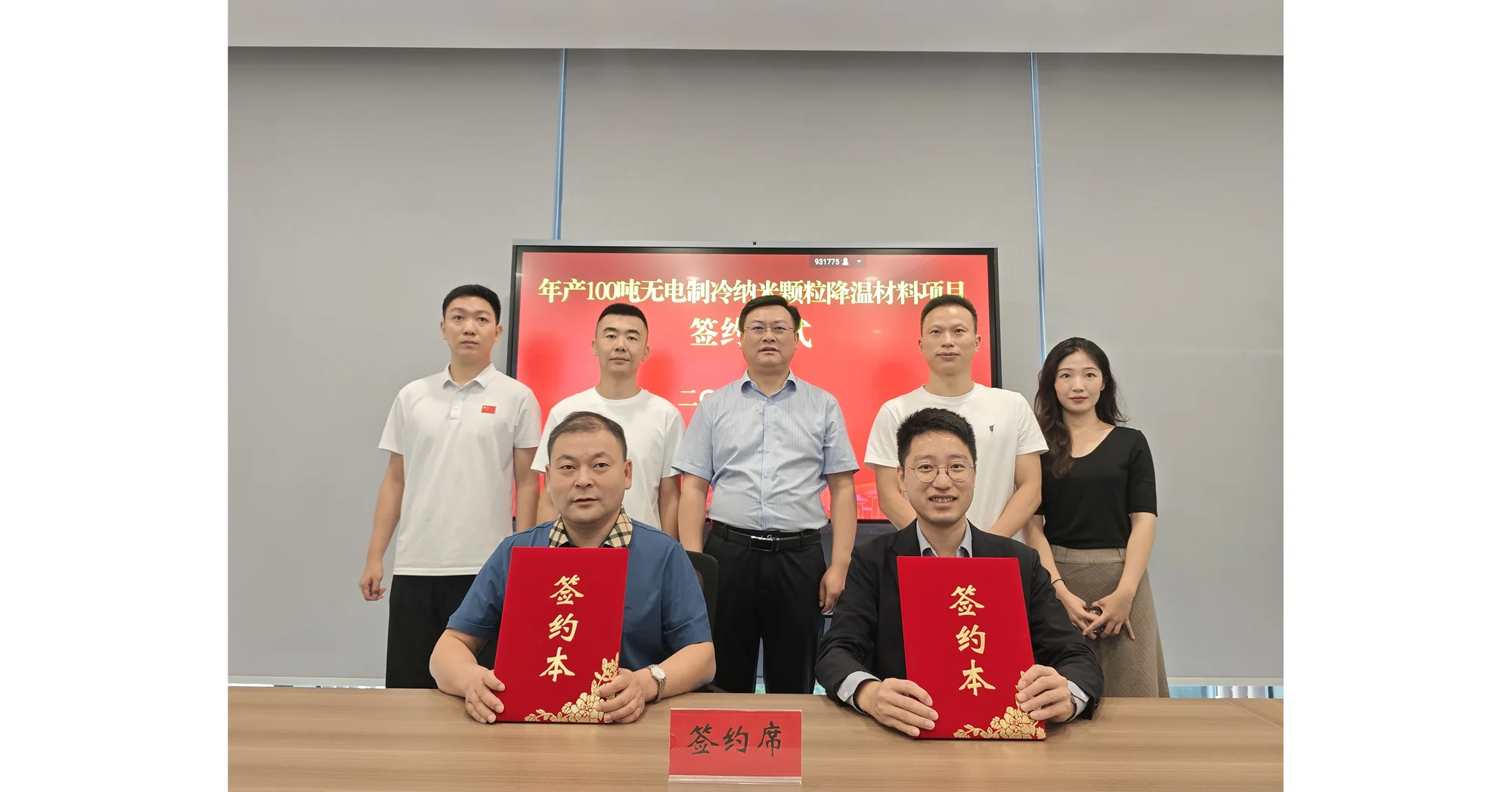
SHENZHEN, China, Sept. 8, 2026 /PRNewswire/ -- i2Cool Shenzhen Limited ("i2Cool"), a platform company specializing in electricity-free passive radiative cooling materials, has completed a Series B financing round worth tens of millions of yuan, equivalent to several million US dollars. The round was backed by Shenzhen TopoScend Capital Co., Ltd. ("TopoScend Capital"), with Linglu Capital serving as the exclusive financial adviser.

The proceeds will primarily be used to build standardized nanoparticle production lines, advance core technology development, recruit key talent, and accelerate commercialization in priority markets worldwide.

Research Foundations and a Scalable Product Platform

Founded in 2022, i2Cool focuses on the research, manufacturing, and commercialization of electricity-free passive radiative cooling materials. The company has established scalable production and delivery capabilities for radiative cooling nanoparticles. Its founding team has strong roots in Hong Kong academia and is led by two scholars recognized among the world's top 2% most-cited scientists. Together, the team brings more than 15 years of research experience in radiative cooling and related fields, as well as extensive expertise in translating materials science into commercial applications.

Co-founder Professor Edwin Chi-Yan Tso is Associate Dean (Internationalisation and Outreach) and Chair Professor of Energy and Sustainability at the School of Energy and Environment, City University of Hong Kong. He is also a member of the Hong Kong Young Academy of Sciences and a recipient of support under the National Science Fund for Excellent Young Scholars. Co-founder and CEO Prof. Martin Y. Zhu is an Adjunct Professor in the Department of Management at City University of Hong Kong's College of Business and was named to the Forbes China 30 Under 30 list in 2024.

At the heart of i2Cool's business is its "Particle+" platform, built around standardized functional nanoparticles. The platform extends the company's core radiative cooling materials into coatings, films, powder coatings, textiles, automotive coatings, exterior wall tiles, and other end products—creating an integrated portfolio from enabling materials to finished applications.

Full-Spectrum Thermal Management, Accelerated by AI

i2Cool's core technology is built on full-spectrum thermal management and optical control. By engineering material performance across the ultraviolet, visible, near-infrared, and mid-infrared bands, its solutions reflect solar radiation to reduce heat gain while emitting thermal energy through the 8–13 μm atmospheric window. This enables passive cooling without additional electricity or refrigerants.

i2Cool's core products can achieve solar reflectivity and mid-infrared emissivity of more than 95%. To move beyond the predominantly white appearance of conventional radiative cooling materials, the company also integrates technologies such as photoluminescence and thermochromism, enabling color customization and adaptive thermal control while preserving cooling performance.

Related research involving members of the team was published in Science. The reported hierarchically structured passive radiative cooling ceramic achieved 99.6% solar reflectivity and 96.5% mid-infrared emissivity. These figures relate specifically to the research material reported in the paper and should not be interpreted as uniform specifications across all of i2Cool's commercial products.

Building on this foundation, i2Cool combines AI-powered optical simulation with polymer materials science to model and optimize light-scattering and reflection pathways within nanoparticle systems. According to the company's internal development benchmarks, this approach has improved R&D efficiency by a factor of 12 compared with conventional methods.

Commercial Momentum and Global Expansion

i2Cool's commercialization has continued to accelerate. The company currently reports an order backlog of CNY 120 million (approximately US$17.9 million) and a three-year compound annual growth rate of 377% in operating revenue. Its solutions have reached more than 30 countries and regions, including markets across the Middle East and Southeast Asia. To date, i2Cool has completed more than 500 projects covering over 1,100,000 square metres, with overseas markets accounting for 50% of revenue.

Alongside established applications in buildings and power infrastructure, i2Cool is expanding into high-growth areas such as AI data centres, robotics, and new energy vehicles. The company has worked with industry players including Sunwoda Electronic Co., Ltd., The Hong Kong and China Gas Company Limited (Towngas), and Toyota Tsusho Corporation.

Leadership and Investor Perspectives

"Our ambition extends beyond any single radiative cooling product. We aim to build a platform company for the sector," said Prof. Martin Y. Zhu, Co-founder and CEO of i2Cool. "By continuously strengthening our capabilities in functional nanoparticles, materials design, and AI-enabled R&D, we can bring this advanced thermal-management technology into a wider range of industries and address real heat-management challenges in both industrial applications and everyday life. This financing will directly support the build-out of standardized nanoparticle production lines and capacity expansion, while accelerating large-scale deployment in high-value applications such as new energy vehicles and AI data centres."

"The 15th Five-Year Plan period will be critical to advancing China's dual-carbon goals. Tighter carbon-intensity requirements are accelerating green transformation across industries, making energy efficiency and carbon reduction increasingly important to high-quality development," said Yanping Shi, Vice President of TopoScend Capital and General Manager of the Duliang Advanced Industries Investment Fund. "i2Cool has taken passive radiative cooling from a City University of Hong Kong laboratory to scaled production and commercial deployment across more than 30 countries and regions. It is a strong example of industry–university–research collaboration between Shenzhen and Hong Kong, and of green technology progressing from policy support to market adoption. This investment represents an important step in TopoScend Capital's green technology strategy. We will continue to focus on low-carbon value chains and use capital to support technological innovation and the broader green transition."

"i2Cool has established clear technological strengths in microscopic materials design and spectral-control modelling, while successfully developing standardized nanoparticles that underpin a scalable product platform," said Xiaorui Xi, Investment Director at Linglu Capital. "The company has also built strong international momentum, with operations spanning more than 30 countries and regions and overseas markets contributing more than half of its revenue. We see significant potential for i2Cool to grow into a global platform company for radiative cooling materials and look forward to its continued technological and commercial progress."

About i2Cool

Founded in 2022, i2Cool Shenzhen Limited is a green technology company specializing in electricity-free passive radiative cooling. Built around standardized functional nanoparticles, its portfolio spans coatings, films, powder coatings, textiles, automotive coatings, ceramics, and other applications. Through passive cooling solutions that require no additional electricity or refrigerants, i2Cool helps customers across industries reduce heat loads, energy consumption, and carbon emissions.

Contact:

i2Cool Limited

[email protected] 

i2Cool Limited

[email protected]

SOURCE i2Cool

Share this article

Class (B2B/B2C)
B2B
Ingest Status
Rewritten
Dedupe hash
e6edb73b8cbe43bc2b4ca71f5fbf9431
Press Eligible
Yes
Press Eligible Reason
Company funding and commercial expansion news about industrial cooling technology, manufacturing, and enterprise applications.
Source Name
Unknown Company
Original Summary

<p>The proceeds will support the development of standardized nanoparticle production lines, continued advancement of core technologies, recruitment of key talent, and commercial expansion across priority global markets. Financing Overview SHENZHEN, China, Sept. 8, 2026 /PRNewswire/ -- i2Cool...</p>

Image URL
https://mmx.prnewswire.com/media/MS1983198/20260907235604EDT_image_1.jpg?id=OA2934418&p=facebook
DNOW Inc. Sued for Securities Law Violations - Contact the DJS Law Group to Discuss Your Rights - DNOW
Original HTML

DNOW Inc. Sued for Securities Law Violations - Contact the DJS Law Group to Discuss Your Rights - DNOW

LOS ANGELES, Sept. 8, 2026 /PRNewswire/ -- The DJS Law Group reminds investors of a class action lawsuit against DNOW Inc. ("DNOW" or "the Company") (NYSE: DNOW) violations of §§10(b) and 20(a) of the Securities Exchange Act of 1934 and Rule 10b-5 promulgated thereunder by the U.S. Securities and Exchange Commission.

Shareholders who purchased shares of DNOW during the class period listed are encouraged to contact the firm regarding possible lead plaintiff appointments. Appointment as lead plaintiff is not required to partake in any recovery.

CLASS PERIOD: Shareholders as of August 5, 2025, eligible to vote in the September 9, 2025 special meeting.

DEADLINE: October 2, 2026

CASE DETAILS: According to the Complaint, the Company made false and misleading statements to the market. DNOW downplayed the extent of the challenges it faced with its merger with MRC Global Inc., particularly with its enterprise resource planning software. Based on these facts, DNOW's public statements were false and materially misleading throughout the class period.

If you are a shareholder who suffered a loss, contact us to participate.

WHY DJS LAW GROUP? DJS Law Group's David Schwartz is a founding partner of Schall Brown & Schwartz LLP, and his primary focus is to enhance investor return through balanced counseling and aggressive advocacy. We specialize in securities class actions, corporate governance litigation, and domestic/international M&A appraisals. Our clients are some of the largest and most sophisticated hedge funds and alternative asset managers in the world. The litigation claims of our clients are extraordinarily valuable assets that demand respect, focus, and results.

Join the case to recover your losses.

This press release may be considered Attorney Advertising in some jurisdictions under the applicable law and rules of ethics.

CONTACT:

David J. Schwartz

DJS Law Group

274 White Plains Road, Suite 1

Eastchester, NY 10709

Phone: 914-206-9742

Email: [email protected]

SOURCE DJS Law Group LLP

Share this article

Class (B2B/B2C)
B2B
Ingest Status
Rewritten
Dedupe hash
72b0bfeed1d013f42fe0df59334e1b04
Press Eligible
Yes
Press Eligible Reason
QA FAIL (need review): Final paragraph is a generic 'About the firm' boilerplate with no news context, and the target adds an unsupported factual claim that DJS Law Group 'has filed' the lawsuit, which the source does not explicitly state.
Source Name
DNOW Inc. Sued for Securities Law Violations
Original Summary

<p>LOS ANGELES, Sept. 8, 2026 /PRNewswire/ -- The DJS Law Group reminds investors of a class action lawsuit against DNOW Inc. ("DNOW" or "the Company") (NYSE: DNOW) violations of §§10(b) and 20(a) of the Securities Exchange Act of 1934 and Rule 10b-5 promulgated thereunder by the U.S....</p>

CAPR Investors Have Opportunity to Lead Capricor Therapeutics, Inc. Securities Fraud Lawsuit with SBS Law
Original HTML

CAPR Investors Have Opportunity to Lead Capricor Therapeutics, Inc. Securities Fraud Lawsuit with SBS Law

LOS ANGELES, Sept. 8, 2026 /PRNewswire/ -- Schall, Brown & Schwartz LLP ("SBS"), a national shareholder rights litigation firm, reminds investors of a class action lawsuit against Capricor Therapeutics, Inc. ("Capricor" or "the Company") (NASDAQ: CAPR) for violations of §§10(b) and 20(a) of the Securities Exchange Act of 1934 and Rule 10b-5 promulgated thereunder by the U.S. Securities and Exchange Commission.

Shareholders who purchased shares of CAPR during the class period listed are encouraged to contact the firm regarding possible lead plaintiff appointments. Appointment as lead plaintiff is not required to partake in any recovery.

CLASS PERIOD: December 17, 2025 to July 26, 2026

DEADLINE: September 28, 2026

If you are a shareholder who suffered a loss, click here to participate.

CASE DETAILS: According to the Complaint, the Company made false and misleading statements to the market. Capricor changed the statistical analysis plan used to analyze the clinical data related to Deramiocel despite the fact that the FDA had not agreed to changes from the pre-specified plan before the resubmission of its Biologics License Application ("BLA"). The Company faced a significant risk the FDA would not approve the BLA for Deramiocel based on a lack of sufficient evidence of effectiveness. Based on these facts, the Company's public statements were false and materially misleading throughout the class period. When the market learned the truth about Capricor, investors suffered damages.

We also encourage you to contact Brian Schall or David Schwartz of Schall, Brown & Schwartz LLP, 2049 Century Park East, Suite 2460, Los Angeles, CA 90067, at 310-301-3335, to discuss your rights free of charge. You can also reach us through the firm's website at www.schallfirm.com, or by email at [email protected].

The class, in this case, has not yet been certified, and until certification occurs, you are not represented by an attorney. If you choose to take no action, you can remain an absent class member.

Join the case to recover your losses

WHY SBS? Schall, Brown & Schwartz LLP represents investors around the world and specializes in securities class action lawsuits and shareholder rights litigation. Bringing together the extensive experience and diverse skillsets of founding partners Brian Schall, Andrew Brown, and David Schwartz, SBS is dedicated to aggressively advocating for every investor.

This press release may be considered Attorney Advertising in some jurisdictions under the applicable law and rules of ethics.

CONTACT:

Schall, Brown & Schwartz LLP

Brian Schall, Esq.,

Andrew Brown, Esq.,

David Schwartz, Esq.,

www.schallfirm.com

Office: 310-301-3335

[email protected]

SOURCE Schall, Brown & Schwartz LLP

Share this article

Class (B2B/B2C)
B2B
Ingest Status
Rejected
Dedupe hash
95d745995ac672d8d79dceceb266eccb
Press Eligible
No
Press Eligible Reason
[Retro-Cleanup] legal spam
Source Name
Unknown Company
Original Summary

<p>LOS ANGELES, Sept. 8, 2026 /PRNewswire/ -- Schall, Brown & Schwartz LLP ("SBS"), a national shareholder rights litigation firm, reminds investors of a class action lawsuit against Capricor Therapeutics, Inc. ("Capricor" or "the Company") (NASDAQ: CAPR) for violations of §§10(b) and 20(a)...</p>

PNR Investors Have Opportunity to Lead Pentair plc Securities Fraud Lawsuit with SBS Law
Original HTML

PNR Investors Have Opportunity to Lead Pentair plc Securities Fraud Lawsuit with SBS Law

LOS ANGELES, Sept. 8, 2026 /PRNewswire/ -- Schall, Brown & Schwartz LLP ("SBS"), a national shareholder rights litigation firm, reminds investors of a class action lawsuit against Pentair plc ("Pentair" or "the Company") (NYSE: PNR) for violations of §§10(b) and 20(a) of the Securities Exchange Act of 1934 and Rule 10b-5 promulgated thereunder by the U.S. Securities and Exchange Commission.

Shareholders who purchased shares of PNR during the class period listed are encouraged to contact the firm regarding possible lead plaintiff appointments. Appointment as lead plaintiff is not required to partake in any recovery.

CLASS PERIOD: April 28, 2026 to July 14, 2026

DEADLINE: October 2, 2026

If you are a shareholder who suffered a loss, click here to participate.

CASE DETAILS: According to the Complaint, the Company made false and misleading statements to the market. Pentair suffered a sizeable destocking in its Pool channel. The Company's sales and income were negatively impacted by the destocking. Based on these facts, the Company's public statements were false and materially misleading throughout the class period. When the market learned the truth about Pentair, investors suffered damages.

We also encourage you to contact Brian Schall or David Schwartz of Schall, Brown & Schwartz LLP, 2049 Century Park East, Suite 2460, Los Angeles, CA 90067, at 310-301-3335, to discuss your rights free of charge. You can also reach us through the firm's website at www.schallfirm.com, or by email at [email protected].

The class, in this case, has not yet been certified, and until certification occurs, you are not represented by an attorney. If you choose to take no action, you can remain an absent class member.

Join the case to recover your losses

WHY SBS? Schall, Brown & Schwartz LLP represents investors around the world and specializes in securities class action lawsuits and shareholder rights litigation. Bringing together the extensive experience and diverse skillsets of founding partners Brian Schall, Andrew Brown, and David Schwartz, SBS is dedicated to aggressively advocating for every investor.

This press release may be considered Attorney Advertising in some jurisdictions under the applicable law and rules of ethics.

CONTACT:

Schall, Brown & Schwartz LLP

Brian Schall, Esq.,

Andrew Brown, Esq.,

David Schwartz, Esq.,

www.schallfirm.com

Office: 310-301-3335

[email protected]

SOURCE Schall, Brown & Schwartz LLP

Share this article

Class (B2B/B2C)
B2B
Ingest Status
Rejected
Dedupe hash
030c0353bd8f770d506560e863c85afe
Press Eligible
No
Press Eligible Reason
[Retro-Cleanup] legal spam
Source Name
Unknown Company
Original Summary

<p>LOS ANGELES, Sept. 8, 2026 /PRNewswire/ -- Schall, Brown & Schwartz LLP ("SBS"), a national shareholder rights litigation firm, reminds investors of a class action lawsuit against Pentair plc ("Pentair" or "the Company") (NYSE: PNR) for violations of §§10(b) and 20(a) of the Securities...</p>

Pentair plc Sued for Securities Law Violations - Contact the DJS Law Group to Discuss Your Rights - PNR
Original HTML

Pentair plc Sued for Securities Law Violations - Contact the DJS Law Group to Discuss Your Rights - PNR

LOS ANGELES, Sept. 8, 2026 /PRNewswire/ -- The DJS Law Group reminds investors of a class action lawsuit against Pentair plc ("Pentair" or "the Company") (NYSE: PNR) for violations of §§10(b) and 20(a) of the Securities Exchange Act of 1934 and Rule 10b-5 promulgated thereunder by the U.S. Securities and Exchange Commission.

Shareholders who purchased shares of PNR during the class period listed are encouraged to contact the firm regarding possible lead plaintiff appointments. Appointment as lead plaintiff is not required to partake in any recovery.

CLASS PERIOD: April 28, 2026 to July 14, 2026

DEADLINE: October 2, 2026

CASE DETAILS: According to the Complaint, the Company made false and misleading statements to the market. A destocking of Pentair's Pool channel products impacted its financial performance. Based on these facts, Pentair's public statements were false and materially misleading throughout the class period.

If you are a shareholder who suffered a loss, contact us to participate.

WHY DJS LAW GROUP? DJS Law Group's David Schwartz is a founding partner of Schall Brown & Schwartz LLP, and his primary focus is to enhance investor return through balanced counseling and aggressive advocacy. We specialize in securities class actions, corporate governance litigation, and domestic/international M&A appraisals. Our clients are some of the largest and most sophisticated hedge funds and alternative asset managers in the world. The litigation claims of our clients are extraordinarily valuable assets that demand respect, focus, and results.

Join the case to recover your losses.

This press release may be considered Attorney Advertising in some jurisdictions under the applicable law and rules of ethics.

CONTACT:

David J. Schwartz

DJS Law Group

274 White Plains Road, Suite 1

Eastchester, NY 10709

Phone: 914-206-9742

Email: [email protected]

SOURCE DJS Law Group LLP

Share this article

Class (B2B/B2C)
B2B
Ingest Status
Rejected
Dedupe hash
d193909a02b903aab617c985726bf3dc
Press Eligible
No
Press Eligible Reason
[Retro-Cleanup] legal spam
Source Name
Pentair plc Sued for Securities Law Violations
Original Summary

<p>LOS ANGELES, Sept. 8, 2026 /PRNewswire/ -- The DJS Law Group reminds investors of a class action lawsuit against Pentair plc ("Pentair" or "the Company") (NYSE: PNR) for violations of §§10(b) and 20(a) of the Securities Exchange Act of 1934 and Rule 10b-5 promulgated thereunder by the U.S....</p>

Generated Article_json
{"target_audience": "b2b", "is_medical": false, "ai_generated_title": "Pentair Faces Securities Fraud Suit Over Pool Channel Destocking", "body_html": "<p><strong>Los Angeles -- [CURRENT_DATE] --</strong> DJS Law Group has filed a class action lawsuit against Pentair plc (NYSE: PNR), alleging violations of Sections 10(b) and 20(a) of the Securities Exchange Act of 1934.</p><h5>Investors who bought Pentair shares between April 28, 2026 and July 14, 2026 face an October 2, 2026 deadline to seek lead plaintiff status.</h5><p>The complaint centers on claims that Pentair made false and misleading statements to the market during the class period. A destocking of Pentair's Pool channel products materially impacted the Company's financial performance, according to the filing.</p><h5>The lawsuit alleges Pentair's public statements were materially misleading throughout the roughly 11-week class period.</h5><p>DJS Law Group, led by David J. Schwartz, is soliciting affected shareholders to join the litigation. Appointment as lead plaintiff is not a prerequisite for participating in any potential recovery.</p><p>The firm specializes in securities class actions, corporate governance litigation, and M&A appraisals, representing hedge funds and alternative asset managers in high-value litigation claims.</p>", "meta_description": "DJS Law Group files securities class action against Pentair plc over alleged misleading statements tied to Pool channel destocking; Oct 2, 2026 deadline.", "seo_keywords": "Pentair, PNR, securities class action, DJS Law Group, Pool channel destocking, shareholder lawsuit, NYSE, securities fraud", "companies": ["Pentair plc", "DJS Law Group"], "industries": ["Industrial Manufacturing"], "markets_regions": ["United States"], "news_type": ["regulatory_update", "financial_disclosure"], "products": [], "themes": ["regulatory_compliance"], "events": [], "cta_text": "Shareholders who purchased Pentair (PNR) shares during the class period may contact DJS Law Group before the October 2, 2026 deadline.", "learn_more": "", "fact_check": {"accuracy_score": 100, "legal_risk": "low", "corrections_made": [], "recommendation": "publish"}}
BZAI Investors Have Opportunity to Lead Blaize Holdings, Inc. Securities Fraud Lawsuit with SBS Law
Original HTML

BZAI Investors Have Opportunity to Lead Blaize Holdings, Inc. Securities Fraud Lawsuit with SBS Law

LOS ANGELES, Sept. 8, 2026 /PRNewswire/ -- Schall, Brown & Schwartz LLP ("SBS"), a national shareholder rights litigation firm, reminds investors of a class action lawsuit against Blaize Holdings, Inc. ("Blaize" or "the Company") (NASDAQ: BZAI) for violations of §§10(b) and 20(a) of the Securities Exchange Act of 1934 and Rule 10b-5 promulgated thereunder by the U.S. Securities and Exchange Commission.

Shareholders who purchased shares of BZAI during the class period listed are encouraged to contact the firm regarding possible lead plaintiff appointments. Appointment as lead plaintiff is not required to partake in any recovery.

CLASS PERIOD: July 18, 2025 to April 28, 2026

DEADLINE: October 5, 2026

If you are a shareholder who suffered a loss, click here to participate.

CASE DETAILS: According to the Complaint, the Company made false and misleading statements to the market. Blaize created the appearance of growth by announcing transactions with entities not capable of meaningful business activities. The Company improperly recognized revenue. Based on these facts, the Company's public statements were false and materially misleading throughout the class period. When the market learned the truth about Blaize, investors suffered damages.

We also encourage you to contact Brian Schall or David Schwartz of Schall, Brown & Schwartz LLP, 2049 Century Park East, Suite 2460, Los Angeles, CA 90067, at 310-301-3335, to discuss your rights free of charge. You can also reach us through the firm's website at www.schallfirm.com, or by email at [email protected].

The class, in this case, has not yet been certified, and until certification occurs, you are not represented by an attorney. If you choose to take no action, you can remain an absent class member.

Join the case to recover your losses

WHY SBS? Schall, Brown & Schwartz LLP represents investors around the world and specializes in securities class action lawsuits and shareholder rights litigation. Bringing together the extensive experience and diverse skillsets of founding partners Brian Schall, Andrew Brown, and David Schwartz, SBS is dedicated to aggressively advocating for every investor.

This press release may be considered Attorney Advertising in some jurisdictions under the applicable law and rules of ethics.

CONTACT:

Schall, Brown & Schwartz LLP

Brian Schall, Esq.,

Andrew Brown, Esq.,

David Schwartz, Esq.,

www.schallfirm.com

Office: 310-301-3335

[email protected]

SOURCE Schall, Brown & Schwartz LLP

Share this article

Class (B2B/B2C)
B2B
Ingest Status
Rejected
Dedupe hash
dbc692bc830bb0388ea7ec5f87b98ed7
Press Eligible
No
Press Eligible Reason
[Retro-Cleanup] legal spam
Source Name
Unknown Company
Original Summary

<p>LOS ANGELES, Sept. 8, 2026 /PRNewswire/ -- Schall, Brown & Schwartz LLP ("SBS"), a national shareholder rights litigation firm, reminds investors of a class action lawsuit against Blaize Holdings, Inc. ("Blaize" or "the Company") (NASDAQ: BZAI) for violations of §§10(b) and 20(a) of the...</p>