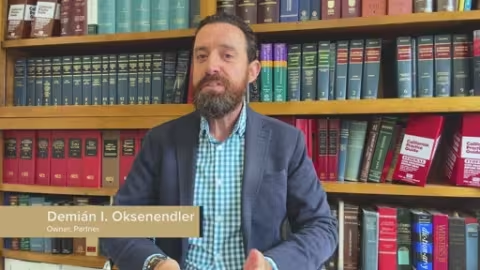
South San Francisco – September 16, 2026 -- California law requires insurers to acknowledge a claim within 15 days and reach a coverage decision within 40 days of receiving proof of loss, giving policyholders a concrete timeline to judge whether their insurer is acting in good faith. A HelloNation article, featuring insights from Bad Faith Attorney Expert Demián I. Oksenendler of South San Francisco, breaks down the legal standards insurers must follow once a claim is filed.
Insurers must investigate, decide, and explain within set timeframes.
Under California regulations, companies must acknowledge receipt of a claim, conduct a full investigation, and provide a written explanation whenever a claim is denied. Failing to meet these obligations without a legitimate reason can rise to the level of insurance bad faith.
Disagreement over coverage is not automatically bad faith.
The article stresses that insurers are permitted to dispute the cause of a loss, its value, or how policy language applies to specific facts. Bad faith requires conduct that falls outside what California law considers reasonable — not merely an outcome the policyholder dislikes.
Courts recognize specific red flags in claims handling.
Denying a claim that the policy language and facts clearly support, failing to properly investigate before reaching a conclusion, and unreasonable delays in processing or paying a claim are all cited as recognized problems. Adjusters are expected to gather evidence, inspect damage, and review documentation before making a determination.
Misrepresenting coverage or lowballing settlements can carry legal consequences.
If a claims representative states that a loss is excluded when the policy language does not support that position, the misstatement may be actionable. Offering a settlement that significantly undervalues a documented loss is also flagged as a potential indicator of improper handling.
Policyholders should compare denial letters against actual policy language.
The article recommends organizing documentation — photographs, repair estimates, and all written insurer communications — to build a factual record. California law allows civil remedies for proven bad faith, which may include recovery of the original claim amount and, in some cases, damages beyond the policy limits.