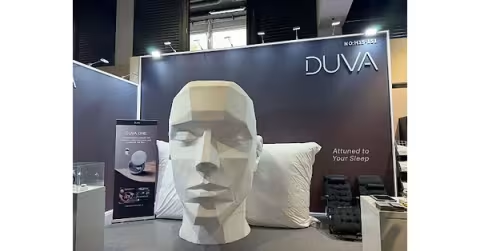
Berlin – September 10, 2026 -- Fitnexa's DUVA brand unveiled the DUVA ONE sleep earbud system at IFA 2026 in Berlin, a device built to adjust sound and noise cancellation throughout the night rather than just report on sleep quality the next morning.
The earbuds respond mid-sleep instead of only after waking
Users can fall asleep listening to a podcast over Bluetooth; once asleep, DUVA ONE switches to locally stored sleep audio to save power. If a partner starts snoring or traffic noise rises, the system adjusts active noise cancellation (ANC) or adds sound masking. A private offline alarm wakes only the wearer, with no need for an active phone connection.
Sensors track heart rate, movement and room conditions
PPG and motion sensors in the earbuds estimate sleep phases and monitor heart rate, HRV, sleeping position and movement, while the charging case tracks noise, light, temperature and humidity. An AI agent combines these signals with playback status and personal preferences to choose a response. Users control sleep audio, playback duration, ANC strategy and nighttime interventions through the DUVA app.
Layered noise reduction cuts sound by up to 42 dB
Passive isolation, hybrid ANC and sleep audio combine to reduce noise by up to 42 dB, with a transparency mode and adaptive ANC calibration. Each anatomically shaped earbud weighs about 3.3 grams and measures roughly 9.9 mm thick, with two ear-tip shapes and multiple sizes plus stabilizing wings offering more than 40 fit configurations.
Battery lasts up to 16 hours in low-power mode
The earbuds run up to 16 hours in their most efficient setting, including 13 hours of local audio with ANC off and 9.5 hours with ANC on. The USB-C charging case, which also supports wireless charging, provides up to five additional charges. The offline alarm gradually increases in volume and offers 5-, 10- or 15-minute snooze options via on-earbud controls.
The company says the device does not record conversations
DUVA ONE does not record conversations, store ambient sound or capture raw environmental audio, according to the company. Users can disable individual sensors and delete stored history data.
"People don't sleep in a static environment, so sleep technology shouldn't stay static either,