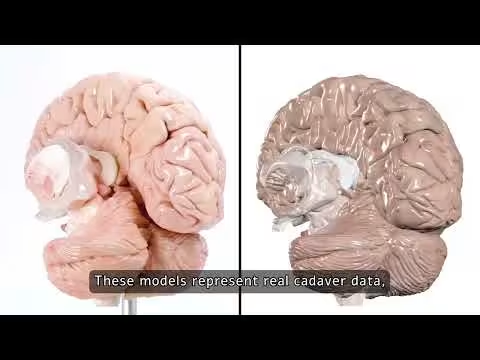
Santa Clara, Calif. – September 08, 2026 -- Anatomage Inc. has launched Anatomage Replica, a new line of 3D-printed physical anatomical models built from real cadaver data, targeting medical schools, dissection labs and clinical training programs.
Anatomage Unveils First 3D-Printed Cadaver-Based Model Set
The initial Replica lineup covers five structures: heart, brain, hand, knee and foot. Each model includes removable components that let students dissect layers repeatedly without destroying the specimen, addressing a core limitation of traditional cadaveric dissection, which is inherently destructive and cannot be reset for reuse.
Replica Models Target Gaps in Traditional Dissection and Plastination
Plastinated specimens, made from real preserved human tissue, offer anatomical detail but are often fragile, expensive and visually distinct from living or freshly preserved tissue; some rely on painted or altered coloring to distinguish structures. Sourcing and ethical provenance of individual plastinated parts sold commercially have also drawn scrutiny. Anatomage positions Replica as a lower-cost alternative that sidesteps these sourcing concerns while remaining durable and reusable.
Replica models are derived from the volumetric cadaver data and high-precision synthetic cadavers underlying Anatomage Table, the company's digital anatomy visualization system. Muscles, ligaments and bones in the printed models retain the appearance of the original frozen cadavers, while vascular and nerve structures are color-coded for identification. Outer layers are removable, allowing students to examine deeper structures directly.
Anatomists Praise Detail Comparable to Real Cadavers
According to Anatomage, anatomists who reviewed the Replica models noted a level of anatomical detail and precision comparable to actual cadavers, now available in a durable physical format for classroom and lab use. The company says the models link directly to its digital anatomy platform, giving students a consistent physical-digital reference they can return to throughout their training at a cost significantly below plastinated human specimens.