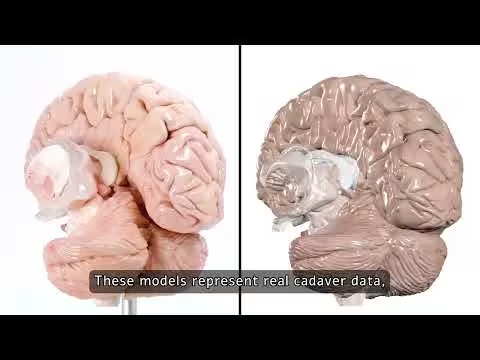
Santa Clara – September 08, 2026 -- Anatomage Inc. has launched Anatomage Replica, a line of 3D-printed physical anatomical models built from real cadaver data, giving medical educators a durable, reusable alternative to plastinated human specimens.
Anatomage Replica launches with five anatomical models derived from cadaver scans
The first Anatomage Replica set includes the heart, brain, hand, knee and foot, each featuring removable components that expose underlying structures for closer study. The models source their anatomical data from the Anatomage Table, the company's digital platform built on volumized scans of real cadavers and high-fidelity synthetic specimens.
Physical models replicate frozen-cadaver appearance with color-coded vascular and nerve structures
Muscles, ligaments and bones in Replica models retain the visual characteristics of the original frozen cadavers used to generate the source data, while vascular structures and nerves are color-coded for identification. Removable outer layers let students examine internal anatomy through hands-on manipulation, mirroring the exploration available in Anatomage's digital table.
Company positions Replica as lower-cost, ethically sourced substitute for plastinated specimens
Plastination, the current industry standard for durable anatomical specimens, relies on preserved human tissue that can be fragile, expensive, and subject to ethical and provenance questions when body parts are procured for commercial sale. Anatomage said Replica avoids these issues by generating physical models entirely from existing digital cadaver data rather than new tissue procurement, while offering a lower price point than plastinated human specimens.
Anatomage said anatomists reviewing the Replica models found the level of detail and accuracy consistent with the source cadavers. The company is marketing the product as a bridge between physical dissection training and digital visualization, intended for use in classrooms, dissection labs and clinical training programs.