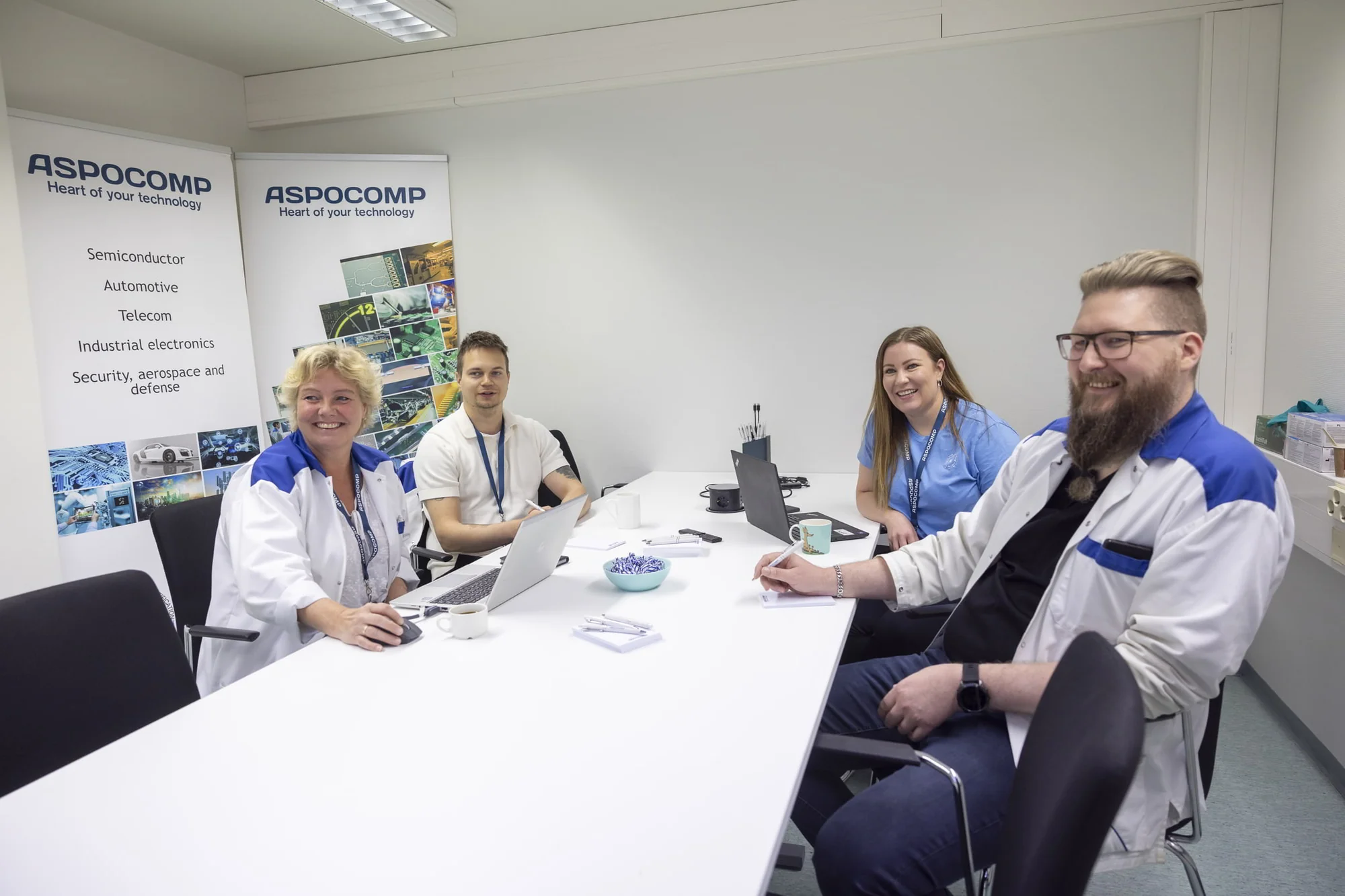
In high-reliability electronics, getting the PCB right for the first time is critical. Mistakes in manufacturability or material selection can cause costly delays or even halt production entirely.
At Aspocomp, the Technical Support team led by NPI Manager Jari-Pekka Seppänen plays a vital role in helping customers get their PCB designs right from the start. The team’s mission is simple: ensure that every design is manufacturable, cost-effective, and reliable.
“Our job is to help the customer succeed. We’re here to make sure their designs don’t just look good on screen; they work reliably in the real world,” Jari-Pekka explains.
Early-Stage Involvement Saves Time and Cost
Too often, PCB layout decisions are made without knowing how they’ll impact manufacturability. Many designers have never visited a PCB factory, so they may not be aware of practical limitations or cost drivers.
That’s why Jari-Pekka encourages customers to get in touch as early as possible:
“If we’re involved during the layout phase, we can suggest adjustments that improve reliability, reduce cost, or speed up delivery. Small changes can make a huge difference.”
This can include suggestions on stack-up choices, impedance control, fine-pitch design rules, and thermal management — always tailored to the customer’s end-use and expected volumes.
Tailored Support from a Dedicated Engineer
One of the team’s key strengths is customer proximity. Every customer is assigned to a dedicated technical support engineer who becomes a long-term partner for design reviews, documentation questions, and production transitions.
The team includes four highly experienced engineers, each with strong expertise in PCB technology and design.
Jari-Pekka Seppänen leads the team with 18 years at Aspocomp, bringing a strong understanding of both engineering and production.
Henni Moilanen – 16 years, Tomi Latvala – 9 years, and Sari Turunen – 11 years of experience at Aspocomp, all bring deep technical understanding across PCB design, layout optimization, manufacturability and engineering support for customer projects.
“We work closely together as a team. We also interact with production daily, so we know what’s possible and what’s not,” says Jari-Pekka.
From Concept to Mass Production
Aspocomp’s technical support is not limited to early-stage development. The team helps customers through every stage of the product lifecycle:
- Prototype reviews to ensure early builds go smoothly.
- Material readiness checks for long-term availability.
- Transition planning for scaling volume production.
- Documentation support for certifications and traceability.
“We’re not just solving problems. We’re helping customers design better, faster, and smarter,” Jari-Pekka summarises.
Reducing Risk, Increasing Confidence
In a fast-paced industry, small choices made early can have major downstream effects. A poorly chosen material, an unmanufacturable via, or an overly tight design rule can derail timelines and drive up costs.
Aspocomp’s technical support team acts as a safeguard, bringing years of practical manufacturing knowledge into the design room. By bridging the gap between theory and production, they help customers get to market faster and with fewer surprises.
“We make it easy for our customers to succeed. That’s our mission,” says Jari-Pekka.
About Jari-Pekka Seppänen
Jari-Pekka Seppänen is the NPI Manager at Aspocomp, leading the company’s Technical Support team. With over two decades of hands-on experience in PCB manufacturing, he combines deep technical knowledge with a practical understanding of customer challenges.
Jari-Pekka has worked in various engineering and supervisory roles throughout his career and has a strong background in front-end processes, design-for-manufacturing (DFM), and new product introduction (NPI). At Aspocomp, he plays a central role in ensuring that customer designs are robust, cost-efficient, and production-ready from first layout to volume ramp-up.
He is passionate about building bridges between design and manufacturing, helping customers avoid pitfalls, reduce iteration cycles, and get to market faster with smarter, more reliable solutions.
Planning your next PCB project?
Contact Aspocomp’s technical team to learn how early support can save time, reduce costs, and improve product reliability from design to delivery.