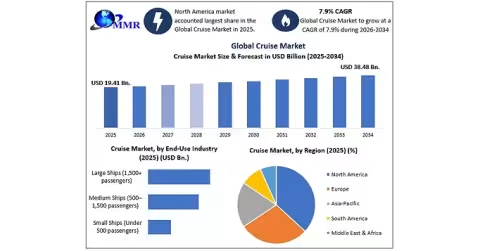
Pune, India – October 05, 2026 -- The global cruise market reached USD 19.41 billion in 2025 and is forecast to nearly double to USD 38.48 billion by 2034, expanding at a compound annual growth rate of 7.9% from 2026 to 2034, according to a new analysis by Maximize Market Research.
Passenger volumes climbed 7.5% as cruise demand rebounded globally
Global ocean cruise passenger volume reached approximately 37.2 million in 2025, up 7.5% from 2024. North America remained the dominant source market with more than 22 million passengers, while the Caribbean held its position as the most-visited cruise destination, drawing over 16 million travelers last year.
Fleet expansion accelerates with nearly 80 new vessels in the pipeline
The industry operated 310 ocean-going ships in 2025, and operators have nearly 80 new ocean, expedition, and river vessels scheduled for delivery through 2036. Cruise lines are investing in LNG-capable and fuel-flexible ships, shore-power connectivity, advanced wastewater treatment, smart cabins, and AI-supported onboard personalization as sustainability and digitalization reshape fleet strategy.
Cruise tourism generated USD 198.8 billion in global economic output and supported 1.8 million jobs in 2024. Roughly 35% of ocean cruise travelers in 2025 were under age 40, signaling broader generational uptake beyond traditional retiree demographics.
Disney Adventure's Singapore homeport launch expands Asia-Pacific capacity
In March 2026, Disney Cruise Line launched the Disney Adventure, a 208,000-tonne vessel and its first ship homeported in Asia, strengthening Singapore's position as a regional cruise hub and expanding premium family-cruise capacity across Southeast Asia.
Mainstream ships dominate the fleet mix at roughly half of market share
By type, mainstream cruise ships account for approximately 50-55% of the market in 2025, backed by affordable pricing and large-scale onboard entertainment. Premium vessels hold near 30-32% share, while luxury ships represent around 15%, drawing affluent travelers toward personalized service and exclusive itineraries. Large ships exceeding 1,500-passenger capacity continue to anchor fleet investment, even as small and medium vessels support luxury, river, and expedition segments.
Competition intensifies through fleet modernization and regional diversification
Carnival Corporation & plc, Royal Caribbean Group, MSC Cruises, Norwegian Cruise Line Holdings, Disney Cruise Line, Viking, Princess Cruises, Celebrity Cruises, Costa Cruises, and TUI Cruises remain key competitors, alongside luxury operators Regent Seven Seas Cruises, Silversea Cruises, Seabourn, Crystal, and Oceania Cruises.
Royal Caribbean Group expanded its Celebrity river fleet, Norwegian Cruise Line added the Norwegian Luna to bolster premium capacity, and Viking introduced the Viking Mira to its luxury ocean lineup. Regent Seven Seas Cruises prepared the Seven Seas Prestige for its maiden transatlantic voyage, underscoring a broader industry push toward differentiated itineraries and cleaner propulsion technologies.
Europe continues to draw demand through Mediterranean and Northern European routes, while Asia Pacific gains traction across China, Japan, and Australia on rising disposable incomes. The Middle East is building cruise infrastructure through hubs such as Dubai, and South America is emerging as a growth frontier via destinations in Brazil, Argentina, and the Amazon region.