AltaPointe Health Celebrates $15 Million BayPointe Hospital Expansion
Image File
Original HTML

New 34-bed expansion increases access to inpatient psychiatric care.

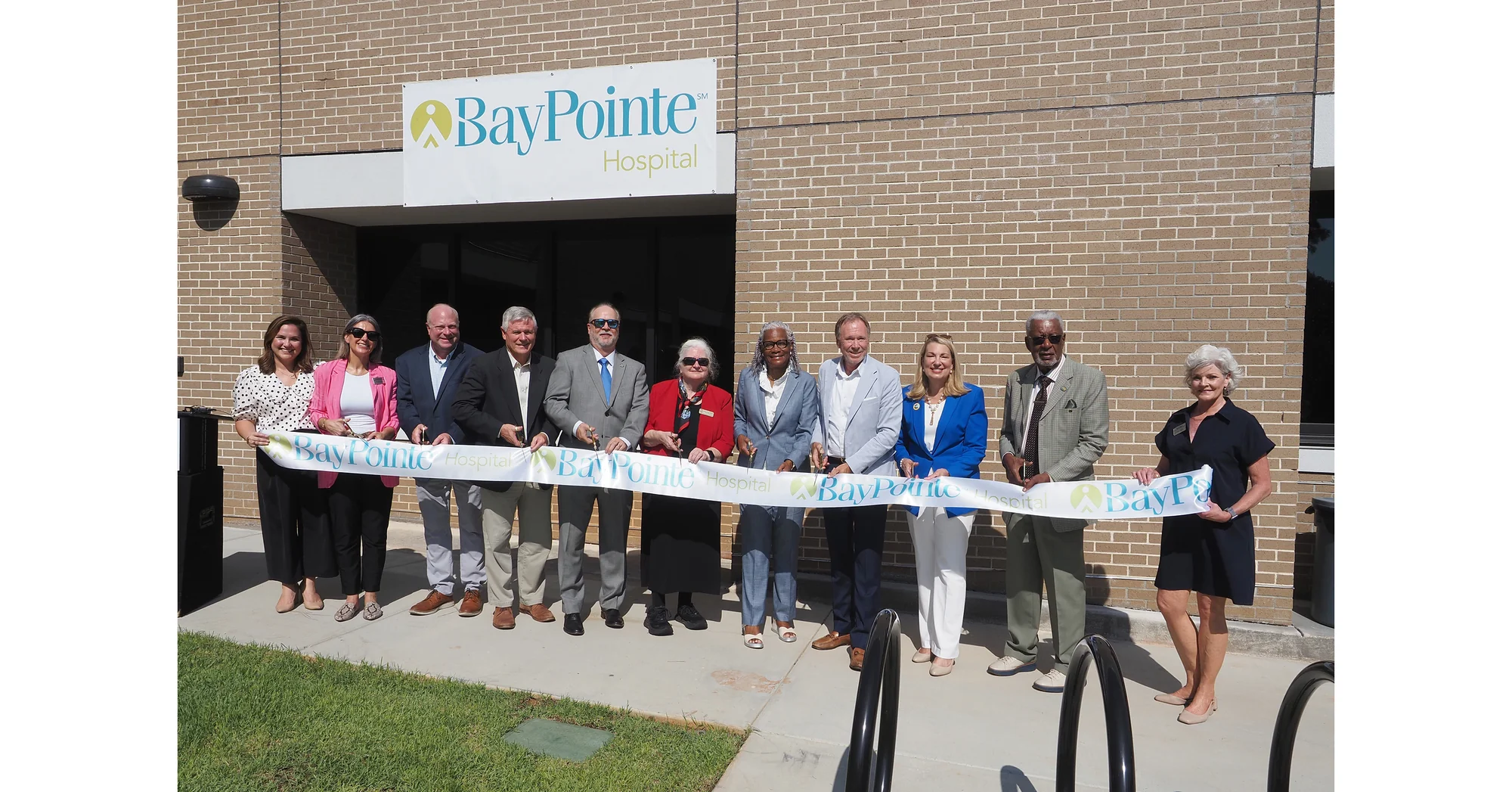
MOBILE, Ala., Sept. 22, 2026 /PRNewswire/ -- AltaPointe Health celebrated the completion of a $15 million expansion at BayPointe Hospital on Monday with a ribbon-cutting ceremony, marking a significant investment in behavioral health care for Mobile County and the surrounding region.

The expansion adds 34 adult psychiatric beds to BayPointe Hospital, increasing the hospital's capacity from 104 to 138 beds and expanding access to inpatient psychiatric care for adults in Mobile County.

The Mobile County Commission provided $6 million in American Rescue Plan Act funding toward the $15 million project.

Mobile County Commission President Connie Hudson and Commissioner Merceria Ludgood joined state lawmakers, AltaPointe Health board members, leadership and community members to officially cut the ribbon on the new expansion.

"This expansion represents much more than additional beds. It represents greater access to care for people in our community when they need it most," said Tuerk Schlesinger, chief executive officer of AltaPointe Health. "We are incredibly grateful to the Mobile County Commission for recognizing the need for additional psychiatric resources and investing in this project. Their partnership has allowed us to strengthen the behavioral health care system in Mobile County and ensure more individuals and families can receive appropriate care close to home."

Mobile County Commission President Connie Hudson said the expansion addresses a longstanding need for additional adult psychiatric services in Mobile County.

"When we first embarked on this, there was really no facility in Mobile County that could serve the needs of the adult population," Hudson said. "You had juveniles, you had geriatric services, but not for the regular adult population, so we're in the process of remedying that."

BayPointe Hospital has historically focused on providing inpatient psychiatric treatment for children and adolescents. In 2025, the hospital began serving a limited number of adult patients in Mobile, converting 24 existing children's beds for adult use. The new expansion provides additional capacity to serve children, adolescents, and adults who need inpatient psychiatric care.

The project also includes additional classroom space for students receiving treatment at BayPointe and supports individuals referred for psychiatric evaluation and treatment through local probate courts.

BayPointe Hospital is one of AltaPointe Health's two freestanding psychiatric hospitals. EastPointe Hospital is in Daphne. Together, the hospitals are part of AltaPointe's comprehensive continuum of care, which also includes a 24-hour behavioral health crisis center, community behavioral health clinics and integrated primary care services.

AltaPointe Health delivers integrated behavioral and primary health care, providing more than 1.9 million services annually to about 45,000 patients across seven Alabama counties. Its physicians also serve as faculty and administrators for the University of South Alabama Frederick P. Whiddon College of Medicine's Department of Psychiatry.

About AltaPointe Health

AltaPointe Health is a comprehensive behavioral and primary health care system serving communities throughout Alabama. Its continuum of care includes psychiatric hospitals, crisis services, outpatient behavioral health care, substance use treatment, residential services and integrated primary health care. AltaPointe Health is committed to providing accessible, high-quality care to individuals and families throughout the communities it serves.

SOURCE AltaPointe Health Systems

Share this article

Class (B2B/B2C)
B2B
Ingest Status
Rewritten
Dedupe hash
prn_302886560
Press Eligible
Yes
Press Eligible Reason
Healthcare provider expansion adding psychiatric capacity and representing a major facility investment.
Source Name
Unknown Company
Original Summary

<p>New 34-bed expansion increases access to inpatient psychiatric care. MOBILE, Ala., Sept. 22, 2026 /PRNewswire/ -- AltaPointe Health celebrated the completion of a $15 million expansion at BayPointe Hospital on Monday with a ribbon-cutting ceremony, marking a significant investment in...</p>

Image URL
https://mmx.prnewswire.com/media/MS1994081/BayPointe-Ribbon-Cutting.jpg?id=OA2964287&p=facebook
Content Hash (SHA-256, erste 32 hex)
1012d2487ce61b8ec32dc9bef79893f8
MediKarma's Jack™ AI Responsibly Powers the Infrastructure Behind Direct-to-Patient Care: Organized, Longitudinal Medical Records at Scale, Without Taking the Provider Out of the Loop
Image File
Original HTML

MediKarma's Jack™ AI Responsibly Powers the Infrastructure Behind Direct-to-Patient Care: Organized, Longitudinal Medical Records at Scale, Without Taking the Provider Out of the Loop

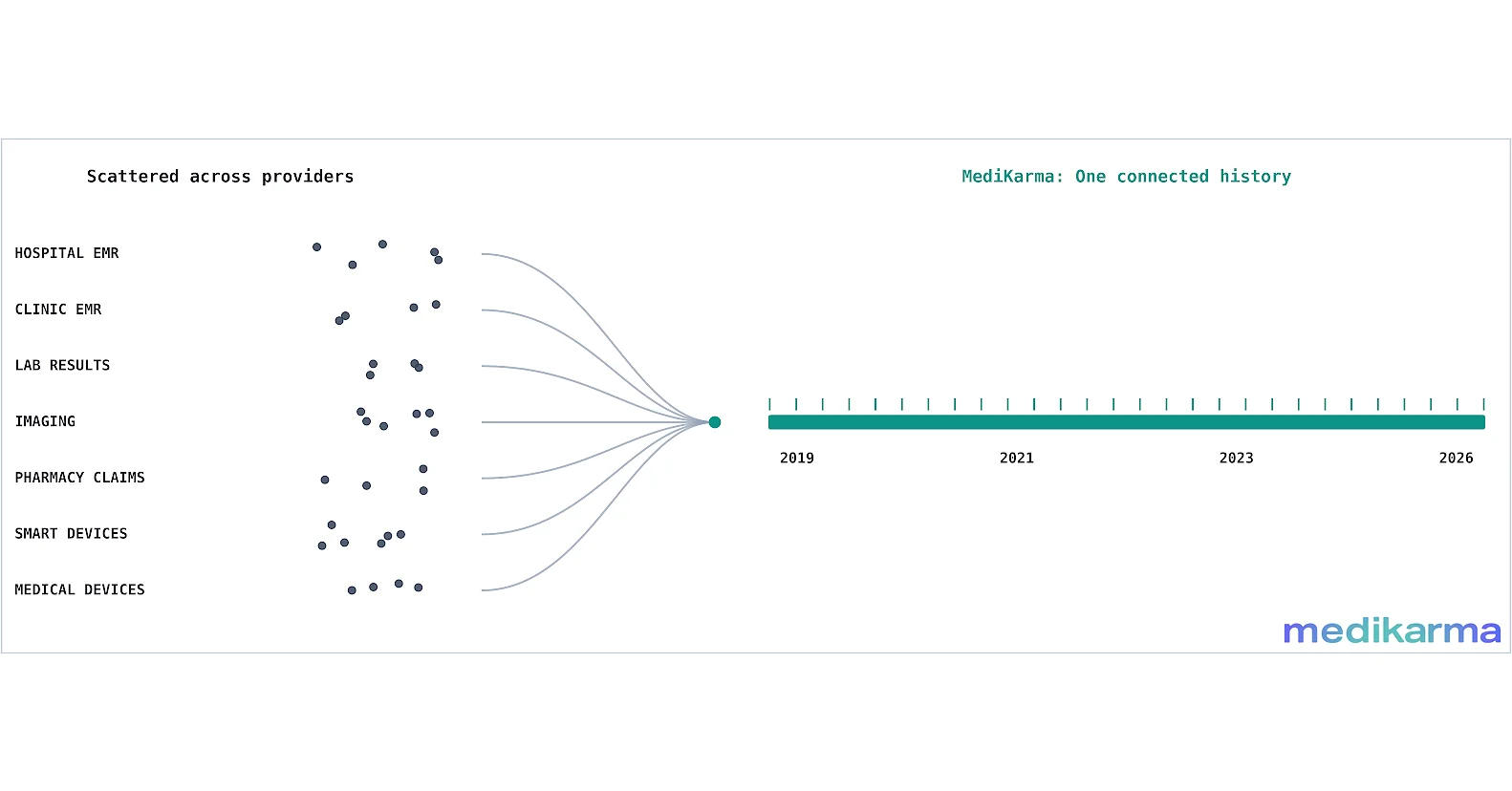
From pharmaceutical companies to medical device makers, wearable and sensor companies, wellness brands, telehealth platforms and AI platforms, MediKarma gives direct-to-patient care an organized, longitudinal medical record and, where applicable, continuous provider-supervised engagement to build on. MediKarma retrieves substantially more medical records than individual-access (IAS) methods, built around a Responsible AI standard that pairs that depth with provider supervision.

SAN RAMON, Calif., Sept. 22, 2026 /PRNewswire/ -- Reaching patients directly is no longer optional across healthcare. The only question left is whether it can be done without losing clinical oversight along the way. What determines whether that reach helps patients or puts them at risk often comes down to something unglamorous: how complete the patient's medical record is, and whether a provider remains involved where care is actually being delivered. MediKarma builds infrastructure that supports direct-to-patient care at scale with an organized, longitudinal medical record and continuous, where applicable, provider-supervised engagement, regardless of whether the underlying offering uses AI, a care team, a chat bot, a digital twin avatar or another model.

"Every company trying to reach patients directly today runs into the same wall: too little of the patient's medical record to build a real profile, or too much of it, unsummarized and out of context, to actually use," said Kris Narayan, CEO of MediKarma. "MediKarma exists to solve that specific problem at scale, not to replace what these companies are building, but to give it an organized, longitudinal medical record to work from, and, where applicable, provider supervision to ensure it's used appropriately."

The position responds to a problem MediKarma's Chief Medical Officer, Dr. Miguel Venereo, described this month on KevinMD: most medical records that look complete are, in practice, a fraction of a patient's real history, a gap that carries clinical and liability risk as more first-pass judgments shift to AI.

"An incomplete chart doesn't announce itself; it just looks like a chart," said Dr. Venereo. "The physicians and systems reasoning over that chart deserve better information to work from, and so do their patients."

From a de-identified population of 65 million patients, MediKarma selected a cohort of 8 million patients based on a minimum claims threshold and membership in the highest-cost disease categories. Within that cohort, MediKarma's health score showed a 90.6% correlation with actual claims costs – an early signal, MediKarma says, of what becomes possible when patient engagement is built on an organized, longitudinal clinical picture across multiple providers, rather than a fragmented one. On the clinical engagement side, in a 120-day pilot with an outside endocrinology practice, 50% of participating patients either reduced their A1C or maintained a healthy baseline.

MediKarma's application to join the CMS Health Technology Ecosystem initiative's Diabetes & Obesity track has been formally accepted by the Centers for Medicare and Medicaid Services, connecting MediKarma through CMS-aligned networks and placing MediKarma among a defined group of organizations building real, working interoperability infrastructure under a federal program. MediKarma is live in production today, including in active health plan deployments, demonstrating production-ready interoperability at scale.

MediKarma's proprietary technologies power this directly. Jack™ retrieves and organizes longitudinal medical records across multiple providers and data sources. Jill™ uses that longitudinal context to support summarization, patient engagement and provider-reviewed workflows, where applicable. Together, Jack™ and Jill™ are designed to give patients and care teams a more organized clinical picture without replacing provider judgment.

That same foundation is available to pharmaceutical companies, medical device companies, health and wellness companies, wearables companies and telehealth companies operating direct-to-patient offerings. Rather than becoming inefficient under the weight of voluminous, fragmented medical records, these companies can instead work from an organized, longitudinal, multi-provider record – becoming more efficient, more proficient and more comprehensive in their approach to patient care, with the confidence of having performed an organized, longitudinal patient review, in a fraction of the time it would otherwise take.

In practice, this means device makers gain the longitudinal context a single physiological reading or diagnostic result can't provide on its own; wearable and sensor companies can pair longitudinal record context with provider-supervised engagement where appropriate, without becoming a regulated company themselves; pharmaceutical-sponsored direct-to-patient platforms can give affiliated medical groups longitudinal record context that lowers the risk of medically inappropriate prescribing; and general-purpose AI platforms extending into healthcare gain the longitudinal context that turns a best-effort answer into a more clinically credible one. Each of these depends on Jack™, Jill™, or both – the same two technologies, configured wherever an organized, longitudinal, provider-supervised medical record makes the difference, at scale. For existing providers, including hospitals, medical groups, clinics and payer organizations using MediKarma directly, that same foundation helps reduce the risk of care decisions made on an incomplete medical picture, without adding headcount or time-consuming processes.

About MediKarma

MediKarma builds the provider-governed infrastructure behind direct-to-patient care, giving pharmaceutical, device, wellness, telehealth and AI companies an organized, longitudinal medical record and continuous, where applicable, provider-supervised patient engagement to build on, at scale. Learn more at medikarma.ai.

Media Contact

Carol O'Keefe

9259634052

[email protected] 

SOURCE MediKarma, Inc.

Share this article

Class (B2B/B2C)
B2B
Ingest Status
Rewritten
Dedupe hash
prn_302886664
Press Eligible
Yes
Press Eligible Reason
Healthcare technology company announcement about AI-powered medical record infrastructure and provider-supervised direct-to-patient care for enterprise partners.
Source Name
Unknown Company
Original Summary

<p>From pharmaceutical companies to medical device makers, wearable and sensor companies, wellness brands, telehealth platforms and AI platforms, MediKarma gives direct-to-patient care an organized, longitudinal medical record and, where applicable, continuous provider-supervised engagement...</p>

Image URL
https://mmx.prnewswire.com/media/MS1994226/MediKarma-image1.jpg?id=OA2964632&p=facebook
Content Hash (SHA-256, erste 32 hex)
081c73eb2d560aaea3a1bef6e4410aa5
Penicillin Allergy Awareness - Rethinking and Reevaluating Penicillin Allergy
Image File
Original HTML

Prepare for National Penicillin Allergy Awareness Day by Utilizing AAAAI Resources and Sharing Educational Materials

MILWAUKEE, Sept. 22, 2026 /PRNewswire/ -- September 28 is National Penicillin Allergy Day. More than 90% of patients with a documented penicillin allergy in their electronic medical records can safely take penicillin after evaluation. Because penicillin remains the most effective treatment for many infections, patients with an inaccurate penicillin allergy label are not getting the care they need. Removing an unnecessary penicillin allergy label, known as "de-labeling," improves patient outcomes, reduces healthcare costs and advances the fight against antimicrobial resistance.

When addressing penicillin allergy, it's imperative to question the diagnosis, evaluate the allergy and advance patient care. As the leading member organization of allergist/immunologists, the AAAAI is committed to serving as a trusted source of information regarding penicillin allergy and its effects on public health.

Learn more about penicillin allergy de-labeling with these valuable resources and educational materials:

- The AAAAI Penicillin Allergy Center features educational and outreach materials for medical professionals including podcasts, informative videos, social media graphics, practice resources and more.

- Penicillin allergy testing is safe for children and adults. Explore the AAAAI's Penicillin Allergy Position Statement for more information.

- The Penicillin Allergy Verification and Evaluation (PAVE) Act (H.R. 5736), developed in collaboration with the AAAAI and with bipartisan support from members of Congress, would require penicillin allergy verification and evaluation to be included in Medicare's Initial Preventative Physical Exam (IPPE) and Annual Wellness Visit (AWV). Reach out to members of congress through our advocacy platform, AAAAI Advocate, to express support for the PAVE Act.

- Explore additional AAAAI advocacy initiatives in the fight against antibiotic and antimicrobial resistance.

- AAAAI experts are available for media requests and interviews to discuss penicillin allergy and the importance of de-labeling. Email [email protected] to request an interview with an AAAAI expert.

- Visit aaaai.org to learn more about penicillin allergy and join the fight for antibiotic stewardship.

The American Academy of Allergy, Asthma & Immunology (AAAAI) is the leading membership organization of more than 7,100 allergists, asthma specialists, clinical immunologists and other professionals with a special interest in the research and treatment of allergic and immunologic diseases. Established in 1943, the AAAAI is the go-to resource for patients living with allergies, asthma and immune deficiency disorders.

SOURCE American Academy of Allergy, Asthma & Immunology (AAAAI)

Share this article

Class (B2B/B2C)
B2B
Ingest Status
Rewritten
Dedupe hash
prn_302886633
Press Eligible
Yes
Press Eligible Reason
Healthcare organization news providing substantive allergy education, clinical resources, and policy information for medical professionals.
Source Name
Penicillin Allergy Awareness
Original Summary

<p>Prepare for National Penicillin Allergy Awareness Day by Utilizing AAAAI Resources and Sharing Educational Materials MILWAUKEE, Sept. 22, 2026 /PRNewswire/ -- September 28 is National Penicillin Allergy Day. More than 90% of patients with a documented penicillin allergy in their...</p>

Image URL
https://mmx.prnewswire.com/media/MS1123820/The-American-Academy-of-Allergy-Asthma-Immunology-Logo.jpg?id=OA2964428&p=facebook
Content Hash (SHA-256, erste 32 hex)
510daa8bd37268929e645d55c6c9ffaf
Lateral Flow Assay Market to Reach US$ 16.37 Bn by 2031, Growing at 8.2% CAGR: New Report by Wissen Research
Image File
Original HTML

SHERIDAN, Wyo., Sept. 22, 2026 /PRNewswire/ -- The global lateral flow assay market is projected to grow from USD 11.04 billion in 2026 to USD 16.37 billion by 2031, registering a CAGR of 8.2% during the forecast period (2026–2031), according to a new study by Wissen Research.

Growth is being driven by rising global prevalence of infectious diseases, cardiac conditions, and chronic illnesses requiring rapid, decentralized diagnostic confirmation, alongside an aging population and growing focus on preventive healthcare. Continued high consumption of home-based diagnostic kits — a habit reinforced during the COVID-19 pandemic and now extending into pregnancy, fertility, and chronic-disease self-monitoring — is sustaining demand across hospitals, clinics, and home-care settings, supported by technological advances toward multiplex detection formats and AI-enabled digital readers.

Get a Free Sample of This Report to Explore Key Findings and Data

Where the Technology Is Heading: Multiplexing and CRISPR-Enhanced Detection

The defining shift in lateral flow testing is a move away from single-analyte qualitative strips toward multiplex detection assays capable of confirming the presence of several targets from one sample in a single step. This is proving especially valuable in syndromic infectious disease testing — such as combined respiratory panels for influenza, RSV, and COVID-19 — and in cardiac marker testing, where multiple biomarkers often need to be measured simultaneously for an accurate clinical picture.

At the biochemical level, the underlying platform itself is evolving. CRISPR-enhanced nucleic acid lateral flow assays, using Cas12a and Cas13 enzymes with RNA-specific guide-RNA-based analysis, are enabling low-cost nucleic acid detection with minimal laboratory infrastructure. Recent research has addressed longstanding false-positive challenges in CRISPR-LFA designs while enabling simultaneous testing for multiple pathogens on a single strip — a capability conventional single-analyte antibody-based LFAs have struggled to match. Parallel advances are extending into food safety testing, where magnetic bead enrichment combined with CRISPR-based detection is enabling simultaneous screening for multiple food pathogens.

Alongside these biochemical advances, AI-assisted interpretation and connected digital readers are gaining ground in advanced LFA platforms, particularly valuable in chronic disease management, environmental testing, and food safety applications where digital recordkeeping improves traceability, quality control, and regulatory compliance compared with conventional visual interpretation.

What's Fueling Growth in the Lateral Flow Assay Market

- Rising Disease Burden and Aging Population: Growing global prevalence of infectious diseases, cardiac conditions, and chronic illnesses is sustaining demand for rapid, decentralized diagnostic confirmation.

- Home Testing Adoption: Continued high consumption of home-based diagnostic kits, reinforced during the COVID-19 pandemic, is extending into pregnancy, fertility, and chronic-disease self-monitoring.

- Multiplex and Digital Reader Innovation: Technological advances toward multiplex detection formats and AI-enabled digital readers are improving result interpretation and expanding clinical applications.

- Point-of-Care Preference: Hospitals and clinics are increasingly favoring lateral flow testing over centralized lab testing to avoid delays in clinical decision-making.

- Healthcare Infrastructure Expansion: Rapidly expanding diagnostic access in developing economies is broadening the addressable market for LFA manufacturers.

- Manufacturing Scale and Supply Contracts: Long-term, high-volume manufacturing agreements are helping companies maintain supply continuity and respond quickly to outbreak-driven demand surges.

Need Insights Specific to Your Business? Request a Customized Version of This Report

Challenges Facing the Lateral Flow Assay Market

Accuracy perception remains one of the sector's most persistent constraints. Concerns around sensitivity and specificity relative to laboratory-based methods such as PCR can limit adoption of certain LFA formats for high-risk clinical decisions, and traditional diagnostic procedures often continue to outperform LFA-based formats in settings where hospitals are reluctant to change established workflows.

Regulatory clarity has also become more complex in the post-pandemic environment. Regulations surrounding infectious disease testing remain unsettled in several markets following the shift away from pandemic-era emergency use authorizations back to standard licensing procedures, creating uncertainty for manufacturers navigating product approval timelines. Resistance from patients and clinical professionals to move away from familiar diagnostic processes adds a further adoption barrier, even where LFA-based alternatives offer meaningfully faster results.

Recent Strategic Developments in the Lateral Flow Assay Market

In August 2026, VolitionRx Limited reported that its point-of-care lateral flow device for measuring nucleosomes showed close correlation with its established laboratory-based Nu.Q NETs platform, supporting the device's potential for identifying at-risk patients from finger-prick blood samples in hospital settings.

In December 2025, BBI Solutions formed a strategic alliance with Lateral Dx to combine assay development capability with BBI's ISO 13485-certified manufacturing capacity, aiming to reduce time-to-market for assay developers.

In November 2025, F. Hoffmann-La Roche Ltd signed a supply and manufacturing agreement with Sapphiros, securing exclusive rights to at least one billion lateral flow tests annually from Sapphiros' UK reel-to-reel production process, along with access to an upcoming instrument-free multiplex molecular platform for point-of-care and home testing.

In June 2025, Abingdon Health plc entered into an agreement with Okos Diagnostics for the co-development and commercialization of a rapid avian influenza (H5N1) lateral flow assay kit for bovine and human use.

These moves reflect an industry increasingly built on manufacturing partnerships — pairing specialized assay-design innovators with ISO-certified manufacturers capable of reel-to-reel production at billions of units per year — as companies compete to secure supply capacity ahead of the next major diagnostic demand surge.

Key Insights from Lateral Flow Assay Market Analysis

- Kits and reagents dominated the market by product in 2025, generating the largest share of revenue as a recurring consumable used in every test performed, requiring no capital investment at the point of use.

- Multiplex detection assays are projected to register the highest growth by technique during the forecast period, driven by clinical demand for syndromic differentiation from a single sample in a single step.

- North America held the largest regional share in 2025, supported by advanced healthcare infrastructure, high diagnostic testing volumes, and strong retail pharmacy distribution of self-diagnostic kits.

- Asia-Pacific is the fastest-growing region, driven by rising investment in medical infrastructure, expanding diagnostic access, and growing local-international research partnerships across China, India, and Japan.

Key Players in the Lateral Flow Assay Market

Leading companies in the lateral flow assay market are focused on product innovation, multiplex and digital reader capability, strategic alliances, and geographic expansion to strengthen their competitive position.

Regional Analysis and Growth Opportunities

North America leads the lateral flow assay market, supported by advanced healthcare infrastructure, high diagnostic testing volumes, and a strong retail pharmacy network for self-diagnostic kit distribution. Companies including ACON and Thermo Fisher Scientific contribute to the region's diagnostic kit and reader platform ecosystem.

Asia-Pacific is the fastest-growing region, propelled by increasing investment in medical infrastructure, rising demand for diagnostic tests, and expanding government support for diagnostic facilities across both urban and rural areas. Growing local-international partnerships and research funding in China, India, and Japan continue to position the region as an emerging force in global LFA demand.

Europe, Latin America, and the Middle East & Africa complete the report's regional coverage, with growth supported by expanding decentralized testing adoption and rising home-care diagnostic use.

Get a Custom Briefing on This Market for Your Business: https://www.wissenresearch.com/request-customization/?report=lateral-flow-assay-market

Wissen Research's healthcare technology analysts are available to walk through findings specific to your market, region, or competitive set.
Class (B2B/B2C)
B2B
Ingest Status
Rewritten
Dedupe hash
prn_302886683
Press Eligible
Yes
Press Eligible Reason
Healthcare technology market analysis covering lateral flow diagnostics, industry growth, innovation, companies, and manufacturing partnerships.
Source Name
Lateral Flow Assay Market to Reach US$ 16.37 Bn by 2031, Growing at 8.2% CAGR
Original Summary

<p>SHERIDAN, Wyo., Sept. 22, 2026 /PRNewswire/ -- The global lateral flow assay market is projected to grow from USD 11.04 billion in 2026 to USD 16.37 billion by 2031, registering a CAGR of 8.2% during the forecast period (2026–2031), according to a new study by Wissen Research. Growth is...</p>

Image URL
https://mmx.prnewswire.com/media/MS1837774/Wissen-Research-Logo.jpg?id=OA2964585&p=facebook
Content Hash (SHA-256, erste 32 hex)
d9a0e641201d8b61aa1b5f34fcefdaf6
Roof Replacement Advice Given in HelloNation Article Featuring Roofing Expert Jason Rule
Image File
Original HTML

The article outlines how to evaluate a roof's condition, lifespan, and warning signs before committing to a replacement.

CONCORD, N.H., Sept. 22, 2026 /PRNewswire/ -- What should homeowners look for when choosing a roofing contractor in Concord, New Hampshire? HelloNation published an article that answers this question, drawing on insights from roofing expert Jason Rule of Jasmor Properties, LLC in Concord.

The HelloNation article explains that making informed decisions about roof replacement in Concord, New Hampshire, begins with understanding the roof's current condition. Homeowners are encouraged to assess multiple factors before hiring a contractor or committing to a full replacement. This approach helps avoid unnecessary expenses while ensuring long-term protection against New Hampshire's changing weather conditions.

The article notes that one of the first considerations is the lifespan of an asphalt roof that New Hampshire homeowners can expect. Asphalt shingles typically last between 20 and 50 years, depending on the materials and installation quality. However, the article emphasizes that harsh winters, ice buildup, and summer heat can shorten that lifespan, making regular evaluation essential.

Visible wear is another key factor the article discusses. Shingle damage warning signs, such as curling, cracking, or missing shingles, often indicate that the roof is no longer providing full protection. The article explains that these signs of roof failure can quickly escalate into more serious issues in Concord, where snow and ice add extra stress to roofing systems.

Recurring leaks are also highlighted as a major concern. The article explains that roof leaks New Hampshire homeowners experience may begin as small issues but can signal deeper structural problems over time. Water stains, mold, and mildew indicate moisture is entering the home, and the article advises that repeated leaks often signal the need for a roof replacement in Concord, NH, rather than simple repairs.

Granule loss is another warning sign the article covers. Asphalt shingles rely on protective granules to withstand weather exposure. When these granules collect in gutters or downspouts, it suggests the shingles are deteriorating. The article connects this issue directly to asphalt roof lifespan in New Hampshire conditions, noting that environmental stress can accelerate wear beyond expected timelines.

The article also emphasizes scheduling a professional roof inspection. A thorough inspection helps determine whether repairs are sufficient or if full replacement is necessary. This step matters because some signs of roof failure aren't visible from the ground, making professional evaluation critical.

Ventilation and insulation are discussed as key components of overall roof health. The article explains that properly ventilated roof systems help regulate temperature and moisture levels. Without adequate ventilation, heat and moisture can become trapped, leading to premature material aging. In colder months, poor insulation can contribute to ice dams, which are another source of roof leaks that New Hampshire homeowners must address.

Local weather patterns also play a major role in roofing decisions. The article describes how Concord's mix of heavy snowfall, rain, and temperature swings can accelerate deterioration. These conditions mean roofs in New Hampshire may show signs of failure earlier than expected, even within their typical asphalt roof lifespan.

Ultimately, the article frames roof replacement in Concord, NH, as a decision based on a full understanding of roof performance rather than a single issue. By recognizing shingle damage warning signs, addressing attic roof ventilation concerns, and scheduling a roof inspection, Concord, NH, experts can help homeowners make informed choices that protect their property.

What Should You Look for When Choosing a Roofing Contractor in Concord, NH? features insights from Jason Rule, a roofing expert in Concord, New Hampshire, in HelloNation.

About HelloNation

HelloNation is America's Good News Network, a premier media platform built on the idea that good news travels faster when real people tell real stories. Through its community-focused publications and innovative "edvertising" approach, HelloNation delivers content that informs, inspires, and spotlights the leaders making a meaningful impact in their communities.

SOURCE HelloNation

Share this article

Class (B2B/B2C)
B2C
Ingest Status
Rewritten
Dedupe hash
prn_302886685
Press Eligible
Yes
Press Eligible Reason
Consumer-focused roofing advice featuring a local roofing expert and company; contains informational value beyond pure advertising.
Source Name
Unknown Company
Original Summary

<p>The article outlines how to evaluate a roof's condition, lifespan, and warning signs before committing to a replacement. CONCORD, N.H., Sept. 22, 2026 /PRNewswire/ -- What should homeowners look for when choosing a roofing contractor in Concord, New Hampshire? HelloNation published an...</p>

Image URL
https://mmx.prnewswire.com/media/MS1994266/PR-2-Jasmore-SEP.mp4?id=OA2964767&p=thumbnail
Content Hash (SHA-256, erste 32 hex)
35e01cbc0818436cb8450562a5962900
New Jersey Enacts Comprehensive Employee Ownership Finance Legislation Designed with Lafayette Square Institute
Image File
Original HTML

Gov. Sherrill signs bipartisan package establishing Employee Ownership Transition Program and revolving loan fund at NJEDA; LSI releases state playbook laying out a development finance toolkit for states

TRENTON, N.J., Sept. 22, 2026 /PRNewswire/ -- New Jersey has enacted comprehensive bipartisan legislation that equips the New Jersey Economic Development Authority (NJEDA) with tools to finance the conversion of businesses to employee ownership. Gov. Mikie Sherrill signed the legislation (A5016/S4218) on September 4, establishing an Employee Ownership Transition Program at NJEDA with reimbursements for feasibility studies, consultative services for firms making the transition, statewide outreach in partnership with the NJ/NY Center for Employee Ownership at Rutgers University, and an Employee Ownership Revolving Loan Fund to finance conversions directly. State Senators Andrew Zwicker and Shirley Turner and Assemblymembers Lisa Swain, Roy Freiman, and Al Barlas sponsored the legislation.

Lafayette Square Institute was proud to support partners in the New Jersey legislature, Governor Sherrill's office, and NJEDA to achieve this outcome in the Garden State. The legislation builds directly upon recommendations from Lafayette Square Institute's flagship employee ownership state policy white paper titled Employee Ownership as Economic Development released earlier this year at the National Conference of State Legislators annual convening. The publication details a toolkit for states to expand employee ownership including credit enhancement, institutional capital mobilization, and tax incentives. The playbook also evaluates various strategies to capitalize and fund various tools, build institutional capacity within state government, and implement a comprehensive employee ownership strategy.

The Employee Ownership Revolving Loan Fund revives a tool NJEDA pioneered 50 years ago, when the agency's first loan financed the employee buyout of the Okonite Company in Passaic County, New Jersey. That loan was repaid and revolved ninefold. Today, Okonite remains 100% employee-owned and has paid more than $300 million in ESOP distributions to its workers. The Fund can be capitalized by state appropriations, federal sources such as U.S. Economic Development Administration grants, and philanthropic capital.

"Governor Sherrill is committed to expanding resources for sustainable business transition plans and employee ownership, protecting jobs, strengthening communities, and creating economic opportunities for workers and their families" said NJEDA Chief Executive Officer Evan Weiss. "We are proud to partner with the Lafayette Square Institute and the NJ/NY Center for Employee Ownership at Rutgers University to ensure the NJEDA's Employee Ownership Transition Program will provide effective support for entrepreneurs, furthering the Administration's objective of making New Jersey the best state in the nation to start and grow a business."

"New Jersey is living through two economic transitions at once: a generation of business owners reaching retirement without a succession plan, and artificial intelligence changing who gains from work. Employee ownership addresses both challenges by keeping companies rooted in our communities and giving the people who build a business a share in what it earns. Lafayette Square Institute brought us this model and the evidence behind it, and this law equips EDA with the tools to use it," said Senator Andrew Zwicker (D-16).

"This bill is bipartisan for a simple reason: it keeps New Jersey businesses in New Jersey hands without a new mandate or a new tax," said Assemblyman Al Barlas (R-40). "A revolving loan fund lends, gets repaid, and lends again, which is how the EDA helped Okonite's workers buy their company fifty years ago. Lafayette Square Institute built this concept on that record, and I was glad to help put it back to work."

"When you align the financial success of a business with the success of the employees who help run it every day, the benefits are limitless. Employee stock ownership programs offer workers a meaningful path to financial security, while giving local business owners a better way forward in preserving the companies they have worked so hard to build and that make New Jersey flourish," said Assemblywoman Lisa Swain (D-38). "I'm deeply grateful to Lafayette Square Institute, the NJ/NY Center for Employee Ownership, and the employee owners who helped us get this done."

"At a moment when returns to capital are pulling away from returns to labor, employee ownership puts workers on both sides of the ledger. New Jersey has now built the financing tools to do just that, and this playbook shows every other state how to do the same," said Julien Rosenbloom, Senior Associate at Lafayette Square Institute.

"This bipartisan legislative accomplishment is an exciting win for the Garden State at a moment of historically unprecedented business succession across the country," said Jack Moriarty, Executive Director of Lafayette Square Institute. "By integrating employee ownership into the economic development toolkit, we can preserve and create jobs that build wealth for American workers and families."

"The evidence from decades of research is consistent: employee-owned companies pay more, keep workers longer, build more retirement wealth, are more productive, and weather downturns with fewer layoffs. The New Jersey/New York Center for Employee Ownership looks forward to partnering with NJEDA so that every owner considering a sale knows selling to employees is a real option. We congratulate Governor Sherrill, Senator Zwicker, and Assemblywoman Swain on this important step," said William Castellano, Executive Director, New Jersey/New York Center for Employee Ownership, Rutgers School of Management and Labor Relations.

About Lafayette Square Institute

Lafayette Square Institute is a nonprofit policy and data analytics platform committed to aligning private capital with the public interest. Through deep bipartisan relationships, innovative finance tools, and data analysis, LSI mobilizes investment in the people and places that need it.

Media Contact:

Julien Rosenbloom

Lafayette Square Institute

[email protected]

SOURCE Lafayette Square Institute

Share this article

Class (B2B/B2C)
B2B
Ingest Status
Rewritten
Dedupe hash
prn_302886690
Press Eligible
Yes
Press Eligible Reason
Business and economic development legislation creates financing tools for employee ownership transitions and revolving loans.
Source Name
Unknown Company
Original Summary

<p>Gov. Sherrill signs bipartisan package establishing Employee Ownership Transition Program and revolving loan fund at NJEDA; LSI releases state playbook laying out a development finance toolkit for states TRENTON, N.J., Sept. 22, 2026 /PRNewswire/ -- New Jersey has enacted comprehensive...</p>

Image URL
https://mmx.prnewswire.com/media/MS1994139/LSI-Logo.jpg?id=OA2964438&p=facebook
Content Hash (SHA-256, erste 32 hex)
6ec3521b93d3ef56880b2c1a5c9f9ba1
MES Inc. Urges Robotics OEMs to Lock In Manufacturing Strategy Before Design Freeze as Global Robot Demand Hits Record Levels
Image File
Original HTML

With industrial robot installations above 500,000 units for a fourth straight year, the Ohio-based sourcing and supply chain firm says structural aluminum components will decide how fast humanoid, mobile and collaborative robots can scale

COLUMBUS, Ohio, Sept. 22, 2026 /PRNewswire/ -- As robotics companies move from prototypes to volume production, MES Inc., a global manufacturing sourcing and supply chain partner to Fortune 500 OEMs, is advising robotics developers to treat structural aluminum components as a core system decision rather than a downstream sourcing task.

The timing reflects a market that's growing fast. According to the International Federation of Robotics' World Robotics 2025 report, roughly 542,000 industrial robots were installed worldwide in 2024, more than twice as many as a decade earlier, and annual installations have now stayed above 500,000 units for four consecutive years. The global operating fleet reached about 4.66 million units in 2024, a 9% year-over-year increase.

Much of the industry conversation centers on AI software. MES points out that every one of those systems still depends on precision mechanical parts that carry loads, manage heat and hold tolerances through millions of cycles. A single robotic platform can contain 20 to 40 distinct structural aluminum components. These include joint and actuator housings, motor housings, gearbox and harmonic drive casings, structural frames, and battery and electronics enclosures.

"We watched the EV industry go through this exact inflection point," said Hiten Shah, founder of MES Inc. "Early on, everyone focused on batteries, and manufacturing was treated as something to solve later. The companies that invested early in castings and structural platforms ended up producing faster, cheaper and more consistently. Robotics is heading to the same place, and the companies that plan for physical scale now won't have to retrofit their designs later."

The shift from prototype to production

At low volumes, robotics teams typically machine parts from billet, which keeps iteration fast. Once volume targets reach tens of thousands of units, that approach gives way to die casting, extrusion and forging, and each process brings its own engineering constraints. MES identifies five areas where robotics programs most often run into trouble during scale-up:

- Porosity control in die cast components under years of cyclic loading

- Thin-wall geometries that reduce weight but push structural limits

- Tolerance stack-up across cast and machined features in multi-axis assemblies

- Alloy selection that balances performance with manufacturability

- Tooling lead times and capital costs that can outrun development schedules

"Process selection is where most of the cost and risk gets decided," said Brad Layne, Engineering Manager at MES. "High-pressure die casting works for complex housings, extrusions for linear frame members, and forgings for high-fatigue joints where porosity isn't acceptable. Nearly all of it then goes to CNC machining to bring bearing seats and sealing surfaces to final tolerance. If you get that sequence right before the design is locked, you save months once you're ramping."

MES supports robotics manufacturers with aluminum die casting, extrusions, forgings and precision CNC machining through a globally distributed supplier network. The company also qualifies suppliers and reviews designs for manufacturability early in development.

MES's full analysis, "Robotics Is the New EV," is available at https://www.mesinc.net/robotics-is-the-new-ev/.

About MES Inc.

MES Inc. is a global manufacturing sourcing and supply chain company headquartered in Lewis Center, Ohio. Founded by Hiten Shah, MES serves Fortune 500 OEMs across the automotive, energy, robotics, electrical, lighting, and construction and agriculture sectors. It manages sourcing, quality and delivery end to end through operations in the United States, Mexico, Poland, India, Vietnam, China and beyond. MES has held ISO 9001:2015 certification since 2009 and is NMSDC certified. Learn more at www.mesinc.net.

SOURCE MES, Inc.

Share this article

Class (B2B/B2C)
B2B
Ingest Status
Rewritten
Dedupe hash
prn_302886673
Press Eligible
Yes
Press Eligible Reason
Business-focused analysis and manufacturing guidance for robotics OEMs and supply-chain professionals.
Source Name
Unknown Company
Original Summary

<p>With industrial robot installations above 500,000 units for a fourth straight year, the Ohio-based sourcing and supply chain firm says structural aluminum components will decide how fast humanoid, mobile and collaborative robots can scale COLUMBUS, Ohio, Sept. 22, 2026 /PRNewswire/ -- As...</p>

Image URL
https://mmx.prnewswire.com/media/MS1994280/MES-logo.jpg?id=OA2964821&p=facebook
Content Hash (SHA-256, erste 32 hex)
5304d07821cde42a4b1f46d8d1d52f38
10Bridge Expands AI-Enabled Data Integration Platform with AI Process Anomaly Monitoring
Image File
Original HTML

New capability continuously monitors data-integration jobs, identifies exceptions to normal file and data activity, and alerts designated users

CARROLLTON, Ga., Sept. 22, 2026 /PRNewswire/ -- 121G (https://121g.io), a leader in data interoperability solutions, today announced the addition of its AI Process Anomaly Monitoring capabilities to its 10Bridge (https://10bridge.io) data acquisition and interoperability platform. The new functionality automatically monitors jobs processed through 10Bridge to identify transactions, files, and data that fall outside standard or typical processing patterns; a proactive methodology for anticipating and resolving data integration issues before they become a problem. When a potential anomaly is detected, 10Bridge automatically alerts designated users so they can preemptively investigate and resolve promptly.

Healthcare data integration environments depend on the reliable movement and processing of high volumes of data from multiple sources. Traditional transaction monitoring often relies on predefined technical rules or manual review. AI Process Anomaly Monitoring adds an intelligent layer of operational oversight by learning from normal processing behavior and surfacing activity that warrants preemptive resolution, including potential file or data errors that may otherwise be difficult to identify and troubleshoot quickly.

"AI Process Anomaly Monitoring strengthens 10Bridge's ability to help customers manage complex data integration workflows with greater data transparency and processing integrity," said Johnathan Samples, CTO, at 121G. "By automatically identifying processing behavior that falls outside expected patterns and notifying the right users, 10Bridge helps teams proactively focus their attention where it is most needed."

Key capabilities include:

- Continuous monitoring of jobs processed through the 10Bridge platform.

- Automated identification of transactions, files, or data that deviate from typical processing behavior.

- Preventative detection of potential file and data errors based on observed anomalies.

- Timely alerts to designated users for preemptive investigation and follow-up.

- An additional layer of operational intelligence that complements existing rules, controls, and monitoring processes.

The new anomaly monitoring functionality expands 10Bridge's broader suite of AI-enabled capabilities, which includes AI Agents that simulate user interactions when standard integration methods are unavailable, as well as AI Data Enrichment that extracts and structures discrete data from clinical text, images, and documents. Together, these capabilities enable 10Bridge to acquire, enrich, validate, and monitor healthcare data across complex interoperability workflows.

AI Process Anomaly Monitoring is available as part of the 10Bridge platform. For additional information, visit https://10bridge.io or contact Wesley Cannon at [email protected].

About 10Bridge

10Bridge is an AI-enabled data acquisition and interoperability platform developed by 121G. The platform helps healthcare organizations acquire, integrate, enrich, and manage data from disparate systems and sources. Through a combination of established integration methods and AI-driven capabilities, 10Bridge supports complex data workflows when conventional approaches alone are insufficient.

Media Contact:

Wesley Cannon

[email protected]

SOURCE 121G

Share this article

Class (B2B/B2C)
B2B
Ingest Status
Rewritten
Dedupe hash
prn_302886692
Press Eligible
Yes
Press Eligible Reason
Healthcare technology company announces AI-enabled anomaly monitoring for its data integration platform.
Source Name
Unknown Company
Original Summary

<p>New capability continuously monitors data-integration jobs, identifies exceptions to normal file and data activity, and alerts designated users CARROLLTON, Ga., Sept. 22, 2026 /PRNewswire/ -- 121G (https://121g.io), a leader in data interoperability solutions, today announced the addition...</p>

Image URL
https://mmx.prnewswire.com/media/MS1639742/121G-10Bridge-Logo.jpg?id=OA2926763&p=facebook
Content Hash (SHA-256, erste 32 hex)
2bea2adacfaf14805c3308a0b9d8ee39
Piedmont to Invest Nearly $600 Million in Relocation Hospital in Newton County, Ga.
Image File
Original HTML

ATLANTA, Sept. 22, 2026 /PRNewswire/ -- Piedmont, Georgia's leading health system, has filed a Letter of Determination with the Georgia Department of Community Health to build a relocation hospital for Piedmont Newton Hospital, located in Covington Ga., at a cost of nearly $600 million, all of which will be borne by Piedmont.

This will be the second-largest capital project in the organization's history, after the Marcus Tower opened on its Piedmont Atlanta Hospital campus in 2020. In addition to this project, Piedmont has invested nearly $2 billion into expansion projects in the communities it serves over the past five years.

"As a nonprofit, Piedmont exists to serve its communities and this investment will help to serve one of Georgia's fastest-growing communities," said Piedmont Healthcare President and CEO Kevin Brown.

Piedmont partnered with Newton Medical Center to form Piedmont Newton in 2015. Like many community and rural hospitals across the country at that time, Newton Medical Center had struggled to remain financially sustainable. Piedmont has since invested $70 million into expanding services in the community and into the hospital facility itself, which was built in 1954. Newton County, located 35 miles east of Atlanta, is home to more than 112,000 people, according to the 2020 U.S. Census.

The existing hospital is licensed for 128 beds but is currently limited by its aging and landlocked physical plant. The planned relocation facility will facilitate modernization efforts.

"The relocation hospital not only will enable us to provide more access and high-quality care now but it also will position us to grow with Newton County and to support those communities along the I-20 corridor to the east," said Piedmont Newton CEO Lindsey Petrini.

Piedmont Newton employs around 1,000 people and has more than 500 physicians and 200 Advanced Practice Practitioners on medical staff. The hospital had nearly 8,000 inpatient admissions in its Fiscal Year 2026 and its 32-bed Emergency Department received more than 52,000 visits.

Since joining the Piedmont system, the hospital has received 11 A grades from the independent Leapfrog Group, which rates hospitals on patient safety. Piedmont Newton provides advanced Neonatal Intensive Care services and serves as a Primary Stroke Center for the area.

Piedmont, which treats patients from all 50 states, has nationally recognized programs and is a system of 2,000 locations, including 28 hospitals, that cares for more than 4.5 million patients annually.

SOURCE Piedmont Healthcare

Share this article

Class (B2B/B2C)
B2B
Ingest Status
Rewritten
Dedupe hash
prn_302886620
Press Eligible
Yes
Press Eligible Reason
QA FAIL (need review): Final paragraph is a generic About-the-Company boilerplate describing Piedmont's size and patient volume, with no direct connection to the relocation hospital news; this violates the PR-boilerplate ending rule.
Source Name
Unknown Company
Original Summary

<p>ATLANTA, Sept. 22, 2026 /PRNewswire/ -- Piedmont, Georgia's leading health system, has filed a Letter of Determination with the Georgia Department of Community Health to build a relocation hospital for Piedmont Newton Hospital, located in Covington Ga., at a cost of nearly $600 million,...</p>

Image URL
https://mmx.prnewswire.com/media/MS1635536/Piedmont-Healthcare-Logo.jpg?id=OA2964514&p=facebook
Content Hash (SHA-256, erste 32 hex)
bcd6d3b4fa21e25645239f46ead96043
4,000 Children Saved
Original HTML

One Family's Story Shows Why Every Second Matters

NESCONSET, N.Y., Sept. 22, 2026 /PRNewswire/ -- LifeVac announced today that it has reached another extraordinary milestone: 4,000 children saved from choking emergencies. The milestone was reached following the rescue of a 3-year-old boy who suffered a complete airway obstruction while eating breakfast.

The child began choking on a piece of sausage. His mother initially watched him attempt to cough it up himself, but he soon became completely quiet as the obstruction worsened. Basic Life Support (BLS) choking protocols were immediately attempted but were unsuccessful in removing the obstruction.

With her son still unable to breathe, the mother's husband retrieved the family's LifeVac Home Kit from their diaper bag, where it had been kept for nearly three years. The child was placed on the ground and LifeVac was used three times with the pediatric mask. On the third attempt, the remaining piece of sausage was successfully dislodged and the child began breathing again.

"The device saved my son's life," his mother reported. "I had already done the Heimlich maneuver but was unsuccessful."

911 had already been called, but the family reported that emergency responders were at least 10 minutes away and the nearest hospital approximately 15 minutes away. By the time EMS arrived, the obstruction had been removed. The child was examined by EMS personnel, who found no complications following the incident.

Just hours later, his mother reported that her son was back to "running around playing and laughing."

"He wouldn't be here without your device, and I will be forever thankful for it," she said.

For LifeVac, this rescue represents far more than another number. Four thousand children now represent four thousand families who experienced the terror of a choking emergency and were given another option when initial rescue measures were unsuccessful.

"Knowing that 4,000 families didn't suffer the ultimate tragedy is what LifeVac is all about. We need to keep going to eliminate these senseless deaths." Arthur Lih, Inventor & CEO of LifeVac.

LifeVac is an FDA-authorized Class II suction anti-choking device as a second-line treatment, intended to resolve choking in victims with a complete airway obstruction when a current choking protocol has been followed without success.

As LifeVac marks its 4,000th child saved, its mission remains the same as the day the company was founded: to eliminate unnecessary choking deaths worldwide.

About LifeVac LLC:

LifeVac is a company known for its lifesaving airway clearance device of the same name. Founded in 2011, it is based out of Nesconset, New York. It is registered with the FDA, MHRA, and Australia ARTG.

Media Contact: Laura Bonelli | 516-659-4122 | [email protected]

SOURCE LifeVac

Share this article

Class (B2B/B2C)
B2C
Ingest Status
Rewritten
Dedupe hash
prn_302886622
Press Eligible
Yes
Press Eligible Reason
Company healthcare product milestone and child rescue story with consumer safety relevance.
Source Name
Unknown Company
Original Summary

<p>One Family's Story Shows Why Every Second Matters NESCONSET, N.Y., Sept. 22, 2026 /PRNewswire/ -- LifeVac announced today that it has reached another extraordinary milestone: 4,000 children saved from choking emergencies. The milestone was reached following the rescue of a 3-year-old boy...</p>

Content Hash (SHA-256, erste 32 hex)
6846bf10efe6fbb4d425cc99505f14e1