Beyond the PDF: Building trust into the future of global trade
Image File
Original HTML

For more than a decade, organizations across the global trade industry have invested heavily in digitizing trade processes. Yet many trade transactions are still slowed by manual processing, disconnected systems and unnecessary risk. The problem isn't a lack of technology. It's a lack of trusted, interoperable data.

That challenge is reflected in CGI's 2026 Voice of Our Clients research. While 88% of corporate and transaction banking leaders say technology and digital acceleration are having a high impact on their organizations, fewer than half (47%) say their digitization strategy is delivering the expected results. Closing that gap requires more than digitizing documents. It requires trusted data that organizations can exchange confidently across the trade ecosystem.

Scanning and converting documents into PDFs was an important first step in modernizing trade finance, improving efficiency and reducing reliance on paper. Yet a PDF is still just a digital copy of a physical document. The information it contains often must be extracted, re-entered into multiple systems and verified manually before it can be used.

The next phase of digital trade requires moving beyond document images to trusted structured data that enables organizations to exchange verified information consistently across systems and organizations.

This is the foundation of trusted trade. It reduces risk, improves efficiency and supports more seamless cross-border trade.

Building a supply chain of trust

Just as goods move through a coordinated global supply chain, the data and trust that accompany them must move seamlessly as well.

Today, organizations often review, re-enter and verify the same trade data each time a shipment changes hands or a new party joins the transaction. Whether it's a bank, a customs authority or a buyer, each participant repeats much of the same work to confirm that the information is accurate. This duplication slows transaction processing, increases costs and creates friction throughout the trade ecosystem.

Trusted trade replaces this repetitive process with a simple principle: verify once, use many. Digital signatures, cryptographic technologies and supportive legal frameworks make it possible to verify information at its source and carry that proof throughout the transaction life cycle. Once verified, information such as an organization's identity or an employee’s authority to sign an invoice can be securely shared and reused by multiple parties, eliminating the need for repeated manual verification.

Digital identity: Establishing trust at the source

A trusted trade ecosystem depends on knowing exactly who you are doing business with and confirming that the instructing party is authorized to act on behalf of their organization.

For banks, corporates and other trade participants, verifying a counterparty has always been essential. Yet establishing an organization's legal identity and confirming that the individual signing an agreement is authorized to do so often remains a manual, time-consuming process. While many organizations have transitioned from paper-based processes to digital services, they continue to operate on a model of assumed trust, relying on usernames, passwords and one-time passcodes (OTPs) to establish identity. Without a higher level of assurance, organizations remain exposed to fraud, compliance risks and operational delays.

Digital identity addresses this critical gap by shifting the security model from assumed to verifiable trust. The legal entity identifier (LEI) provides a globally recognized means of verifying an organization's identity. Combined with the verifiable LEI (vLEI), it enables a standardized, cryptographically secure and automated way to verify both an organization’s identity and the authority of individuals acting on its behalf.

The result is greater confidence in every digital transaction. Participants can verify counterparties, confirm signing authority and reduce reliance on manual checks. That not only reduces risk but also makes digital trade faster, more transparent and easier to scale.

Breaking down digital islands: Connecting the trade ecosystem

Secure data and trusted digital identities are essential, but they are only part of the solution. Trade also depends on systems exchanging information with one another.

Today, many organizations operate on separate technology platforms that were never designed to work together. A shipping company's system may not easily exchange data with a bank's platform or integrate seamlessly with customs authorities or other trade participants. These disconnected systems create digital islands that limit the benefits of digitization.

The answer is not to move everyone onto the same platform. It's to adopt common data standards that allow different systems to communicate and exchange trusted information.

Organizations such as the International Chamber of Commerce's Digital Standards Initiative (ICC DSI) are helping advance this work by promoting globally recognized trade data standards. Just as the internet relies on shared protocols to connect billions of devices, digital trade depends on common standards that allow information to move consistently across organizations, industries and borders. A digital invoice created in Brazil, for example, should be interpreted the same way by a financial institution in Singapore. That level of interoperability gives organizations the flexibility to choose the technology that best meets their needs while enabling trusted data to flow across the broader trade ecosystem.

Turning trusted trade into reality

The transition from digital trade to trusted trade requires more than new technologies. Organizations will need to adopt common standards, strengthen digital identity and enable trusted data to move securely across the trade ecosystem. The building blocks already exist. The next step is broader industry adoption and collaboration.

Every stakeholder has a role to play:

- Corporate leaders and boards: Treat digital trade as a business transformation initiative, not just an IT project. Support the use of globally recognized identifiers, such as the LEI, and strengthen vendor onboarding and due diligence with trusted digital identity.

- Banks and financial institutions: Move beyond document digitization by embedding global data and identity standards into client and trade finance processes. Doing so can reduce manual intervention, improve compliance and create new opportunities for automation and financing.

- Technology providers: Build solutions on open, interoperable standards rather than proprietary ecosystems. Organizations benefit most when trusted data can move securely between platforms without creating new digital silos.

- Governments and regulators: Continue advancing legal and regulatory frameworks that recognize digital trade records and trusted digital identities while supporting secure cross-border data exchange.

Across the industry, the focus has shifted from digitizing trade to building trusted, interoperable trade ecosystems. I'll be exploring this topic during the panel session at Sibos 2026 in Miami, "From digital trade to trusted trade," and look forward to hearing how organizations across the industry are approaching this next phase of transformation.

I'd welcome the opportunity to discuss how your organization is approaching trusted trade and the next phase of digital transformation. Please reach out if you’d like to continue the conversation.

Back to top

Class (B2B/B2C)
B2B
Ingest Status
Rewritten
Dedupe hash
b567c07f057ebf7489550d1df2b0f47a
Press Eligible
Yes
Press Eligible Reason
Industry analysis on digital trade, trusted data, identity, and interoperability for businesses and financial institutions.
Source Name
CGI Inc.
Original Summary

<p>Despite years of digital investment, trade finance still relies on manual verification and disconnected data. Discover how digital identity, verifiable credentials and AI can create trusted data, reduce risk and enable faster, more efficient global trade.</p>

Image URL
https://www.cgi.com/sites/default/files/aerial-view-of-a-container-port.jpg
Source Node
Content Hash (SHA-256, erste 32 hex)
384d5a0c5a52b240e46fa683198538f2
From supply chains to ecosystems: The role of flow and modularity in manufacturing
Image File
Original HTML

In the first two blogs in this series, “The new manufacturing mandate,” and “Preparing the enterprise for AI-led transformation,” I explored how manufacturers are building greater resilience amid continuous uncertainty and why scaling AI requires a more adaptive enterprise foundation.

The next challenge extends beyond the enterprise. Competitive advantage will depend on how effectively manufacturers connect with suppliers, logistics providers, customers and technology partners to make better decisions and respond as conditions continuously change.

External signals matter, too. Changes in demand, weather events, trade barriers, tariffs and geopolitical developments can quickly affect manufacturing operations. Organizations that also bring those signals into decision-making will be better positioned to respond.

For manufacturing leaders, I believe two capabilities will increasingly shape that advantage: flow and modularity. Flow is the ability to move information, materials and decisions across the network with fewer barriers. Modularity is the ability to evolve technologies, capabilities or relationships without redesigning the entire network.

Together, they provide a way to think about the next stage of manufacturing transformation, creating the conditions for shared visibility, trusted collaboration and increasingly shared capability.

Supply chains are becoming value networks

Manufacturers have spent decades optimizing supply chains for efficiency, cost and just-in-time operations. Recent disruptions have exposed the limits of optimizing for efficiency alone.

Our 2026 Voice of Our Clients findings underline the pressure. Sixty-eight percent of manufacturing executives say shifts in global trade and economic order are having a high impact on their organizations.

Manufacturers are responding by increasing end-to-end visibility, diversifying sourcing and regionalizing supply networks. They are also using AI to improve forecasting and support faster decisions as conditions change.

Looking toward 2030, supply networks are likely to become more predictive and increasingly autonomous, using AI, digital twins and real-time collaboration to anticipate disruption and respond more effectively.

The result is a shift from linear supply chains toward adaptive value networks. Resilience will depend on how well the wider network can respond, not only on the strength of an individual enterprise.

Digital shape and trust determine ecosystem readiness

Information must move across organizational boundaries for these networks to work. At the same time, manufacturers need confidence in what they share and how others can use it.

Our research highlights the challenge. Fifty-four percent of manufacturers report having a holistic data strategy, yet only 48% say they can effectively locate their data assets. Eighty-four percent prioritize cyber risk assessment when selecting IT providers, while only 36% consider their IT/OT data convergence mature.

These figures point to a broader issue. Ecosystem participation requires what I call the right “digital shape”: the ability to connect through modular platforms, manage data securely, strengthen IT/OT convergence, and collaborate without losing control or sovereignty.

Manufacturers cannot participate effectively if fragmented systems or inconsistent data keeps them isolated. Nor can they build trusted relationships if they cannot assess the security of their partners and providers.

The leadership challenge is therefore not simply how to connect more systems. It is how to connect selectively and securely while maintaining the governance and control each participant requires.

AI and smarter data ecosystems

Data spaces offer one approach. They create governed environments in which organizations can exchange agreed data while retaining control over its use.

Applied effectively, they can support traceability, planning, sustainability reporting and faster responses to disruption, forming part of a new operating model for modern manufacturing.

While trusted data creates visibility across manufacturing networks and ecosystems, AI helps organizations act on that information.

Manufacturers can use AI to identify disruption earlier, anticipate variability and coordinate responses across planning, procurement, production and logistics.

Our research shows that 66% of manufacturers are already applying AI in core business and operational processes, and 73% are exploring agentic AI.

The next wave of AI value won't come from smarter analysis inside functional silos. It will come from orchestrated response across the network: connecting planning with procurement, production with logistics and visibility with faster decisions.

And the horizon extends beyond AI. Emerging technologies such as quantum computing could eventually expand what is possible in optimization, simulation, materials science and supply network design.

But it's not fully clear when, or how, these technologies will mature enough to act on. That uncertainty can create hesitation. Waiting too long can slow progress, but committing too early to a rigid architecture can limit future choices.

Manufacturers therefore need the kind of foundation that lets them introduce capabilities progressively as the technology and business cases mature. Modularity gives them a way to adapt without betting the entire architecture on trying to predict what comes next.

The next step requires shared risk, shared reward and trusted guidance

The next phase of ecosystem transformation will increasingly depend on shared risk and shared reward. Manufacturers will need partners that can help modernize foundations, shape AI strategies, strengthen security, support organizational change and scale execution without simply shifting the risk back onto the enterprise.

Talent pressures reinforce this shift. Forty-four percent of manufacturers report significant difficulty recruiting IT talent. Forty-one percent say talent shortages are having a high business impact, while 71% expect to rely substantially or fully on providers for IT services over the next three years.

This is more than a case for outsourcing. It is a strategic shift toward partner-enabled capability, where organizations can access specialist expertise while retaining the knowledge and accountability that differentiates the business.

In practice, this means reengineering how governance, architecture, security, adoption and value creation come together as manufacturers become more interdependent with their partners.

Next-generation manufacturing leaders will master flow and modularity

The manufacturers that lead won’t be those with the best factories, the lowest costs or the most AI pilots. They will be the ones who can participate confidently in trusted ecosystems and adapt as those ecosystems evolve.

This raises a different question for today's leaders: are we optimizing individual parts of the business, or creating the conditions for value to move across the network?

The answer will depend on how well manufacturers have built the foundations described above. Can information move when decisions depend on it? Can new capabilities be introduced without rebuilding the architecture? Can partners collaborate without compromising control?

These are practical tests of flow and modularity, and they point to a broader shift: leadership is no longer only about optimizing what happens inside the enterprise, but about creating the conditions for value to move beyond it.

If you are exploring how these changes are reshaping your manufacturing network, I would welcome the opportunity to compare perspectives.

Back to top

Class (B2B/B2C)
B2B
Ingest Status
Rewritten
Dedupe hash
b07c6722c5ee304ed6792d711e718f30
Press Eligible
Yes
Press Eligible Reason
Substantive manufacturing industry analysis on AI, supply networks, data ecosystems, and modularity.
Source Name
CGI Inc.
Original Summary

<p>As manufacturing networks become more interconnected, competitive advantage depends on more than internal efficiency. Our 2026 Voice of Our Clients research highlights why flow, modularity and trust matter across the ecosystem.</p>

Image URL
https://www.cgi.com/sites/default/files/abstract-blue-metallic-data-stream.jpg
Source Node
Content Hash (SHA-256, erste 32 hex)
c40dc62ce3be92a2f2f6bbc946577fbe
The future of insurance rating: From automation to AI-assisted decision intelligence
Image File
Original HTML

Traditionally, insurers have approached rating largely as an automation challenge: implement the rules, calculate the premium and update rates when needed. That approach is changing.

Market conditions, consumer behavior, competition and expanding smart data sources are increasing the need for faster, more precise pricing decisions. Insurers now have an opportunity to rethink rating as a connected pricing life cycle that brings together data, actuarial expertise, analytics, artificial intelligence (AI) and governance.

Why traditional rating cycles are changing

Several shifts are reshaping insurance pricing.

- Faster pricing cycles: Traditional rate changes can take days, weeks or even months because sophisticated pricing models require extensive analysis, validation and implementation. Today, insurers need to model, test and implement changes more frequently in days or, in some cases, hours. At the same time, risks are changing quickly. Consider a landscaping business that begins working in higher-risk locations or adds tree removal using a cherry picker. Its risk profile has changed, but an insurer may have limited information about those changes. Identifying evolving risks sooner can help insurers adjust coverage and pricing without adding unnecessary complexity for the client.

- A connected pricing life cycle: Modeling, testing, approvals, deployment, monitoring and refinement should work as one process rather than separate activities. Legacy systems require insurers to move data among different tools to test rates and analyze their potential impact. Modern pricing platforms can connect these activities, helping insurers shorten pricing cycles while reducing the complexity associated with moving data between systems.

- Greater business ownership: Low-code and no-code capabilities can give actuarial and business teams greater control over routine pricing changes while IT focuses on architecture, integration, security and platform reliability. AI could extend this capability by helping users interpret requirements, identify affected rules, run simulations and flag potential impacts before deployment. Built-in testing, approvals, version control and audit trails remain essential to maintaining appropriate oversight.

- Broader data and integration: External data, predictive models and simulations can supplement traditional rating factors. Specialized cloud-based platforms can also connect rating to policy administration, underwriting and distribution systems. The objective is not simply to use more data or technology, but to make better pricing decisions.

What AI changes in the insurance pricing life cycle

AI creates an opportunity to move beyond automating predefined rating processes.

Consider telematics in auto insurance. Insurers can already use information about how much, when and how safely a policyholder drives to supplement traditional rating factors. AI could analyze this information alongside factors such as road conditions and vehicle technology to provide a more nuanced view of risk.

For example, AI could help distinguish sudden braking caused by hazardous road conditions from a recurring pattern of aggressive driving. With appropriate validation, governance and controls, pricing professionals could use these insights to investigate risk, test scenarios and assess whether a pricing change is justified.

The value goes beyond calculating a premium. AI can help professionals understand what is driving risk and make more informed, explainable decisions.

From insurance rating technology to decision intelligence

The next stage of insurance rating is not simply about implementing rate changes faster. It is about helping pricing professionals understand, test and govern decisions throughout the pricing life cycle.

We are already seeing elements of this shift in our work with insurers. Connected pricing environments can give actuarial and business teams greater control while maintaining the governance insurers require.

AI adds another layer. Pricing professionals could increasingly use natural language to investigate unexpected results, compare formulas, explore data or run simulations. Instead of navigating separate systems and workflows, they could bring the information needed for a decision into one governed process.

When I meet with clients, one of my key questions is what they expect from AI. Their answers often return to practical needs: greater pricing agility, faster time to market and easier, smarter integration across platforms.

One need has been particularly interesting: preserving knowledge as experienced professionals retire. As a new generation moves into these roles, insurers need tools that help people understand why pricing decisions were made, learn from previous decisions and build expertise faster. These tools will also help the next generation of professionals get up to speed faster by simplifying processes and providing support.

That points to a larger opportunity: creating decision intelligence around pricing.

If the context behind each pricing decision remains available after deployment, insurers could compare assumptions and expected outcomes with actual performance. When results begin to diverge, AI could help assemble the relevant history and direct an actuary to areas that warrant investigation.

Instead of reconstructing decisions across multiple systems, actuaries could spend more time evaluating what happened, why it happened and what should change. Over time, pricing can become a continuous learning process in which previous outcomes inform future decisions.

Keeping people at the center of insurance rating

Greater speed cannot come at the expense of trust, particularly in a regulated industry.

We see AI supporting actuaries, not replacing their judgment or making consequential pricing decisions autonomously. AI can prepare analyses, identify opportunities and make recommendations. Actuaries remain in control, supported by appropriate business, actuarial and regulatory approvals.

Recommendations also need to be explainable and traceable. Pricing professionals need to understand how recommendations were produced and be able to test them.

CGI’s 2026 Voice of Our Clients insights indicate that organizations are looking beyond administrative applications: 64% intend to use AI in core business processes, compared with 17% in administrative functions and 15% in IT-only applications.

For insurance leaders, pricing is one area where strong technology, automation and data foundations can directly affect business performance and the client experience.

Building the next generation of insurance rating

The next generation of insurance rating will depend on how effectively insurers combine trusted rating technology, actuarial expertise, connected intelligence and responsible governance.

It will also require insurers and technology providers to shape new capabilities together. Through the Ratabase Product Advisory Council (RPAC), we are bringing insurance practitioners and CGI experts together to explore industry challenges, test emerging concepts and inform future product priorities.

For insurance leaders, the opportunity is to look beyond automating today’s processes. Where could better data and AI-assisted insights improve pricing decisions? Where could greater business control shorten the path from analysis to deployment while maintaining appropriate governance?

The goal is not automation for its own sake. It is a pricing environment that helps professionals make better-informed decisions, learn from outcomes and act with confidence while keeping people accountable for the decisions that matter.

I welcome conversations with insurance leaders about where AI can make a practical difference in pricing and how we can shape its role responsibly together.

Back to top

Class (B2B/B2C)
B2B
Ingest Status
Rewritten
Dedupe hash
f7a9a7601c56924906094a89fbd0d03f
Press Eligible
Yes
Press Eligible Reason
Industry-focused article on AI, pricing technology, and insurance operations.
Source Name
CGI Inc.
Original Summary

<p>Insurance pricing is evolving. Learn how insurers can connect data, actuarial expertise, analytics, AI and governance to make faster, more precise decisions while helping pricing professionals better understand, test and govern outcomes.</p>

Image URL
https://www.cgi.com/sites/default/files/team-meeting-in-modern-office.jpg
Source Node
Content Hash (SHA-256, erste 32 hex)
caba989f2e383d2ffe1cfa43bf555d76
How agentic AI can orchestrate better insurance customer outcomes
Image File
Original HTML

The conversation about AI in insurance customer service is moving beyond cost efficiency. As AI becomes mainstream, insurers are exploring how it can also improve the customer experience.

Agentic AI takes this potential a step further. Rather than simply generating an answer, a well-designed AI agent can understand a customer’s objective, coordinate actions across systems and people, and work toward the desired outcome, while escalating to a human when judgment is required.

That capability brings greater autonomy and a critical question: How can insurers give AI agents the authority to act while maintaining the human judgment customers need and trust?

When AI orchestrates the insurance customer journey

Agentic AI can shift insurance customer service from managing interactions to orchestrating outcomes. This will increasingly blur the boundaries between core and supporting functions, requiring insurers to rethink processes, data and technology together.

Consider a policyholder whose home has been damaged during a major storm. A conversational AI system may explain what the policyholder should do next. An agentic AI system could authenticate the customer, understand their coverage, open the claim and coordinate the journey. It could collect information, arrange services, initiate permitted payments and provide proactive updates while involving a human claim professional when judgment or additional support is required.

As routine work becomes increasingly automated, insurance professionals can focus their time on complex exceptions, vulnerable customers, disputes, judgment and oversight of AI-enabled journeys.

Beyond individual cases, agentic AI could also help insurers move from reactive to proactive service by identifying coverage gaps, preventing policy lapses, anticipating risks and addressing issues before they impact the customer.

But are insurers ready to make the shift? CGI’s 2026 Voice of Our Clients research shows that AI-enabled customer experience is a top priority, but delivering on that ambition depends on core modernization, automation and strong data foundations. Front-end innovation relies on back-end modernization. While 71% of insurance executives say digitalization is affecting their operating model, only 19% believe their operating model is sufficiently agile to support digital transformation.

With AI now widely accessible, the challenge for insurers is turning its potential into measurable, repeatable and controlled business outcomes.

Trust must be engineered, not asserted

Delegated authority has long been fundamental to insurance. Underwriters have limits, claims professionals have settlement authorities, and payments above defined thresholds require additional approval. The same principle should apply to agentic AI.

Each AI agent should operate within clearly defined boundaries: what it can access, recommend, change, approve or initiate, and when it must stop and involve a human.

Trust and governance therefore need to be designed from the start. Regulatory expectations are moving in the same direction. In Europe, key EU AI Act requirements, including transparency obligations, became applicable in August 2026. In the U.S., a growing number of states have adopted the NAIC Model Bulletin on AI use by insurers, while Canada's OSFI is strengthening expectations around AI and model risk.

The frameworks differ, but the direction is consistent: greater autonomy requires greater accountability, transparency, human oversight and operational resilience.

Why technology ecosystem choice matters for insurers

No single technology provider will supply every capability an insurer needs for an agentic operating model. The architecture may combine cloud infrastructure, foundation models, customer service platforms, core insurance systems, identity services, data platforms, cybersecurity controls and specialized industry solutions.

The same principle applies to conversational and agentic AI in customer service. CGI has delivered client initiatives with platforms such as NiCE Cognigy, but the starting point is not the technology itself. Technology choices need to reflect the customer experience an organization wants to create, its target operating model and the business outcomes it aims to achieve.

The governing principle is straightforward: technology selection should follow the target operating model and the desired business outcome, not the other way around.

A disciplined path from experimentation to scale

Insurers should not begin with the most complex claims or the most autonomous agents. A more measured approach starts with simple, bounded use cases that establish reusable foundations for trusted delegation before expanding autonomy.

Agentic AI will not eliminate the need for human insurance professionals. It will change where their time and judgment create the most value. It will also change what customers expect an insurer to know, explain and accomplish during a single interaction.

By combining agentic AI with modern customer platforms and trusted customer data, insurers can move beyond simply improving service productivity. They can begin to orchestrate customer journeys proactively, anticipate needs and coordinate actions across systems and teams, with the goal of improving customer satisfaction, loyalty and retention.

As insurers explore where agentic AI can create value, the conversation should start with the right balance of autonomy, human judgment and trust. Connect with me to discuss what that balance could look like for your organization.

Back to top

Class (B2B/B2C)
B2B
Ingest Status
Rewritten
Dedupe hash
ed51fcc8e9195a42b851530e4b48efbe
Press Eligible
Yes
Press Eligible Reason
Discusses agentic AI adoption, governance, and customer service strategy for insurers.
Source Name
CGI Inc.
Original Summary

<p> The conversation about AI in insurance customer service is moving beyond cost efficiency. As AI becomes mainstream, insurers are exploring how it can also improve the customer experience. Agentic AI takes this potential a step further. Rather than simply generating an answer, a well-designed AI agent can understand a customer’s objective, coordinate actions across systems and people, and work toward the desired outcome, while escalating to a human when judgment is required. That capability brings greater autonomy and a critical question: How can insurers give AI agents the authority to act while maintaining...</p>

Image URL
https://www.cgi.com/sites/default/files/consultants-in-data-center-discussing-information-on-laptop.jpg
Source Node
Content Hash (SHA-256, erste 32 hex)
32d59074238ba96affdef39269330c7f
Back to 2029: Meet your customer's AI agent
Image File
Original HTML

“Where we’re going, we don’t need roads.” —Dr. Emmett Brown, Back to the Future

When Back to the Future Part II imagined 2015, it gave us flying cars, self-lacing shoes, and hoverboards. Today, we can envision a different future—one shaped by AI agents that act on our behalf.

Imagine a Tuesday morning in 2029. You don‘t open a banking app or compare mortgage rates. Instead, over coffee, you say: “Find me the best mortgage for a $650,000 home. Fixed for 10 years. Flexibility matters more than the lowest payment.”

Within seconds, an AI agent compares lenders, checks affordability, reviews fees, and recommends three banks. Those banks speak not to you, but to your agent.

This may sound futuristic, but a decade ago, asking AI for financial advice instead of searching Google seemed equally improbable. The interface is changing again, including who banks communicate with and how decisions are made.

The strategic question is no longer whether AI will transform banking. It‘s: What happens when banks compete not only for customers, but for the agents representing them?

When customer experience meets agent experience

Banking has reinvented itself with every new customer interface—from branches and call centers to online and mobile banking. Now another interface is emerging: not another screen, but another decision-maker.

Banks have spent decades refining the customer experience (CX). As AI agents increasingly act on customers’ behalf, they may need to focus just as intently on agent experience (AX).

These agents won’t be influenced by an award-winning app. Instead, they’ll compare, calculate, and negotiate based on whether product information is structured, APIs are reliable, pricing is transparent, and lending criteria can be interpreted by software.

This makes APIs the new front door. A bank’s next “customer” may never see its interface; instead, an AI agent might assess its offering in milliseconds, reject its API, and move on to a competitor. The API becomes the storefront, the product catalog becomes the sales pitch, and data quality becomes the bank’s reputation.

As one banking executive observed, “We’ve spent years polishing the front door while nobody looked at the loading dock.” In an agent-driven market, APIs may become the loading dock—the route through which financial products are discovered, evaluated, and accessed. API quality is therefore no longer simply an IT metric. It’s a business capability and a source of competitive advantage.

In this sense, AI agents are the DeLorean of banking—not because they transport us into the future, but because they allow us to examine today’s business model through tomorrow’s lens.

The customer journey is shrinking

Banks have optimized every stage of the customer journey, from awareness and comparison to approval and onboarding. AI agents can compress much of that journey into seconds. The journey becomes an evaluation, and the evaluation becomes a recommendation. Competition moves from winning attention to earning algorithmic preference.

A European mortgage lender recently asked us, “How do we make our mortgage journey more digital?” The deeper issue was whether future customers would complete that journey themselves—or delegate it to an AI agent.

Together, we reframed the discussion around information architecture, APIs, and product transparency. What began as a UX discussion became a strategic conversation about the bank’s future distribution model.

A new kind of trust

Banking has always been built on trust. As customers increasingly use AI to support financial decisions, banks may need to earn the trust not only of customers, but also of the systems advising them.

That trust will come from transparent products, consistent decisions, reliable data, secure interactions, and information that intelligent systems can readily understand.

From AI inside the bank to AI beyond it

CGI’s Andy Schmidt recently argued that banking has moved beyond AI experimentation. The challenge is no longer proving what AI can do through isolated pilots—it’s redesigning the business around AI. (The science fair is over: Building what’s next in banking | CGI.com).

Most banks ask, “How can AI improve our operations?” A more strategic question is, “How will AI change who interacts with our bank?” Increasingly, the first interaction may come from software acting for a customer.

AI creates opportunities to rethink how banks serve customers, make decisions, and deliver value across an increasingly intelligent ecosystem.

Six questions worth asking today

Whether this future arrives in 3 years or 10 is almost beside the point. Leadership teams should already be asking:

- Are our products machine-readable?

- Can AI accurately understand and compare our offerings?

- Are our APIs designed for automated interactions?

- Is our pricing transparent enough for algorithmic decision-making?

- Can external AI systems interact with us securely?

- If an AI agent had to recommend one bank tomorrow, why would it choose ours?

These aren‘t simply technology questions. They‘re fundamental business strategy questions.

CGI’s latest Voice of Our Clients research highlights the opportunity and the work ahead. While 75% of banks are exploring agentic AI, 39% remain in the proof-of-concept phase. At the same time, 72% say responsible AI and digital innovation are accelerating digitization.

The next challenge is scaling AI beyond the enterprise and preparing for customers who rely on agents to evaluate products and make decisions for them.

Preparing for the next interface

Every major banking interface has seemed obvious after it arrived: online, mobile, and open banking. AI agents may become the next interface—not replacing people or advisors, but increasingly acting on customers’ behalf to discover, evaluate, and select products.

The most important question may therefore no longer be, “How should our bank use AI?” It may be, “How ready is our bank for customers who increasingly rely on AI?”

There is no established playbook, which is precisely why the conversation matters. Over the last five decades, CGI has helped banks navigate profound change by identifying where innovation creates lasting value—from modernizing core platforms to reimagining digital customer experiences.

Today, that means preparing for customers whose financial decisions are increasingly supported—or delegated—to AI. It requires anticipating changes in customer behavior, distribution models, and market expectations before they become competitive reality.

If this blog leaves you with more questions than answers, that may be where the conversation should begin. I welcome the opportunity to discuss what this future could mean for your organization and how to prepare.

Back to top

Class (B2B/B2C)
B2B
Ingest Status
Rewritten
Dedupe hash
bd3665980a3f79528c68335443410b71
Press Eligible
Yes
Press Eligible Reason
Business-focused analysis of how AI agents may reshape banking APIs, customer interactions, and strategy.
Source Name
CGI Inc.
Original Summary

<p>Explore how customer AI agents could reshape banking—and what financial institutions can do today to prepare for an agent-first future.</p>

Image URL
https://www.cgi.com/sites/default/files/woman-holding-device.jpg
Source Node
Content Hash (SHA-256, erste 32 hex)
7e6d6fb1ec78c2a9876dfa95eb5831f3
Attributes of a high-performing banking GCC
Image File
Original HTML

While many banks have clearly defined their transformation priorities, translating them into results at scale requires the right operating model, capabilities and organizational alignment.

To strengthen execution and accelerate results, banks are increasingly turning to global capability centers (GCCs). By providing access to specialized talent, expanding delivery capacity, and supporting strategic transformation initiatives, GCCs can help banks move from lofty ambition to sustained impact.

However, simply launching a GCC is no longer a differentiator. Today, the more important question is whether the GCC can evolve beyond a delivery organization to become a strategic capability that helps the bank execute faster, innovate more effectively, and achieve measurable business outcomes.

Based on our GCC experience, the highest-performing GCCs share several attributes that distinguish them from those that struggle to deliver their full potential.

1. They own outcomes, not activities

The value of many GCCs is measured primarily through operational metrics: headcount growth, utilization rates, cost savings, and project volumes. While these indicators provide useful operational insight, they don’t answer the most important question: is the GCC helping the bank achieve its strategic objectives?

High-performing GCCs are increasingly evaluated based on business outcomes rather than delivery activity. Their success is tied to the initiatives they accelerate, the capabilities they enable, and the value they help to create across the enterprise.

Instead of focusing solely on how much work is completed, leading banks measure how effectively that work contributes to modernization, growth, resilience, and the customer experience.

The conversation shifts from activity to impact.

2. They become capability hubs, not talent hubs

Access to talent remains one of the primary reasons banks establish GCCs. However, the most mature centers are no longer viewed simply as sources of additional capacity.They’ve become enterprise hubs for critical capabilities.

AI, data engineering, cloud transformation, cybersecurity, digital product development, and platform modernization increasingly require specialized expertise that can be difficult to scale across traditional operating models. Leading banks use GCCs to concentrate and develop these capabilities, creating centers of expertise that support strategic priorities across the organization.

As transformation demands continue to grow, capability depth becomes a greater competitive advantage than workforce scale alone.

3. They participate in enterprise decision-making

Many GCCs remain heavily involved in execution while having limited influence on planning and prioritization. This creates a disconnect between strategic objectives and delivery outcomes. High-performing GCCs operate differently.

Their leaders participate in enterprise planning discussions, understand business priorities, and contribute to decisions that shape transformation roadmaps. As a result, delivery teams gain greater context, priorities become clearer, and banks can respond more effectively to changing business needs.

The GCC becomes an active contributor to strategic execution rather than a downstream recipient of work. In short, they make the bank more agile.

4. They strengthen organizational resilience

Banks face increasing pressure to deliver transformation while managing regulatory complexity, evolving customer expectations, and ongoing talent shortages. In this environment, resilience matters as much as efficiency.

The most effective GCCs help banks build resilience by diversifying delivery capabilities, strengthening knowledge continuity, and creating greater flexibility to respond to changing business conditions. They provide additional capacity during periods of accelerated transformation and help reduce concentration risks associated with relying on a limited set of locations or talent pools.

As a result, the GCC contributes not only to execution, but also to the bank’s ability to adapt and sustain performance over time.

5. They continuously evolve their mandate

One of the clearest differences between average and high-performing GCCs is how their role changes over time. Many centers begin with a narrow focus on delivery support. However, the strongest GCCs view this as only the starting point.

As trust grows and capabilities mature, a GCC’s responsibilities should expand. What begins as a delivery organization can evolve into a strategic capability center, an innovation partner, and ultimately a key contributor to enterprise transformation.

This evolution doesn’t happen automatically. It requires intentional investment in leadership, capability development, governance, and operating model alignment.

However, when executed effectively, the GCC becomes increasingly valuable as business priorities evolve.

The future of banking GCCs

The banking industry is entering a period where execution capacity may become as important as strategy itself. AI adoption is accelerating. Modernization remains a priority. Regulatory expectations continue to increase. Competition for specialized talent persists.

In this environment, banks need more than additional delivery capacity. They need operating models that can consistently translate strategy into outcomes.

The most successful GCCs aren’t defined by location, size, or labor arbitrage. They’re defined by their ability to strengthen enterprise execution, accelerate transformation, and contribute to measurable business value.

The question is no longer whether banks should establish GCCs. The question is whether they can evolve them into strategic assets that help close the execution gap.

CGI works with banks worldwide to design, establish, and evolve high-performing GCCs aligned with their strategic priorities. Explore our global capability centers (GCC) capabilities or connect with me to discuss how a GCC could advance your bank’s transformation agenda.

Class (B2B/B2C)
B2B
Ingest Status
Rewritten
Dedupe hash
560d2ea8f5b6f2920fe6c7e17b7cda18
Press Eligible
Yes
Press Eligible Reason
Business-focused guidance on global capability centers and banking transformation.
Source Name
CGI Inc.
Original Summary

<p>Discover the attributes that distinguish high-performing global capability centers in banking.</p>

Image URL
https://www.cgi.com/sites/default/files/cgicom-header-image-gcc2.jpg
Source Node
Content Hash (SHA-256, erste 32 hex)
2c94d3bb19217fb68570869e18e8372e
MORE TO LOVE FROM RAPID REWARDS: SOUTHWEST AIRLINES EXPANDS REWARDS, REDEMPTION, AND MEMBER BENEFITS
Image File
Original HTML

New loyalty program benefits, expanded redemption options, premium experiences, and fleetwide Starlink connectivity bring more value to Rapid Rewards

DALLAS, Oct. 15, 2026 /PRNewswire/ -- Southwest Airlines Co. (NYSE: LUV) announced today the next evolution of its award-winning Rapid Rewards® program, making the loyalty program more rewarding for Customers throughout the travel journey.

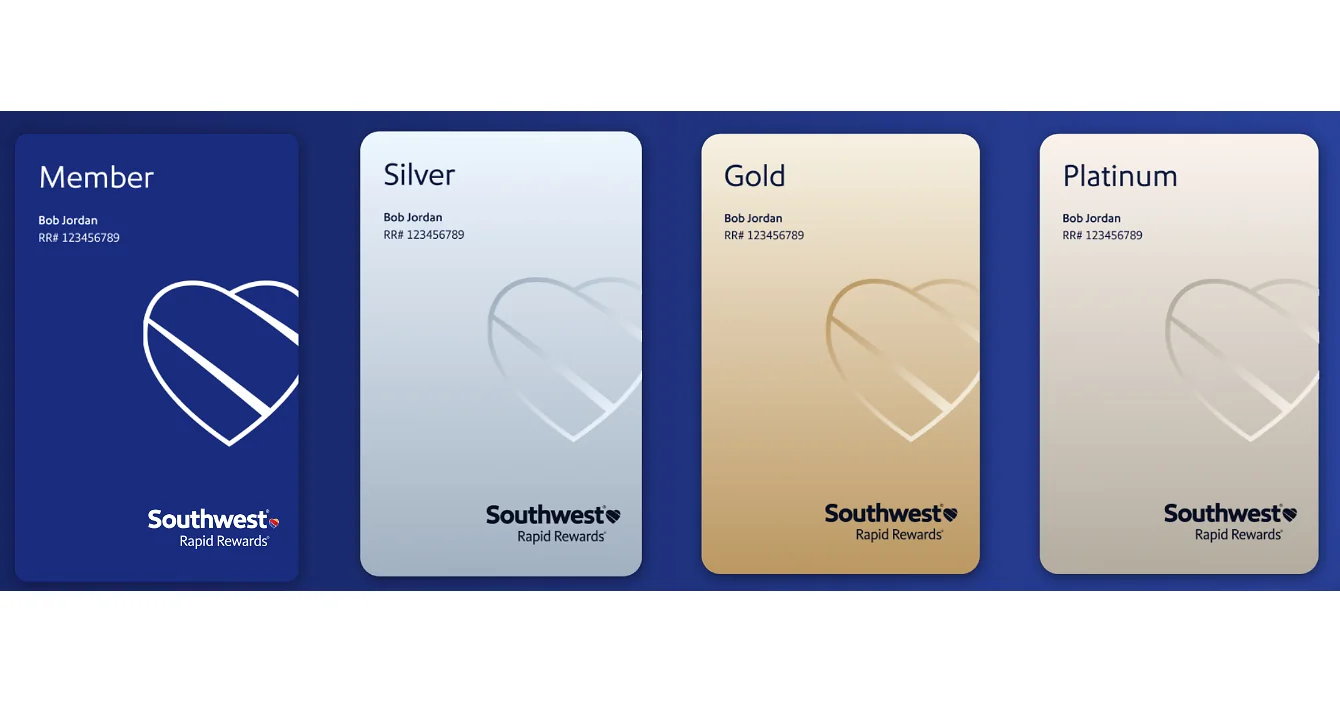
Beginning January 1, 2027, Members will see a new lineup of Silver, Gold, and Platinum tiers, new Milestone Rewards to earn along the way to status, more opportunities for Companion Pass® trips, and a faster path to tier status for Rapid Rewards Credit Cardmembers. Additional enhancements will give Members new ways to earn and redeem points through international loyalty partners and to enjoy using points for seat selection and rental cars.

"Rapid Rewards was built on a simple idea: make it easy for Customers to earn and use rewards," said Nandika Suri, Vice President of Rapid Rewards at Southwest Airlines. "As our Members engage more with Southwest, they've told us they want Rapid Rewards to reward them in more meaningful ways, whether they're working toward status or using the points they've earned. These updates build on that feedback by rewarding Members throughout their Southwest experience, while keeping the simplicity and value that have always set our program apart."

More Rewards Along the Way

Rapid Rewards will continue to offer the hallmark benefits that Members value, including no blackout dates, points that don't expire, and flexible options to earn tier status through both Tier Qualifying Points (TQPs) and qualifying flights. The airline is introducing new enhancements to build on that foundation, including:

- New Platinum status, with Unlimited Companion Pass

Southwest® is introducing a new three-tier structure to give Members more opportunities that unlock valuable benefits as their engagement grows.

Beginning in January 2027, A-List will become Silver and A-List Preferred will become Gold. In addition, Southwest is introducing a new tier to its program—Platinum. Platinum status will sit above Silver and Gold and will include unlimited Companion Pass trips1.

- New Milestone Rewards; Reach First Reward Before Reaching Silver Status

Starting in January 2027, Members will no longer have to wait until reaching a new tier to receive rewards. Southwest is adding Milestone Rewards along a Member's tier journey2.

- Before Members reach Silver, they'll be able to select rewards like Rapid Rewards points or seat certificates.

- Between Gold and Platinum, Members can qualify to receive three Companion Pass trips.

- A Faster Path to Tier Status

Beginning in January 2027, every Rapid Rewards Credit Cardmember, including Plus Cardmembers, will earn one TQP for every dollar spent on purchases with a Rapid Rewards® Credit Card from Chase3. This change gives every Cardmember a simpler, faster path to tier status.

More Ways to Use Rapid Rewards Points

- New International Redemptions

In Spring 2027, Members will be able to earn and redeem Rapid Rewards points for travel through new international airline loyalty partnerships, initially with Icelandair, China Airlines, and Etihad Airways. These partnerships will give Customers access to popular destinations from Reykjavik to Paris, Taipei to Tokyo, and Abu Dhabi to Johannesburg.

- Use Points for Seats and Rental Cars

Later in 2027, Rapid Rewards Members will also be able to use points for seat selection on Southwest-operated flights, including Extra Legroom and Preferred seats4. Beginning in November 2026, Members can redeem Rapid Rewards points for rental cars across all participating car rental partners directly through cars.southwest.com.

A More Rewarding Travel Experience

In addition to new program rewards, Southwest is introducing new travel experiences:

- Southwest Icon Lounge™ - A New Way to Experience Southwest Hospitality

The airline is bringing its Hospitality to a new part of the journey in late 2027 with the Southwest Icon Lounge™ network, in partnership with Chase. The lounges will combine premium amenities, thoughtful and local design, and the warmth of Southwest's culture to create distinctive spaces where Customers can relax, get work done, or simply enjoy the lounge before they travel.

The Southwest Icon name celebrates Southwest's 55-year legacy—from Herb Kelleher's people-first philosophy to the Customers and Employees who continue to shape its story.

Access to the Southwest Icon Lounge network will be available through a new, premium, Southwest Rapid Rewards® Credit Card, issued by Chase, launching in 2027.

- Fleetwide Starlink Connectivity in 2027

Southwest is bringing the fastest WiFi in the sky, powered by Starlink, to its entire fleet. In fall 2027, Southwest expects to become the first major U.S. airline to complete a fleetwide rollout of Starlink, providing access to high-speed connectivity from takeoff to landing.

WiFi is available free to Rapid Rewards Members, thanks to T-Mobile®5.

Additional details on tiers, Companion Pass, Rapid Rewards points redemption, international loyalty partnerships, and more can be found at southwest.com/rapid-rewards/2027/.

ABOUT SOUTHWEST AIRLINES CO.

Southwest Airlines Co. operates one of the world's most admired and awarded airlines, offering its one-of-a-kind value and Hospitality at 121 airports across 12 countries. Southwest took flight in 1971 to democratize the sky through friendly, reliable, and low-cost air travel and now carries more air travelers flying nonstop within the United States than any other airline.6 By empowering its more than 73,0007  People to deliver unparalleled Hospitality, the maverick airline cherishes a passionate loyalty among more than 134 million Customers carried in 2025. Southwest leverages a unique legacy and mission to serve communities around the world including harnessing the power of its People and Purpose to put communities at the Heart of its success. Learn more by visiting Southwest.com/citizenship.

1 Companion Pass benefits allow a Member to designate one Companion to fly with the Member on Southwest®-operated flights. A Companion's reservation must be booked through Southwest. Companion Pass travel has no blackout dates but is subject to availability. While there are no seat restrictions, a seat must be available on a flight for a Companion. For more information regarding Companion Pass benefits, please visit https://www.southwest.com/rapid-rewards/2027/companion-pass-changes/.

2 Eligible Rapid Rewards® Members who achieve a Milestone may select from available Milestone Rewards depending on the applicable Milestone level. Benefit selections are final. Benefits are subject to eligibility requirements, expiration dates, usage restrictions, and additional terms and conditions. Visit https://www.southwest.com/rapid-rewards/guides/milestone-rewards-explained/ for complete details.

3 Effective January 1, 2027, the earning of Tier Qualifying Points through credit card spend changes. Tier Qualifying Points are earned through flight purchases, the cash portion of a cash plus points reservation, points from spend on Southwest Rapid Rewards Credit Cards at one Tier Qualifying Point earned per $1 spent on eligible purchases on the card, Getaways by Southwest purchases, Tier Qualifying Point bonus promotions, and buy Tier Qualifying Points promotions.

4 Rapid Rewards® Members may redeem points for available eligible seat selections on Southwest Airlines-operated flights after booking and ticketing and prior to check-in. Available seat types and the number of points required vary by flight and are subject to change until the seat selection is completed. Points may not be used to purchase seat selections at the airport, including at kiosks or the gate. Rapid Rewards terms and conditions apply.

5 Where available. Available only on WiFi-enabled designated aircraft.

6 Based on U.S. Dept. of Transportation quarterly Airline Origin & Destination Survey as of Q4 2025.

7 Fulltime-equivalent active Employees as of June 30, 2026.

Cautionary Statement Regarding Forward-Looking Statements

This news release contains forward-looking statements within the meaning of Section 27A of the Securities Act of 1933, as amended, and Section 21E of the Securities Exchange Act of 1934, as amended. Specific forward-looking statements include, without limitation, statements related to (i) the Company's initiatives, strategic priorities, focus areas, core strengths, goals, and opportunities, including with respect to product offering enhancements; and (ii) the Company's expectations with respect to the timing of and Customer response to its product offering enhancements. These forward-looking statements are based on the Company's current estimates, intentions, beliefs, expectations, goals, strategies, and projections for the future and are not guarantees of future performance. Forward-looking statements involve risks, uncertainties, assumptions, and other factors that are difficult to predict and that could cause actual results to vary materially from those expressed in or indicated by them.

Ingest Status
Rejected
Dedupe hash
prn_302910243
Source Name
MORE TO LOVE FROM RAPID REWARDS
Original Summary

<p>New loyalty program benefits, expanded redemption options, premium experiences, and fleetwide Starlink connectivity bring more value to Rapid Rewards DALLAS, Oct. 15, 2026 /PRNewswire/ -- Southwest Airlines Co. (NYSE: LUV) announced today the next evolution of its award-winning Rapid...</p>

Image URL
https://mmx.prnewswire.com/media/MS2013956/Starting-January-1-2027-Southwest-Airlines-will-introduce-a-new-three-tier-loyalty-structure-Silver.jpg?id=OA3020635&p=facebook
Content Hash (SHA-256, erste 32 hex)
5ea3c56097b9e4dd8bdf4e0ade41c1c3
Chubby Group Closes $50M Series A Led by Prysm Capital at $500M Valuation; Signs Deal to Purchase 47 GEN Korean BBQ Restaurants
Image File
Original HTML

Chubby Group Closes $50M Series A Led by Prysm Capital at $500M Valuation; Signs Deal to Purchase 47 GEN Korean BBQ Restaurants

The agreement with GEN Restaurant Group and Chubby's first institutional funding round position it as one of the largest Asian dining groups in the U.S.

LOS ANGELES, Oct. 15, 2026 /PRNewswire/ -- Chubby Group, the company behind Chubby Cattle, Wagyu House, The X Pot, NIKU X, Chubby Skewers, and Chubby Bowls, has announced a $50 million Series A led by Prysm Capital at a $500 million valuation to fund the growth of the portfolio. The company also announced it signed a letter of intent to acquire GEN Korean BBQ's 47 U.S. restaurants and four development sites from GEN Restaurant Group (Nasdaq: GENK) in a transaction valued at up to $100 million. The acquisition is expected to significantly expand Chubby's reach and footprint, positioning it as one of the largest Asian dining groups in the U.S.

Chubby has already transformed former GEN sites, growing unit revenue up to 6x by pairing its supply chain with elevated culinary standards, refreshed interiors, signature hospitality, and the Chubby Club experience. It now plans to roll out that playbook across all 47 restaurants.

Quality at the Source

Rather than buying cuts from distributors, Chubby buys whole cattle and whole chickens and runs direct seafood programs, processing and delivering everything through its own supply chain. Using the whole animal across its 25+ brands means higher-quality ingredients at more affordable prices, from wagyu omakase to fast-casual bowls cooked in tallow from its own cattle program. Those efficiencies translate into greater value for guests through Chubby Club, a membership ecosystem that brings benefits wherever members dine—across Chubby and partner brands or at home through delivery. 

"We've built Chubby by investing in better ingredients, hospitality and value for our guests, and our Chubby Club members have become our biggest champions," said David Zhao, co-founder of Chubby Group. "Prysm's investment and the addition of GEN's 47 restaurants to our ecosystem will let us do that at a much bigger scale and reinvest the efficiencies we gain in the guest experience."

Prysm Capital Leads First Institutional Round

The $50 million Series A, led by Prysm Capital, will fund expansion of Chubby's supply chain and new openings, including plans for 30 new locations across Mr. Chubby and Chubby Bowls in 2027. To date, Chubby's growth has been supported by operating cash flow and capital from its founders, local operating partners, supply chain partners, and family offices, with more than $90 million invested across its restaurants and supply chain.

"We've watched Chubby Group grow from 20 to 70 locations while staying profitable," said Matt Roberts, co-founder and partner at Prysm Capital. "They own everything from the supply chain to the in-house design to the loyalty program. Chubby Group turns this structural advantage into a fantastic experience at a great value for their customers, which is why they keep coming back. And now every additional restaurant expands this edge."

47 Restaurants, Four Phases, 12 Months

Chubby Group will acquire GEN Korean BBQ's 47 U.S. restaurants and four development sites from GEN Restaurant Group. Closing remains subject to definitive agreements, license and lease transfers, and regulatory approvals. As part of the consideration, GEN will hold a note convertible into Chubby Group equity at a $1.5 billion valuation, and Chubby will receive a perpetual license to the GEN brand.

Chubby will take over the restaurants in four phases over 12 months, with the first 12 locations targeted for November 1, 2026. It plans to move the portfolio onto its supply chain and Chubby Club ecosystem, relaunching each restaurant as GEN X, a wagyu-forward take on the Korean BBQ guests already know, or as one of the Chubby Club concepts. Chubby will fund the conversions from its own capital.

From One Restaurant to More Than 70

Chubby's growth comes as Asian restaurants outpace the broader industry. Outside the Asia-Pacific region, sales at Asian full- and limited-service restaurants grew at an 11% compound annual rate from 2020 to 2025, compared with 7% for the restaurant market overall, according to Euromonitor International.

Since opening its first restaurant in 2016, Chubby Group has grown to more than 70 locations, with plans to reach roughly 100 by year-end. Systemwide revenue has grown from $1.5 million in 2016 to $233 million in 2025, with $400 million projected for full-year 2026. The company also serves approximately 450,000 Chubby Club members.

About Chubby Group

Chubby Group is a U.S.-based restaurant and hospitality company behind Chubby Cattle, Wagyu House, The X Pot, NIKU X, Chubby Skewers, and Chubby Bowls. Its vertically integrated platform combines direct sourcing and supply chain operations with restaurant development, brand services, and the Chubby Club membership program. Across its portfolio of Asian-inspired dining concepts, Chubby Group focuses on delivering premium ingredients, compelling value, and distinctive guest experiences. For more information, visit chubbygroup.com.

About Prysm Capital

Prysm Capital seeks to partner with disruptive, generational companies at the inflection point of accelerated growth. With offices in New York, San Francisco, and Princeton, Prysm provides flexible growth capital to founders building category-defining technology and consumer businesses, including Replit, Rivian, Island, FieldAI, Fanatics, Fireworks, HappyRobot, Clear Street, ALSO, and Mind Robotics. For more information, visit www.prysmcapital.com.

MEDIA CONTACT:

Mary Magnani, CodePR

[email protected] 

SOURCE Chubby Group

Share this article

Class (B2B/B2C)
B2B
Ingest Status
Rewritten
Dedupe hash
prn_302910258
Press Eligible
Yes
Press Eligible Reason
Restaurant group announces a $50 million funding round and planned acquisition of 47 restaurants.
Source Name
Unknown Company
Original Summary

<p>The agreement with GEN Restaurant Group and Chubby's first institutional funding round position it as one of the largest Asian dining groups in the U.S. LOS ANGELES, Oct. 15, 2026 /PRNewswire/ -- Chubby Group, the company behind Chubby Cattle, Wagyu House, The X Pot, NIKU X, Chubby...</p>

Image URL
https://mmx.prnewswire.com/media/MS2013955/ChubbyGroup_PrysmCapital_Visit_PressPhoto.jpg?id=OA3020634&p=facebook
Content Hash (SHA-256, erste 32 hex)
1722c096d426a7966a1e056eb0866c58
U.S. Travel Agency Air Ticket Sales Surpass $10 Billion in September 2026
Image File
Original HTML

Q3 2026 Sales Reach $29.7 Billion, an 18% Increase From 2025

ARLINGTON, Va., Oct. 15, 2026 /PRNewswire/ -- Today, Airlines Reporting Corporation (ARC) released data showing U.S.-based travel agency air ticket sales totaled $10.2 billion in September 2026, an 18% increase from September 2025.* Passenger trips reached 25.7 million in September 2026, a 2% year-over-year increase. Third-quarter 2026 sales totaled $29.7 billion, up 18% from $25.1 billion in the third quarter of 2025, while passenger trips for the quarter rose 3.5% to 77.4 million.

Results for September 2026 showed:

"Demand for travel remains strong despite geopolitical uncertainty and inflationary pressure, with over 77 million airline trips ticketed through travel agencies in the third-quarter. This reflects a 3.5% increase in trips from the same period in 2025," said Steve Solomon, ARC's Chief Commercial Officer. "Even as the summer season wound down, passenger volume held steady with September air ticket sales of $10.2 billion, up 4% from August. Overall, September capped an exceptional third-quarter."

NDC transactions accounted for 21.2% of total ARC-settled transactions in September 2026, which is a 7% increase from the previous year. In September 2026, 1,264 travel agencies reported NDC transactions.

More detailed information is available on ARC's sales statistics page.

About ARC:

ARC's platform is the intelligence behind air travel, connecting the industry and powering commercial decisions for airlines and their partners. Our trusted services fuel airline retailing, with ARC processing over $100 billion in U.S.-based agency air sales annually. ARC leads industry collaboration between airlines, agencies, corporate buyers and other partners to enable a thriving industry ecosystem. For more information, visit arccorp.com.

Contact:

ARC Media Team: [email protected]

Notes:

*Ticket Sales

- Results are based on monthly sales data ending September 30, 2026, from 9,863 U.S. retail and corporate travel agency locations and online travel agencies. Results do not include sales of tickets purchased directly from airlines.

- The average ticket price (USD) is for a round-trip ticket settled through ARC for an itinerary that included only U.S. domestic travel.

- Passenger trips include the total number of passengers traveling from one airport to another using direct or connecting flights. Newly issued trips are added, and refunded trips are deducted to provide a net view of traveling passengers.

- U.S. domestic passenger trips include the total number settled through ARC where the itinerary is wholly within the U.S. International passenger trips include the total number settled through ARC where some or all the travel occurs to airports outside the U.S. or originates outside the U.S.

- Total sales are equal to the total amount paid for a ticket, which includes taxes and fees.

**Average Economy Class Ticket Price

- Economy Class is defined as tickets for U.S. domestic travel purchased in September 2026 under fare codes excluding First Class, Business Class and Business Class Premium.

***Average Premium Class Ticket Price

- Premium Class is defined as tickets for U.S. domestic travel purchased in September 2026 under fare codes assigned to First Class, Business Class and Business Class Premium.

© Airlines Reporting Corporation (ARC). All rights reserved.

SOURCE Airlines Reporting Corporation (ARC)

Share this article

Class (B2B/B2C)
B2B
Ingest Status
Rewritten
Dedupe hash
prn_302910238
Press Eligible
Yes
Press Eligible Reason
Industry sales and passenger data from ARC for travel agencies and airlines.
Source Name
Unknown Company
Original Summary

<p>Q3 2026 Sales Reach $29.7 Billion, an 18% Increase From 2025 ARLINGTON, Va., Oct. 15, 2026 /PRNewswire/ -- Today, Airlines Reporting Corporation (ARC) released data showing U.S.-based travel agency air ticket sales totaled $10.2 billion in September 2026, an 18% increase from September...</p>

Image URL
https://mmx.prnewswire.com/media/MS1549594/ARC-Logo-L-Teal-RGB-Logo.jpg?id=OA3021833&p=facebook
Content Hash (SHA-256, erste 32 hex)
48287375033f58cae36bdf9b5e16855c
Vital Lyfe's Portable Watermaker, Access, Named to TIME's List of the Best Inventions of 2026
Image File
Original HTML

TORRANCE, Calif., Oct. 15, 2026 /PRNewswire/ -- Today, TIME revealed its annual list of the Best Inventions, which features 300 extraordinary innovations changing our lives. Vital Lyfe's first generation watermaker, Access, has been named a TIME Best Invention in the Outdoors category.

Access is a user-friendly, cost-effective system that enables anyone to generate filtered water from all naturally occurring water sources, including seawater, through a simple, intuitive, push-button process. The system is designed for a wide range of applications and consumers, including off-grid exploration and communities, short- or long-term sailing, maritime environments, rural living, disaster relief organizations, and emergency response. Access is available now for pre-order and will begin shipping later this year.

To compile this year's list, TIME solicited nominations from its editors and correspondents around the world through an online application process, paying special attention to growing fields such as health care and AI. TIME then evaluated each contender on a number of key factors, including originality, efficacy, ambition, and impact.

"We are honored to receive this recognition from TIME, just as we're about to put Access into the hands of consumers and organizations around the world," said Jonathan Criss, CEO and Co-Founder of Vital Lyfe. "We focused on building a beautiful product that's easy to use and affordable, and it's awesome to see all that hard work recognized. For those dedicated to the outdoors, off-grid, and maritime environments, Access is a game-changer for self-sustainability and health. I'm incredibly proud of our whole team for achieving this honor."

"Water scarcity doesn't have to define our future. We believe the future of water is one where people have the power to make their own water, wherever they are. By putting water production into the hands of individuals and communities, decentralized infrastructure can make access to water more resilient and more universal. Access is just the beginning of that future," said Andrew Harner, COO and Co-Founder of Vital Lyfe.

See the full list of TIME's Best Inventions here: ti.me/best-inventions

About Vital Lyfe

Vital Lyfe is a water technology company that builds scalable, portable water filtration systems designed to increase global access to clean water. By combining advanced engineering, efficient manufacturing, and a mission driven approach, Vital Lyfe is working to redefine how fresh water is produced and distributed around the world. Learn more at https://www.vital-lyfe.com/.

Media Contact:

[email protected]

SOURCE Vital Lyfe

Share this article

Class (B2B/B2C)
B2C
Ingest Status
Rewritten
Dedupe hash
prn_302910230
Press Eligible
Yes
Press Eligible Reason
Portable watermaker product launch and recognition aimed at consumers and organizations.
Source Name
Unknown Company
Original Summary

<p>TORRANCE, Calif., Oct. 15, 2026 /PRNewswire/ -- Today, TIME revealed its annual list of the Best Inventions, which features 300 extraordinary innovations changing our lives. Vital Lyfe's first generation watermaker, Access, has been named a TIME Best Invention in the Outdoors category....</p>

Image URL
https://mmx.prnewswire.com/media/MS1770884/Vital-Lyfe-Logo.jpg?id=OA3021670&p=facebook
Content Hash (SHA-256, erste 32 hex)
f79ac8c75053769b82f34eee59ad91fc