Recognition in Practice: What O.C. Tanner’s Influence Greatness 2026 Revealed About Culture, Growth and Human Connection
Image File
Original HTML

There are conferences we attend where you learn about an organization’s philosophy and then there are conferences where you experience it. That distinction stayed with me throughout the duration of O.C. Tanner’s Influence Greatness 2026 at Black Desert Resort in Southern Utah.

I attended as an invited analyst guest representing Brandon Hall Group™, with O.C. Tanner hosting my participation. Going into the event, I expected to learn more about the company’s research, recognition platform, technology roadmap, partnerships and perspective on the future of workplace culture. Of course, I did. However, what I did not fully anticipate was how intentionally the philosophy behind the technology would show up in the experience itself.

For an organization with such a long history in employee recognition and workplace culture, O.C. Tanner had an opportunity to tell us what meaningful recognition should look like. Instead, they showed us.

When the Experience Matches the Message

From the moment I arrived in UT, there was an unmistakable level of care behind the experience. The setting at Black Desert Resort was exceptional, but beautiful surroundings alone do not create connection. It was the consistency of the human interactions that stood out.

Members of the O.C. Tanner team stopped to talk. They checked in, remembered conversations, made introductions and made certain people knew where they needed to be and had what they needed. I especially appreciated Mindi Cox and Raphael Magre, who went out of their way throughout the event to make sure I felt welcomed and connected. That same attentiveness extended far beyond my own experience. I saw it in how O.C. Tanner interacted with analysts, clients, speakers, members of its Client Advisory Council, its own employees and the broader attendee community.

That really matters because recognition loses its power when it feels like a transaction or an isolated HR program. It becomes meaningful when people consistently experience signals that say: We see you. Your contribution matters. You belong here. Influence Greatness demonstrated that principle in practice.

Recognition Is Moving Closer to the Work

Our analyst discussions also provided a deeper look at how O.C. Tanner is evolving its technology and product strategy. One theme surfaced repeatedly: Recognition needs to become easier to access and more naturally integrated into the way people already work.

For many organizations, another standalone platform is not necessarily the answer. Employees are already moving among HR systems, collaboration tools, communication platforms and multiple applications throughout their workday. If recognition sits somewhere outside that flow, participation becomes harder and the experience can feel disconnected.

O.C. Tanner is increasingly addressing this through integrations, partnerships, APIs and expanded ways for recognition to reach employees across different work environments. The company’s partnership with Kudoboard, for example, expands employee-led celebrations around milestones and meaningful life and work moments. Integrations with systems such as Workday and Microsoft Teams similarly reflect a broader shift toward bringing recognition into the rhythm of work rather than requiring employees to leave it.

That is particularly important as organizations think about frontline employees, distributed teams, global workforces and employees who do not spend their days sitting behind a laptop. This is notable because technology access should not determine recognition access.

Another important conversation involved measurement. Organizations increasingly want to understand not only whether employees are using recognition programs, but what those programs are influencing. Retention, engagement, trust, collaboration, performance, employee experience and ultimately business outcomes all belong in that conversation.

From my own perspective, as a former Chief Financial Officer, this is an important evolution. Participation is useful information but, impact is the more important question.

The 2027 Global Culture Report: Growth Cannot Be Extraction

One of the most substantive parts of Influence Greatness was the release and discussion of findings from the O.C. Tanner Institute’s 2027 Global Culture Report. The research, based on nearly 26,000 employee perspectives across 23 countries, examines four areas organizations should consider as they navigate continued disruption: organizational compassion, growth cultures, active trust and innovation.

The growth conversation especially caught my attention. Organizations talk frequently about upskilling and reskilling. Those investments are necessary, but employees do not simply want to be developed so organizations can extract more productivity from them. Growth needs to be reciprocal.

Employees should be able to see how development expands their own capabilities, opportunities, confidence, mobility and future, while the organization benefits from greater adaptability, innovation and performance. That difference is significant and the research reinforces the connection.

When recognition is integrated into growth cultures, employees are substantially more likely to innovate, trust the organization and respect its values. That gives leaders a different way to think about development. Instead of asking only, “What skills do we need employees to acquire?” we should also be asking, “What are we creating that allows employees to grow because they are here?” When those two interests meet, growth becomes a partnership and stops being yet another organizational demand.

Recognition as a Cultural Amplifier

Another idea I kept returning to throughout the event was the concept of amplification. Recognition does not create a healthy culture from out of the blue. It reinforces what an organization chooses to notice.

If leaders recognize collaboration, employees learn that collaboration matters. If experimentation is acknowledged even when every idea does not succeed, employees gain permission to innovate. If compassion, service, problem-solving, mentoring and quiet contributions are consistently noticed, those behaviors become increasingly visible within the organization. That makes recognition much more than saying thank you. It becomes a cultural signal and those signals matter even more during periods of change.

Several sessions explored organizations operating under pressure, whether from AI, economic uncertainty, workforce shortages, burnout, rapidly changing skills requirements, or shifting employee expectations. The common thread was that sustainable performance cannot be separated from the human conditions in which people are being asked to perform.

Leadership Still Determines What People Experience

That theme carried through many of the speakers. Former NASA astronaut José M. Hernández opened the conference with a story grounded in extraordinary perseverance. His path to becoming an astronaut included repeated rejection, deliberate preparation, continued education and a willingness to keep investing in himself. But one of the ideas that stayed with me was his emphasis on validating people and helping them rise to the occasion. Leadership is not simply about setting the destination. It is also about creating the conditions that allow people to believe they can reach it.

Well-being expert Jennifer Moss brought another important dimension to the conversation through her discussion of burnout, trust, hope, purpose and the changing experience of work. Her reminder that hope can be developed as a skill was particularly meaningful in a workplace environment where uncertainty has become almost constant.

Another well-being expert, Ashish Kothari, challenged organizations to look beyond individual well-being interventions and examine the systems creating the conditions employees are working within. One question from that conversation deserves more attention: organizations review operational, sales, staffing and financial data constantly, so why is meaningful people data so often reviewed only periodically? That question connects directly to the work HR leaders are being asked to do today. If people truly are among an organization’s most important assets, our measurement and management practices should reflect it.

AI Can Amplify Culture, but It Cannot Substitute for It

Of course, AI was part of the conversation as well. AI expert Allie K. Miller challenged attendees to move beyond using AI as a basic productivity tool and think more expansively about how it can become part of work systems, workflows, roles and organizational capability. One of the most useful ideas from that discussion was also one of the simplest: AI scales culture, it does not create it.

Technology can increase the speed and reach of what already exists. If an organization has trust, curiosity, strong leadership, knowledge sharing and psychological safety, technology can help amplify those strengths. If those conditions are absent, technology cannot simply manufacture them.

Even O.C. Tanner’s own use of AI within recognition reflects this tension. Technology may help someone create a stronger recognition message or expose an opportunity to appreciate someone, but the human intention behind the recognition still matters. Efficiency should support human connection, not replace it.

From Pickleball to Grease: Designing Moments That People Remember

Some of the strongest examples of recognition during Influence Greatness did not happen in a breakout room. During the analyst experience, O.C. Tanner arranged time with professional pickleball player Tyler Loong. I had never played pickleball before, which made the experience both humbling and fun. We learned, played, laughed and connected in an environment completely different from the analyst discussions earlier in the day. That mattered too because relationships are often built in the spaces around the formal agenda.
Class (B2B/B2C)
B2B
Ingest Status
Rewritten
Dedupe hash
f1bf49420baf2c35ddac2cbf8f685f41
Press Eligible
Yes
Press Eligible Reason
Covers O.C. Tanner’s workplace recognition technology, research, partnerships, and corporate culture strategies.
Source Name
Brandon Hall Group
Original Summary

<p>There are conferences we attend where you learn about an organization’s philosophy and then there are conferences where you experience it. That distinction stayed with me throughout the duration of O.C. Tanner’s Influence Greatness 2026 at Black Desert Resort in Southern Utah. I attended as an invited analyst guest representing Brandon Hall Group™, with O.C. [&#8230;]</p>
<p>The post <a href="https://brandonhall.com/recognition-in-practice-what-o-c-tanners-influe… in Practice: What O.C. Tanner’s Influence Greatness 2026 Revealed About Culture, Growth and Human Connection</a> appeared first on <a href="https://brandonhall.com">Brandon Hall Group</a>.</p>

Image URL
https://brandonhall.com/wp-content/uploads/2026/10/O-C-Tanner-Influence-Blog.png
Source Node
Content Hash (SHA-256, erste 32 hex)
af238b4582e70fa14a878d5ccb898c28
SAP’s Planned Acquisition of TechWolf: What It Means for Skills and Workforce Intelligence
Image File
Original HTML

I have spent a lot of time over the past several years studying skills.

At Brandon Hall Group, we have researched skills-based organizations, built frameworks around skills architecture, talked with technology providers and, most importantly, advised organizations trying to turn the idea of skills into something that actually changes how they hire, develop, deploy and plan their workforce.

Our recent research, Skills, Work and Talent: Why Skills Architecture Is Becoming the New Operating Logic for the Enterprise, looks at that journey through our five-stage Skills Architecture Progression Model: Skills Visibility, Skills Insight, Skills Evidence, Skills Integration and, ultimately, Skills Orchestration. The progression reflects something we see repeatedly in our work. Defining skills is only the beginning. The real value comes when organizations can use trusted skills intelligence to make better workforce decisions across learning, talent, workforce planning and the business.

Through all of those conversations, I have noticed something.

When we get deep enough into an enterprise skills discussion, TechWolf inevitably comes up.

Sometimes the organization is already working with them. Sometimes they are evaluating them. Sometimes another technology provider brings them into the conversation. But their name has become increasingly difficult to avoid.

That is why SAP’s announcement that it intends to acquire TechWolf is significant, but not particularly surprising.

What is more interesting is what the acquisition tells us about where the skills market is going.

Skills are becoming part of a much bigger intelligence layer

It would be easy to look at this as SAP adding another skills technology to SAP SuccessFactors. I think that misses the bigger story.

TechWolf itself has been evolving beyond that definition.

The company increasingly talks about Skills Intelligence, Work Intelligence and Market Intelligence together. SAP’s announcement reinforces that direction, describing a model that connects the work itself, down to individual tasks, with the skills people have and apply and what is happening in the external labor market.

Together, these capabilities provide a much more current understanding of the workforce, the work being performed and what is happening outside the organization.

For years, organizations have talked about building a skills taxonomy or becoming a skills-based organization. Those are important steps, but the business does not ultimately need a better list of skills. It needs better answers to workforce questions.

What capabilities do we have today? What will we need tomorrow? How is the work changing? Which tasks can AI augment or automate? How should roles change as a result? Where can we redeploy people rather than hire externally? Where should we invest in development?

Those questions require more than skills data.

They require context about people, skills, jobs, tasks, work and the market around them.

That is much closer to what SAP is acquiring.

AI makes the context layer even more important

As AI moves from copilots into agents and increasingly autonomous workflows, enterprise AI needs context.

An agent can retrieve information or complete a task, but to make meaningful workforce decisions it needs to understand how an organization actually works. It needs to understand roles, skills, tasks, relationships and business context. And that information needs to be current, trusted and governed.

SAP specifically points to TechWolf’s context graph as a grounding layer for agent queries. SAP says that foundation can make token usage more efficient while making Joule more intelligent in areas such as skills-based hiring, workforce planning and role redesign.

That may ultimately prove more consequential than the skills use cases that initially made TechWolf well known.

The next stage of this market is not simply about having better skills intelligence. It is about connecting skills intelligence to work intelligence and making that intelligence available to the systems and AI agents that increasingly influence workforce decisions.

It is also why we are seeing strategic workforce planning, job architecture, role redesign and AI impact assessment move much closer together.

These used to be relatively distinct conversations. AI is collapsing the distance between them.

There is an ecosystem question worth watching

There is also a less obvious part of this announcement that I find particularly interesting.

TechWolf has built much of its value around being an intelligence layer that can work across the enterprise technology ecosystem. Its ability to coexist with the systems organizations already have is part of the value proposition. SAP’s own announcement specifically notes that TechWolf works with SAP SuccessFactors as well as non-SAP applications.

That dynamic changes when SAP owns the company.

SAP has been clear that its current plan, subject to the transaction closing, is for TechWolf to remain an independent entity and for its platform to remain available to SAP and non-SAP customers.

But it also raises an interesting question: How will other enterprise technology providers respond to relying on a workforce intelligence layer owned by one of their largest competitors?

There is no reason to assume those relationships disappear. TechWolf’s interoperability is part of what has made the platform valuable in the first place.

Still, ownership matters.

How SAP preserves that neutrality, how deeply TechWolf becomes embedded within SuccessFactors, and how competing platforms respond will be important to watch as the transaction moves forward.

Brandon Hall Group will be in the middle of the conversation

The timing of the announcement is particularly interesting for us at Brandon Hall Group.

On October 21, our Chief Strategy Officer, Michael Rochelle, will be at UNLEASH World in Paris participating in SAP’s Skills at Scale: Build and Develop a Workforce that Drives Your Business Forward Explorer Tour.

The conversation was already set to explore how large organizations establish a skills foundation, connect skills across the talent lifecycle, introduce intelligence and agentic experiences, improve internal mobility and reskill people as AI changes roles.

TechWolf was already part of that conversation as an SAP ecosystem partner before this announcement.

Now the context has changed considerably.

For years, the industry has asked how organizations become skills-based. I think the more important question now is what happens after you have the skills intelligence.

Can you connect those skills to the work actually being performed? Can you understand how AI changes that work? Can you redesign roles around that understanding? Can you give leaders and AI agents enough trusted context to make better workforce decisions?

That is where this market is going.

SAP’s planned acquisition of TechWolf reinforces something we have been seeing through our research and advisory work for some time: skills are not the destination. They are becoming part of the intelligence infrastructure organizations will use to understand and redesign work.

And that is a much bigger conversation.

Class (B2B/B2C)
B2B
Ingest Status
Rewritten
Dedupe hash
1001e6bac1720fd7e957ea16059761b6
Press Eligible
Yes
Press Eligible Reason
Analysis of SAP’s planned acquisition of TechWolf and its implications for enterprise workforce intelligence and AI.
Source Name
Brandon Hall Group
Original Summary

<p>I have spent a lot of time over the past several years studying skills. At Brandon Hall Group, we have researched skills-based organizations, built frameworks around skills architecture, talked with technology providers and, most importantly, advised organizations trying to turn the idea of skills into something that actually changes how they hire, develop, deploy and [&#8230;]</p>
<p>The post <a href="https://brandonhall.com/saps-planned-acquisition-of-techwolf-what-it-me…’s Planned Acquisition of TechWolf: What It Means for Skills and Workforce Intelligence</a> appeared first on <a href="https://brandonhall.com">Brandon Hall Group</a>.</p>

Image URL
https://brandonhall.com/wp-content/uploads/2026/10/SAP-TechWolf-2026.png
Source Node
Content Hash (SHA-256, erste 32 hex)
08a5484694010787534ef5e09b35908e
Talent Management Is Alive and Well, but It Is Changing.
Image File
Original HTML

Talent management is changing so fast that it is easy to mistake disruption for decline. The technology is evolving. Many of the practices we have relied on for years are shifting. The lines between learning, performance, career development, succession, workforce planning and talent acquisition are becoming less distinct.

But none of that means talent management is disappearing.

I think we need to be careful not to confuse the traditional talent management technology category, or the way organizations have historically practiced talent management, with the discipline itself. They are very different.

Talent management exists because organizations must make decisions about the people and capabilities they need to execute their business strategy. They must understand the talent they have, what people can do, where capability gaps exist, how people should be developed and where talent should be deployed. They need to think about succession, performance, careers, leadership and the capabilities they will need in the future.

AI doesn’t make any of those things less important. In many respects, it makes them more important and certainly more complex.

What is changing is how we do the work.

For years, talent management was built around a set of relatively independent processes. We had a performance-management process, a succession process, a learning process, a workforce-planning process and so on. Technology largely mirrored that structure. We bought systems and modules to automate each activity.

The problem is that the business doesn’t experience talent that way.

A capability gap doesn’t necessarily mean we need to train someone. We may need to hire someone. We may already have someone elsewhere in the organization who could do the work. We may need to redesign the job. We may need to develop someone for the capability over time. And now we have another possibility: some portion of that work may be better performed or augmented by AI.

That changes the conversation considerably.

This is where I believe talent management is headed. It is becoming less about administering a series of talent processes and much more about understanding and managing the capabilities the business needs.

AI is accelerating that shift because we can now see and understand far more about the workforce than we could before. We can bring together information about skills, learning, performance, experience, career interests and work itself. We can identify relationships in that information that would be difficult, if not impossible, to detect manually.

But having more intelligence about the workforce doesn’t eliminate the need for talent management. What would be the point of having all that intelligence if we aren’t going to do something with it?

If we identify a skills gap, we still have to decide how to close it. If we identify someone with potential, we still have to decide how to develop them. If we know someone has adjacent skills that could make them a candidate for another role, someone still has to create the opportunity. If AI tells us that a job is changing, we still have to determine what that means for the person doing the job today.

Those decisions are talent management.

There is another aspect of this that I think deserves more attention. We are entering a period when organizations will need to manage human and AI capabilities simultaneously.

That is a significant change.

Workforce planning can no longer be only about how many people we need and what skills they should have. Organizations increasingly need to understand the work itself: What work needs to get done? What should people do? What can AI do? Where should AI augment people rather than replace an activity? And what new capabilities do people need now that AI is part of how the work gets done?

That doesn’t make talent management obsolete. It expands its mandate.

It also means some traditional boundaries within talent management probably won’t survive. Learning can’t operate independently of skills. Skills can’t be disconnected from workforce planning. Workforce planning can’t be disconnected from the changing nature of work. Performance can’t be separated from development. Career mobility can’t work well if we don’t understand people’s capabilities.

We have spent years connecting these concepts while often managing them separately in practice. AI gives us an opportunity, and I would argue a business requirement, to finally bring them together.

That is why I see what is happening as a metamorphosis of talent management rather than its demise.

Some of the technologies associated with traditional talent management will undoubtedly change or disappear. Some longstanding practices should be retired. I don’t think anyone will miss cumbersome annual processes that produced more administration than insight.

But the discipline isn’t going anywhere because the business need remains.

In fact, the opposite may hold.

As work changes faster, skills have shorter shelf lives, career paths become less predictable and AI takes on a larger role in getting work done, organizations need a much better understanding of their people and capabilities than they have today.

That is a talent management challenge.

Talent management is alive and well. It is simply becoming something different from what we have known before.

And I think that is very good.

Class (B2B/B2C)
B2B
Ingest Status
Rewritten
Dedupe hash
81ae1cad559edce714c5513b53a15d86
Press Eligible
Yes
Press Eligible Reason
Discusses how AI is reshaping talent management and workforce planning for organizations.
Source Name
Brandon Hall Group
Original Summary

<p>AI is expanding the mandate of talent management. Michael Rochelle of Brandon Hall Group™ on how to manage human and AI capabilities together.</p>
<p>The post <a href="https://brandonhall.com/talent-management-is-alive-and-well-but-it-is-c… Management Is Alive and Well, but It Is Changing.</a> appeared first on <a href="https://brandonhall.com">Brandon Hall Group</a>.</p>

Image URL
https://brandonhall.com/wp-content/uploads/2026/10/Talent-Management-Is-Alive-Well-But-Changing.png
Source Node
Content Hash (SHA-256, erste 32 hex)
59ebae65f681515d7b0ef94df8bc4954
What Is Workforce Intelligence? The New HCM Technology Category Explained
Image File
Original HTML

Workforce Intelligence is becoming one of the latest terms in HCM technology. More technology providers are using it to describe their capabilities, but they aren’t necessarily talking about the same thing.

Some approach it through people analytics. Others through skills intelligence, talent acquisition, workforce planning, internal mobility or learning. Each brings something valuable, but no single technology category provides the complete picture.

For corporate HR leaders, this creates a challenge. How do you know what Workforce Intelligence actually means, which capabilities matter, and whether the technology you already have can deliver some of what these providers are promising?

The interesting part is that HR leaders have been responsible for many of these decisions for decades. Understanding workforce capabilities, anticipating talent needs, managing turnover, planning for change and connecting people decisions to business outcomes are hardly new responsibilities.

What’s changing is the technology’s ability to connect information that has historically lived in separate systems and turn it into intelligence that can inform decisions.

At Brandon Hall Group, we’ve been studying this convergence and began tracking Workforce Intelligence as a distinct HCM technology category in 2025.

My goal with this article is to help define the emerging category from the corporate practitioner’s perspective. What does Workforce Intelligence actually encompass? Where does the technology come from? And how can HR leaders evaluate the capabilities they already have, identify what’s missing and bring the right pieces together?

It’s an evolving category, and I expect the definition to mature as the technology does. But we need a starting point.

What Is Workforce Intelligence?

Brandon Hall Group™ defines Workforce Intelligence as:

The continuous understanding of the workforce, the work being performed, the capabilities and skills available, and the external talent market, using connected data and intelligence to improve workforce and business decisions.

An important part of that understanding is workforce movement. Who is joining the organization, who is leaving, who is moving internally, and what patterns are emerging across different employee populations? Changes in turnover, attendance, scheduling, compensation and employee sentiment can provide early signals of workforce challenges or opportunities. When viewed together and in context, these signals help organizations understand what is happening across their workforce and where action may be needed.

HR has employee information. Finance understands workforce costs. Talent Acquisition monitors external labor markets. Learning and Development assesses capabilities. Workforce Planning forecasts future talent requirements. Business leaders understand the work that needs to get done.

Advances in AI, data integration and workforce modeling are creating new opportunities to bring these perspectives together and understand how people, capabilities, work and business requirements influence one another with greater speed and precision.

That’s what’s driving the emergence of Workforce Intelligence as a technology category.

Where Did Workforce Intelligence Come From?

One of the most interesting aspects of this emerging market is that technology providers are approaching it from different directions.

Some began in People Analytics, helping organizations understand workforce trends, turnover, performance and organizational effectiveness.

Others emerged from Skills Intelligence, using AI to identify workforce capabilities, infer skills and uncover gaps that traditional job architectures and employee profiles often miss.

Talent Intelligence providers have historically focused on recruiting and external talent markets, but many are expanding into internal mobility and broader workforce planning.

Strategic Workforce Planning platforms connect business requirements with workforce supply, demand, costs and future scenarios.

Labor Market Intelligence providers bring an external perspective, helping organizations understand where skills exist, how much they cost and how competitive the market has become.

And emerging Work Intelligence capabilities examine the jobs, tasks and workflows themselves, particularly as AI changes how work gets accomplished.

These technology categories aren’t disappearing. Their capabilities are increasingly overlapping.

Workforce Intelligence is the convergence of these different approaches into a more complete understanding of the workforce and the work it needs to perform.

How Is Workforce Intelligence Different from Talent Intelligence?

Talent intelligence is one of the foundations of Workforce Intelligence. It helps organizations understand available talent, skills, capabilities and opportunities, both internally and in the external labor market.

Workforce Intelligence brings additional dimensions into the picture, including the work being performed, workforce movement, operational conditions, organizational capacity and business requirements.

For example, knowing which employees have a particular skill is valuable. Understanding whether the organization needs more of that skill, whether AI is changing the work, whether employees with that capability are leaving, and what action the business should take brings us closer to Workforce Intelligence.

This distinction matters when evaluating technology. A provider may deliver excellent talent intelligence capabilities without addressing every dimension of Workforce Intelligence. That doesn’t make the technology less valuable. It helps organizations understand where it fits in their broader technology ecosystem.

Brandon Hall Group Began Recognizing Workforce Intelligence in 2025

In 2025, Brandon Hall Group introduced Best Workforce Intelligence & People Analytics as a distinct category within our Technology Awards.

Four organizations earned recognition:

- Capgemini (Gold): Orgvue-Enabled TransformX Operating Model

- ActivTrak (Silver): Workforce Intelligence for Maximum Business Impact

- Tata Consultancy Services (Bronze): TCS USA Workforce Intelligence and People Analytics

- UST (Bronze): Data Quality Dashboard: A Foundation for Scalable Workforce Intelligence

What makes these winners interesting is the range of problems represented by their submissions.

The entries address different dimensions of workforce intelligence, including data quality, analytics, organizational transformation and business impact.

This illustrates why corporate buyers need to understand the category before evaluating technology providers. Two vendors may use the same terminology while approaching very different workforce challenges.

The Five Domains of Workforce Intelligence

At Brandon Hall Group, we see five connected domains that help explain what a more complete Workforce Intelligence capability should address.

- People: Who is in the organization? Where are they? What are their experiences, performance, aspirations and workforce costs?

- Skills and Capabilities: What can employees actually do? What capabilities exist internally? Where are the gaps, and which adjacent skills could be developed?

- Work: What work needs to be accomplished? How are jobs and tasks changing? Where can AI augment, automate or fundamentally redesign work?

- External Market: What talent and capabilities exist outside the organization? Where are they located? How available are they, and at what cost?

- Business Context: What is the organization trying to accomplish? What workforce capabilities, capacity and investments will be required to execute its strategy?

A technology platform doesn’t necessarily need to own all five domains. But corporate leaders should understand which domains a solution addresses, how it connects to the others and which decisions those connections improve.

The real opportunity comes from connecting these different perspectives.

What Does Workforce Intelligence Actually Solve?

Consider a common challenge: A business leader says the organization needs to hire 200 people with a particular set of technical capabilities.

A traditional approach might begin with headcount approval, recruiting plans and external labor market analysis.

Workforce Intelligence allows the organization to ask a broader set of questions.

Do we already have employees with these capabilities? Are there people with adjacent skills who could be developed? What work will these employees actually perform? Could portions of that work be automated or redesigned? What does external talent availability look like? And which option makes the most sense financially?

Those questions change the nature of the workforce decision.

Our 2026 HCM Excellence Awards research provides a useful example.

FPT Software reported that approximately 40% of its existing skills information was outdated, incomplete or contradictory. Managers lacked reliable visibility into available capabilities, sometimes considering external hiring when qualified engineers were already employed within the organization.

As the company improved its approach to skills intelligence and matching, it began identifying internal talent beyond managers’ existing networks.

The lesson extends well beyond skills technology.

An organization can have extensive employee data and still lack a reliable understanding of the workforce it already has.

Workforce Intelligence creates the opportunity to address that problem before organizations make expensive talent and workforce decisions.

What Should Corporate HR Leaders Look for in Workforce Intelligence Technology?

This is where I would encourage buyers to spend their time.

The category is still developing, and technology providers will naturally emphasize the capabilities where they have the strongest history.

Rather than starting with a vendor’s definition, I would evaluate Workforce Intelligence through six questions.

- What workforce decisions does the technology actually improve?

Class (B2B/B2C)
B2B
Ingest Status
Rewritten
Dedupe hash
0caeda9b9674cc2b572bcf5eee87b5e0
Press Eligible
Yes
Press Eligible Reason
Explains an emerging HCM technology category and its applications for corporate HR leaders.
Source Name
Brandon Hall Group
Original Summary

<p>Workforce Intelligence is becoming one of the latest terms in HCM technology. More technology providers are using it to describe their capabilities, but they aren&#8217;t necessarily talking about the same thing. Some approach it through people analytics. Others through skills intelligence, talent acquisition, workforce planning, internal mobility or learning. Each brings something valuable, but no [&#8230;]</p>
<p>The post <a href="https://brandonhall.com/what-is-workforce-intelligence/">What Is Workforce Intelligence? The New HCM Technology Category Explained</a> appeared first on <a href="https://brandonhall.com">Brandon Hall Group</a>.</p>

Image URL
https://brandonhall.com/wp-content/uploads/2026/10/Brandon-Hall-Group-Defines-Workforce-Intelligence.png
Source Node
Content Hash (SHA-256, erste 32 hex)
b8d9d510e1835d23728718ca17644434
UKG’s Headless AI Strategy: A Major Step Forward in the Evolution of Workforce Technology
Image File
Original HTML

Earlier this year, I wrote about UKG’s evolution toward becoming a Workforce Operating Platform and why I believed it was an important advancement for the HCM technology market. What stood out to me was the company’s recognition that workforce technology needed to do more than manage transactions, maintain records and support administrative processes. It needed to help organizations make better decisions and improve how work is accomplished.

I explored that direction in my earlier article, UKG Analyst Day 2026: Why the Future of Workforce Technology Is Becoming an Operating Platform.

UKG’s announcement today takes that strategy in an exciting and important direction.

UKG, a Brandon Hall Group™ Smartchoice® Preferred Provider, has announced a headless AI vision that will enable employees, managers and leaders to initiate workforce activities through AI experiences, including Anthropic, Google Gemini, OpenAI and consumer voice assistants. UKG’s Workforce Operating Platform provides the intelligence, business rules and operational controls that govern execution.

This is one of the more significant strategic developments in workforce technology because it addresses a fundamental challenge organizations face as they scale their AI investments: integrating intelligent technology with the operational realities of managing people and work.

Jennifer Morgan and Suresh Vittal Are Connecting the Right Priorities

What makes UKG’s direction particularly compelling is the alignment between CEO Jennifer Morgan’s emphasis on employee empowerment and Chief Product Officer Suresh Vittal’s focus on making enterprise AI actionable.

Jennifer has consistently emphasized the importance of improving frontline employees’ lives. In today’s announcement, she links AI to something that matters enormously to employees: greater agency over their schedules, pay, benefits and working lives.

I think that is an important perspective.

Much of the enterprise AI conversation has focused on productivity, efficiency and automation. Those are legitimate priorities, but the employee experience deserves equal attention. Frontline employees often have limited flexibility in accessing workforce information and services, even though scheduling, compensation and work arrangements directly affect their personal lives.

Jennifer’s perspective recognizes that making these interactions easier can improve the employee experience and support workforce stability and business performance.

Suresh brings an equally important dimension to the strategy.

In his accompanying article, Why the Future of Enterprise AI Is About Action, he argues that enterprise AI needs to move beyond providing answers and become more directly connected to the systems and processes that get work done.

I agree with that assessment.

Organizations have made substantial investments in AI assistants, conversational interfaces and increasingly sophisticated agents. But the real business value emerges when those capabilities support decisions and trigger appropriate actions within established operational processes.

Jennifer is articulating what AI should achieve for employees and organizations. Suresh is advancing the technology strategy that can make those outcomes possible.

I see alignment as an important strength of UKG’s approach.

From a Workforce Operating Platform to a System of Action

One of the most interesting aspects of UKG’s announcement is its positioning of the Workforce Operating Platform as a system for action.

Traditional HCM systems have been highly effective at maintaining records, processing transactions and supporting established workforce processes. Those capabilities remain essential, but organizations increasingly need technology that helps them respond to evolving workforce conditions.

UKG’s headless approach separates the experience through which someone initiates work from the platform that executes it.

Through Model Context Protocol tools, pre-built connectors and related technologies, approved AI experiences can access selected UKG capabilities and initiate workforce workflows. The UKG platform continues to enforce the appropriate permissions, policies, approvals and business logic.

This is a smart architectural decision.

Employees and managers can interact with workforce technology through convenient, familiar experiences, while organizations maintain the operational structure necessary to execute workforce activities responsibly.

It also allows UKG to build on its customers’ existing technology investments rather than requiring them to adopt another disconnected application.

This approach represents a natural progression of the Workforce Operating Platform strategy and an important example of how enterprise software can evolve beyond traditional application boundaries.

Addressing the Growing Challenge of AI Fragmentation

One concern I have about the rapid expansion of enterprise AI is that organizations may unintentionally recreate the technology fragmentation they have spent years trying to eliminate.

Companies are introducing AI assistants, agents and specialized applications across functions. While these technologies offer tremendous opportunities, they can also create additional complexity when they operate independently of the systems that run the business.

UKG’s approach recognizes that organizations will increasingly use multiple AI experiences rather than relying on a single interface for all activities.

Instead of requiring employees to interact exclusively through UKG applications, the company is extending selected workforce capabilities to approved AI environments while maintaining a consistent operating foundation.

I think this is a particularly strong strategic decision.

It gives organizations flexibility in how they adopt AI while preserving the workforce’s intelligence, governance and operational processes they already depend on.

It also shifts the conversation about enterprise AI investments. The question is no longer simply which AI assistant offers the most impressive capabilities. It is whether those capabilities can integrate with the underlying systems that support business execution.

UKG is directly addressing that question.

The Frontline Workforce Is Where This Strategy Becomes Especially Powerful

The potential impact on frontline employees and managers is one reason I am particularly enthusiastic about UKG’s direction.

Frontline environments are dynamic. Staffing requirements change, employees call out, customer demand fluctuates and operational priorities shift throughout the day.

A retail manager facing unexpected absences needs to understand which employees are available, whether they have the appropriate skills and what the scheduling implications might be.

A healthcare supervisor responding to increased patient demand must balance qualifications, staffing requirements, employee availability and compliance obligations.

These situations require more than access to information. They require the ability to make informed decisions and to act quickly.

UKG’s strategy enables managers to initiate these activities through conversational AI experiences, while the Workforce Operating Platform provides the underlying intelligence and operational controls.

The opportunity is equally important for employees.

Accessing scheduling information, understanding pay-related questions, or initiating workforce requests should be straightforward. Making these interactions easier can reduce frustration and give employees greater control over their work lives.

This connects directly to Jennifer Morgan’s emphasis on employee agency.

It also creates business value. When managers spend less time on administrative processes, they can devote more attention to coaching employees, serving customers and improving operations.

UKG is making an important connection among AI innovation, employee experience and organizational performance.

Workforce Intelligence and Governance Make the Difference

Another strength of UKG’s strategy is how it brings together workforce experience, intelligence and AI.

Workforce Experience, powered by the next generation of UKG Bryte™, provides conversational ways for employees and managers to engage with workforce capabilities.

Workforce Intelligence, powered by the Workforce Intelligence Hub, connects workforce signals, benchmarks, labor market insights and business context.

Workforce AI uses agentic workflows and intelligent automation to translate that intelligence into action across HR, payroll and workforce management.

Together, these capabilities connect understanding workforce conditions with responding to them.

Suresh Vittal’s emphasis on context, authority, action and accountability is particularly relevant here.

For AI to support workforce decisions responsibly, it must understand the context of a request, identify who is authorized to act, operate within established workflows and maintain accountability for the outcome.

These requirements are especially important in workforce management, where decisions can affect compensation, compliance, employee well-being and operational performance.

UKG’s approach shows that governance and innovation are not competing priorities.

Strong operational controls can make it easier for organizations to expand AI adoption because they provide confidence that activities are being executed appropriately.

That combination of intelligence, flexibility and governance is an important differentiator.

What This Means for the HCM Technology Market

UKG’s announcement also has broader implications for enterprise technology providers and buyers alike.

As AI becomes more deeply embedded in business operations, the value of workforce technology will increasingly depend on how effectively platforms integrate intelligence, operational context and execution.

Class (B2B/B2C)
B2B
Ingest Status
Rewritten
Dedupe hash
5f9018578fd07b0fd96652e9b9e2065a
Press Eligible
Yes
Press Eligible Reason
Covers UKG’s enterprise AI strategy and workforce technology platform.
Source Name
Brandon Hall Group
Original Summary

<p>UKG, a Brandon Hall Group™ Smartchoice® Preferred Provider, has announced a headless AI vision that will enable employees, managers and leaders to initiate workforce activities through AI experiences, including Anthropic, Google Gemini, OpenAI and consumer voice assistants. UKG’s Workforce Operating Platform provides the intelligence, business rules and operational controls that govern execution.</p>
<p>The post <a href="https://brandonhall.com/ukgs-headless-ai-strategy-a-major-step-forward-…’s Headless AI Strategy: A Major Step Forward in the Evolution of Workforce Technology</a> appeared first on <a href="https://brandonhall.com">Brandon Hall Group</a>.</p>

Image URL
https://brandonhall.com/wp-content/uploads/2026/10/UKGs-Headless-AI-Strategy-1.png
Source Node
Content Hash (SHA-256, erste 32 hex)
766386e9ef75b1655884520815fbd56c
The Future of Healthcare’s Workforce Starts with the People Behind It
Image File
Original HTML

I returned from the WMHH Summit in Chicago grateful for the people I spent time with and reflective about the workforce challenges healthcare leaders are preparing to address.

A personal highlight was the quality time and meaningful discussions I shared with friends like Andrew “Andy” S. Lawrence, Vice President of HR, Talent Development at the University of Maryland Medical System and Brittany Taggart, Senior Learning Architect, of Intermountain Health. I also appreciated sharing the experience with my colleague Amoi Black. Getting to know one another and exchanging perspectives made our time in Chicago especially rewarding. These connections matter. They give us opportunities to understand the people behind the priorities and build relationships that continue long after an event ends. I will look forward to seeing Andy at the BHG AI event next week and Brittany at our HCM Excellence Conference® in January in Florida.

For Brandon Hall Group™, attending had a clear purpose. Healthcare leaders need meaningful benchmarking, practical best practices and research that helps them make informed decisions amid significant workforce challenges. We came to listen, better understand their needs and share evidence they can use.

My breakfast session, “Megatrends Shaping the Future of Healthcare HR: The Soft Skills Are Now the Hard Skills,” focused on a question that will become increasingly important: How do we help people perform, collaborate and lead effectively as healthcare work changes? I prepared a review of 27 Brandon Hall Group HCM Excellence Awards® Excellence in Practice blueprints across 11 healthcare organizations that deliver patient care. The examples connected human skills with leadership reinforcement and the conditions under which employees work. Together, they offer practical lessons for the future.

Human Skills Need to Be Defined In Everyday Actions

In healthcare, communication, empathy and judgment have consequences for patients and employees. Developing these capabilities requires clarity about what people should actually do. Listening without interrupting, explaining what happens next, checking understanding and responding constructively to a concern are behaviors employees can practice and managers can observe.

- Ascension’s Elevated Service Actions initiative translated service commitments into six observable behaviors. Leaders reinforced one behavior each month through huddles, staff meetings and coaching. Its case reported a 13 point improvement in care team responsiveness and nearly five points in clinician interaction scores.

- Acibadem Healthcare Group used actual patient complaints to create realistic simulation scenarios for 2,268 Patient Services employees across 22 hospitals. Employees practiced empathy and communication in situations reflecting the pressure of their work.

These examples suggest a useful direction for healthcare HR: Make human capabilities specific, build realistic practice into development and evaluate whether those behaviors carry into the workplace.

Leadership Development Must Extend Into the Next Shift

An employee’s ability to use a skill depends partly on how their leader pays attention and responds. If an organization encourages employees to raise safety concerns, managers need to know how to listen and follow through. If employees learn new ways to communicate, leaders/managers need to coach and reinforce those behaviors. IHH Healthcare’s Speak Up for Safety program recognized this relationship through a separate manager pathway. Managers learned to receive concerns professionally, provide feedback, follow-up and protect employees from retaliation.

The Acibadem case also offered an important implementation lesson. Investing in managers as coaches mattered alongside the learning experience itself. As healthcare organizations prepare future leaders, they should give managers practical support for these daily responsibilities. Development has greater value when it changes what happens during a difficult conversation, a team huddle, or a demanding shift.

AI Will Bring New Questions About the Value and Design of Work

The priorities represented in the attendee briefing included AI education, reduced administrative burden and improved staff efficiency. Those priorities create important work and contemplation for HR.

As technology changes tasks, organizations will need to reconsider responsibilities, skills and performance expectations. Employees will need opportunities to learn, ask questions and understand how their roles are evolving. One question I believe leaders should ask early is: What will we enable people to do with the time technology gives back? There may be opportunities for more patient interaction, stronger coordination and continued development. Achieving those benefits requires intentional decisions about workflows and staffing.

Workforce Readiness Depends on Retaining Experience and Developing New Talent

Retirement, succession and early tenure retention were also reflected in the attendee priorities. These issues need to be considered together. Organizations need to preserve experienced employees’ knowledge while helping newer colleagues build capability and confidence. Mentoring, structured onboarding and opportunities to apply learning can support that transition.

- Advocate Health’s Emerging Leader Program illustrated one approach to preparing people for greater responsibility. It combines development in areas such as feedback, emotional intelligence and collaboration with mentoring and applied projects. Its case reported an 87% conversion or internal mobility among graduates. For healthcare HR, the broader opportunity is to connect development with visible pathways forward. Employees need to understand how they can grow, while organizations need greater visibility into the people preparing for future roles.

Supporting Retention Requires Understanding People’s Circumstances

Workforce support also requires a closer look at the specific barriers employees face. This particularly resonates with me, as over the course of my career you never know what someone may be facing. Advocate Health’s Teammate Success Coaching found that departures attributed to personal reasons could reflect difficulties with transportation, childcare, housing, or finances. Coaches identified barriers during the first 90 days and coordinated practical assistance. The case reported early tenure attrition falling from more than 70% to as low as 16% in key participating sites. Those results are specific to the settings described, but the underlying lesson has wider relevance: organizations need to understand the problem early enough to help. An empathetic conversation becomes more useful when managers and support teams know exactly what the issue is and have a way to act on what they learn.

Addressing Workforce Strain Means Examining Working Conditions

- Oak Street Health’s PROPEL Coaching Program identified potential burnout and paired providers with experienced peer coaches. Studies show that people respond to their peers and direct managers, I loved reading about this program. Managers and coaches worked together to address workflow barriers and support needs. The case reported a 15% reduction in first year provider turnover and 92% of leaders reported improved performance. Those findings describe retention and performance outcomes, rather than a measured reduction in burnout. They demonstrate how coaching can connect with practical changes to the employee’s work experience.

Brandon Hall Group Perspective

Healthcare’s workforce challenges require more than filling vacancies or introducing new technology. Leaders need to strengthen the conditions that help people succeed: clear expectations, practical development, supportive managers and opportunities to grow. The award-winning blueprints offer concrete examples of how organizations are putting these priorities into practice. For healthcare HR leaders, the next step is to identify which approaches address their own workforce challenges, adapt them to their environment and measure the results.

This is why Brandon Hall Group’s engagement with the healthcare community matters. Through research, benchmarking, HCM Excellence Awards® Excellence in Practice blueprints and advisory support, we help leaders connect evidence with action. Conversations with healthcare executives also help us focus our research on the decisions and challenges that matter most to them.

I left Chicago with a deeper appreciation for this community and the work ahead. To Andy, Brittany, Amoi and everyone who shared their time and perspectives, thank you for making the experience so meaningful. I look forward to continuing these conversations, building on new friendships and helping healthcare leaders support the people shaping the future of care.

Class (B2B/B2C)
B2B
Ingest Status
Rewritten
Dedupe hash
04b2d6e81dd57cd69a9ba436c17c5ab1
Press Eligible
Yes
Press Eligible Reason
Healthcare workforce and HR practices, including technology and leadership development, are discussed for industry professionals.
Source Name
Brandon Hall Group
Original Summary

<p>Brandon Hall Group's Heidi Grecsek returned from the WMHH Summit in Chicago grateful for the people I spent time with and reflective about the workforce challenges healthcare leaders are preparing to address.</p>
<p>The post <a href="https://brandonhall.com/the-future-of-healthcares-workforce-starts-with… Future of Healthcare’s Workforce Starts with the People Behind It</a> appeared first on <a href="https://brandonhall.com">Brandon Hall Group</a>.</p>

Image URL
https://brandonhall.com/wp-content/uploads/2026/10/The-Future-of-Healthcares-Workforce.png
Source Node
Content Hash (SHA-256, erste 32 hex)
5a4995953c6b9f699e1aed802dd005a0
The Insight Series: AI & Digital Health
Image File
Original HTML

AdvaMed’s Digital Health Tech division brings together leading companies developing AI-enabled solutions that are transforming health care, from diagnosis and treatment to clinical decision support and care beyond traditional settings.

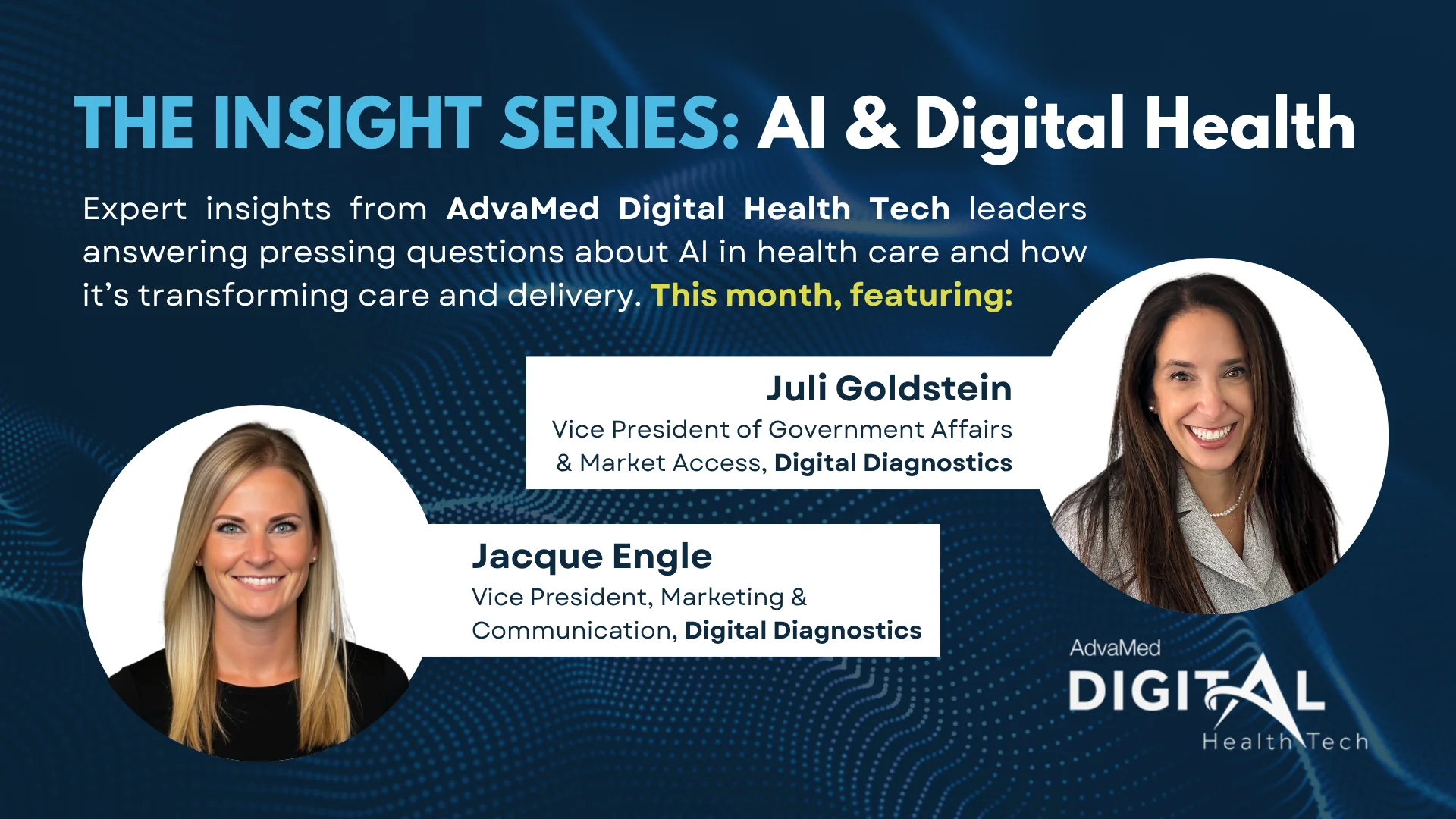
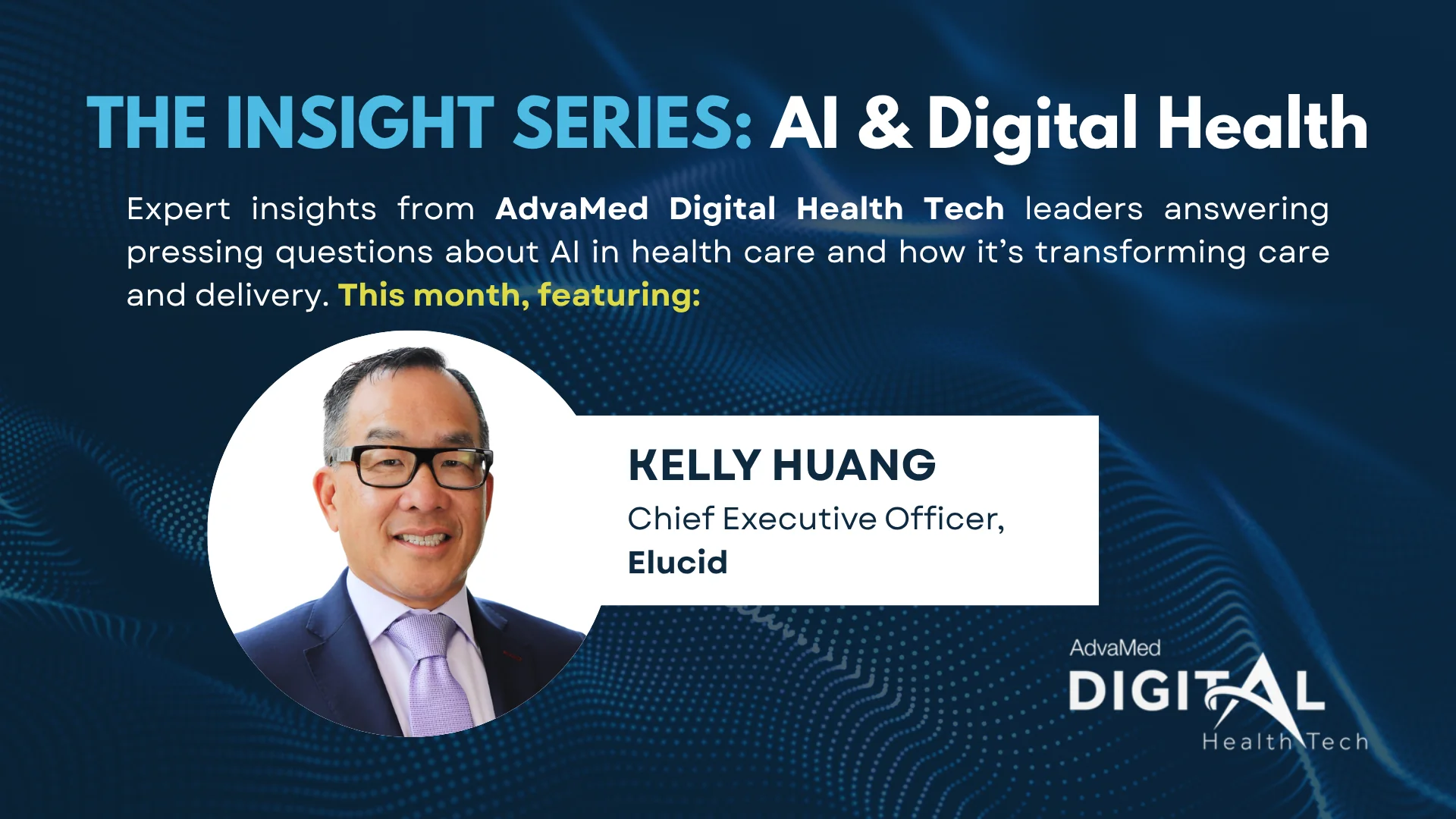
“The Insight Series: AI & Digital Health” features industry experts answering key questions to help inform policymakers and the public about how AI is shaping the future of care delivery. Our latest edition features Jacque Engle, Vice President of Marketing & Communication and Juli Goldstein, Vice President of Government Affairs & Market Access at Digital Diagnostics.

AdvaMed: How is artificial intelligence changing health care today, and what should patients know about it?

Jacque Engle: AI is no longer a future promise in health care. It is here and already changing lives. Digital Diagnostics™ is the clearest example of that reality. LumineticsCore® is the first fully autonomous AI diagnostic system cleared by the FDA-in any specialty of medicine. The system is designed to detect diabetic retinopathy, a common complication of diabetes and a leading cause of blindness.

What makes this meaningful for patients is where and how it works. LumineticsCore brings high-quality diagnostic services to the point-of-care thereby meeting patients where they receive care, bridging the gap between specialty and primary care and delivering accessibility, affordability, and access to necessary care. A patient with diabetes can now walk into a primary care or family medicine visit and receive a retinal diagnosis for diabetic retinopathy on the spot, with no specialist appointment needed and no long wait. Perhaps even more impactful, a finding of diabetic retinal disease it more than just a complication from diabetes; it is an early warning sign of impending risk for stroke, kidney failure, and peripheral vascular disease. Detecting diabetic retinal disease in the frontline settings of care, health care providers can make therapeutic changes that prevent acute complications from diabetes. As a whole, that is a fundamental shift in how care is delivered.

Patients should know that FDA authorized AI tools used in their care have gone through rigorous clinical validation and regulatory review. LumineticsCore is not a prototype or a research experiment. It received FDA clearance in 2018 and was one of the first systems to receive breakthrough device designation following the signing of the 21st Century Cures Act, marking a milestone in the integration of AI into medicine as a whole.

AdvaMed: What are the biggest benefits AI brings to patient care today — and what’s just hype?

Juli Goldstein: The real benefits are tangible and measurable. In our pivotal clinical trial, LumineticsCore avoided 91% of unnecessary specialty visits by providing a diagnostic result at the point-of-care showing patients as negative for more than mild diabetic retinopathy. That means fewer burdensome referrals, faster answers related to possible health complications, and a more efficient use of the health care system for patients who do not need specialist follow-up.

The access dimension is equally real. Every year, over 60,000 people go blind from diabetic retinopathy, a condition that is almost entirely preventable if caught early. Yet as few as 15% of people living with diabetes receive the annual eye exam they need. AI can close that gap at scale in a way that simply adding more specialists cannot.

What is hype? The idea that AI can broadly transform care without the hard work of clinical validation, regulatory clearance, workflow integration, and reimbursement infrastructure. Sustainable reimbursement is key to scaling adoption and thereby realizing the potential benefits of medical AI to better health outcomes for all. At Digital Diagnostics, we have pursued all of those pieces deliberately, including achieving industry firsts such as the autonomous AI CPT® code in the medical section of the CPT editorial code book (CPT Code 92229) and attainment for related quality measures that can make reimbursement possible and the technology self-sustaining in clinical practice.

AdvaMed: Should patients be worried that AI tools used in their care are replacing their clinicians?

Jacque Engle: No, not when there is FDA clearance and oversight, and LumineticsCore is a good illustration of why. Clearance under the FDA requires rigorous safety validation and requires ongoing monitoring, oversight, and extensive documentation. The AI-driven system performs the interpretation and delivers a diagnostic report at the point-of-care without the requirement for a remote specialist overread, but that is not the same as replacing the clinician relationship. The clinician still needs to order the exam, educate the patient on the findings from the exam, and use their clinical acumen to make treatment plans and referrals for follow up. It means that a specific, well-defined interpretation task can be performed reliably at the point of care, thereby strengthening the patient – clinician relationship.

LumineticsCore enhances the clinical team. This AI technology has improved satisfaction for both patients and the clinical team by providing clinicians with real-time data to manage diabetes care and patient relationships more effectively. When a patient tests positive for diabetic retinopathy, that result immediately prompts a timely, actionable referral to a specialist, reducing time-to-follow-up from 60 days with a remote reading network to just 5 days with LumineticsCore. Moreover, since a finding of diabetic retinal disease can be a signal of impending risk of cardiovascular and other complications, there have been significant anecdotal stories from providers who have used the results to improve diabetes management together with patients.

AI tools also carry an ethical obligation to work without bias. LumineticsCore has been trained and validated to mitigate bias and ensure the system works equally well for all people, regardless of sex, race, or ethnicity. That commitment to fairness is part of what makes responsible AI a complement to, not a replacement for, human-centered care.

AdvaMed: What does the future of AI look like in health care?

Juli Goldstein: We are at the beginning of a significant expansion. Ophthalmology led the way, and the lessons learned with LumineticsCore are now paving a path for AI diagnostics across many more conditions. AI will move beyond diabetic retinopathy to layering on more diagnoses, with algorithms likely to help diagnose age-related macular degeneration and glaucoma, and a single AI-enabled platform with the capability to potentially diagnose all of these conditions through eye imaging, which holds promise for non-invasive imaging and lowering cost of care.

More broadly, the future will see autonomous AI move into areas of medicine where access gaps are most severe, including chronic disease management, rural communities, and resource-limited settings globally. Autonomous AI increases health care system productivity, which could increase care access and reduce health disparities.

The regulatory and reimbursement infrastructure built around LumineticsCore, the first FDA-cleared device to autonomously diagnose anything in any field of medicine, has created a roadmap others can follow. That infrastructure is as important as the technology itself. As Dr. Michael Abramoff, founder of Digital Diagnostics, has noted: “You cannot buy a fully autonomous, self-driving car that is street-legal, but you can get diagnosed by a ‘street-legal,’ FDA-cleared, bioethically sound, reimbursable autonomous AI.” That is the future we are building toward, together with regulators, providers, payers, health systems, medical associations, and patients.

AdvaMed: If you could change one thing about how we adopt and utilize AI in health care, what would it be — and why?

Jacque Engle: We would accelerate the alignment between innovation, reimbursement, and health care access together, not sequentially.

Too often, a promising AI tool clears the FDA, then sits on the shelf while the reimbursement and coverage debates play out over years. During that time, patients, especially those in rural and vulnerable communities who stand to benefit most, go without. As adoption lags in spite of regulatory approval, the decisions about which operational, reimbursement, and trust-building barriers to prioritize may shape not only a single product’s future but the broader path of AI in medicine.

At Digital Diagnostics, we believe AI developers, policymakers, payers, health systems, associations, and clinicians need to build those pathways in parallel, not in sequence. The potential is too urgent. Digital Diagnostics is paving the way for rigorously validated autonomous and bias-free AI technology to become a new standard of care, contributing to democratizing health care and closing care gaps. But realizing that vision requires policy frameworks that move at the pace of the need, not just the pace of the technology.

AdvaMed: When the Social Security Act was written in 1965 no one could have imagined that a simple eye scan could one day detect the most costly and chronic conditions before symptoms even appear. How do we modernize Medicare and the broader regulatory environment to keep pace with innovations like cutting-edge diagnostics?

Juli Goldstein: LumineticsCore has proven that autonomous AI can deliver a reliable, accessible, FDA-cleared diagnosis at the point-of-care. That was the foundation. What we are building toward now is a platform approach rooted in systemic disease detected using non-invasive, lower cost ocular imaging, connecting patients and providers through a single, seamless delivery platform.

For patients, this means a routine, non-invasive eye exam could one day serve as an early warning system for some of the most serious and costly diseases we face.

Class (B2B/B2C)
B2B
Ingest Status
Rewritten
Dedupe hash
a80f2956b4bd59c7b634b21e17cc8335
Press Eligible
Yes
Press Eligible Reason
Healthcare AI industry interview discussing clinical validation, reimbursement, and adoption of diagnostic technology.
Source Name
AdvaMed News
Original Summary

<p>“The Insight Series: AI &#038; Digital Health” features industry experts answering key questions to help inform policymakers and the public about how AI is shaping the future of care delivery. Our latest edition features Jacque Engle, Vice President of Marketing &#038; Communication and Juli Goldstein, Vice President of Government Affairs &#038; Market Access at Digital Diagnostics.</p>
<p>The post <a href="https://www.advamed.org/2026/07/27/the-insight-series-ai-digital-health… Insight Series: AI &amp; Digital Health</a> appeared first on <a href="https://www.advamed.org">AdvaMed®</a>.</p>

Image URL
https://www.advamed.org/wp-content/uploads/2026/07/DHT-The-Insight-Series-Jacque-and-Julie-Digital-Diagnostics.png
Source Node
Content Hash (SHA-256, erste 32 hex)
d5495529b646a11d6f55959059df6121
Memory Chip Shortages: Implications for Medtech Innovation and Patient Care
Image File
Original HTML

Memory chips power a vast spectrum of medical technologies, from imaging and diagnostic systems to patient monitors, infusion pumps, ventilators, and surgical robotics. AdvaMed estimates that 75 percent to 80 percent of medtech products, excluding personal protective equipment and consumables, use memory chips.

As artificial intelligence, cloud computing, and data-center growth drive global demand, medtech companies are facing shortages, longer lead times, allocation limits, and sharp price increases. These disruptions can delay access to the technologies hospitals, clinicians, and patients rely on every day.

Why the shortage matters

Memory and storage prices have risen sharply, and industry forecasts suggest supply-demand imbalances may persist well into 2027.

Recent news coverage has underscored that these constraints are affecting sectors beyond consumer electronics and artificial intelligence infrastructure. An August 10 New York Times article identified medical technology among the industries facing memory chip shortages, noting that rising demand from data centers is increasing competition for the same components used in medical equipment.

Recent AdvaMed survey results show the breadth of the challenge across the medtech industry. Seventy-five percent of respondents reported memory chip-related constraints, 88 percent reported price increases, and 63 percent reported supplier allocation challenges or limited availability of specific components. Looking ahead, 63 percent said they are uncertain whether they will be able to procure sufficient memory chips, or products incorporating memory chips, to avoid supply chain disruptions, while 56 percent reported being very concerned about overall memory chip supply chain stability.

Companies are experiencing constraints across several categories of memory and storage technologies, including high-speed memory used to run device software and data processing, flash memory used for long-term storage, removable and embedded storage products, and mature components that remain important because many regulated medical technologies have long product lifecycles.

Unique challenges for medical technology

Medtech represents only a small share of global memory demand — around 1 to 2 percent — but its products are indispensable across hospitals, clinics, laboratories, and home-care settings. The sector is especially vulnerable because medical technologies often have longer lifecycles, depend on specific and specialized components, and operate within rigorous regulatory and quality frameworks.

Substituting components is rarely quick. To ensure patient safety and product effectiveness, changes may require validation, testing, documentation, quality review, and regulatory processes, so even available alternatives can take months or years to implement.

In contrast to many technology sectors that can rapidly transition to newer hardware platforms, medtech manufacturers often must support products already deployed throughout health care systems for many years. That makes the continuity of supply especially important.

Impact on manufacturing and innovation

Lead times for some key components have increased substantially, with companies reporting that certain components now take months longer to obtain than they did under normal supply conditions. Supply constraints can delay production, trigger unplanned redesigns, and complicate long-term product planning.

For medical technologies, redesign is not simply a procurement decision. Even when an alternative component is available, manufacturers may need to complete engineering assessments, supplier qualification, software or hardware validation, quality-system documentation, risk analysis, and regulatory assessments to determine whether the change affects safety or effectiveness. Depending on the nature of the modification, FDA review or authorization may be required before the redesigned product can be deployed to patients. These safeguards are necessary to protect patient safety and product performance, but they also mean supply disruptions can slow manufacturing timelines and the pace of innovation.

Patient care at risk

Memory chip constraints are beginning to affect technologies used in diagnosis, monitoring, and treatment. If chip shortages persist, they could disrupt continuity of care, complicate clinical decision-making, and affect patient outcomes, particularly in high-acuity or resource-constrained settings.

These disruptions could also increase pressure on hospitals and health systems already managing constrained resources. When critical technologies are delayed or harder to obtain, the effects can extend beyond manufacturers to clinicians, providers, and patients.

Why health care should be prioritized

Because memory components support products used to diagnose, monitor, and treat patients, disruptions can extend well beyond commercial impacts. Health care should be prioritized in memory allocation, product transitions, and supply planning.

Medtech’s memory needs are comparatively modest, so targeted supplier actions can help protect patient care while requiring only a limited share of overall capacity.

AdvaMed’s call to memory suppliers

AdvaMed encourages memory chip suppliers to recognize medtech as a priority segment and take steps to avoid disruptions. Key actions include:

- Prioritize health care during allocation decisions and periods of constrained supply.

- Provide earlier visibility into component transitions, product discontinuations, allocation decisions, and anticipated supply constraints.

- Engage directly with medtech manufacturers to account for the sector’s longer product lifecycles and regulatory, quality, and patient-care obligations.

- Incorporate health care-specific requirements into long-term supply planning and product transition decisions.

Although medtech represents only a small share of global memory chip demand, targeted supplier action can help protect patient access and strengthen long-term resilience across both the memory chip and medical technology sectors.

Abby Pratt is AdvaMed’s senior vice president for global strategy and analysis.

Hear Patient Stories

The Story of Medtech empowers patients to share their experiences with medical technology in an effort to educate, inspire, and create community.

Class (B2B/B2C)
B2B
Ingest Status
Rewritten
Dedupe hash
0f8ec8c39006e0b6caa55766ad00a17b
Press Eligible
Yes
Press Eligible Reason
Medtech industry analysis on memory-chip supply constraints and their effects on manufacturing, innovation, and patient care.
Source Name
AdvaMed News
Original Summary

<p>Global memory chip shortages are creating growing challenges for the medical technology sector. These disruptions could affect timely patient care and innovation, underscoring the need for collaboration with memory chip suppliers and federal partners to safeguard access to essential medical technologies.</p>
<p>The post <a href="https://www.advamed.org/2026/08/17/memory-chip-shortages-implications-f… Chip Shortages: Implications for Medtech Innovation and Patient Care</a> appeared first on <a href="https://www.advamed.org">AdvaMed®</a>.</p>

Image URL
https://www.advamed.org/wp-content/uploads/2026/08/Blog-Post-Photo-Sizing-1600-x-891-px-8-1024x570.png
Source Node
Content Hash (SHA-256, erste 32 hex)
248b57bdb7a16741ab605d1239fa6c17
Your First Look at The MedTech Conference Attendee List
Image File
Original HTML

Momentum for The MedTech Conference is exceptionally strong, with leaders and organizations from across the medtech ecosystem already confirmed. If you have not yet registered, now is the time to make plans to join us October 18–21 in Boston!

This year’s theme, “Medtech Moves Us,” reflects both the impact our industry has on patients and the progress we make when we come together. As the proud host of The MedTech Conference and a year-round convener of the industry, AdvaMed is bringing the medtech community together for high-value programming across 7+ stages and more than 20 focus areas.

I’m pleased to share the first 2026 Attendee List Preview, offering an early look at the remarkable range of medtech leaders already registered. The list includes CEOs, senior executives and professionals across business development, strategy, regulatory affairs, policy, investment and innovation. It represents leading global companies, emerging innovators, investors, service providers and organizations from across the medtech ecosystem.

The list is a strong reflection of the quality, diversity and momentum building behind this year’s conference. That momentum is also evident in our recently announced featured keynote discussion, “Pulse of Medtech: Where the Industry Is Going Next,” featuring Mick Farrell of Resmed, Mike Mahoney of Boston Scientific and Ashley McEvoy of Insulet, moderated by John Babitt of EY.

The strength of the conference is further reflected in the industry leaders supporting it, including Abbott, B.Braun Medical, BD, Boston Scientific, Dexcom, EY, GE HealthCare, Hologic, Johnson & Johnson MedTech, Medtronic, Olympus, Philips, PwC, Resmed, Siemens Healthineers, Smith+Nephew, Solventum, STERIS and Stryker.

At a time when direct connection and collaboration are more important than ever, I encourage you to register and join thousands of your peers and industry leaders in Boston.

Let’s make this our most valuable and successful gathering yet.

Scott Whitaker

Scott Whitaker, President and CEO, AdvaMed

Hear Patient Stories

The Story of Medtech empowers patients to share their experiences with medical technology in an effort to educate, inspire, and create community.

Class (B2B/B2C)
B2B
Ingest Status
Rewritten
Dedupe hash
c830e8fcb141c63b218d007b2e1dfc17
Press Eligible
Yes
Press Eligible Reason
Medtech industry conference preview for professionals and industry leaders.
Source Name
AdvaMed News
Original Summary

<p>I’m pleased to share the first 2026 Attendee List Preview, offering an early look at the remarkable range of medtech leaders already registered. The list includes CEOs, senior executives and professionals across business development, strategy, regulatory affairs, policy, investment and innovation. It represents leading global companies, emerging innovators, investors, service providers and organizations from across the medtech ecosystem. </p>
<p>The post <a href="https://www.advamed.org/2026/08/17/your-first-look-at-the-medtech-confe… First Look at The MedTech Conference Attendee List</a> appeared first on <a href="https://www.advamed.org">AdvaMed®</a>.</p>

Image URL
https://www.advamed.org/wp-content/uploads/2026/08/MTC26-Attendee-List-2.jpg
Source Node
Content Hash (SHA-256, erste 32 hex)
6a1b369a8ee9d9ae2bb9e6a6e2528bf5
The Insight Series: AI & Digital Health with Kelly Huang
Image File
Original HTML

AdvaMed’s Digital Health Tech division brings together leading companies developing AI-enabled solutions that are transforming health care, from diagnosis and treatment to clinical decision support and care beyond traditional settings.

“The Insight Series: AI & Digital Health” features industry experts answering key questions to help inform policymakers and the public about how AI is shaping the future of care delivery. This edition features Kelly Huang, CEO of Elucid, an AI medical technology company focused on providing physicians with a more precise, non-invasive view of atherosclerosis to drive patient-specific cardiovascular care.

AdvaMed: What are the biggest benefits AI brings to patient care today, and what’s just hype?

Kelly Huang: The biggest benefit is turning imaging we’re already collecting into information that physicians could never see before. At Elucid, a patient’s existing coronary CT angiogram can also be analyzed with our Plaque-IQ software to quantify the type and amount of plaque in both coronary and carotid vessels, and, with our BioIntegrated FFR-CT* [CT-derived Fractional Flow Reserve, or the derived pressure and blood flow drop across a narrowed section (stenosis) of a coronary artery] to help physicians understand the overall risk of the patient for heart attack and stroke based on detailed lesion-by-lesion information. Traditionally, plaque type at highest risk for rupture and FFR would be tedious to measure by invasive imaging and pressure wire catheterizations. With Elucid, both of those factors, which the human eye simply cannot extract from a scan, can be quantified from a single, non-invasive test. We see this play out in our own data: two patients can look identical on paper — same total plaque volume and similar degree of stenosis — turn out to have very different disease and overall risk once you look at the biology, because one patient’s plaque is lipid-rich and unstable, and the other’s is calcified and stable. Same data, different disease … understanding the disease through integration of anatomy, biology, and physiology can now lead to more personalized treatment. It is not just about risk calculation; it is turning that risk information into personalized therapy. That’s exactly the kind of progress AI should be leading.

When AI is a black-box that doesn’t change what a physician does next – this is when the result is not pragmatic nor transparent and inspectable by the physician. This becomes the “hype.” We built our platform so physicians can always see the work behind every step (the underlying vessel and lumen segmentation, the plaque composition, the FFR-CT based on integration of all biological and anatomical properties of plaques and vessels, the FFR-CT pullback curve, and the lesion tool) rather than trusting an output they cannot verify. If an AI output doesn’t lead to a different, better-informed clinical decision, it’s a novelty, not a benefit to patient care. Moreover, Elucid always supports the physician in making care decisions. We believe the future of AI replacing doctors is hype. We aim to support better clinical decision making by physicians and closing the gap between need for care and the ability to provide care.

AdvaMed: Your primary focus is cardiovascular diagnostics. How is artificial intelligence changing the way we diagnose serious heart conditions?

Kelly Huang: For years, coronary CT angiography (CCTA) answered one question: is there a blockage, and how severe is it? We think of that period in cardiovascular care as CCTA 1.0, anatomy alone: stenosis, plaque volume, vessel remodeling. The field then moved to what I’d call CCTA 2.0, adding AI-derived plaque or FFR-CT estimates, but largely as separate tools used at different stages of disease. We believe we’re headed toward CCTA 3.0: where anatomy, biology, and physiology are integrated together, at a lesion-by-lesion level, from a single noninvasive scan to enable truly personalized treatment decisions.

The concept of a “serious heart condition” is often oversimplified. In reality, heart disease exists along a broad clinical spectrum, beginning with asymptomatic early atherosclerosis and potentially progressing to a devastating myocardial infarction. Elucid’s platform is designed to support physicians across every stage of this continuum: from primary care physicians and preventive cardiologists to cardiovascular imaging specialists and interventional cardiologists.

By enabling a more thorough and informed assessment of each patient’s disease, Elucid can help clinicians deliver more personalized and comprehensive care. This may include optimizing medical therapy, providing reassurance when appropriate, planning targeted local interventions, or confidently deferring unnecessary procedures. Our Plaque-IQ software applies algorithms trained and validated against ground-truth histology, the gold standard for plaque analysis, so physicians can see the composition of the plaque biology: how much is calcified and stable versus lipid-rich and vulnerable to rupture. Our BioIntegrated FFR-CT* uses invasive FFR as ground truth and integrates anatomy and plaque biology, which can dramatically impact vasodilatory capacity, to predict the FFR values along each vessel. Because anatomy, biology, and physiology come from one internally consistent model of the same artery, our plaque analysis and FFR-CT are always concordant, instead of being estimated separately and reconciled after the fact. It lets physicians non-invasively diagnose disease biology and its functional consequences, not just anatomy.

AdvaMed: When we talk about AI creating efficiency in healthcare, we’re often talking about doing the same things faster. Why do you believe that faster wasn’t the point — and what does it actually take to build AI that changes what happens to a patient, not just how quickly it happens?

Kelly Huang: The main issue is that for the past many years, cardiovascular disease is the number one killer in the developed and the developing world. On the one hand, this highlights the importance of cardiovascular medicine as a field; on the other hand, it shows that we need better pathways, better assessments, and possibly more personalized assessments and solutions. Speed doesn’t help if the underlying decision is still built on the same incomplete information. Reading those same data faster wouldn’t have told either physician what they needed to know, and nearly half of all heart attacks happen in patients who were classified as low risk using traditional factors like age, cholesterol, and family history.

Building AI that changes outcomes means building it to surface something clinically new and actionable: information that wasn’t visible to the physician before, validated rigorously enough that they can trust it and act differently because of it. However, it is important to mention that alongside our focus on equipping physicians with tools and data that can improve patient outcomes and reduce cardiovascular events, we remain equally committed to workflow efficiency. Elucid’s platform is designed to reduce the burden on clinicians by automating repetitive tasks, streamlining workflow, and allowing physicians to spend more time on meaningful patient interaction and care decisions.

AdvaMed: Health tech has largely delivered on its efficiency promise: documentation is faster, queues are shorter, operations are leaner. So why aren’t outcomes keeping pace, and what do you believe the causes are?

Kelly Huang: Efficiency and outcomes are different problems with different solutions. Most digital health tools have optimized the workflow around a clinical decision (how quickly a note gets written, how fast a patient moves through a visit) without changing the substance of the decision itself. If a physician is still stratifying cardiovascular risk using population-level factors, getting them to that same conclusion faster doesn’t prevent the heart attack that occurs in a patient that those factors miss. Improving outcomes requires giving physicians better information to act on, not just faster access to the information they already had. Ultimately, we can’t out-efficiency a diagnostic blind spot. Outcomes will only move when the underlying clinical picture gets more precise, not just faster to produce.

AdvaMed: Healthcare organizations face an overwhelming number of AI solutions. What criteria should health systems use to determine which technologies are most likely to improve patient outcomes and deliver lasting value?

Kelly Huang: I’d point health systems to three things. First, is the technology providing accurate information? What is it validated against? Is it compared to a real ground truth? Second, is the data that it provides reproducible? We have shown excellent reproducibility on all data that Elucid’s platform provides. Third, is there regulatory clearance and, ideally, peer-reviewed and real-world evidence showing the technology changes clinical management, not just that the algorithm performs well in isolation? Fourth, is there transparency? Can physicians see how the AI arrived at its answer? A tool that shows its work, down to the underlying segmentation and plaque composition, earns trust in a way black-box output never will, and that trust is often what determines whether a technology gets used at the point of care or quietly ignored.

AdvaMed: Many healthcare leaders feel they have an AI strategy in place. What blind spots do you see most often, and what risks do organizations face if they underestimate how quickly AI capabilities are evolving?

Kelly Huang: The most common blind spot is treating “AI strategy” as one thing, when in reality the maturity and evidence base behind different AI tools varies enormously; a scheduling algorithm and a diagnostic algorithm trained on histopathology are not in the same category of risk or opportunity and shouldn’t be governed the same way.

Class (B2B/B2C)
B2B
Ingest Status
Rewritten
Dedupe hash
6b0036c311fa936ddd70c4e381745657
Press Eligible
Yes
Press Eligible Reason
Industry interview about AI-enabled cardiovascular diagnostic technology and its clinical applications.
Source Name
AdvaMed News
Original Summary

<p> “The Insight Series: AI &#038; Digital Health” features industry experts answering key questions to help inform policymakers and the public about how AI is shaping the future of care delivery. This edition features Kelly Huang, CEO of Elucid, an AI medical technology company focused on providing physicians with a more precise, non-invasive view of atherosclerosis to drive patient-specific cardiovascular care.  </p>
<p>The post <a href="https://www.advamed.org/2026/08/27/the-insight-series-ai-digital-health… Insight Series: AI &amp; Digital Health with Kelly Huang</a> appeared first on <a href="https://www.advamed.org">AdvaMed®</a>.</p>

Image URL
https://www.advamed.org/wp-content/uploads/2026/08/DHT-The-Insight-Series-Kelly-Huang-Elucid.png
Source Node
Content Hash (SHA-256, erste 32 hex)
2c2859d1cd3b1dd04375d9bcce988463