CloudFit Software Named to the Inc. 5000 for the Fourth Time
Original HTML

CloudFit Software Named to the Inc. 5000 for the Fourth Time

LYNCHBURG, Va. — August 2026 — CloudFit Software has once again been named to the Inc. 5000, marking the fourth time the company has earned a place among the fastest-growing private companies in America.

The annual Inc. 5000 recognizes privately held U.S. companies demonstrating significant revenue growth over a three-year period. CloudFit previously earned a place on the list in 2021, 2022, and 2023, making its return in 2026 another milestone in the company’s continued growth.

For CloudFit, that growth has been driven by a simple mission: run every mission-critical workload.

Since its founding in 2018, CloudFit has grown from a team of former Microsoft leaders into a trusted technology partner serving organizations across government, defense, and commercial industries. Today, CloudFit helps organizations securely operate and optimize their Microsoft environments through cloud engineering, cybersecurity, compliance, managed services, Microsoft licensing, application development, and AI.

“This recognition is really about our people and our customers,” said Carroll Moon, Founder and CEO of CloudFit Software. “Our growth has always come from focusing on the mission in front of us, taking extreme accountability for the outcome, and serving our customers well. Being recognized by Inc. for the fourth time is an honor, and we’re incredibly grateful to the CloudFit family and the customers who continue to trust us with their most important workloads.”

Growth Built on Service

CloudFit’s fourth Inc. 5000 recognition comes during a period of continued expansion for the company.

In 2025, CloudFit was named Microsoft’s Global Defense & Intelligence Partner of the Year, recognizing the company’s work supporting mission-critical environments across the defense and intelligence community.

At the same time, CloudFit has continued expanding its capabilities across the Microsoft ecosystem, helping organizations navigate everything from Microsoft 365 and Azure licensing to secure cloud operations, cybersecurity, CMMC compliance, application development, and managed services.

That growth has not changed the philosophy CloudFit was built around: serve first.

CloudFit’s S.E.R.V.E. values — Servant Leadership, Extreme Accountability, Results Driven, Velocity, and Empowerment — continue to guide how the company approaches its customers, its employees, and the communities it serves.

Looking Ahead

Being named to the Inc. 5000 for the fourth time represents how far CloudFit has come, but the mission ahead remains much bigger.

As organizations face growing security requirements, evolving technology, and increasing pressure to modernize, CloudFit will continue investing in the people, expertise, and technology required to securely run the workloads its customers depend on every day.

“We’re proud of the growth, but growth itself has never been the goal,” Moon said. “The goal is to serve well, deliver outcomes for our customers, and make a meaningful impact. If we continue doing those things, the growth follows.”

CloudFit extends its thanks to its employees, customers, partners, and community who have contributed to the company’s journey and made this recognition possible.

About CloudFit Software

CloudFit Software is a Microsoft-focused technology company headquartered in Lynchburg, Virginia, with a mission to run every mission-critical workload. Founded in 2018 by former Microsoft leaders, CloudFit brings more than 140 years of combined Microsoft experience to organizations across government, defense, and commercial industries. CloudFit provides Microsoft licensing, cloud engineering, cybersecurity, CMMC compliance, managed services, application development, AI, and end-user support designed around secure, reliable outcomes.

Learn more about CloudFit Software at cloudfitsoftware.com.

Media Contact

Emma Lombardi, Senior Marketing Manager

emmalombardi@cloudfitsoftware.com

Comments are closed

Class (B2B/B2C)
B2B
Ingest Status
Rewritten
Dedupe hash
958f201b1561815fd7ee5124db8237f5
Press Eligible
Yes
Press Eligible Reason
Manuelle Prüfung nötig. Risiko: MEDIUM. Flags: ['numbers']. Stichprobe: False
Source Name
CloudFit Software, LLC
Original Summary

<p>CloudFit&#160;Software Named to the Inc. 5000 for the Fourth Time&#160; LYNCHBURG, Va. — August 2026&#160;—&#160;CloudFit&#160;Software has once again been named to the Inc. 5000, marking the fourth time the company has earned a place among the fastest-growing private companies in America.&#160; The annual&#160;Inc. 5000&#160;recognizes privately held U.S. companies&#160;demonstrating&#160;significant revenue growth over a three-year period.&#160;CloudFit&#160;previously earned...</p>
<p>The post <a href="https://cloudfitsoftware.com/cloudfit-software-named-to-the-inc-5000-fo… Software Named to the Inc. 5000 for the Fourth Time </a> first appeared on <a href="https://cloudfitsoftware.com">CloudFit</a>.</p&gt;

Image URL
https://cloudfitsoftware.com/wp-content/uploads/2025/02/CloudFit_Logo.svg
Content Hash (SHA-256, erste 32 hex)
9e25437967fae81830c84533237f6294
Microsoft CSP Licensing: Why Buying Direct from Microsoft Doesn’t Always Make Sense
Original HTML

Microsoft CSP Licensing: Why Buying Direct from Microsoft Doesn’t Always Make Sense

Key Takeaways

- Buying Microsoft licenses directly from Microsoft isn’t automatically the least expensive option. A Microsoft Cloud Solution Provider (CSP) may be able to offer more competitive pricing.

- There are different types of Microsoft resellers. Understanding whether you’re working through a direct or indirect model can help explain differences in pricing, service and turnaround time.

- Buying direct can make sense when speed and self-service are your biggest priorities, but your team takes on more of the licensing administration.

- Two Microsoft CSPs selling the same licenses can provide very different experiences. Internal processes, account prioritization and the number of handoffs involved matter.

- The right CSP should do more than process transactions. It should help you understand, purchase and manage your Microsoft licensing over time.

Most supply chains work the same way: the more people involved, the more expensive the product gets.

Think about a grocery store. A farmer produces something. A manufacturer packages it. A distributor gets it where it needs to go. The grocery store puts it on the shelf. Every business along the way has employees to pay, facilities to run and margins to make. By the time the product reaches you, those costs have been passed along.

Microsoft licensing works almost in reverse.

It can actually be more expensive to buy licenses directly from Microsoft than to purchase them through a Microsoft Cloud Solution Provider (CSP). That’s because Microsoft has built an extensive partner network to help sell and manage its licenses, taking some of the administrative work off Microsoft’s plate while giving qualified partners room to offer customers competitive pricing.

For customers, that’s generally a good thing. But it also means that where you buy your Microsoft licenses matters more than you might think.

Why Can Buying Through a Microsoft CSP Cost Less?

With physical goods, every additional company in the supply chain adds another layer of cost. Software-as-a-service has different economics.

Microsoft doesn’t necessarily want to handle every quote, subscription change, agreement, renewal, billing question and licensing request for every customer itself. At Microsoft’s scale, that’s a tremendous amount of administrative work.

The partner ecosystem helps solve that problem.

Qualified Microsoft partners can receive licenses at pricing that gives them room to resell those licenses competitively. Microsoft reduces some of the effort involved in managing the customer relationship, the CSP builds a business around making that process efficient, and some of the available margin can be passed along to the customer through better pricing.

So unlike our grocery store example, adding the right company to the purchasing process doesn’t necessarily add another markup for the end customer. It can actually create savings.

That distinction becomes particularly important as an organization’s Microsoft footprint grows. A small difference in per-license pricing might not seem significant when you’re buying a handful of seats. Across hundreds of users, multiple products and recurring subscriptions, the economics start to look very different.

What’s the Difference Between Microsoft CSP Resellers?

There are multiple ways to purchase Microsoft licensing.

You can buy directly from Microsoft. You can work with a provider operating directly within Microsoft’s partner programs. Or you can work with an indirect reseller that purchases through another provider upstream.

An indirect reseller can still offer better pricing than purchasing directly from Microsoft. But every additional layer can affect how much room there is on pricing and, just as importantly, how quickly information and orders move.

If your provider has to send your request to another organization, which then has to process it through its Microsoft relationship, you’ve introduced another handoff.

That doesn’t automatically make an indirect reseller a bad choice. It simply means customers should understand what they’re buying into.

When evaluating a Microsoft CSP, don’t stop at asking whether the company sells Microsoft licenses. Find out how its relationship with Microsoft works and what that means for you.

When Does Buying Directly from Microsoft Make Sense?

There’s a clear advantage to Microsoft’s self-service model: Speed.

If you know exactly what you need, you can purchase it and get moving. There’s no waiting for someone to prepare a quote or process an order.

For a startup experimenting with infrastructure, a small business purchasing a handful of licenses or a team that simply needs something right now, that convenience can outweigh other considerations.

The trade-off is that your organization owns more of the administration.

Someone has to understand what you’re buying. Someone has to allocate licenses, manage subscriptions, keep track of agreements and monitor renewals. As products, users and agreements accumulate, somebody needs to maintain a clear picture of what the organization actually has and what it’s paying for.

Microsoft provides tools to help, but your team still has to use and understand them. That’s why the decision often comes down to what your organization values most. If you need something immediately and are comfortable managing licensing internally, buying direct may work perfectly well. If you’re spending significantly on Microsoft and want to reduce both cost and administrative work, a CSP becomes much more compelling.

Should You Consider a Microsoft Enterprise Agreement?

For larger organizations, a Microsoft Enterprise Agreement (EA) is another way to purchase Microsoft licensing at scale. EAs can make sense when licensing needs are significant and relatively predictable, but the longer-term structure may offer less flexibility than some organizations want as their needs change.

If you’re approaching an EA renewal, that’s a good time to compare your options rather than automatically renewing the same purchasing model. Look at what you’re actually using, what you’re committed to, and how your needs have changed. Then compare that against what purchasing through a Microsoft CSP could look like.

The goal isn’t to move away from an EA simply for the sake of moving. It’s to make sure the way you’re buying Microsoft still makes sense.

What Happens After You Get a Microsoft Licensing Quote?

Price gets most of the attention when organizations compare licensing providers. The operating model behind that price deserves some attention too.

Imagine working with a traditional large licensing provider.

You start with a salesperson. They understand what you need and provide a quote. You approve it, and your information moves to contracting. Contracting handles the Microsoft agreement. Another department handles invoicing. Once everything is complete, you’re introduced to an account manager or customer service representative.

Now, a few months later, you need additional licenses.

Your request may move from customer service back to sales, then through contracting or invoicing before the licenses are actually procured. Every one of those steps makes sense organizationally. Collectively, they create a lot of handoffs.

Handoffs take time. They can also mean repeating information, waiting for internal approvals and figuring out who actually owns your request. The problem can become more noticeable when you’re a smaller customer of a very large provider.

A CSP serving organizations with thousands or tens of thousands of seats has to prioritize its resources. If your company needs 300 licenses and another customer needs 10,000, the economics naturally favor the larger account.

Again, that’s not necessarily a sign of poor service. It’s a consequence of the provider’s business model. But if you’re the 300-seat organization waiting on an order, you probably care quite a bit.

Is the Biggest Microsoft CSP Always the Best Choice?

Scale can be valuable. Large providers may have extensive resources, established processes and enormous purchasing volume.

But those advantages don’t automatically translate into a better experience for every customer.

The better question is how the provider’s operating model fits your organization.

Who handles your account after the sale? How many people or departments does a simple licensing request need to move through? How quickly can the provider respond when you need to add users? Who keeps track of agreements and renewals? Can someone actually help you understand your licensing, or are they primarily there to process transactions?

Those questions become especially important for small and mid-sized organizations that may represent a relatively small account to a very large licensing provider.

You’re buying the same Microsoft products either way. The difference is everything that happens around them.

What Should a Microsoft CSP Actually Do for You?

Price matters. So does expertise.

Microsoft’s ecosystem includes Microsoft 365, Azure, security, identity, endpoint management, and multiple cloud environments. Licensing decisions don’t exist separately from the technology those licenses enable.

A good CSP should be able to explain what you’re buying, help you understand your agreements and give you useful guidance when your environment changes.

That doesn’t always mean recommending another product. Sometimes the right answer is a different license. Sometimes it’s a different purchasing structure. Sometimes you already have what you need.

That’s where an indirect reseller starts becoming much more useful than a place to process an order.

What Should You Ask Before Choosing a Microsoft Cloud Solution Provider?

There isn’t one universally correct way to buy Microsoft licenses.

For some organizations, Microsoft’s direct self-service model is exactly what they need.

Class (B2B/B2C)
B2B
Ingest Status
Rewritten
Dedupe hash
33a09ec76f9f7e1f5b089251084e918d
Press Eligible
Yes
Press Eligible Reason
Business-focused guidance on Microsoft licensing and CSP providers for organizations.
Source Name
CloudFit Software, LLC
Original Summary

<p>Microsoft CSP Licensing: Why Buying Direct from Microsoft Doesn&#8217;t Always Make Sense&#160; Key Takeaways&#160; Most supply chains work the same way: the more people involved, the more expensive the product gets.&#160; Think about&#160;a grocery store. A farmer produces something. A manufacturer packages it. A distributor gets it where it needs to go. The grocery store...</p>
<p>The post <a href="https://cloudfitsoftware.com/microsoft-csp-licensing/">Microsoft CSP Licensing: Why Buying Direct from Microsoft Doesn’t Always Make Sense</a> first appeared on <a href="https://cloudfitsoftware.com">CloudFit</a>.</p&gt;

Image URL
https://cloudfitsoftware.com/wp-content/uploads/2025/02/CloudFit_Logo.svg
Content Hash (SHA-256, erste 32 hex)
0bf29bc649a5d9ebb680e3565955c3bc
Sharetru and CloudFit Software Partner to Secure CUI Beyond the CMMC Enclave
Original HTML

Sharetru and CloudFit Software Partner to Secure CUI Beyond the CMMC Enclave

New integration gives defense contractors a controlled, auditable way to exchange CUI with external partners without expanding access to their internal environment.

Lynchburg, VA, October 13, 2026 – Sharetru and CloudFit Software today announced a strategic partnership that introduces a new approach to secure CUI exchange for the Defense Industrial Base, combining CloudFit’s fully managed easyCMMC enclave with Sharetru’s FedRAMP Moderate authorized managed file transfer capabilities.

CMMC enclaves provide defense contractors with a controlled environment for working with CUI. But CUI rarely stays inside one organization. It must move between primes, subcontractors, suppliers, consultants, and government customers, creating additional risk each time information crosses the organizational boundary.

The CloudFit and Sharetru integration is designed specifically for that point of exposure.

Rather than provisioning external users into the organization’s Microsoft environment, easyCMMC remains the protected internal workspace while Sharetru provides a dedicated path for CUI moving in and out. External partners authenticate through Sharetru, keeping outside identities out of the organization’s directory and eliminating the need for tenant accounts or guest licensing.

“Protecting CUI inside a secure environment is only part of the equation. Our customers also need a secure, practical way to share that information with the partners they work with every day,” said Carroll Moon, CEO of CloudFit Software. “By bringing CloudFit and Sharetru together, we’re helping organizations maintain control and visibility as CUI moves beyond the enclave, without unnecessarily extending access to their internal environment.”

The integration also gives organizations greater control and evidence around external file movement. Administrators explicitly grant access and sharing permissions, while file-level audit activity is forwarded into Sentinel DCE so security teams can monitor activity at the boundary alongside the rest of the environment.

Sharetru Federal operates within MIS Sciences Corporation’s GovPoint Cloud Services FedRAMP Moderate boundary, which includes NIST SP 800-53 Rev. 5 Moderate baseline controls, 3PAO validation, continuous monitoring, and annual assessment. CloudFit brings deep Microsoft expertise to easyCMMC, with more than 140 combined years spent working at Microsoft across its leadership team, and was named Microsoft’s 2025 Partner of the Year for Defense and Intelligence.

“Sharing CUI with outside partners is a daily reality for defense contractors, and it shouldn’t force a choice between security and usability. Together with CloudFit, we’re making secure external exchange of CUI practical, so organizations keep full control over their data without adding administrative burden for their teams,” said Brendon Ainsworth, CEO at Sharetru.

Together, CloudFit and Sharetru provide a purpose-built model for how CUI actually moves through the defense supply chain: a secure environment for working with CUI and a controlled gateway for moving it beyond that environment.

To learn more about the CloudFit and Sharetru integration, contact CloudFit or Sharetru to schedule a demonstration.

About CloudFit Software

CloudFit Software is a Microsoft cloud and cybersecurity company helping organizations securely adopt, manage, and optimize Microsoft technologies. Named Microsoft’s 2025 Global Defense & Intelligence Partner of the Year, CloudFit delivers managed cloud, cybersecurity, compliance, Microsoft licensing, and IT solutions to organizations with complex security and regulatory requirements. Its easyCMMC solution provides Defense Industrial Base organizations with a fully managed, purpose-built environment for handling CUI and meeting CMMC requirements. With deep Microsoft expertise across Commercial, GCC, GCC High, Azure, and Azure Government environments, CloudFit helps customers simplify secure operations while providing the hands-on support and guidance they need to succeed.

About Sharetru

Sharetru provides secure file sharing and managed file transfer for organizations that handle sensitive and regulated data, replacing email attachments, consumer file-sharing tools, and legacy FTP servers with a single governed platform. Every transfer — whether a person uploading a file to the web application, sharing a link, or a system moving files by SFTP, FTPS, or API — is authenticated, logged to a named user, and retained for audit visibility. Sharetru is SOC 2 Type II certified and HIPAA audited, and its Sharetru Federal offering is FedRAMP Moderate Certified. Founded in 2001 and headquartered in Las Vegas, Nevada, Sharetru is used by hundreds of organizations to move sensitive files with a documented, auditable record of who accessed them, when, and from where. For more information, visit www.sharetru.com.

Comments are closed

Class (B2B/B2C)
B2B
Ingest Status
Rewritten
Dedupe hash
1eb7d73ef1ccc5284cf0d830a1c78e2e
Press Eligible
Yes
Press Eligible Reason
Manuelle Prüfung nötig. Risiko: MEDIUM. Flags: ['numbers']. Stichprobe: False
Source Name
CloudFit Software, LLC
Original Summary

<p>Sharetru and CloudFit Software Partner to Secure CUI Beyond the CMMC Enclave New integration gives defense contractors a controlled, auditable way to exchange CUI with external partners without expanding access to their internal environment. Lynchburg, VA, October 13, 2026 – Sharetru and CloudFit Software today announced a strategic partnership that introduces a new approach to...</p>
<p>The post <a href="https://cloudfitsoftware.com/sharetru-and-cloudfit-partner-on-cmmc/">Sh… and CloudFit Software Partner to Secure CUI Beyond the CMMC Enclave</a> first appeared on <a href="https://cloudfitsoftware.com">CloudFit</a>.</p&gt;

Image URL
https://cloudfitsoftware.com/wp-content/uploads/2025/02/CloudFit_Logo.svg
Content Hash (SHA-256, erste 32 hex)
5b6fb70aab923a30cde5f3563b366edc
Telix to Present at the Morgan Stanley 24th Annual Global Healthcare Conference and H.C. Wainwright 28th Annual Global Investment Conference
Image File
Original HTML

Telix to Present at the Morgan Stanley 24th Annual Global Healthcare Conference and H.C. Wainwright 28th Annual Global Investment Conference

Melbourne (Australia) and Indianapolis, IN (United States) | September 9, 2026

Telix advises that Dr. Christian Behrenbruch, Managing Director and Group CEO and Kevin Richardson, CEO, Precision Medicine will present at the upcoming Morgan Stanley 24th Annual Global Healthcare Conference and at the H.C. Wainwright 28th Annual Global Investment Conference, both in New York, NY.

Presentation details:

Morgan Stanley 24th Annual Global Healthcare Conference

Date: September 14, 2026

Time: 9:15 a.m. EDT (11:15 p.m. AEST)

H.C. Wainwright 28th Annual Global Investment Conference

Date: September 15, 2026

Time: 10:30 a.m. EDT (12:30 a.m. AEST, Sep 16)

Both sessions will be webcast live, and accessible through Telix’s Investor Relations website.

For more information including how to register, please visit: https://ir.telixpharma.com/events-presentations.

Class (B2B/B2C)
B2B
Ingest Status
Rewritten
Dedupe hash
e1c155aec255d5f7436e05a1cfa9feee
Press Eligible
Yes
Press Eligible Reason
QA FAIL (need review): The TARGET introduces a factual claim not found in the SOURCE: that Telix is 'dual-headquartered' in Melbourne and Indianapolis. The SOURCE merely lists these cities as dateline locations; it does not state Telix's corporate headquarters structure. All other facts match.
Source Name
Telix Pharmaceuticals Limited
Original Summary

<p>Telix advises that Dr. Christian Behrenbruch, Managing Director and Group CEO and Kevin Richardson, CEO, Precision Medicine will present at the upcoming Morgan Stanley 24th Annual Global Healthcare Conference and at the H.C. Wainwright 28th Annual Global Investment Conference, both in New York, NY.</p>
<p>The post <a href="https://telixpharma.com/news-views/telix-to-present-at-the-morgan-stanl… to Present at the Morgan Stanley 24th Annual Global Healthcare Conference and H.C. Wainwright 28th Annual Global Investment Conference </a> appeared first on <a href="https://telixpharma.com">Telix Pharmaceuticals Limited</a>.</p>

Image URL
https://telixpharma.com/wp-content/uploads/2026/09/Conferences-1200x675.jpg
Content Hash (SHA-256, erste 32 hex)
80b237647b31d5bafdec1c6c950afb6f
Reliable access and availability of Ga-68 radiopharmaceuticals
Image File
Original HTML

Reliable access and availability of Ga-68 radiopharmaceuticals

Key thought leaders share their perspectives. This article has been reproduced with permission from Cardinal Health.

There when you need it: we asked five leaders across the nuclear medicine industry to share their specific experiences with one of the four key advantages of Gallium-68* (Ga-68) PET imaging: availability and reliable access on demand.

Industry experts

All five experts have had a positive experience due to:

Reliability of local production on a generator

Providers can obtain Ga-68 via compact and readily available generators, which makes the isotope locally accessible at hundreds of nuclear pharmacies across the country. As a result, providers can rely on dependable and convenient access when scheduling patients.

Receiving doses where and when needed

“The ease of scheduling is real: we can schedule our patients with the confidence that the product will be on-site on time,” Dr. Spier said. The key is having Ga-68 available locally instead of being shipped by air or ground from a major metropolitan area.

About half of Rio Grande Urology’s patients drive an hour or more to their facility, so reliability is very important. “It can be devastating if a patient drove 150 miles and the procedure had been cancelled because the radioisotope wasn’t available,” he added. “You would create a lot of discontent from the patient, who may never want to come back.”

Overcoming cyclotron constraints

Dr. Sohi noted that cyclotron-based products have the potential to create scheduling challenges, such as needing to order well in advance of the scan. But with Ga-68-based products produced on a local generator, American Molecular Imaging can order and often receive a dose within the same day.

“The local availability of Ga-68 enables us to fill gaps in our schedule, such as those caused by cancellations or patient add-ons,” he said. “It’s also more convenient for patients who need to schedule their scan at a particular time — such as in the morning or over the weekend — due to such things as work commitments or a lack of transport.”

Dr. Lavaf noted a similar experience at Desert Regional Medical Center. “Ga-68 is much easier to access than isotopes produced on a cyclotron alone, so we can more easily schedule patients any time,” he said. They are now able to open more time slots and start scanning patients in the morning as well as the afternoon.

Maximizing the use of PET/CT cameras

Sarasota Memorial Hospital has two PET/CT cameras that operate Monday through Friday. When it comes to scheduling Ga-68 scans, any challenges are caused more by the availability of the scanner than the isotope.

“We have not experienced any restrictions on when we can order Ga-68; we can typically get it when we need it, any time of day,” Kaplan said. “There has never been a shortage or challenge getting a dose when needed — unlike our past experience with other radioisotopes. The reliability is key.”

Robust access to Ga-68 supports the hospital’s operational goals as well. “At the end of the day, hospitals need to maximize the use of our cameras. The availability of Ga-68 helps ensure we can fill those time slots.”

The future is here

All five leaders reported having a positive experience with the availability and reliable access of Ga-68 PET imaging. With several FDA-approved imaging agents already in the market and numerous clinical trials underway investigating its use in the diagnosis of various types of disease, Ga-68 is making an impact. And the opportunity has just begun.

4 key advantages of Ga-68:

and reliable access on demand

in scheduling patients

to meet growing patient demand

Note

The views and opinions expressed in this piece are based on the physicians’ individual clinical experiences. However, results may vary for individual physicians and patients. This material is intended for informational purposes only and should not be construed as medical guidance.

*Gallium-68 (Ga-68) is a key radioisotope in nuclear medicine, largely employed in conjunction with specific ligands which target somatostatin receptors (SSTR) as a mechanism to accurately image neuroendocrine tumors (NET) as well as prostate specific membrane antigen (PSMA) in the imaging, diagnosis and staging of prostate cancer. Today, Ga-68 is the most widely used diagnostic isotope in ongoing theranostic clinical trials (source: clinicaltrials.gov analysis, data on file).

Safety statement: Gallium-68, when paired with a variety of targeting molecules (ligands), is a radioactive agent and should be handled by or under the control of qualified and licensed physicians with appropriate safety measures to help minimize radiation exposure. Any radiation-emitting product may increase the risk for cancer, especially in pediatric patients. Adhere to the respective dose recommendations for specific Ga-68 products and ensure safe handling to minimize the risk for excessive radiation exposure to either patients or healthcare workers.

© 2026 Cardinal Health. All Rights Reserved. Lit. No. 1NPS25-4052108-02 (02/2026)

Class (B2B/B2C)
B2B
Ingest Status
Rewritten
Dedupe hash
b22782cfd6b90998fc0c340dfe7346a8
Press Eligible
Yes
Press Eligible Reason
Manuelle Prüfung nötig. Risiko: HIGH. Flags: ['medical', 'numbers']. Stichprobe: False
Source Name
Telix Pharmaceuticals Limited
Original Summary

<p>There when you need it: we asked five leaders across the nuclear medicine industry to share their specific experiences with one of the four key advantages of Gallium-68* (Ga-68) PET imaging: availability and reliable access on demand.</p>
<p>The post <a href="https://telixpharma.com/news-views/reliable-access-and-availability-of-… access and availability of Ga-68 radiopharmaceuticals</a> appeared first on <a href="https://telixpharma.com">Telix Pharmaceuticals Limited</a>.</p>

Image URL
https://telixpharma.com/wp-content/uploads/2026/09/Frame-1241-1200x675.jpg
Content Hash (SHA-256, erste 32 hex)
f3da545688aa93c90ab0a1646ebecbec
FDA Approves Telix’s Brain Cancer Imaging Drug Pixclara
Image File
Original HTML

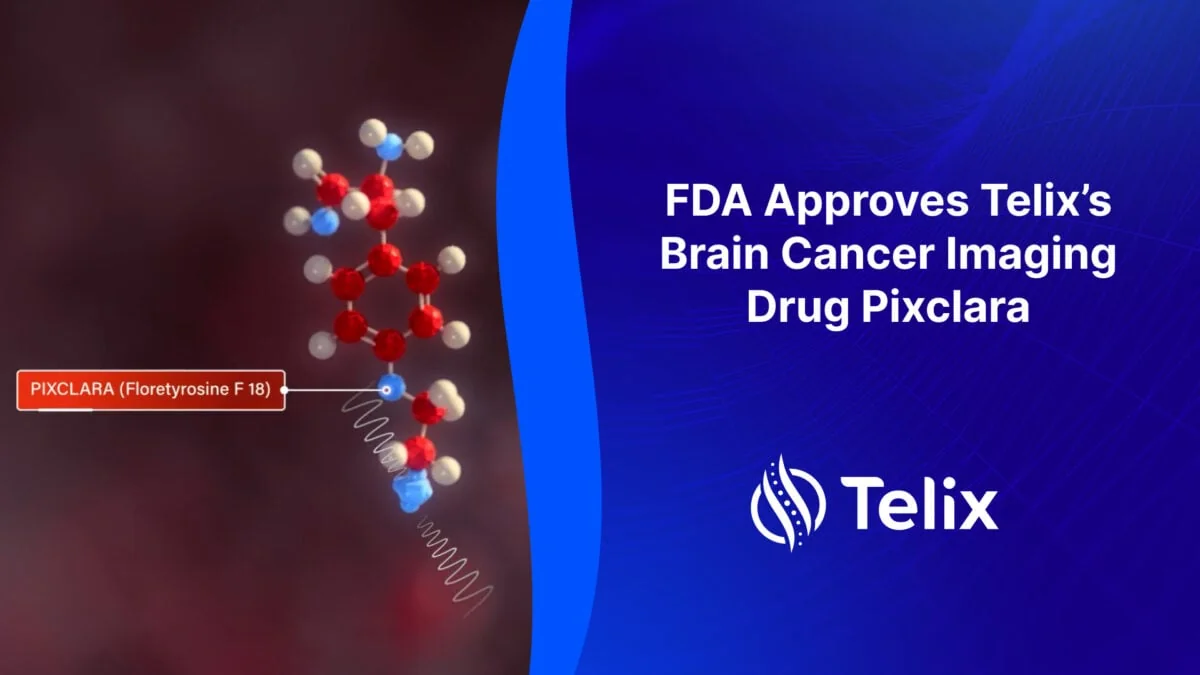
FDA Approves Telix’s Brain Cancer Imaging Drug Pixclara

Melbourne (Australia) and Indianapolis, IN (United States) | September 14, 2026

- Pixclara® is the first FDA-approved FET-PET imaging drug for glioma (brain cancer).

- Approval addresses a significant unmet need, helping physicians to differentiate recurrent or progressive glioma from treatment-related change in adults and pediatric patients.

- FET-PET imaging is recommended in international clinical practice guidelines, including NCCN Guidelines®.

- Pixclara expands Telix’s industry-leading Precision Medicine business and reinforces the Company’s leadership in diagnostics and targeted radiopharmaceutical therapies (together, “theranostics”).

Telix today announces that the United States (U.S.) Food and Drug Administration (FDA) has approved its New Drug Application (NDA) for Pixclara® (floretyrosine F 18 or 18F-FET), an amino acid positron emission tomography (PET) drug for imaging gliomas (brain cancer).

Pixclara is a radioactive diagnostic drug indicated for use with positron emission tomography (PET) to differentiate recurrent or progressive glioma from treatment-related change, in conjunction with other diagnostic evaluations, in adults and pediatric patients 1 month of age and older.

PET imaging with floretyrosine F 18 (FET-PET) is recommended in international clinical practice guidelines for the imaging of gliomas, including NCCN Guidelines®[1], but until now there has not been an FDA-approved product available in the U.S.

Gliomas are the most common form of central nervous system (CNS) cancer, accounting for approximately 30% of all brain and CNS tumors and 80% of all malignant brain tumors[2]. In the U.S., approximately 24,000 new glioma cases are diagnosed each year[3], representing a significant unmet addressable need.

Kevin Richardson, Chief Executive Officer, Telix Precision Medicine, said, “FDA approval of Pixclara will enable broad access in the U.S. to FET-PET imaging, which is already recognized in international clinical practice guidelines. As the first FDA-approved PET imaging drug for glioma, Pixclara will provide physicians in the U.S. with more certainty in their diagnoses and greater confidence in their treatment planning for patients.”

Kelly Sitkin, President and CEO, American Brain Tumor Association, said, “The approval of Pixclara will advance glioma care by enabling more precise monitoring, complementing the role of MRI. We welcome the FDA’s decision, which provides a pathway to access this technology in the U.S. and helps address a critical unmet need in brain cancer diagnostics.”

Patrick Wen, MD, E. Antonio Chiocca, MD, PhD, Family Endowed Chair in Neuro-Oncology at Mass General Brigham Cancer Institute, said, “Having an FDA-approved FET-PET product with high diagnostic accuracy will make a significant, positive difference to the management of patients with gliomas. This is a very positive step forward for brain cancer imaging and treatment planning.”

About Pixclara (floretyrosine F 18)

Pixclara® is an intravenous positron emission tomography (PET) imaging drug for the differentiation of recurrent or progressive glioma from treatment-related change, in conjunction with other diagnostic evaluations, in adults and pediatric patients 1 month of age and older. It comprises a small molecule targeting compound labeled with a diagnostic radioisotope, fluorine-18. After administration into the bloodstream, Pixclara targets membrane transport proteins known as L-type amino acid transporters 1 and 2 (LAT1 and LAT2). Once bound, energy emissions from the radioisotope can be detected by a PET scanner. Pixclara (TLX101-Px) is also the subject of a Phase 3 registrational study for potential indication expansion for the diagnosis of brain metastases[4].

Pixclara is the only FDA-approved radiopharmaceutical imaging drug for glioma (brain cancer).

INDICATIONS AND USAGE

PIXCLARA is indicated for use with positron emission tomography (PET) to differentiate recurrent or progressive glioma from treatment-related change, in conjunction with other diagnostic evaluations, in adults and pediatric patients 1 month of age and older.

IMPORTANT SAFETY INFORMATION

WARNINGS AND PRECAUTIONS

Risk for Misinterpretation

Image misinterpretation may occur with PIXCLARA PET. A negative image does not rule out the presence of recurrent or progressive glioma and a positive image does not confirm the presence of recurrent or progressive glioma. Equivocal findings may occur with PIXCLARA PET, including low-level or atypical uptake patterns, which may result in false positive or false negative interpretations.

Interpret PIXCLARA PET findings with caution and correlate results with available clinical evaluations, such as histopathology, cross-sectional imaging, and/or clinical history to support appropriate clinical decision-making.

Radiation Risks

PIXCLARA contributes to a patient’s overall long-term cumulative radiation exposure. Long-term cumulative radiation exposure is associated with an increased risk for cancer. Ensure safe drug handling to protect patients and health care providers from unintentional radiation exposure. Advise patients to hydrate before and after administration and to void frequently after administration.

ADVERSE REACTIONS

Clinical Trials Experience

Because clinical trials are conducted under widely varying conditions, adverse reaction rates observed in the clinical trials of a drug cannot be directly compared to rates in the clinical trials of another drug and may not reflect the rates observed in practice.

The safety of PIXCLARA was evaluated in 382 patients with gliomas. Among these 382 patients, 371 adult patients received at least one intravenous dose of PIXCLARA at a mean activity of 204 ± 18 MBq (5.5 ± 0.47 mCi). The remaining 11 pediatric patients received at least one intravenous dose of PIXCLARA at a mean activity of 155 ± 53.5 MBq (4.2 ± 1.4 mCi).

The mean age of the patients was 57 years (range: 5 years to 86 years). Sex was 59% male, 37% female, and 3% unreported. Distribution by race was 26% White, 6% Asian, 1% Black or African American, and 67% other or unreported. Distribution by ethnicity was 3% Hispanic/Latino, 96% non-Hispanic/Latino, and 1% unknown or unreported.

Adverse reactions that occurred in ≥0.5% of patients receiving PIXCLARA were headache (0.5%).

Adverse reactions that occurred in 0.5% of patients were nausea, injection site reaction, fatigue, and malaise.

Adverse Reactions in Pediatric Patients

Overall, the safety profile observed in pediatric patients from the clinical study was consistent with the safety profile in adult patients.

Please note that this information is not comprehensive.

Please see the Full Prescribing Information at https://telixpharma.com/wp-content/uploads/2026/09/USPI_PIXCLARA_Sep2026.pdf

You are encouraged to report suspected adverse reactions of prescription drugs to the FDA. Visit MedWatch at www.fda.gov/medwatch or call 1-800-FDA-1088. You may also report adverse reactions to Telix Pharmaceuticals (US) by calling 1-844-455-8638 or emailing pharmacovigilance@telixpharma.com.

[1] Galldiks et al. Lancet Oncol. 2025 (Joint guidelines from the European Association of Nuclear Medicine (EANM), European Association of Neuro-Oncology (EANO), Society of Nuclear Medicine and Molecular Imaging (SNMMI), Response Assessment in Neuro-Oncology (RANO), The European Society for Pediatric Oncology and The Response Assessment in Pediatric Neuro-Oncology for the characterization of recurrence in glioma patients); National Comprehensive Cancer Network® (NCCN) Clinical Practice Guidelines in Oncology (NCCN Guidelines®) for Central Nervous System Cancers V3.2026.

[2] Goodenberger et al. Cancer Genet. 2012.

[3] CBTRUS Statistical Report: Primary Brain and Other Central Nervous System Tumors Diagnosed in the United States in 2018-2022. Neuro-Oncology. 2025.

[4] Investigational New Drug (IND) application successfully cleared, with Study May Proceed notification received from FDA. Telix ASX disclosure August 20, 2026.

Class (B2B/B2C)
B2B
Ingest Status
Rewritten
Dedupe hash
1f3b03b8864152e78514efb036d28927
Press Eligible
Yes
Press Eligible Reason
Manuelle Prüfung nötig. Risiko: HIGH. Flags: ['medical', 'numbers']. Stichprobe: False
Source Name
Telix Pharmaceuticals Limited
Original Summary

<p>Telix today announces that the United States (U.S.) Food and Drug Administration (FDA) has approved its New Drug Application (NDA) for Pixclara® (floretyrosine F 18 or 18F-FET), an amino acid positron emission tomography (PET) drug for imaging gliomas (brain cancer).</p>
<p>The post <a href="https://telixpharma.com/news-views/fda-approves-telixs-brain-cancer-ima… Approves Telix’s Brain Cancer Imaging Drug Pixclara</a> appeared first on <a href="https://telixpharma.com">Telix Pharmaceuticals Limited</a>.</p>

Image URL
https://telixpharma.com/wp-content/uploads/2026/09/Pixclara-1200x675.jpg
Content Hash (SHA-256, erste 32 hex)
5ffc8c8972c0c2d8e0f536ebccec9ad5
“Let’s go, let’s get them”
Image File
Original HTML

“Let’s go, let’s get them”

During Prostate Cancer Awareness Month, Telix is speaking with the advocates and patients on the front line of fighting prostate cancer.

Michael Ramos served for 16 years as the elected District Attorney of San Bernardino County, California. In 2017, a year before he planned to retire, he was diagnosed with prostate cancer. We spoke with him about his diagnosis, the scan that changed the course of his care, and why he now brings a prosecutor’s energy to patient advocacy.

The diagnosis

A shock diagnosis

Michael Ramos spent his entire career as a public servant. He started as a probation officer, went to law school, and became a trial lawyer in the district attorney’s office, where he tried 125 jury trials driven by a passion for crime victims. In 2002, he was elected District Attorney of San Bernardino County, California, a position he held for 16 years, working with governors and legislators along the way.

He was also, by any measure, healthy.

“I used to do triathlons,” he says. “I worked out every day. I had a very stressful job. People would go to lunch, I’d go to the gym.”

Then in 2017, a year before he was going to retire, Michael was diagnosed with prostate cancer.

“It took me back. I remember going to my car and just sitting in my driver’s seat. The first person I called was my wife, and I said, here’s the news. And along with that, it was, okay, what now?”

Michael’s shock is shared by many of the men who receive the same news each year. Around one in eight men will be diagnosed with prostate cancer in their lifetime, and in 2026 an estimated 333,830 new cases will be diagnosed in the United States alone.1 It remains the second-leading cause of cancer death in American men, behind only lung cancer.1

Prostate cancer in the United States, 2026 estimates.

The decision

What now? Building a support team

Michael’s answer to that question came from two directions: his medical team and his family. Together with his urologist, his wife, his son and his daughter, he sat down and worked through the options, from surgery to remove the prostate to radiation and brachytherapy.

“The combination of both sitting down professionally with a medical doctor and then with the people that really care and love you, that’s how we made the decision,” he says. “It made it easier having that kind of a team.”

Michael began treatment, including around two years of hormone therapy. Then his PSA started climbing again.

PSA stands for prostate-specific antigen, a protein made by cells in the prostate gland. Small amounts of PSA can enter the bloodstream, where it can be measured with a simple blood test. Higher levels can be an early sign of a prostate problem, including cancer.

For men treated for prostate cancer, a rising PSA is a familiar and feared turn. Between 27% and 53% of patients who undergo surgery or radiation therapy will go on to experience biochemical recurrence.2 The critical question then becomes where the cancer is, and conventional imaging such as CT and bone scans can struggle to locate small sites of disease.3

The scan

Finding every cell

Years earlier, Michael had read a newspaper article about a doctor at Loma Linda University Medical Center who was, in his words, doing fantastic stuff with nuclear medicine. He kept the article. When his PSA began rising, he tracked down its subject, Dr. Frankis Almaguel, Director of Molecular Imaging and Therapeutics at Loma Linda University Cancer Center. They met at his lab two days later.

“He told me, we want to do a PSMA-PET scan so we can actually see where the cancer cells are,” Michael says.

Prostate-specific membrane antigen (PSMA) is a protein found at high levels on the surface of most prostate cancer cells, making it a powerful target for molecular imaging.4 By pairing a radioactive tracer with a molecule that binds to PSMA, positron emission tomography (PET) can show physicians where prostate cancer cells are in the body. In a landmark clinical trial, PSMA-PET imaging was significantly more accurate than conventional imaging (CT and bone scanning) in men with high-risk prostate cancer.3

Michael’s scan revealed two areas of disease. Rather than leaving him to wait for a report, his doctor stayed to walk him through the images on screen.

“The beautiful thing is he stayed to explain to me the results,” Michael says. “There were two places where it kind of lit up. I remember feeling like, okay, let’s go, let’s get them.”

For a career trial lawyer, the appeal of seeing the disease was empowering.

“The result was like a game plan. It was a great piece of, I’ll use my analogy again, evidence. Direct evidence, not circumstantial. Here it is. Here’s the plan.”

Armed with the scan, Michael’s care team, spanning nuclear medicine, radiation oncology, medical oncology and urology, mapped out targeted treatment for the sites of disease. After his first treatment two years ago, his PSA fell sharply.

Asked whether he would have reached the same plan, and the same confidence, without the scan, his answer is blunt.

“No. I’m not sure where I’d be. I’m sure they would have tried other treatments, but this was a game changer, because we could come up with a specific plan.”

At Telix, PSMA-PET imaging sits at the core of our prostate cancer portfolio, developed to help physicians see the location and extent of disease and support more informed treatment decisions at critical points in the patient journey. We are also advancing investigational PSMA-targeted radiopharmaceutical therapies, designed to deliver cancer-killing radiation directly to diseased cells while limiting the impact on surrounding healthy tissue. This theranostic approach, pairing precision diagnostics with targeted therapy directed at the same molecular target, is central to our work in prostate cancer and beyond.

Advocacy

Putting cancer in prison

Michael retired from the district attorney’s office, but not from public service. Having met many people living with cancer, he has found a new focus for the energy he once brought to the courtroom.

“My passion has changed,” he says. “I still care about crime victims, of course, but now, as a cancer survivor, it is my priority to do what I can as an advocate to help those people that have had this diagnosis of cancer.”

He follows the field closely, listening to doctors at conferences and watching the pace of progress. Even now, he talks about the disease the way a prosecutor talks about a case.

“Like I used to put criminals in prison for hurting victims, we’re going to put cancer in prison,” he says. “The technology is amazing. With companies like this and doctors like Dr. Almaguel, we will be able to not just keep us alive for another year or two.”

When asked what he would say to other men facing a prostate cancer diagnosis today, his answer is immediate.

“Don’t lose hope. Technology has changed so much since I was diagnosed. As I listen to doctors at various conferences, the future is bright. You’re going to live a long life. You will live a long life.” Michael Ramos

References

- American Cancer Society. Key Statistics for Prostate Cancer. cancer.org. Cancer Facts & Figures 2026.

- Artibani W, et al. Management of Biochemical Recurrence after Primary Curative Treatment for Prostate Cancer: A Review. Urol Int. 2018;100(3):251–262.

- Hofman MS, et al. Prostate-specific membrane antigen PET-CT in patients with high-risk prostate cancer before curative-intent surgery or radiotherapy (proPSMA): a prospective, randomised, multicentre study. Lancet. 2020;395(10231):1208–1216.

- Silver DA, et al. Prostate-specific membrane antigen expression in normal and malignant human tissues. Clin Cancer Res. 1997;3(1):81–85.

This article is for educational and disease-awareness purposes and does not constitute medical advice or product promotion.

Class (B2B/B2C)
B2C
Ingest Status
Rewritten
Dedupe hash
3bd4821b1779324f847a6731b7a5d472
Press Eligible
Yes
Press Eligible Reason
Manuelle Prüfung nötig. Risiko: HIGH. Flags: ['medical', 'numbers']. Stichprobe: False
Source Name
Telix Pharmaceuticals Limited
Original Summary

<p>Michael Ramos served for 16 years as the elected District Attorney of San Bernardino County, California. In 2017, a year before he planned to retire, he was diagnosed with prostate cancer. We spoke with him about his diagnosis, the scan that changed the course of his care, and why he now brings a prosecutor’s energy to patient advocacy.</p>
<p>The post <a href="https://telixpharma.com/news-views/lets-go-lets-get-them/">&#8220;Let&#… go, let&#8217;s get them&#8221;</a> appeared first on <a href="https://telixpharma.com">Telix Pharmaceuticals Limited</a>.</p>

Image URL
https://telixpharma.com/wp-content/uploads/2026/09/PCAM-5-1200x675.jpg
Content Hash (SHA-256, erste 32 hex)
a3e24f273d61d1c221711bfbb493e34d
Telix and ITM Join Forces to Create a Radiopharmaceutical Powerhouse
Image File
Original HTML

Telix and ITM Join Forces to Create a Radiopharmaceutical Powerhouse

Melbourne (Australia), Indianapolis, IN (United States) and Munich (Germany) | September 21, 2026

- Transformational merger reflects Telix’s long-term growth strategy as a vertically integrated radiopharmaceutical company with enhanced capabilities across development, isotope production and global manufacturing, underpinned by commercial excellence and the industry’s most extensive therapeutic pipeline.

- ITM is the world’s leading supplier of therapeutic radioisotopes, with broad capabilities spanning lutetium-177 (177Lu), actinium-225 (225Ac) and terbium-161 (161Tb) production.

- ITM is the only producer of globally scaled commercial-grade 177Lu and serves as a key supplier for both commercially available and future therapeutic radiopharmaceuticals.

- ITM’s commercial-scale and profitable isotope production business significantly contributes to cash generation while deepening Telix’s supply chain for isotopes required for its therapeutics pipeline.

- ITM’s complementary pipeline includes ITM-11 (177Lu-edotreotide), a novel, therapeutic candidate for the treatment of gastroenteropancreatic neuroendocrine tumors (GEP-NETs), which has successfully completed Phase 3 development, potentially accelerating entry into a validated commercial market for targeted radionuclide therapy (TRT).

- Upfront consideration of US$1.65 billion on a cash-free/debt-free basis. After adjustments, ITM Shareholders are expected to be paid approximately US$1.25 billion in Telix Shares at US$11.841 per share, released as Nasdaq ADRs after the respective escrow periods.

- Additional contingent consideration of up to US$700 million upon achievement of regulatory approvals and commercial sales milestones for ITM-11.

- The transaction is subject to Telix Shareholder approval and other customary closing conditions.

Investor conference call to be held today at 9:30 a.m. AEST Monday September 21, 2026. (7:30 p.m. EDT Sunday September 20, 2026 / 1:30 a.m. CEST Monday September 21, 2026).

Register at the following link: https://s1.c-conf.com/diamondpass/10057230-8w1zq8.html

Telix today announces it has signed a strategic agreement to lead a merger with ITM Isotope Technologies Munich SE (“ITM”), a global leader in radioisotope production and radiopharmaceutical development.

The merger will further strengthen Telix’s leadership as a vertically integrated radiopharmaceutical company with the capabilities required to develop, manufacture and deliver innovative treatments to patients globally. The combined organization will be uniquely positioned as a radiopharmaceutical industry leader, differentiated by a world-class scaled isotope manufacturing business with a validated global distribution network, a market-leading commercial precision medicine platform and the industry’s most extensive therapeutic radiopharmaceutical pipeline.

Founded in 2004, ITM is a private company with a leading commercial scale radioisotope manufacturing and global distribution network spanning over 65 countries. ITM is a key supplier of 177Lu and – with a compound annual growth rate (CAGR) of 40% from 2021 to 2025 – delivered annual revenue of US$273 million in 20252. This commercial momentum is underpinned by increasing global demand for TRT and radioisotopes for commercially approved products and assets under clinical development. The global nuclear medicine market is forecast to reach US$41 billion by 20343.

ITM’s late-stage novel pipeline is complementary to Telix and includes ITM-11 (177Lu-edotreotide), a differentiated somatostatin receptor (SSTR)-targeted treatment for GEP-NETs. ITM-11 has completed a successful Phase 3 trial (COMPETE, NCT03049189)4 and fully enrolled a second indication expansion Phase 3 study (COMPOSE, NCT04919226) with an interim analysis expected in H1 2027. If approved, ITM-11 has the potential to accelerate Telix’s entry into the commercial therapeutic market and expand its presence in neuroendocrine tumors, a commercially validated and clinically significant market for TRT.

The combined organization is expected to generate unaudited pro forma 2026 revenue and income exceeding US$1.3 billion5, based on management estimates. ITM’s radioisotope manufacturing business is profitable and generates cash flow. Continued growth from manufacturing, cost savings and further synergies and pipeline optimization are expected to support a positive EBITDA6 contribution in 20277 and onward. If approved by health regulators, the launch of ITM-11 is expected to drive further upside, with the potential to generate additional high-margin therapeutic revenue in the near term.

Telix Managing Director and Group CEO, Dr. Christian Behrenbruch, said, “This merger positions Telix at the forefront of the consolidation that is occurring as the industry matures. ITM is the leader in radioisotope production, with deep scientific expertise and a track record of value-adding innovation. We have enjoyed a close working relationship with ITM for many years and there is strong management alignment for the rationale behind this transaction. By combining our complementary strengths, we will create a company with commercial scale, world-leading supply and the most exciting theranostic drug portfolio in the sector. Importantly, this combination further expands our late-stage therapeutic pipeline with two completed Phase 3 trials and deepens radioisotope security, while bringing together the mission critical capabilities needed to deliver radiopharmaceutical treatments to patients around the world.”

ITM Chief Executive Officer, Dr. Andrew Cavey, added, “Joining two radiopharmaceutical pioneers creates a company with unmatched breadth and depth across the value chain, supported by deep expertise and talent. Our management teams have a track record of working together and a nuanced understanding of our respective commercial strengths and customer relationships. Together, we believe Telix and ITM will be uniquely positioned to capitalize on rapidly growing global demand for radiopharmaceuticals to the benefit of both Shareholders and patients.”

Deal Terms

Under the terms of the agreement and subject to Shareholder approval, Telix will acquire 100% of the shares in ITM for US$1.65 billion upfront on a cash-free/debt-free basis expected as follows:

- US$1.25 billion will be paid to the sellers in the form of 105.8 million Telix shares (priced at the 30-day trailing VWAP as of signing of US$11.841) and released to the sellers as Nasdaq-listed ADRs at the end of their respective escrow periods;

- US$302 million of net debt will be assumed by Telix at closing; and

- US$96 million of management equity rollover and transaction expenses payable by the sellers8; and in each case subject to closing adjustments.

Additional contingent consideration of up to US$700 million will become payable upon the achievement of specified regulatory approvals and sales milestones for ITM-11 as set out below:

- Up to US$250 million upon U.S. Food and Drug Administration (FDA) approval of ITM-11 across three different indications:

- US$100 million upon FDA approval for expected first indication in G1-G2 GEP-NETs no later than December 31, 2027;

- US$100 million upon FDA approval for G2-G3 GEP-NETs indication no later than December 31, 2030; and

- US$50 million upon FDA approval for Lung NETs indication no later than December 31, 2031; and

- Up to US$450 million based on ITM-11 net global sales in FY 2030 in excess of US$150 million.

All milestone consideration will be payable in cash or Shares9 at Telix’s election10. Consideration paid to ITM Shareholders at closing is subject to financial adjustments at closing, indemnity holdbacks, and escrow (lockup) restrictions on the Shares issued at closing of up to 15 months which may be waived in limited part to allow the sellers to pay their tax and transaction expense liabilities.

Upon completion of the transaction, Telix Shareholders will own approximately 76.3% and ITM Shareholders will own approximately 23.7% of Telix shares on issue. The transaction has been approved by Telix’s Board of Directors and, as of signing, Shareholders holding over 90%11 of ITM’s Shares. The transaction is expected to close by the end of FY 2026 subject to Telix Shareholder approval as required under the ASX Listing Rules, regulatory approvals, and other customary closing conditions.

Refer to the Investor Presentation lodged today with the ASX for further information on the transaction.

A Notice of Meeting will be sent to Telix Shareholders for an extraordinary general meeting expected to be held in November 2026.

- Based on the 30-day trailing VWAP on the ASX prior to signing of A$16.65, converted at an AUD/USD exchange rate of 0.71. ↩︎

- ITM audited financial statements (2025). ↩︎

- MEDraysintell Current Landscape of the Nuclear Medicine Market, 2025 edition. ↩︎

- Walter T, et al. The Lancet, July 2, 2026. ↩︎

- Refer to slide 20 of the Investor Presentation released by Telix to the ASX in conjunction with this announcement. ↩︎

- Earnings before interest, tax, depreciation and amortization. ↩︎

- Subject to the realization of targeted synergies and commercial timing assumptions. Excludes one-off implementation costs. ↩︎

- Sellers may allocate and sell some of the Telix Shares deducted from closing consideration to settle a portion of these transaction expenses. ↩︎

- Priced and settled at the 30-day trailing VWAP prior to milestone achievement and converted to Nasdaq ADRs. ↩︎

- Telix will seek Shareholder approval for the issue of Shares for the milestone payments based on Telix share price at signing. ↩︎

- Remaining ITM shareholders expected to sign Joinder Agreements to the Share Purchase Agreement prior to closing. ↩︎

Class (B2B/B2C)
B2B
Ingest Status
Rewritten
Dedupe hash
bb712283b5e4ac4a855ab7374d9f4555
Press Eligible
Yes
Press Eligible Reason
Manuelle Prüfung nötig. Risiko: HIGH. Flags: ['finance', 'medical']. Stichprobe: False
Source Name
Telix Pharmaceuticals Limited
Original Summary

<p>Telix today announces it has signed a strategic agreement to combine with ITM Isotope Technologies Munich SE (“ITM”), a global leader in radioisotope production and radiopharmaceutical development.</p>
<p>The post <a href="https://telixpharma.com/news-views/telix-and-itm-join-forces-to-create-… and ITM Join Forces to Create a Radiopharmaceutical Powerhouse</a> appeared first on <a href="https://telixpharma.com">Telix Pharmaceuticals Limited</a>.</p>

Image URL
https://telixpharma.com/wp-content/uploads/2026/09/ProstACT-Part-1-2-1200x675.png
Content Hash (SHA-256, erste 32 hex)
4f6b7038d3957205532a9a06635d3d2e
Telix Granted FDA Fast Track Designation for BiPASS Pre-Biopsy Prostate Cancer Imaging
Original HTML

Telix Granted FDA Fast Track Designation for BiPASS Pre-Biopsy Prostate Cancer Imaging

Melbourne (Australia) and Indianapolis, IN (United States) | September 30, 2026

- FDA Fast Track designation granted for Telix’s BiPASS® program, which is evaluating 68Ga-PSMA-PET imaging alongside MRI in the pre-biopsy prostate cancer setting.

- The designation recognizes the program’s potential to address an important unmet need by enabling an imaging-first approach to initial prostate cancer diagnosis.

- Fast Track facilitates more frequent engagement with the FDA and may enable expedited review of the planned NDA.

Telix today announced that the United States (U.S.) Food and Drug Administration (FDA) has granted Fast Track designation for the Company’s BiPASS® program.

BiPASS (Biopsy of the Prostate Avoidance Stratification Study[1]) is evaluating gallium-68 (68Ga) PSMA-PET imaging[2] in combination with MRI[3] for the detection of prostate cancer prior to biopsy.

Fast Track is a process designed to facilitate the development and expedite the review of drugs to treat serious conditions and fill an unmet medical need[4], potentially accelerating patient access if approved. More than three million prostate biopsies are performed globally each year[5], yet up to 75% produce a negative result[6]. Biopsy can be stressful and painful for patients and may provide no meaningful diagnostic benefit[7], highlighting the importance of improved diagnostic tools earlier in the patient journey.

Telix recently completed enrollment in the Phase 3 BiPASS study of its proprietary 68Ga-PSMA-PET agents, Illuccix® (kit for the preparation of gallium Ga68 gozetotide injection) and Gozellix® (kit for the preparation of gallium Ga68 gozetotide injection) for pre-biopsy prostate cancer diagnosis. The Company has positively engaged with the FDA on a new drug application (NDA) pathway and is planning its submission. The NDA pathway supports registration as a new product which, if approved, would broaden access to 68Ga-PSMA-PET imaging for a substantially larger patient population.

BiPASS builds on the clinical foundation established by the PRIMARY[8] and PRIMARY2[9] studies. These studies demonstrated that combining 68Ga-PSMA-PET imaging with MRI can significantly improve detection of clinically significant prostate cancer while reducing unnecessary biopsies by almost 50 percent. BiPASS is not intended to replace biopsy when it benefits the patient but rather aims to improve the diagnostic pathway by helping clinicians determine which patients would benefit from biopsy and where biopsy should be targeted.

Dr. David N. Cade, Group Chief Medical Officer at Telix, said, “Fast Track designation reflects the FDA’s recognition of the potential for BiPASS to address an important unmet need in the prostate cancer diagnostic pathway. We believe gallium-68 PSMA-PET, used alongside MRI, could help physicians make more informed decisions before biopsy, improve diagnostic confidence and potentially reduce unnecessary invasive procedures for patients. This designation supports continued close engagement with the FDA as we advance BiPASS toward an NDA submission.”

Illuccix and Gozellix are approved for PET imaging of PSMA-positive lesions in patients with prostate cancer with suspected metastasis who are candidates for initial definitive therapy, and in patients with suspected recurrence based on elevated serum prostate-specific antigen (PSA) level. Illuccix is also approved for the selection of patients indicated for PSMA-directed therapy. The use of Illuccix and Gozellix in the pre-biopsy setting remains investigational and has not been approved by the FDA or any other regulatory authority.

About Illuccix® (kit for the preparation of gallium Ga 68 gozetotide injection)

Illuccix, after radiolabeling with 68Ga, is indicated for PET scanning of PSMA positive lesions in men with prostate cancer who have suspected metastasis and are candidates for initial definitive therapy, those with suspected recurrence based on elevated serum prostate-specific antigen (PSA) level, and for selection of patients who are indicated for PSMA-directed therapy as described in the prescribing information of the therapeutic products.

IMPORTANT SAFETY INFORMATION

WARNINGS AND PRECAUTIONS

Risk for Misinterpretation

Image interpretation errors can occur with Illuccix PET. A negative image does not rule out the presence of prostate cancer, and a positive image does not confirm the presence of prostate cancer. Gallium Ga 68 gozetotide uptake is not specific for prostate cancer and may occur with other types of cancer as well as non-malignant processes such as Paget’s disease, fibrous dysplasia, and osteophytosis. Clinical correlation, which may include histopathological evaluation of the suspected prostate cancer site, is recommended.

Imaging Prior to Initial Definitive or Suspected Recurrence Therapy

The performance of Illuccix for imaging of biochemically recurrent prostate cancer seems to be affected by serum PSA levels and by site of disease. The performance of Illuccix for imaging of metastatic pelvic lymph nodes prior to initial definitive therapy seems to be affected by Gleason score.

Radiation Risks

Gallium Ga 68 gozetotide contributes to a patient’s overall long-term cumulative radiation exposure. Long-term cumulative radiation exposure is associated with an increased risk for cancer. Ensure safe handling to minimize radiation exposure to the patient and healthcare providers. Advise patients to hydrate before and after administration and to void frequently after administration.

ADVERSE REACTIONS

The safety of gallium Ga 68 gozetotide was evaluated in 960 patients in the PSMA-PreRP and PSMA-BCR studies, each receiving one dose of gallium Ga 68 gozetotide. The average injected activity was 188.7 ± 40.7 MBq (5.1 ± 1.1 mCi). The most commonly reported adverse reactions were nausea, diarrhea, and dizziness, occurring at a rate of 1%.

In the VISION study, 1003 patients received one dose of gallium Ga 68 gozetotide intravenously with the amount of radioactivity 167.1 ± 23.1 MBq (4.52 ± 0.62 mCi). Adverse reactions occurring at ≥0.5% in patients with metastatic prostate cancer who received gallium Ga 68 gozetotide injection in the clinical study were fatigue (1.2%), nausea (0.8%), constipation (0.5%), and vomiting (0.5%).

Adverse reactions occurring at a rate of 0.5% in the VISION study were diarrhea, dry mouth, injection site reactions, including injection site hematoma and injection site warmth and chills.

Injection site pain has been identified during post-approval use of ILLUCCIX.

DRUG INTERACTIONS

Androgen deprivation therapy and other therapies targeting the androgen pathway

Androgen deprivation therapy (ADT) and other therapies targeting the androgen pathway, such as androgen receptor antagonists, can result in changes in uptake of gallium Ga 68 gozetotide in prostate cancer. The effect of these therapies on performance of gallium Ga 68 gozetotide PET has not been established.

Please note that this information is not comprehensive.

Please see the Full Prescribing Information here.

About Gozellix® (kit for the preparation of gallium Ga 68 gozetotide injection)

Gozellix, after radiolabeling with 68Ga, is indicated for PET scanning of PSMA positive lesions in men with prostate cancer who have suspected metastasis and are candidates for initial definitive therapy, and those with suspected recurrence based on elevated serum prostate-specific antigen (PSA) level.

IMPORTANT SAFETY INFORMATION

WARNINGS AND PRECAUTIONS

Risk for Misinterpretation

Image interpretation errors can occur with GOZELLIX PET. A negative image does not rule out the presence of prostate cancer, and a positive image does not confirm the presence of prostate cancer. Gallium Ga-68 gozetotide uptake is not specific for prostate cancer and may occur with other types of cancer as well as non-malignant processes such as Paget’s disease, fibrous dysplasia, and osteophytosis. Clinical correlation, which may include histopathological evaluation of the suspected prostate cancer site, is recommended.

Imaging Prior to Initial Definitive or Suspected Recurrence Therapy

The performance of GOZELLIX for imaging of biochemically recurrent prostate cancer seems to be affected by serum PSA levels and by site of disease. The performance of GOZELLIX for imaging of metastatic pelvic lymph nodes prior to initial definitive therapy seems to be affected by Gleason score.

Radiation Risks

Gallium Ga-68 gozetotide contributes to a patient’s overall long-term cumulative radiation exposure. Long-term cumulative radiation exposure is associated with an increased risk for cancer. Ensure safe handling to minimize radiation exposure to the patient and healthcare providers. Advise patients to hydrate before and after administration and to void frequently after administration.

Hypersensitivity Reactions to Sulfites

Ascorbic Acid Stabilizer contains sodium metabisulfite, a sulfite that may cause allergic-type reactions including anaphylactic symptoms and life-threatening or less severe asthmatic episodes in certain susceptible people. The overall prevalence of sulfite sensitivity in the general population is unknown and probably low. Sulfite sensitivity is seen more frequently in asthmatic than in non-asthmatic people.

ADVERSE REACTIONS

The safety of gallium Ga-68 gozetotide was evaluated in 960 patients in the PSMA-PreRP and PSMABCR studies, each receiving one dose of gallium Ga-68 gozetotide. The average injected activity was 188.7 ± 40.7 MBq (5.1 ± 1.1 mCi). The most commonly reported adverse reactions were nausea, diarrhea, and dizziness, occurring at a rate of 1%.

Class (B2B/B2C)
B2B
Ingest Status
Rewritten
Dedupe hash
2a58c75d58af87c2bf0b437dd9d814b6
Press Eligible
Yes
Press Eligible Reason
Manuelle Prüfung nötig. Risiko: HIGH. Flags: ['medical', 'numbers']. Stichprobe: False
Source Name
Telix Pharmaceuticals Limited
Original Summary

<p>Telix today announced that the United States (U.S.) Food and Drug Administration (FDA) has granted Fast Track designation for the Company’s BiPASS® program, evaluating gallium-68 (68Ga) PSMA-PET imaging in combination with MRI for the detection of prostate cancer prior to biopsy.</p>
<p>The post <a href="https://telixpharma.com/news-views/telix-granted-fda-fast-track-designa… Granted FDA Fast Track Designation for BiPASS Pre-Biopsy Prostate Cancer Imaging</a> appeared first on <a href="https://telixpharma.com">Telix Pharmaceuticals Limited</a>.</p>

Image URL
https://telixpharma.com/default-meta-image.jpg
Content Hash (SHA-256, erste 32 hex)
2059fa8dc61477ea9fa459dd05ec8e5e
First Patients Dosed with Telix’s FDA-Approved Brain Cancer Imaging Drug Pixclara® (floretyrosine F 18)
Image File
Original HTML

First Patients Dosed with Telix’s FDA-Approved Brain Cancer Imaging Drug Pixclara® (floretyrosine F 18)

Melbourne (Australia) and Indianapolis, IN (United States) | October 6, 2026

- First doses of Pixclara administered in Cleveland (OH) and Indianapolis (IN) marking the start of U.S. commercial availability.

- Pixclara is the only FDA-approved radiopharmaceutical imaging drug for glioma (brain cancer).

- Pixclara addresses a significant unmet need helping physicians differentiate recurrent or progressive glioma from treatment-related change in adult and pediatric patients 1 month of age and older.

Telix today announces that the first patients in the United States (U.S.) have been dosed with Pixclara® (floretyrosine F 18 or 18F-FET), its FDA-approved, amino acid positron emission tomography (PET) drug for glioma (brain cancer) imaging.

The doses were administered at the Indiana University Health (IU Health) Neuroscience Center in Indianapolis and the University Hospitals, Cleveland Medical Center, Cleveland. The milestone marks the start of commercial availability for Pixclara, with Telix’s U.S. manufacturing and pharmacy distribution partner, PharmaLogic Holdings Corp. (PharmaLogic), supplying finished unit doses to the U.S. market.

Pixclara is a radioactive diagnostic drug indicated for use with PET to differentiate recurrent or progressive glioma from treatment-related change, in conjunction with other diagnostic evaluations, in adults and pediatric patients one month of age and older.

Na Tosha N. Gatson, MD, PhD, FAAN, director of the Center for Neuro-Oncology as part of the Neuroscience & Cancer Institutes with IU Health-Indiana University School of Medicine; tenured professor, Neurology, Neurosurgery, & Medicine, IUSM, and Founding President of the nonprofit, Living Oncology said, “Distinguishing recurrent or progressive gliomas from treatment-related change is one of the most difficult and consequential challenges in brain cancer. Having access to FDA-approved FET-PET[1] imaging with Pixclara will help clinicians make more timely and accurate decisions, minimizing uncertainty in their diagnoses and supporting more confident treatment planning for patients with gliomas.”

Clement Pillainayagam, MD, Specialist in Neurology and Neuro-oncology, University Hospitals Cleveland Medical Center, Seidman Cancer Center, Cleveland, added, “The approval and commercial availability of Pixclara represents an advance for patients with glioma in the U.S. FET-PET imaging is recommended in international clinical practice guidelines, including NCCN Guidelines[2], and having an FDA-approved, commercially available option can help translate this established clinical approach into broader access for patients, adding another tool to help in their care.”

Kevin Richardson, Chief Executive Officer, Telix Precision Medicine, continued, “The first commercial dose of Pixclara is an important milestone for a patient community that has seen limited advances in diagnosis and treatment for many years. We are proud to support patients with glioma and their care teams by bringing this important new precision diagnostic to the U.S., and we thank the clinicians, patients, advocates and broader neuro-oncology community who helped make this possible.”

About gliomas

Gliomas are the most common form of central nervous system (CNS) cancer, accounting for approximately 30% of all brain and CNS tumors and 80% of all malignant brain tumors[3]. In the U.S., approximately 24,000 new glioma cases are diagnosed each year[4], representing a significant unmet addressable need.

About Pixclara (floretyrosine F 18)

Pixclara® is an intravenous positron emission tomography (PET) imaging drug for the differentiation of recurrent or progressive glioma from treatment-related change, in conjunction with other diagnostic evaluations, in adults and pediatric patients 1 month of age and older. It comprises a small molecule targeting compound labeled with a diagnostic radioisotope, fluorine-18. After administration into the bloodstream, Pixclara targets membrane transport proteins known as L-type amino acid transporters 1 and 2 (LAT1 and LAT2). Once bound, energy emissions from the radioisotope can be detected by a PET scanner. Pixclara (TLX101-Px) is also the subject of a Phase 3 registrational study for potential indication expansion for the diagnosis of brain metastases[5].

Pixclara is the only FDA-approved radiopharmaceutical imaging drug for glioma (brain cancer).

INDICATIONS AND USAGE

PIXCLARA is indicated for use with positron emission tomography (PET) to differentiate recurrent or progressive glioma from treatment-related change, in conjunction with other diagnostic evaluations, in adults and pediatric patients 1 month of age and older.

IMPORTANT SAFETY INFORMATION

WARNINGS AND PRECAUTIONS

Risk for Misinterpretation

Image misinterpretation may occur with PIXCLARA PET. A negative image does not rule out the presence of recurrent or progressive glioma and a positive image does not confirm the presence of recurrent or progressive glioma. Equivocal findings may occur with PIXCLARA PET, including low-level or atypical uptake patterns, which may result in false positive or false negative interpretations.

Interpret PIXCLARA PET findings with caution and correlate results with available clinical evaluations, such as histopathology, cross-sectional imaging, and/or clinical history to support appropriate clinical decision-making.

Radiation Risks

PIXCLARA contributes to a patient’s overall long-term cumulative radiation exposure. Long-term cumulative radiation exposure is associated with an increased risk for cancer. Ensure safe drug handling to protect patients and health care providers from unintentional radiation exposure. Advise patients to hydrate before and after administration and to void frequently after administration.

ADVERSE REACTIONS

Clinical Trials Experience

Because clinical trials are conducted under widely varying conditions, adverse reaction rates observed in the clinical trials of a drug cannot be directly compared to rates in the clinical trials of another drug and may not reflect the rates observed in practice.

The safety of PIXCLARA was evaluated in 382 patients with gliomas. Among these 382 patients, 371 adult patients received at least one intravenous dose of PIXCLARA at a mean activity of 204 ± 18 MBq (5.5 ± 0.47 mCi). The remaining 11 pediatric patients received at least one intravenous dose of PIXCLARA at a mean activity of 155 ± 53.5 MBq (4.2 ± 1.4 mCi).

The mean age of the patients was 57 years (range: 5 years to 86 years). Sex was 59% male, 37% female, and 3% unreported. Distribution by race was 26% White, 6% Asian, 1% Black or African American, and 67% other or unreported. Distribution by ethnicity was 3% Hispanic/Latino, 96% non-Hispanic/Latino, and 1% unknown or unreported.

Adverse reactions that occurred in ≥0.5% of patients receiving PIXCLARA were headache (0.5%).

Adverse reactions that occurred in 0.5% of patients were nausea, injection site reaction, fatigue, and malaise.

Adverse Reactions in Pediatric Patients

Overall, the safety profile observed in pediatric patients from the clinical study was consistent with the safety profile in adult patients.

Please note that this information is not comprehensive.

Please see the Full Prescribing Information at https://telixpharma.com/wp-content/uploads/2026/09/USPI_PIXCLARA_Sep2026.pdf

You are encouraged to report suspected adverse reactions of prescription drugs to the FDA. Visit MedWatch at www.fda.gov/medwatch or call 1-800-FDA-1088. You may also report adverse reactions to Telix Pharmaceuticals (US) by calling 1-844-455-8638 or emailing pharmacovigilance@telixpharma.com.

[1] Imaging of floretyrosine F 18 with positron emission tomography.

[2] Galldiks et al. Lancet Oncol. 2025 (Joint guidelines from the European Association of Nuclear Medicine (EANM), European Association of Neuro-Oncology (EANO), Society of Nuclear Medicine and Molecular Imaging (SNMMI), Response Assessment in Neuro-Oncology (RANO), The European Society for Pediatric Oncology and The Response Assessment in Pediatric Neuro-Oncology for the characterization of recurrence in glioma patients); National Comprehensive Cancer Network® (NCCN) Clinical Practice Guidelines in Oncology (NCCN Guidelines®) for Central Nervous System Cancers V3.2026.

[3] Goodenberger et al. Cancer Genet. 2012.

[4] CBTRUS Statistical Report: Primary Brain and Other Central Nervous System Tumors Diagnosed in the United States in 2018-2022. Neuro-Oncology. 2025.

[5] Investigational New Drug (IND) application successfully cleared, with Study May Proceed notification received from FDA. Telix ASX disclosure August 20, 2026.

Class (B2B/B2C)
B2B
Ingest Status
Rewritten
Dedupe hash
541b735fb5cd3541586bd76589078b18
Press Eligible
Yes
Press Eligible Reason
Manuelle Prüfung nötig. Risiko: HIGH. Flags: ['medical']. Stichprobe: False
Source Name
Telix Pharmaceuticals Limited
Original Summary

<p>Telix today announces that the first patients in the United States (U.S.) have been dosed with Pixclara® (floretyrosine F 18 or 18F-FET), its FDA-approved, amino acid positron emission tomography (PET) drug for glioma (brain cancer) imaging.</p>
<p>The post <a href="https://telixpharma.com/news-views/first-patients-dosed-with-telixs-fda… Patients Dosed with Telix’s FDA-Approved Brain Cancer Imaging Drug Pixclara® (floretyrosine F 18)</a> appeared first on <a href="https://telixpharma.com">Telix Pharmaceuticals Limited</a>.</p>

Image URL
https://telixpharma.com/wp-content/uploads/2026/10/Pixclara-first-dose.png
Content Hash (SHA-256, erste 32 hex)
f3459ea277ebfe1e555c411dcc8a64ae