Island - Die EU muss sich fragen, was sie noch anzubieten hat
Image File
Original HTML

30.08.2026 – 17:00

Straubinger Tagblatt

Island - Die EU muss sich fragen, was sie noch anzubieten hat

Straubing (ots)

Für die EU ist das Abstimmungsergebnis eine Schlappe. Island wäre ein Gewinn gewesen: demokratisch stabil, wohlhabend, eng an den Binnenmarkt gebunden und strategisch wichtig im Nordatlantik und in der Arktis. Wenn ein solches Land selbst nach Jahren enger Zusammenarbeit keinen Mehrwert in einer Mitgliedschaft erkennt, muss die EU sich fragen, was sie eigentlich noch anzubieten hat.

Pressekontakt:

Straubinger Tagblatt

Ressort Politik/Wirtschaft/Vermischtes

Markus Peherstorfer

Telefon: 09421-940 4441

politik@straubinger-tagblatt.de

Original-Content von: Straubinger Tagblatt, übermittelt durch news aktuell

Class (B2B/B2C)
Ignore
Ingest Status
Rejected
Dedupe hash
aadd666fc1d8f2e2ce4c669f676ef31c
Press Eligible
No
Press Eligible Reason
Text too short (102 words. Min: 150)
Source Name
Island
Original Summary

Straubinger Tagblatt: Straubing (ots) - Für die EU ist das Abstimmungsergebnis eine Schlappe. Island wäre ein Gewinn gewesen: demokratisch stabil, wohlhabend, eng an den Binnenmarkt gebunden und strategisch wichtig im Nordatlantik und in der Arktis. Wenn ein solches ...

Image URL
https://cache.pressmailing.net/thumbnail/big/6104b7f9-a5ed-46c1-8144-e8f68ede60a1/logo
Rüstungsausgaben - Nicht mehr, sondern weniger Sicherheit
Image File
Original HTML

30.08.2026 – 16:26

Straubinger Tagblatt

Rüstungsausgaben - Nicht mehr, sondern weniger Sicherheit

Straubing (ots)

Mit dieser Bundesregierung und an der Spitze des Verteidigungsministeriums Boris Pistorius hat sich dieses Deutschland auf ein überstarkes und maßloses Wettrüsten eingelassen, das am Ende nicht mehr, sondern weniger Sicherheit für das Land bringt. Von unserer massiven Aufrüstung und der dahinter liegenden Rhetorik geht längst selber ein aggressives Zeichen in die Welt hinaus.

Pressekontakt:

Straubinger Tagblatt

Ressort Politik/Wirtschaft/Vermischtes

Markus Peherstorfer

Telefon: 09421-940 4441

politik@straubinger-tagblatt.de

Original-Content von: Straubinger Tagblatt, übermittelt durch news aktuell

Class (B2B/B2C)
Ignore
Ingest Status
Rejected
Dedupe hash
f5f363f12aaf55ae8a15c4117a475897
Press Eligible
No
Press Eligible Reason
Text too short (94 words. Min: 150)
Source Name
Rüstungsausgaben
Original Summary

Straubinger Tagblatt: Straubing (ots) - Mit dieser Bundesregierung und an der Spitze des Verteidigungsministeriums Boris Pistorius hat sich dieses Deutschland auf ein überstarkes und maßloses Wettrüsten eingelassen, das am Ende nicht mehr, sondern weniger Sicherheit ...

Image URL
https://cache.pressmailing.net/thumbnail/big/6104b7f9-a5ed-46c1-8144-e8f68ede60a1/logo
FR exklusiv - Jugendeinrichtungen beklagen rechte Übergriffe
Image File
Original HTML

30.08.2026 – 16:28

Frankfurter Rundschau

FR exklusiv - Jugendeinrichtungen beklagen rechte Übergriffe

Frankfurt (ots)

Jugendverbände, Jugendclubs und Jugendgruppen sind nach einem Bericht der Frankfurter Rundschau (Montagsausgabe, 31.8.2026) Angriffen und Bedrohungen aus der extrem rechten Szene ausgesetzt. Sie berichten von Einbrüchen in ihre Räume, demonstrativen "Hausbesuchen" durch rechtsextreme Personen, von Hass-Mails und körperlichen Übergriffen.

Das geht aus der "Bedrohungsstudie 2026" hervor, die vom Erziehungswissenschaftler Benno Hafeneger, der Bildungsexpertin Jana Sämann und den Referenten des Deutschen Bundesjugendrings (DBJR), Maximilian Lorenz und Lars Reisner, erarbeitet wurde. Sie erscheint in der Novemberausgabe der Fachzeitschrift "deutsche jugend" und liegt der Frankfurter Rundschau bereits vor.

Danach hat jede vierte Institution bereits wenigstens einen Vorfall erlebt, den sie als rechtsextremen Angriff oder Übergriff einstuft, wie die FR am Montag berichtet. An der Erhebung von Dezember 2025 bis April 2026 nahmen bundesweit 354 Jugendgruppen, -verbände und -ringe teil.

Pressekontakt:

Frankfurter Rundschau

Ressort Politik

Telefon: 069/2199-3222

Original-Content von: Frankfurter Rundschau, übermittelt durch news aktuell

Class (B2B/B2C)
B2C
Ingest Status
Rewritten
Dedupe hash
9999e73d1cb49dc5ef1f7c73bbcfc9ea
Press Eligible
Yes
Source Name
FR exklusiv
Original Summary

Frankfurter Rundschau: Frankfurt (ots) - Jugendverbände, Jugendclubs und Jugendgruppen sind nach einem Bericht der Frankfurter Rundschau (Montagsausgabe, 31.8.2026) Angriffen und Bedrohungen aus der extrem rechten Szene ausgesetzt. Sie berichten von Einbrüchen in ihre ...

Image URL
https://cache.pressmailing.net/thumbnail/big/4dba23b1-1582-473a-83ce-ac08be1c57d2/logo
Global Times: How Chinese NEVs gain ground in global markets, providing greener, smarter mobility
Original HTML

Global Times: How Chinese NEVs gain ground in global markets, providing greener, smarter mobility

NEWS PROVIDED BY

Global Times

Aug 30, 2026, 10:12 ET

SHARE THIS ARTICLE

BEIJING, Aug. 30, 2026 /PRNewswire/ -- This year, the 47th Bangkok International Motor Show was held at the IMPACT Arena, Exhibition and Convention Center. BYD's booth was packed, with crowds lining up to check out the vehicles on display. Increasingly, Chinese new-energy vehicles (NEVs) are winning over consumers around the world.

In Southeast Asia, consumers are willing to wait in long lines to buy popular Chinese NEV models. In Europe, five Chinese automakers sold a combined 138,000 vehicles across 31 countries in May, up 64 percent year-on-year. For the first time, Chinese automakers surpassed Japanese carmakers in monthly new vehicle registrations in Europe. In South America, Brazil has become the largest destination for China's NEV exports. In July, BYD's plant in Brazil rolled its 100,000th vehicle off the production line.

These developments illustrate how China's auto industry is embracing a new development pattern: strengthening domestic production cycle while promoting better interaction between domestic and international markets, with the two markets always reinforcing each other.

Data from the China Association of Automobile Manufacturers shows that China exported 977,300 and 7.098 million vehicles in 2013 and 2025, respectively, marking an increase of more than sixfold in 12 years. From 2021 to 2025, China's vehicle exports saw explosive growth, increasing by about 1 million units annually. And, in the first seven months of this year, China's vehicle exports reached 6.14 million units, surging 66.8 percent year-on-year.

The strong growth of NEVs has played a major role in propelling China to become the world's largest automobile exporter.

From 2020 to 2025, China's NEV exports rose from 69,000 units to 2.615 million units, an increase of more than 36-fold in five years. In June of this year, China's monthly automobile exports exceeded 1 million units for the first time, up 75.1 percent year-on-year. Of the total, NEV exports reached 523,000 units, up 160 percent year-on-year and accounting for more than 50 percent.

Racing into global markets

Chery, BYD and SAIC, among the earliest Chinese automakers to expand into overseas markets, have emerged as the frontrunners in the global push. Now, Geely, Chang'an and Great Wall Motor are accelerating globalization, expanding their overseas market footprints.

And, emerging electric vehicle makers including NIO, XPeng and Leapmotor are leveraging their strengths in smart technological innovation to make inroads into premium overseas markets.

Behind the surge in export volume is the significant leap in vehicle production quality. In terms of product mix, the vehicles exported are primarily middle to high-end car models that have been tested in China's highly competitive domestic market.

On July 16, XPeng held the global launch of its MONA L03 in Munich, Germany, with the model launched simultaneously in China and Europe. And, in terms of retail prices, they generally sell at higher prices overseas than in the domestic market. BYD's ATTO 3, known as the Yuan PLUS in China, sells at around 120,000 yuan in China, while its price in Europe exceeds 300,000 yuan.

Regarding brand reputation, Chinese NEVs have become synonymous with premium quality and high-end products in the global market. As Chinese NEVs gain ground abroad, they are helping reshape the global brand value of "Made in China."

Over these years, China's NEV expansion overseas has undergone three major shifts: from vehicle exports to the globalization of the industrial chain, and then to the globalization of the broader ecosystem. 

For example, SAIC has set up localized R&D, operations and after-sales teams overseas. "We adhere to the principle of 'global thinking, local action,' developing tailored strategies for different markets based on local regulations, road conditions and consumer preferences," a SAIC executive said.

BYD has established an extensive presence in Brazil, covering R&D, production, sales, services and supply chains. Its operations include manufacturing of electric bus and truck chassis, as well as integrated production capabilities such as lithium iron phosphate battery material processing.

In markets like Europe and the US, many multinational companies are proactively adopting and adapting Chinese technologies. Stellantis has partnered with Leapmotor on electric powertrains. In July, CATL and Octopus Energy, the UK's largest energy supplier, announced the establishment of a joint venture to introduce China's Qiji battery-swapping technology to Europe and jointly develop battery-swapping hubs there.

Overcoming challenges

Going global has never been an easy journey, as the overseas policy environment has become increasingly volatile in recent years.

In 2023, Turkey imposed an additional 40 percent tariff on Chinese electric vehicles. In 2024, the EU imposed countervailing duties of up to 35.3 percent on Chinese EVs, while the US imposed a 100-percent tariff on China-made EVs. In 2026, Mexico imposed tariffs of up to 50 percent on passenger vehicles from countries with which it does not have free trade agreements.

"Chinese companies face different challenges in different regions. This is an inevitable stage in their global expansion, a comprehensive test as well as an opportunity to gain experience," said Luo Hao, assistant to the general manager of BYD's branding and public relations department.

Chinese automakers have managed to achieve impressive growth despite headwinds in the global market. For instance, Geely has invested in Malaysian national carmaker Proton, providing support in technology, management and supply chain resources.

The going-global of China's NEV industry has followed an inclusive approach to economic globalization, providing consumers around the world, particularly in Global South countries, with high-quality, cost-effective vehicles that suit local economic conditions, everyday needs and purchasing power.

In Rio de Janeiro, Brazil, office worker Lucas used to buy second-hand cars. Now, after switching to a Chinese NEV, he finds its compact and agile design well suited to the narrow streets of the city's older neighborhoods, while its low charging costs have significantly eased his living expenses.

In South Africa, Shane, a local resident who runs a roadside assistance business and relies heavily on his vehicle, previously struggled with frequent breakdowns of his older cars. After switching to a Chinese NEV, its reliable quality and stable performance resolved his transportation problems, helping him keep his business running smoothly.

Forging ahead at full speed

At the end of 2025, China's auto industry reached some major milestones: FAW-Volkswagen rolled its 30 millionth vehicle off the assembly line, Chang'an Automobile produced its 30 millionth Chinese brand vehicle, and in 2025, China's annual auto production and sales both surpassed 31 million units.

"We need to establish spare parts centers, service centers, and call centers to build up our service system and take root in the local market," said Jia Lishan, vice president of Chang'an Automobile. And, Chang'an plans to establish more than 1,000 sales and service outlets in Europe by 2030.

In 2025, BYD overtook Tesla to become the world's largest seller of electric vehicles. On June 9 this year, BYD founder, chairman and president Wang Chuanfu reiterated at the company's shareholders' meeting his ambition to make BYD truly "No. 1 globally" in terms of scale within five years. Notably, BYD plans to set up 6,000 flash-charging stations overseas by March 2027.

As more NEVs take to roads around the world, and smarter mobility benefits more people in the world, the global expansion of China's NEVs represents not only an achievement of industrial development, but also a vivid illustration of the green low-carbon development and the concept of ecological civilization.

SOURCE Global Times

21%

more press release views with 

Request a Demo

Class (B2B/B2C)
B2C
Ingest Status
Rewritten
Dedupe hash
3c6eaa9ed7e25e4609b9127c64355447
Press Eligible
No
Press Eligible Reason
TARGET contains factual attributions not found in SOURCE: (1) it attributes the May European sales total to CAAM, though the SOURCE only cites CAAM for China's total export statistics; (2) it states that 'Analysts point' to the pricing pattern, but no analysts are mentioned anywhere in the SOURCE.
Source Name
Global Times
Original Summary

<p>BEIJING, Aug. 30, 2026 /PRNewswire/ -- This year, the 47th Bangkok International Motor Show was held at the IMPACT Arena, Exhibition and Convention Center. BYD's booth was packed, with crowds lining up to check out the vehicles on display. Increasingly, Chinese new-energy vehicles (NEVs)...</p>

Luna Batch ID
batch-1788413031-yaG95TSX3GLUxjobWLVC
PetroChina Achieves a Strong Start for "the 15th Five-Year Plan" Interim Operating Results for the First Half of 2026 Hit New Record Highs
Original HTML

PetroChina Achieves a Strong Start for "the 15th Five-Year Plan" Interim Operating Results for the First Half of 2026 Hit New Record Highs USA - English

NEWS PROVIDED BY

PetroChina Company Limited

Aug 30, 2026, 09:00 ET

SHARE THIS ARTICLE

HONG KONG, Aug. 30, 2026 /PRNewswire/ -- PetroChina Company Limited ["PetroChina" or the "Company", (HKSE: 00857; SSE: 601857)] announced that in the first half of 2026, the Company proactively responded to changes in the international situation and volatility in the oil and gas markets, strengthened the organization of production and operations, and deeply advanced quality and efficiency improvement. The two major oil and gas industrial chains remained safe, stable and efficient, the green and low-carbon transition was accelerated, the financial position remained sound, and operating results once again hit a record high for the same period in history. In the first half of 2026, the Company achieved revenue of RMB 1,527.49 billion, representing a year-on-year increase of 5.3%, profit attributable to owners of the Company reached RMB 103.94 billion, exceeding RMB 100 billion in a half-year period for the first time and representing a year-on-year increase of 22.0%, and basic earnings per share were RMB 0.57.

Results Review

Oil and gas supply capability was continuously strengthened, with new energy business accelerating development. The Company adhered to efficient exploration, profitable development and the reserves-production balance, intensified conventional oil and gas exploration, and made vigorous efforts to tackle unconventional resources, achieving 6 new discoveries and 19 new developments. The Company cultivated and established two hundred-billion-cubic-meter-level large-scale reserve areas, namely the Cambrian system in northwestern Sichuan Basin and the Cretaceous system in the southern margin of Junggar Basin, as well as one hundred-million-ton-level deep conventional oil reserve area in Tarim Fuman. The Company fully tapped the potential of mature oil and gas fields to improve recovery rates, accelerated the construction of shale oil and shale gas projects including Daqing Gulong, Xinjiang Mabei Fengcheng and western Chongqing in the Oil and Gas Field, and promoted the large-scale production ramp-up of deep coalbed methane in Daji Gas Field and other gas fields. In the first half of the year, the Company recorded oil and gas equivalent output of 921 million barrels, domestic crude oil output of 393 million barrels, and marketable natural gas output of 2.66 trillion cubic feet. Both domestic natural gas output and oil and gas equivalent output reached the best levels for the same period in history. The new energy business continued to accelerate its development. In the first half of the year, the Company generated 5.07 billion kWh of wind and solar power, representing a year-on-year increase of 37.3%, and signed new geothermal heating contracts covering an area exceeding 60 million square meters. The Company initiated the construction of zero-carbon demonstration plants and fully advanced carbon capture, utilization and storage, injecting 1.37 million tons of CO2 in the first half of the year, representing a year-on-year increase of 14.2%. The oil, gas and new energies business achieved an operating profit of RMB 100.45 billion.

Refining transformation advanced toward innovation and excellence, with the new materials business showing abundant highlights. The Company proactively responded to changes in market demand, flexibly adjusted refined products yield and unit operating loads, continuously optimized the product mix, and increased the production and sales of high value-added refining and chemical products. Adhering to the direction of high-end, green and intelligent development, the Company accelerated the construction of key transformation and upgrading projects. The Tarim 1.2 million tons per year phase II ethylene project and the supporting green and low-carbon demonstration project at Dushanzi Petrochemical were completed and brought into operation, becoming China's first whole-chain green and low-carbon ethylene project. The construction of projects including Blue Ocean New Material Company's high-end polyolefin project and other projects progressed in an orderly manner. The Company continued to accelerate the development of the new materials business. The thousand-ton-level high-performance carbon fiber project of Jilin Petrochemical commenced construction, and the polyolefin elastomer projects at Guangxi Petrochemical and Daqing Petrochemical advanced at a faster pace. The Company actively deployed the bio-manufacturing business, and the bio-based polyacrylamide project of Daqing Refining & Chemical and the bio-aviation kerosene project of Huabei Petrochemical commenced construction. The Company intensified marketing efforts for chemical products and refining specialty products. Chemical product sales maintained rapid growth, and the domestic market shares of products including bonded marine fuel oil, paraffin, low-sulfur petroleum coke and special asphalt remained first. In the first half of the year, the Company processed 655.0 million barrels of crude oil and produced 54.35 million tons of refined products. Chemical commodity products reached 21.32 million tons, representing a year-on-year increase of 6.7%, and both ethylene and paraxylene output reached new record highs for the same period in history. New materials output reached 2.69 million tons, representing a year-on-year increase of 61.4% and maintaining growth of around 50% for five consecutive years. The refining, chemicals and new materials business realized an operating profit of RMB 14.53 billion.

Marketing capability was continuously strengthened, with the marketing business expanding sales and enhancing profitability. The Company's domestic marketing business proactively responded to changes in the market situation, continuously strengthened marketing, and enhanced refined marketing in segmented markets. The Company accelerated its transformation pace and continued to vigorously develop vehicle LNG refueling, charging and battery swapping, and non-fuel businesses. In the first half of the year, 592 integrated energy stations were newly established, 208 LNG refueling stations were newly put into operation, and 18,500 charging guns were newly built. The Company's domestic market share of refined products increased by 0.2 percentage points year-on-year, vehicle LNG retail volume increased by 78.7% as compared with the same period of last year, and charging volume increased by 150%. The profit of the non-fuel business maintained growth, and the gross profit of the international trading business increased. The marketing business achieved an operating profit of RMB 11.36 billion. The natural gas marketing business reasonably optimized the resource structure of domestic and imported natural gas as well as long-term contract and spot natural gas, and endeavored to control procurement costs. The business further optimized the sales flow direction and user structure, with the domestic market share increasing by 1 percentage point as compared with the same period of last year and incremental sales in high-end markets accounting for over 50%. The business also continuously improved the construction of the end-market sales network to constantly enhance service quality and value creation capability. In the first half of the year, the Company sold 161.22 billion cubic meters of natural gas (including LNG), representing a year-on-year increase of 3.9%, of which domestic natural gas sales reached 124.89 billion cubic meters, representing a year-on-year increase of 1.1%. The natural gas marketing business achieved an operating profit of RMB 24.09 billion.

Technological innovation empowered development, with core competitiveness continuously enhanced. Taking innovation as the primary development strategy, the Company vigorously strengthened the construction of an innovation highland for energy and chemicals, established the CNPC Basic Research Institute, coordinated the advancement of applied basic research, basic research and breakthroughs in key core technologies, and continuously promoted the high-efficiency application of research results and the supply of high-quality scientific and technological achievements, comprehensively enhancing its innovation capability and scientific and technological strength. Focusing on its main businesses, the Company intensified research efforts. The Company took the lead in building a national-level continental shale oil demonstration zone. "The Early Formation and Evolution of Petroleum" won the Second Prize of the 2025 National Natural Science Award. The Company vigorously implemented the "Artificial Intelligence Plus" special initiative, and promoted the deep integration of digital and intelligent technologies with the energy and chemical industry as well as the coordinated development of industrial digitalization and digital industrialization. In the first half of the year, the number of newly granted invention patents of the Company increased by 174% year-on-year, and the Company led the development of 4 international standards and 7 national standards.

In the second half of 2026, the Company will closely track the domestic and international macroeconomic situation and the trends of the oil and gas markets, adhere to market-oriented and profitability-centered principles, and uphold the five development strategies of innovation, resources, market, internationalization, and green and low-carbon development. The Company will organize the production and operation of the two major oil and gas industry chains in a safe and stable manner, accelerate the development of the new energy and new materials businesses and the green and environmental protection industry, continuously and deeply promote quality and efficiency improvement, effectively prevent and defuse various risks, and strive to achieve stable growth of the Company's profitability and steady enhancement of its value.

Additional information on PetroChina is available at the Company's website: http://www.petrochina.com.cn

SOURCE PetroChina Company Limited

21%

more press release views with 

Request a Demo

Class (B2B/B2C)
B2B
Ingest Status
Rewritten
Dedupe hash
a5d9fd9f40b3de03a85296b7256327a4
Press Eligible
Yes
Press Eligible Reason
Drupal Save Error: /data/attributes/field_dispatch_status/0 field_dispatch_status.0: The value you selected is not a valid choice.
Source Name
Unknown Company
Original Summary

<p>HONG KONG, Aug. 30, 2026 /PRNewswire/ -- PetroChina Company Limited ["PetroChina" or the "Company", (HKSE: 00857; SSE: 601857)] announced that in the first half of 2026, the Company proactively responded to changes in the international situation and volatility in the oil and gas markets,...</p>

Luna Batch ID
batch-1788413031-yaG95TSX3GLUxjobWLVC
Lesotho Launches National Farmers Portal, Giving Every Farmer a Place in a Single Digital Registry
Image File
Original HTML

Lesotho Launches National Farmers Portal, Giving Every Farmer a Place in a Single Digital Registry USA - English

NEWS PROVIDED BY

Joget

Aug 30, 2026, 09:00 ET

SHARE THIS ARTICLE

The new registration system, built on Joget DX Enterprise, brings farmer and land information together across all 10 districts, giving the Ministry a stronger foundation to serve farmers.

MOYENI, Lesotho, Aug. 30, 2026 /PRNewswire/ -- The Ministry of Agriculture, Food Security and Nutrition (MAFSN) has officially launched the Lesotho Farmers Portal, the country's first national digital platform bringing farmer and land information together in one central registry. The Honourable Selibe Mochoboroane, Minister of Agriculture, Food Security and Nutrition, led the launch in partnership with Vodacom Lesotho. Field officers across all 10 districts will use the platform to register farmers and their land parcels, and to capture information about households, farming activities, livestock, assets and support services.

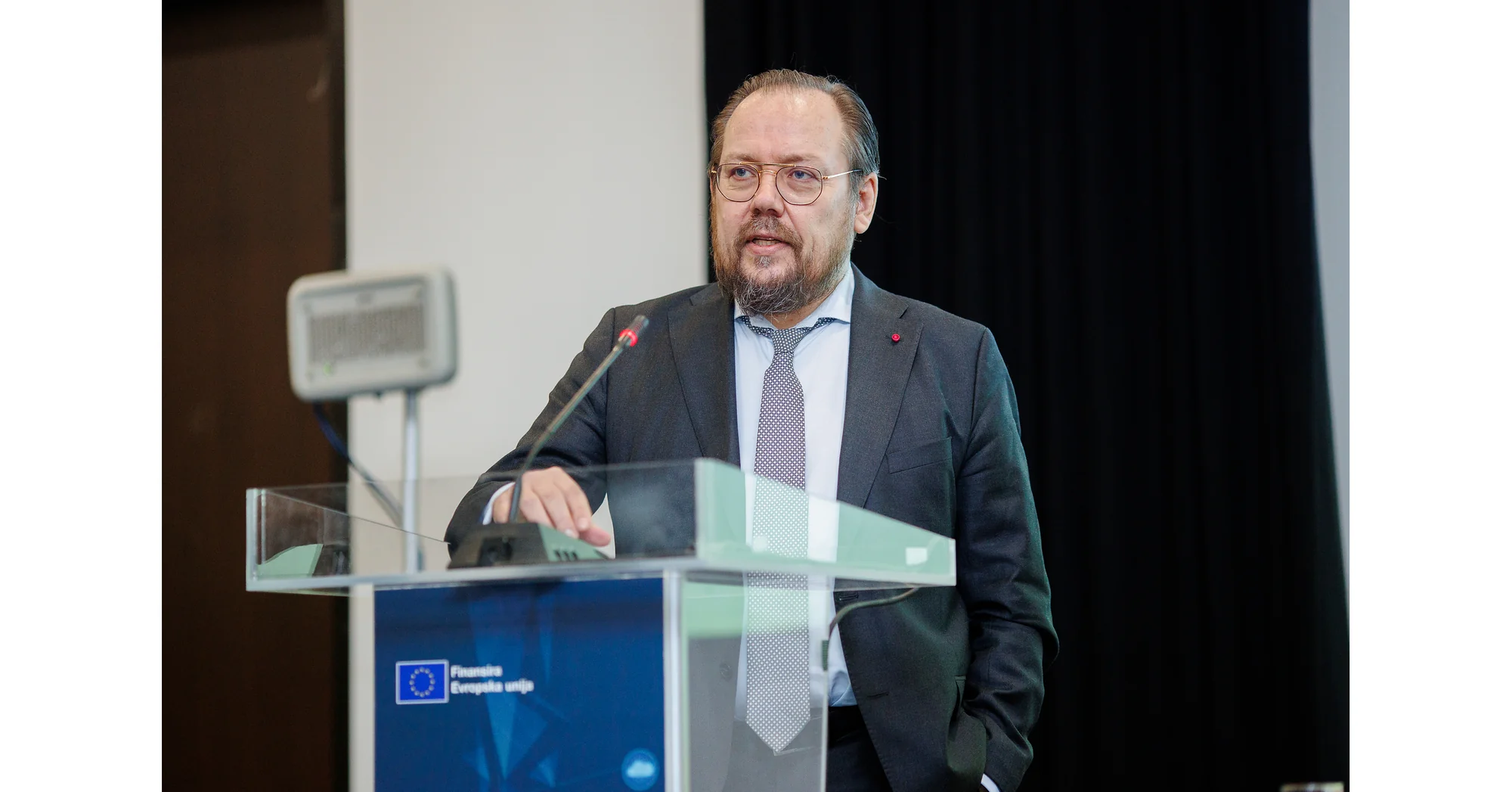
Aare Laponin, Founder and CEO, FiscalAdmin

Prior to the portal, farmer information was held in paper files, spreadsheets and separate district-level records that did not connect to one another. Built by FiscalAdmin Ltd on Joget DX Enterprise platform, the new system replaces that patchwork, giving the Ministry a clearer picture of the country's agricultural community.

Field officers use the portal to register farmers against their national identity number, capture household, farming, livestock and asset information, and record land parcels with GPS boundaries. Ministry staff can then search and review that data centrally, giving the government a live, national view of the farming population for the first time.

For farmers, formal registration means the Ministry can identify who they are, what they grow or raise, and what support they may need, laying the groundwork for future services such as targeted subsidies and input distribution. For the Ministry, the registry replaces incomplete and scattered records with one verified source of data to guide policy and budget decisions.

The wider platform already includes capabilities for programme applications, eligibility evaluation, decision management and entitlement issuance, which can be introduced as the programme progresses beyond this initial registration phase.

The Farmers Portal is an important step in strengthening how the ministry understands and supports farmers across Lesotho. Having reliable information in one place will help the Ministry better understand the needs of the farmers, plan agricultural programmes and improve the way services are delivered. Transitioning from development into a national service enables the platform to benefit farmers across all 10 districts.

Built for the needs of a public-sector team

The Farmers Portal was delivered by FiscalAdmin Ltd using Joget DX Enterprise, with several partners contributing to the programme. MAFSN owns the registry, the data and the process; the International Telecommunication Union (ITU) provided the programme framework and digital-government methodology; GovStack supplied the Registration Building Block specification and reference architecture; the World Food Programme supported the implementation, including the Joget DX Enterprise licence; and Vodacom Lesotho partnered on the launch and on reaching officers in the field.

The portal was built with the realities of a small public-sector ICT team in mind. Much of the application is managed through configuration rather than traditional software development, including forms, lists, workflows, user access and reference data. This means Ministry staff can maintain information such as districts, villages, crops, livestock types and document types through the system itself, without needing a developer for every change.

"We wanted to build a service that could work at a national scale and still be practical for the people using it every day. The Farmers Portal brings together a number of processes that would otherwise remain separate, while giving the Ministry greater control over its own data.

We built this as a live implementation of the GovStack Registration Building Block, so it needed to hold up under real conditions in the field, not just on paper. Joget's enterprise application platform enabled a very small team to turn a working prototype into a national service the Ministry can run and maintain on its own, and that is what made the two-year timeline possible."  said Aare Lapõnin, Founder and CEO, FiscalAdmin Ltd, Technical Delivery Partner.

The delivery approach also used what FiscalAdmin describes as LLM-assisted spec-driven development. An LLM assistant worked against a written specification rather than the live system directly, with each result pushed through the platform's own API and checked by an automated test suite before release. When something did not work, the fix went back into the specification, not into the system directly.

Raveesh Dewan, President and CEO of Joget Inc., said the project shows how technology can help public-sector organisations build practical digital services while keeping them adaptable as their needs evolve.

"What makes this project meaningful is the real-world problem it addresses. The Ministry needed a better way to understand its farmers and manage information that can support agricultural services across the country. We are proud that Joget could provide the foundation for that work.

The portal also shows how an agentic AI application platform can help a small team build and maintain a national service while leaving room to expand it as new needs emerge."  continued Raveesh Dewan, President & CEO, Joget Inc..

As registration reaches full national coverage, the Ministry expects to introduce further services building on the registry, including programme applications and input distribution, extending support to farmers across Lesotho.

About Ministry of Agriculture, Food Security and Nutrition (MAFSN)

The Ministry of Agriculture, Food Security and Nutrition (MAFSN) was first established in 1935 as the Department of Agriculture. Since its inception, like any other government Ministry and/or department, the Ministry has not been immune to transformations and structural changes that have been occurring.

Following a government wide reorganisation and restructuring of Ministries and Departments, the Ministry was renamed Ministry of Agriculture and Food Security in 2003.

Today the Ministry is now known as the Ministry of Agriculture, Food Security and Nutrition. The Ministry's principal responsibility is to facilitate sustainable production and productivity of agricultural outputs and promotion of food and nutrition security in the country.

About FiscalAdmin

FiscalAdmin is a software engineering and consulting company established in 2015 in Tallinn, Estonia.

We focus on assessment, modernisation and development services and technologies for tax administrations, ministries of finance, the public sector and international organisations.

Our Tallinn Office, located in the middle of the Nordic startup scene, is focused on the development of products for the new digital age. We develop new operational models for the public sector to help tackle the complexity of digitalisation through the creation of platforms and ecosystems for public finance, revenue management, marketing, e-commerce and public transport.

About Joget

Joget offers an open-source, enterprise Agentic AI application platform that converges no-code/low-code development with AI agents to help organizations rapidly build and customize enterprise applications at scale. By combining AI agents with visual app builders, not raw code, Joget makes app generation faster, safer, and more accessible for business users and developers alike.

With Generative AI and Agentic AI capabilities, Joget Intelligence enables organizations to automate and enhance processes while maintaining oversight and compliance.

Through Vibe Composition, Joget enables AI-assisted application development where AI interprets business intent and assembles applications using governed, pre-validated composable components. Unlike typical AI code generation, Joget's visual-first approach ensures applications remain maintainable and governed within collaborative human workflows.

As an Application and Integration Fabric, Joget connects legacy and modern systems seamlessly. Its extensible, open-source core and plugin architecture offer unmatched flexibility, and its White Label solution allows OEMs and digital solution providers to fully rebrand the platform.

Trusted by startups, global enterprises, and government agencies, Joget delivers the speed of AI with the control of visual development for scalable, intelligent digital transformation.

Visit www.joget.com and follow us on LinkedIn, X, Facebook, or YouTube.

Media contact: 

FiscalAdmin: info@fiscaladmin.com

Joget Inc: pr@joget.com 

SOURCE Joget

21%

more press release views with 

Request a Demo

Class (B2B/B2C)
B2B
Ingest Status
Error
Dedupe hash
eac7b875b6f8cff6843f36dc62cd6dec
Press Eligible
No
Press Eligible Reason
The TARGET contains factual claims not explicitly stated in the SOURCE: it asserts that the World Food Programme 'funded implementation' (SOURCE only says 'supported the implementation'), and it introduces 'subsidy' services not present in the SOURCE (which only lists 'programme applications and input distribution'). These are potentially misleading financial and service claims.
Source Name
Unknown Company
Original Summary

<p>The new registration system, built on Joget DX Enterprise, brings farmer and land information together across all 10 districts, giving the Ministry a stronger foundation to serve farmers. MOYENI, Lesotho, Aug. 30, 2026 /PRNewswire/ -- The Ministry of Agriculture, Food Security and...</p>

Image URL
https://mmx.prnewswire.com/media/MS1977987/aare-laponin-bosnia-2025-1.jpg?id=OA2919174&p=facebook
Luna Batch ID
batch-1788413031-yaG95TSX3GLUxjobWLVC
NASA's Roman Space Telescope launches with BAE Systems-built scientific instruments
Image File
Original HTML

NASA's Roman Space Telescope launches with BAE Systems-built scientific instruments

NEWS PROVIDED BY

BAE Systems, Inc.

Aug 30, 2026, 09:57 ET

SHARE THIS ARTICLE

The Nancy Grace Roman Space Telescope is the latest NASA astrophysics flagship observatory supported by BAE Systems, following Hubble and Webb

BROOMFIELD, Colo., Aug. 30, 2026 /PRNewswire/ -- BAE Systems (LON: BA) is celebrating the successful launch of NASA's Nancy Grace Roman Space Telescope today from Kennedy Space Center in Florida, which will support critical astrophysics discoveries as the latest flagship observatory.  

NASA’s Nancy Grace Roman Space Telescope launching from Kennedy Space Center (BAE Systems).

BAE Systems designed and developed the Opto-Mechanical Assembly on the Wide Field Instrument (WFI), the primary scientific instrument on the Roman mission. The Opto-Mechanical Assembly provides the stable structure and thermal environment that enables the WFI to meet performance requirements. It includes the optical bench, thermal control system, precision mechanisms, optics and electronics. BAE Systems also provided integration services and testing for the assembly.

"Today's launch of the Roman Space Telescope marks a significant achievement for furthering astrophysics discoveries," said Bonnie Patterson, vice president and general manager of Civil Space for BAE Systems. "Roman will provide unparalleled views of the cosmos, helping to further advance our knowledge of the universe, the physics of our galaxy and the demographics of exoplanets."

The Roman Space Telescope's Wide Field Instrument will provide a field of view at least 100 times greater than the Hubble Space Telescope, allowing scientists to survey the sky up to 1,000 times faster. Roman will study billions of cosmic objects to explore how planets, stars, and galaxies form and develop over time.

BAE Systems has provided significant support for every NASA's astrophysics flagship mission, from the Hubble Space Telescope to the James Webb Space Telescope. These missions complement the Roman Space Telescope through enhanced shared technologies, enabling science and supporting decades of discovery through innovative instrument delivery.

Looking ahead, BAE Systems is already contributing to NASA's next astrophysics flagship mission concept: the Habitable Worlds Observatory (HWO). This mission would build upon the work of previous astrophysics programs and is in the early stages of development. BAE Systems' Ultra-Stable Large Telescope Research and Analysis (ULTRA) studies are developing a picometer-capable mirror actuation system to provide greatly enhanced optical stability and performance.

The HWO mission would be focused on imaging Earth-like planets orbiting other stars and searching them for signs of life. The observatory would also be equipped with a powerful lens to explore stars, the planets of our solar system, different galaxies, and the evolution of the universe with unprecedented sensitivity and resolution.

For more information, please contact:

Brian Rantala, BAE Systems

Mobile: 720-995-8253

brian.rantala@baesystems.us

www.baesystems.com/US

@BAESystemsInc 

SOURCE BAE Systems, Inc.

21%

more press release views with 

Request a Demo
Class (B2B/B2C)
B2B
Ingest Status
Error
Dedupe hash
54a3e0a1baf6a8162c719c51eb4b7fc9
Press Eligible
No
Press Eligible Reason
Text too short (289)
Source Name
Unknown Company
Original Summary

<p>The Nancy Grace Roman Space Telescope is the latest NASA astrophysics flagship observatory supported by BAE Systems, following Hubble and Webb BROOMFIELD, Colo., Aug. 30, 2026 /PRNewswire/ -- BAE Systems (LON: BA) is celebrating the successful launch of NASA's Nancy Grace Roman Space...</p>

Image URL
https://mmx.prnewswire.com/media/MS1978000/Roman-launch-image-8-30-26.jpg?id=OA2919216&p=facebook
Global Times: How full-chain innovation, new production models power the rise of Chinese car brands
Original HTML

Global Times: How full-chain innovation, new production models power the rise of Chinese car brands

NEWS PROVIDED BY

Global Times

Aug 30, 2026, 08:02 ET

SHARE THIS ARTICLE

BEIJING, Aug. 30, 2026 /PRNewswire/ -- When it comes to the rise of China's auto industry, two numbers are especially revealing: 40.3 percent and 77.4 percent - the first is the domestic market share of Chinese-brand passenger cars in 2023; the second is that share in July 2026.

Cars have changed, and so has the automotive industry. Increasingly, it is Chinese automotive brands that are starting to take center stage. From SAIC, BYD, Geely, Chery and Changan to Leapmotor, Li Auto, NIO, XPeng, Seres, Xiaomi and others, China's homegrown brands are shining like a galaxy of stars as they race on the new-energy vehicle (NEV) track.

The collective rise of Chinese car brands and the new model created by China's automotive industry are two sides of the same coin.

Systemic innovation

The novelty of the new model lies in the "full-chain" systemic innovation.

In the exhibition hall of the Seres super factory in Chongqing, the company's chairman Zhang Zhengping points to seven groups of core components on display, including various domain controllers and telematics modules. "In the past," he said, "cars iterated around the engine, transmission, and chassis. Today, what determines a vehicle's level of advancement is these seven 'boxes.'"

These "boxes" are precisely the critical links in the NEV industry - the "three electrics" system of battery, motor, and electronic control, along with chip computing power, integrated perception, algorithms, and intelligent systems. Whoever masters these tech capabilities holds the initiative in the industry. And these capabilities are now firmly in the hands of Chinese companies.

At every critical link in the NEV industrial chain, Chinese enterprises are leading the way: BYD was the first to fully master the "three electrics," making "charging as fast as refueling" a reality with its flash charge technology; CATL's latest battery technology has raised the peak charging rate to 15C, enabling a charge from 10 percent to 80 percent in just three minutes.

On the software side, Huawei's Qiankun smart driving system progresses from reliance on high-definition maps to map-free full-domain navigation; Changan introduced a generative large model, one of the few in China to pass the filing and approval process for generative AI services; GAC Group's Hyptec GT Climbing Edition features 1,004 chips, all designed domestically.

These are just a few examples. Chinese NEVs have become an "innovation platform for industrial integration," connecting all related industries, including semiconductors, software, materials, processing and manufacturing, battery chemistry, and AI.

New production models

The novelty of the new model lies in the production methods of the "super factories."

Stepping inside the Seres super factory in Chongqing, one will find none of the deafening noise or flying sparks of a traditional auto plant. Stamping, welding, and painting are fully automated. More than 3,000 industrial robots work in precise coordination; automated guided vehicles glide quietly through the workshops. An AI visual inspection system operates continuously, catching even the smallest defects invisible to the human eye.

Zhang, the company's chairman, said that one production line can handle mixed-model welding and assembly for multiple vehicle models. From the launch of its first car, AITO saw its one millionth vehicle roll off the line in just 46 months - setting the global record for the fastest time to one million units among luxury NEVs.

Rapid response to market orders is powered by the "industrial brain," the decision-making core of intelligent manufacturing. With deep AI involvement, Seres' "industrial brain" integrates an industrial ecosystem of more than 300 partners and links directly to over 50 core suppliers. R&D efficiency has risen by 20 percent, and the on-time order delivery rate has improved by 13 percent.

A large number of such super factories form a brilliant constellation for China's NEV industry.

BYD's super factory in Zhengzhou is the world's largest single-site NEV production base, capable of rolling out a vehicle in less than one minute and producing a battery cell roughly every three seconds. At NIO's plant in Hefei, 80 percent of manufacturing scenarios are assisted by AI decision-making. Xiaomi's super factory in Beijing has realized 100 percent unmanned "lights-out" production in the key processes of its six core workshops.

Ten-thousand-ton-class mega integrated die-casting, highly flexible production lines, and full digital traceability are becoming signature manufacturing strengths of China's NEV super factories, delivering both visual impact and intellectual inspiration to visitors from around the world.

More than a century ago, Henry Ford created the industrial assembly line. In the 1950s and 1960s, Toyota pioneered lean production. Today, China's "industrial brain + future factory" manufacturing model delivers far more than simply higher speed or lower cost. It represents a complete restructuring of the entire chain - from R&D and manufacturing to supply and service - and an all-around leap in total-factor productivity.

Vibrant industrial ecosystem

The novelty of the new model lies in the industrial ecosystem of "four-chain integration."

An NEV is composed of tens of thousands of parts. Behind every vehicle brand stands a massive system of supply chains.

"China possesses the world's most complete 'three-electrics' supply chain and the most mature intelligent connected vehicle industrial ecosystem." This was the near-unanimous consensus among those interviewed.

In the Yangtze River Delta, a renowned "four-hour industrial circle" has taken shape: Shanghai supplies the chips and software that form the vehicle's "brain," Jiangsu provides power batteries, Zhejiang supplies integrated die-casting machines, and Anhui does the final step of vehicle assembly. All the supporting components for an NEV can be sourced within a four-hour drive.

"In the past, original equipment manufacturers had to send people to suppliers' plants for inspections and to guard shipments," said Wang Zhijie, director of the Chongqing Municipal Commission of Economy and Information Technology.

"Now, data from key equipment is visible in real time, dramatically improving supply-chain efficiency and security. Drawing on the data accumulated in the supply chain, banks can offer 'data loans' to small and medium-sized enterprises. The innovation chain, industrial chain, capital chain, and talent chain are fully connected in the system," Wang said.

"It is not only the vehicle makers that are advancing," said Zhao Fei, general manager of China Changan Automobile. "The entire industrial chain and supply chain are progressing together - batteries, motors, electronic controls, chips, software, and AI. Everyone is moving forward in tandem."

Moving forward together has led to transformations in quality, efficiency, and driving force.

This is a complete, vibrant, and rapidly evolving new model of industrial development - a systemic leap, an open and cross-sector integration, and a symbiotic collective rise.

There is no doubt that the collective vitality generated by this new model has transformed Chinese automotive brands from industry "followers" into industry "definers."

SOURCE Global Times

21%

more press release views with 

Request a Demo

Class (B2B/B2C)
B2B
Ingest Status
Rewritten
Dedupe hash
42cf1337c646e2362b25b1a0d51d0942
Press Eligible
No
Press Eligible Reason
TARGET misclassifies CATL as an automaker, whereas SOURCE presents CATL as a battery technology provider; and TARGET overstates Xiaomi's lights-out production as applying across six core workshops, while SOURCE limits it to key processes within those workshops.
Source Name
Global Times
Original Summary

<p>BEIJING, Aug. 30, 2026 /PRNewswire/ -- When it comes to the rise of China's auto industry, two numbers are especially revealing: 40.3 percent and 77.4 percent - the first is the domestic market share of Chinese-brand passenger cars in 2023; the second is that share in July 2026. Cars have...</p>

Luna Batch ID
batch-1788413031-yaG95TSX3GLUxjobWLVC
Global Times: How fresh dynamics, fierce competition reshape China's auto market
Original HTML

Global Times: How fresh dynamics, fierce competition reshape China's auto market

NEWS PROVIDED BY

Global Times

Aug 30, 2026, 08:10 ET

SHARE THIS ARTICLE

BEIJING, Aug. 30, 2026 /PRNewswire/ -- China's auto market today is more dynamic - and more fiercely competitive - than ever before.

The pace of new-model launches has broken industry records. In the first half of this year, more than 100 all-new models built on new platforms or featuring major generational upgrades entered the market, alongside hundreds of modified and upgraded models. Gasoline-powered vehicles made up less than 20 percent of the all-new models.

This is an unprecedented intensity of supply and an unprecedented speed of product iteration in the history of global automotive development.

Historically, at the peak of Germany's auto industry, the number of newly developed production models launched in a full year was around 100. China introduced more all-new models in just six months than major European and US markets typically do in a full year. Compared with China's own gasoline-car sales peak in 2016-17, the annual number of all-new models launched at the time was less than one-third of the comparable total in the first half of this year.

Such breakneck iteration is possible only in the intelligent era. As China enters the opening year of the 15th Five-Year Plan period (2026-30), its auto market is undergoing profound changes.

Profound changes

On the demand side, NEVs have become the mainstream choice for new-car buyers, fundamentally reversing the previous balance between gasoline-powered and electric vehicles.

After monthly NEV retail penetration surpassed 50 percent at the end of 2025, the retail penetration rate of new-energy passenger vehicles remained above 60 percent from April through July 2026, reaching 65.1 percent in July.

For consumers, NEVs are increasingly the preferred choice. Even steep price cuts on gasoline-powered vehicles have failed to reverse this shift in purchasing behavior. Research shows that more than 80 percent of gasoline-car owners choose an NEV when replacing their vehicles. Meanwhile, intelligent in-car technologies are moving from premium options to standard features, with competition increasingly shifting toward an era of "AI-defined vehicles."

On the supply side, China has built a largely self-sufficient domestic industrial chain, reshaping the traditional global division of labor in the auto industry.

China has achieved a high degree of self-reliance in batteries, electric motors and electronic controls, as well as silicon carbide power modules and electric-drive systems, reducing its dependence on powertrain technologies long dominated by overseas suppliers. Chinese companies now occupy seven of the world's top 10 places in installed power-battery capacity, with a combined market share of more than 72 percent. China's national battery safety standards are also beginning to be introduced overseas.

More telling is the rise of "reverse joint ventures," with joint-venture brands increasingly turning to Chinese technologies. On March 13, the ID. UNYX 08 - the first model jointly developed by Volkswagen and XPeng - rolled off the production line at Volkswagen Anhui's plant. Audi, meanwhile, has teamed up with SAIC Motor to create the China-focused AUDI brand, which makes extensive use of Chinese-developed platforms and intelligent technologies.

The rules formed in the gasoline-car era are losing relevance, while new dynamics are rapidly taking shape in the NEV era. The much-discussed problem of excessive competition, or "involution," therefore needs to be examined through a new market logic.

First, just how "new" are all these new models?

Of the hundreds of models launched in the first half, most were facelifts, configuration tweaks or niche variants, leaving some models facing refreshed rivals almost as soon as they hit the market.

This reflects a fundamental change in supply capacity made possible by technology in the intelligent era.

Gasoline-powered vehicles are constrained by complex mechanical architectures, making major hardware changes costly. Developing a new model typically takes 36 to 48 months, while a basic model may remain in use for five to 10 years. NEVs, by contrast, use modular electric platforms, software and over-the-air (OTA) updates, allowing derivative models to be developed in just six to 12 months - closer to the pace of consumer electronics. The logic of auto production has fundamentally changed.

Growth curve

The next question is: What has happened to the market's growth curve?

From January to July 2026, China produced 9.014 million NEVs and sold 9.007 million, up 9.5 percent and 9.6 percent year-on-year, respectively. But the market has become increasingly differentiated, with a large number of Chinese brands posting double-digit growth. The 10 fastest-growing brands were concentrated in the mid- to high-end pure-electric segment, with Chinese brands overwhelmingly dominating the list. Tesla China was the only foreign brand among the top 10.

More notably, sales of NEVs priced above 400,000 yuan rose 46 percent year-on-year in the first half, with Chinese brands taking nearly 60 percent of the segment. Their growth has been driven not by low prices, but by technology, intelligent features and stronger brands. Those losing ground, by contrast, are mainly joint-venture brands slow to transform, low-end micro-EVs and highly similar models.

This changing growth curve points to an important trend: upgrading and vehicle replacement are becoming the dominant forces driving demand.

China now has 371 million vehicles on the road, the world's largest fleet and nearly one-quarter of the global total. Gasoline-powered vehicles account for 86.81 percent of the fleet and are 8.2 years old on average, while many first-generation NEVs are nearing the end of their warranty periods. This is setting the stage for the world's largest vehicle-replacement cycle, with the 15th Five-Year Plan period becoming a key window for replacement demand and mid- to high-end consumption.

Half-year earnings announcements released in July showed a sharp contrast between weaker profits at some automakers and strong earnings at leading supply-chain companies. This shift in profits should be viewed in the broader context of industrial evolution.

For decades, key auto components and advanced technologies were dominated by overseas companies, with nearly all of the substantial profits they generated flowing abroad. Today, Chinese supply-chain companies increasingly master key technologies through in-house R&D, allowing healthy profits to support long-term investment in frontier technologies.

New trends

Taken together, the new trends emerging in models, sales and profitability in China's NEV industry in the first half of 2026 offer important insights into where the market is heading.

One conclusion is becoming increasingly clear: China's auto market is both the world's largest arena for vehicle replacement and a bellwether for the next round of NEV upgrading and iteration, helping determine the cycle and pace of transformation across the global auto industry.

Unprecedented market potential, rapid innovation and fierce competition are converging in the same market, creating a uniquely powerful draw for global automakers. In an open market, some companies gaining ground while others lose - it is a natural outcome of competition, not a zero-sum game.

"You only get stronger by getting into the thick of competition," BYD Executive Vice President He Zhiqi wrote recently on social media, capturing a sentiment shared by many Chinese entrepreneurs.

Geely Holding Group founder Li Shufu has said that the auto industry should not fight price wars, but instead compete on technology, services, quality and brands.

Price wars are unsustainable, and destructive "involution" should be avoided. Vigorous competition, however, is what defines a major market.

A growing consensus is taking shape among both Chinese and foreign automakers: competition must shift from price to value and move onto a new track of high-quality development, with companies engaging in healthy competition through diverse technological pathways, stronger core capabilities and continuous improvements in user experience.

For Chinese consumers - particularly younger buyers who grew up with smartphones, this kind of vibrant, innovative market with an abundance of choice is precisely what they want.

SOURCE Global Times

21%

more press release views with 

Request a Demo
Class (B2B/B2C)
B2B
Ingest Status
Rewritten
Dedupe hash
02508fb9c3122d4c972d39f3a39a3ee1
Press Eligible
No
Press Eligible Reason
TARGET contains factual claims not explicitly in SOURCE: the $55,000 conversion for 400,000 yuan and the claim that Chinese supply-chain firms succeed 'rather than relying on overseas licensing' (SOURCE only says they master key technologies through in-house R&D).
Source Name
Global Times
Original Summary

<p>BEIJING, Aug. 30, 2026 /PRNewswire/ -- China's auto market today is more dynamic - and more fiercely competitive - than ever before. The pace of new-model launches has broken industry records. In the first half of this year, more than 100 all-new models built on new platforms or featuring...</p>

Luna Batch ID
batch-1788413031-yaG95TSX3GLUxjobWLVC
Parksy (parksy.com) Mapped Parking Around 12 of America's Biggest Venues: Nearly 2,000 Options Near Madison Square Garden, 18 Near Hard Rock Stadium
Image File
Original HTML

Parksy (parksy.com) Mapped Parking Around 12 of America's Biggest Venues: Nearly 2,000 Options Near Madison Square Garden, 18 Near Hard Rock Stadium

NEWS PROVIDED BY

Parksy

Aug 30, 2026, 07:00 ET

SHARE THIS ARTICLE

Car space demand is not a shortage of parking. It is a shortage of introductions. — Daniel Battaglia, Parksy

LOS ANGELES, Aug. 30, 2026 /PRNewswire/ -- Parksy ( parksy.com ), the free parking marketplace, counted its listed parking within five miles of twelve of America's biggest stadiums and arenas, and the results split the country in two. Madison Square Garden has 1,986 listed options, Soldier Field 1,583, Fenway Park 587. Then the suburbs: AT&T Stadium 107, Allegiant Stadium 96, MetLife Stadium 58, and Miami's Hard Rock Stadium 18.

The pattern is structural. A downtown arena inherits the garages and lots of the city around it. A suburban stadium sits ringed by residential streets with almost nothing listed in between. SoFi Stadium lands in the middle at 277, out of more than 32,000 spaces on Parksy nationwide.

The missing supply is already built: the driveways. A homeowner near any of these venues can list a driveway or unused spot free no posting fee, no commission, no lease paperwork. The owner sets the price, keeps every dollar and chooses the dates.

Founder Daniel Battaglia says stadium neighborhoods are where parking arithmetic fails hardest. "Demand arrives eighty thousand cars at a time and supply is whatever the official lot holds. The difference is standing on residential concrete twenty feet from the sidewalk. That is not a shortage of parking. It is a shortage of introductions." Note: The counts are Parksy's own inventory, not estimates of total parking.

About Parksy

Parksy ( parksy.com ) is a free, commission-free parking marketplace operating across 57 countries. Drivers use Parksy to find and book parking, appeal unfair fines with a free AI-powered calculator, scan confusing signage, locate a parked car, and report accidents — all at no cost and with no signup required for most tools. Space owners list and rent out driveways, garages and unused spots for free, with no commission and no lease paperwork. Parksy was founded in 2011 by Daniel Battaglia and is headquartered in Sydney, Australia.

Media Contact:

Daniel Battaglia

Founder & CEO, Parksy

parksy.com | daniel@parksy.com

linkedin.com/in/danielmbattaglia/

Previously: Lehman Brothers, RBC Capital Markets, Macquarie Bank

Author: Parking Made Easy — Making Life Easier

SOURCE Parksy

21%

more press release views with 

Request a Demo

Class (B2B/B2C)
B2C
Ingest Status
Rewritten
Dedupe hash
58cf74b60d87ef6a24296fa52ea6e92e
Press Eligible
No
Press Eligible Reason
Text too short (279)
Source Name
Parksy (parksy.com) Mapped Parking Around 12 of America's Biggest Venues
Original Summary

<p>Car space demand is not a shortage of parking. It is a shortage of introductions. — Daniel Battaglia, Parksy LOS ANGELES, Aug. 30, 2026 /PRNewswire/ -- Parksy ( parksy.com ), the free parking marketplace, counted its listed parking within five miles of twelve of America's biggest stadiums...</p>

Image URL
https://mmx.prnewswire.com/media/MS1977967/press_release_distribution_0538167_236606.jpg?id=OA2919136&p=facebook
Luna Batch ID
batch-1788413031-yaG95TSX3GLUxjobWLVC